



Brass Companion Box
A brass companion box brings refined metalwork to your desk or hearth, offering tidy storage for daily letters, small cigars, or hearth accessories.
Brass Companion Box
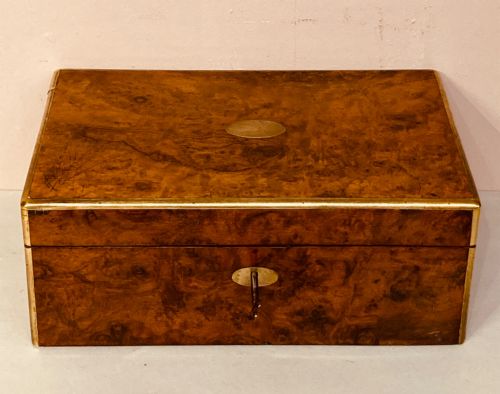
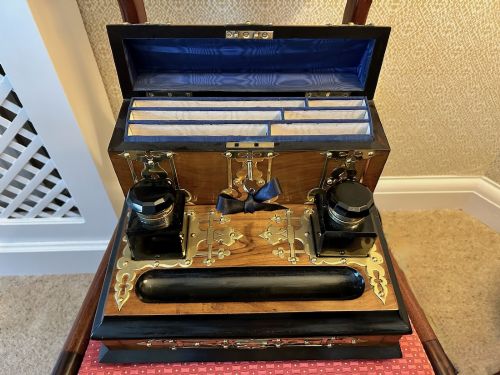
A brass companion box encompasses various lidded vessels and fitted containers designed for the desk or the fireside, often functioning as an inkstand, writing slope, cigar cabinet, or coal scuttle. When you search for a brass companion box, you encounter pieces that serve to organise correspondence, writing materials, or fuel with decorative metal mounts.
The selections span multiple eras, showing the design shifts from late Georgian and Regency elegance through Victorian mass and revival styles to Edwardian refinement. Walnut, rosewood, burr walnut, and coromandel frequently form the wooden carcases, while brass provides structural inlays, handles, hinges, and corner mounts.
Desk accessories and writing boxes dominate the functional forms, housing glass inkwells and compartments, whereas larger fireside vessels serve coal and logs. Each piece reflects the interior habits of the nineteenth and early twentieth centuries, uniting domestic utility with polished metal decoration.
Materials and construction
Cabinetmakers constructed the wooden foundations using dense hardwoods such as mahogany, walnut, rosewood, and exotic coromandel, often embellishing surfaces with decorative burr veneers or tortoiseshell and mother-of-pearl inlays. Brass was worked into sheets for strapwork and escutcheons, cast for handles and feet, or fire-gilded as ormolu mounts.
Metal components were meticulously fitted into the wood using brass pins, screws, and intricate hinges to secure lids, drops fronts, and interior compartments. Glass elements, particularly cut-glass inkwells, were custom-fitted into brass collars within the desk stands and writing slopes.
Brass Companion Box Retail Price Guide 2026
Typical asking prices for brass companion box among the pieces listed under this phrase on Sellingantiques today, from the lower quarter to the upper quarter. They describe what is for sale here now, not the wider market.
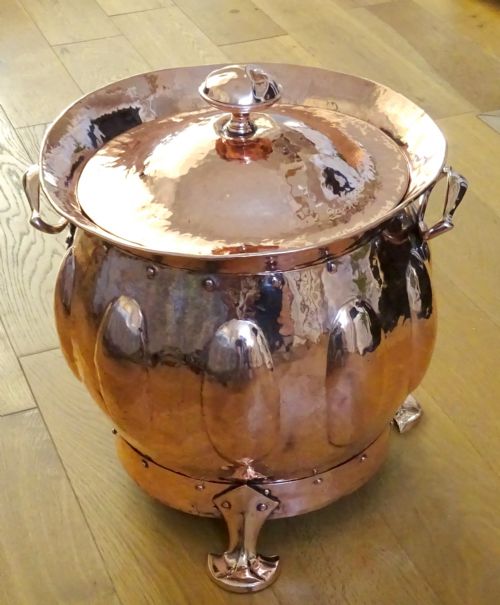
A nineteenth-century coal scuttle proves that even mundane fuel storage once demanded polished brass, fine wood, and an air of drawing-room elegance.
Factors of quality
Quality rests upon the precision of the brass inlay work and the thickness of the hardwoods employed in the box carcase. Finely cast ormolu mounts and crisply engraved brass strapwork distinguish superior pieces from standard production items.
The internal fittings, such as original glass inkwells, silk linings, and smoothly operating locking mechanisms with matching keys, indicate a higher grade of craftsmanship and original completeness.
The Brass Companion Box Glossary
- Writing slope
- A desk accessory with an inclined lid designed to provide a comfortable writing surface when opened. Inside, it typically reveals compartments for pens, nibs, and stationery.
- Inkstand
- A portable tray or stand holding one or more inkwells, often accompanied by pen troughs and sanders. They sit upon a desk to manage liquid writing materials.
- Purdonium
- A specialised coal scuttle or cabinet designed to store fuel near the fireplace in a domestic interior. These boxes often feature a sloping drop-front and a carrying handle.
- Coromandel
- A dense, heavily grained cabinet wood imported from Asia, prized for its rich dark brown colour and contrasting light stripes. It frequently serves as a luxury veneer on nineteenth-century boxes.
- Ormolu
- Gilded bronze or brass applied as decorative mounts to furniture and boxes. The technique involves coating metal with a mercury-gold amalgam and heating it to leave a gold layer.
Brass Companion Box: Frequently Asked Questions
What is a brass companion box used for?
These boxes serve varied domestic functions, acting as desk accessories for holding writing instruments, secure receptacles for cigars, or fireside containers for coal and logs.
They organise small household necessities while displaying decorative metalwork suited to the principal rooms of a period home.
How do I date a Victorian brass box?
Dating relies on observing the combination of wood types, brass inlay styles, and manufacturing techniques characteristic of the nineteenth century. Regency and early Victorian pieces often display restrained brass line inlays, whereas later Victorian examples embrace denser ornamentation and revival styles.
Interior fittings, lock types, and secondary woods also offer clues to the specific decade of production.
Are these boxes suitable for daily modern use?
Many desk stands, writing boxes, and decorative containers remain fully functional for holding modern stationery, small desk items, or matches. Their sturdy hardwood and brass construction stands up well to careful contemporary use.
Care should be taken with delicate veneers, original silk linings, and antique locking mechanisms to preserve their condition.
How should I care for brass and hardwood?
Maintain the polished wood surfaces with gentle dusting and occasional applications of appropriate furniture wax to preserve the moisture in the veneer. Brass mounts require careful cleaning with a soft cloth to avoid abrading the surrounding wood.
Keep the boxes away from direct heat sources and strong sunlight to prevent the timber from warping and the adhesives from failing.