
Brass Column Lighting
Brass column lighting brings steady height and classical form to a room, ranging from simple oil burners to grand Corinthian shafts.
Brass Column Lighting
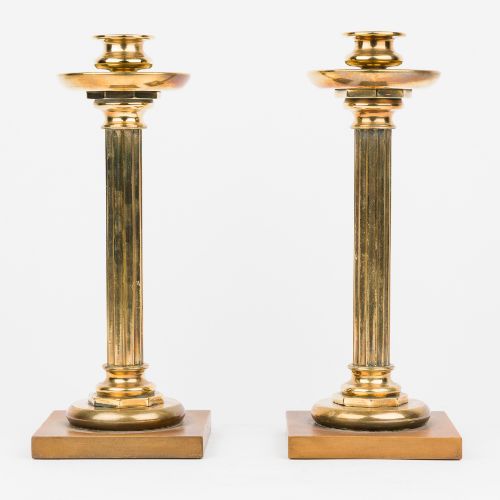
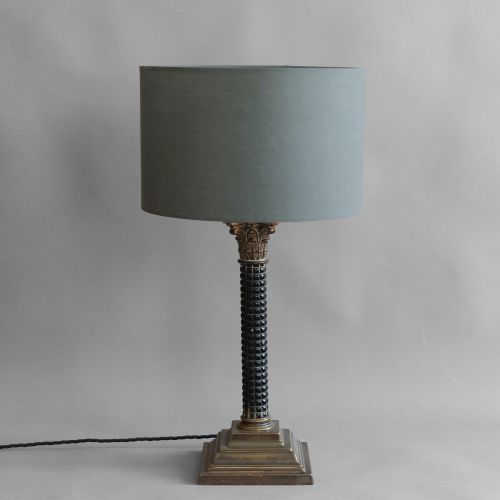
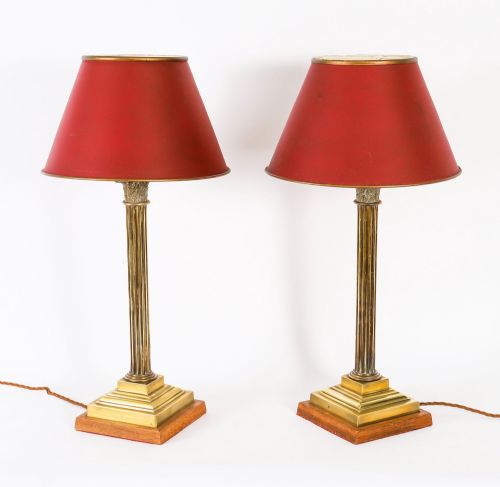
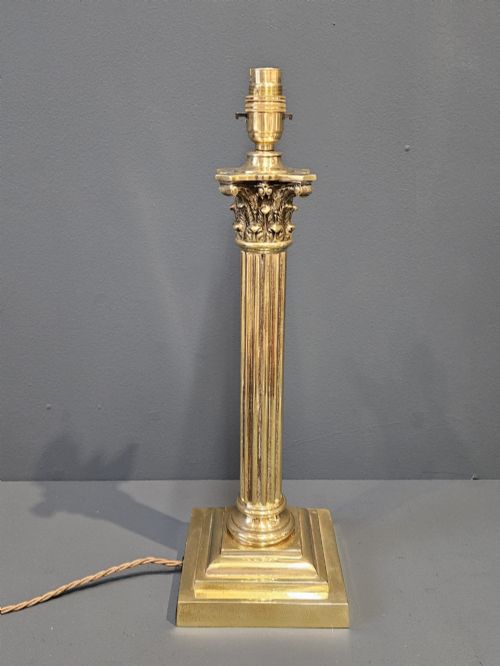
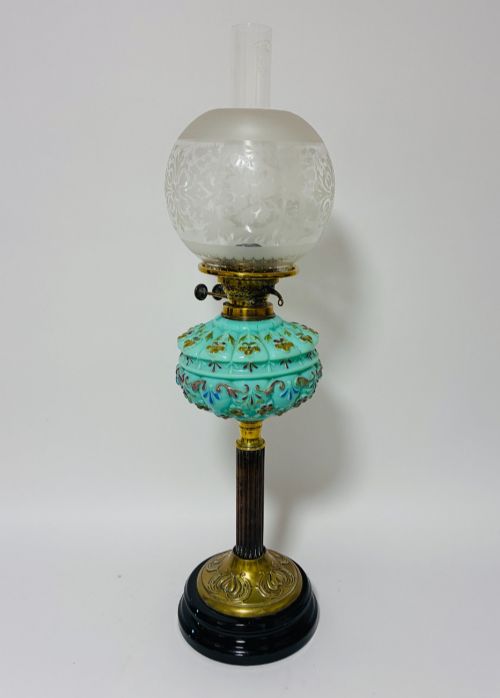
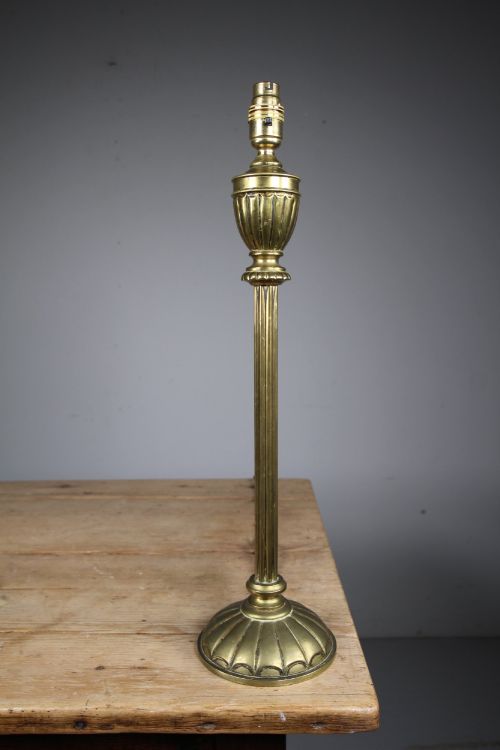
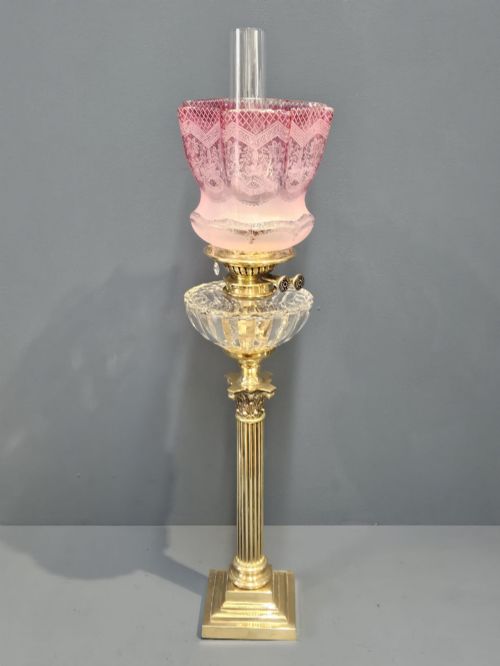
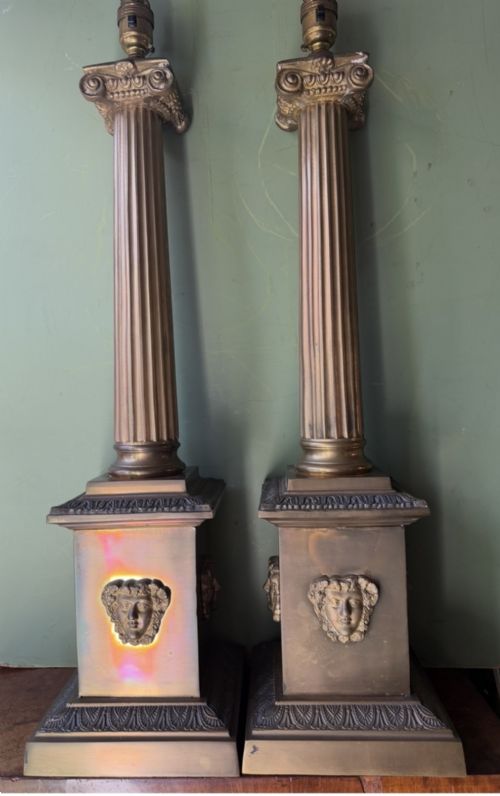
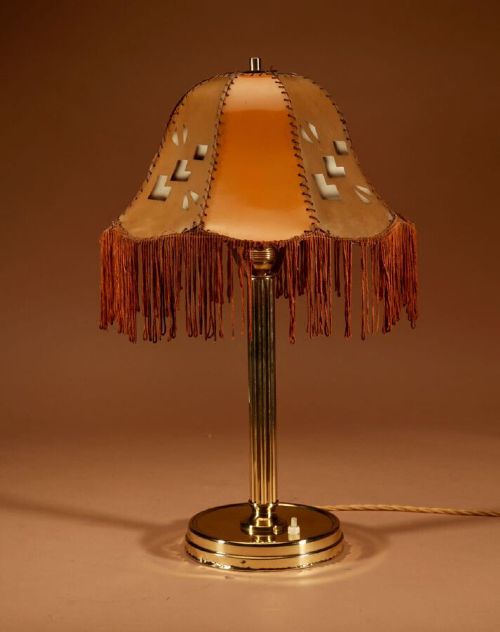
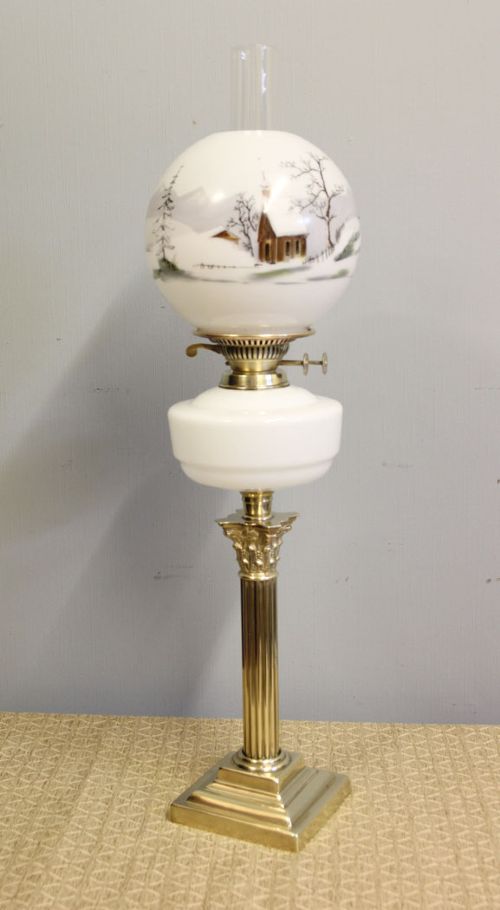
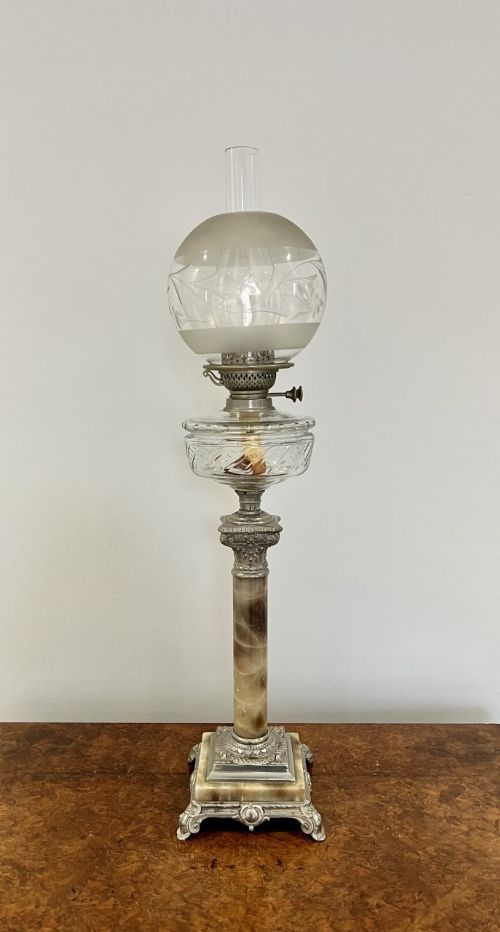
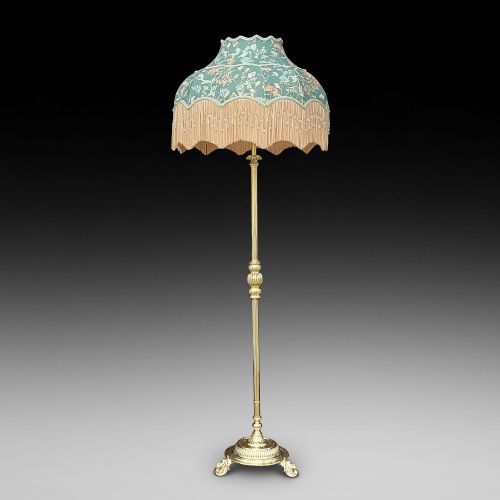
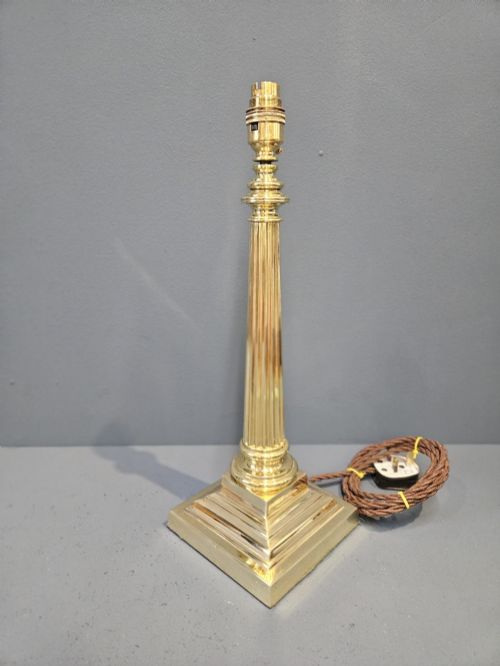
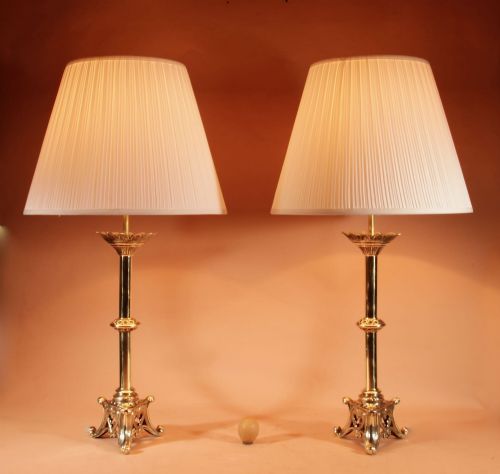
When you search for brass column lighting, you encounter tall, upright pieces designed for illumination, predominantly appearing as table lamps, oil lamps, and candlesticks from the Victorian and Edwardian eras. These objects take structural inspiration from classical architecture, utilising fluted or reeded shafts and stepped pedestals that echo ancient stone building methods. The typical piece met here is a Victorian or Edwardian brass table lamp, often styled with a Corinthian or Ionic capital at the top of the column.
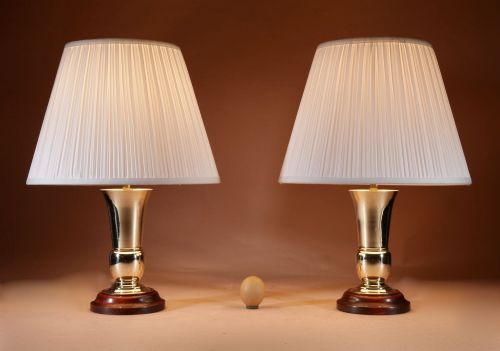
The selection includes standard lamps and floor lamps alongside smaller table versions, spanning the nineteenth century up to the nineteen-twenties. Many examples began life as oil lamps fitted with duplex burners before later conversion to electricity, while others started as candlesticks or architectural ornaments. Regional variations also emerge, including French or Indian makes alongside English workshop output.
How they were made
Makers constructed these columns primarily from cast or spun brass, frequently combining the metal with materials such as marble, opaline glass, and gilt bronze. Columns were often cast in sections and secured to weighted bases to ensure stability, particularly for taller floor lamps and heavy oil lamp reservoirs. Capitals and bases incorporated detailed decorative elements cast separately and joined mechanically or through brazing.
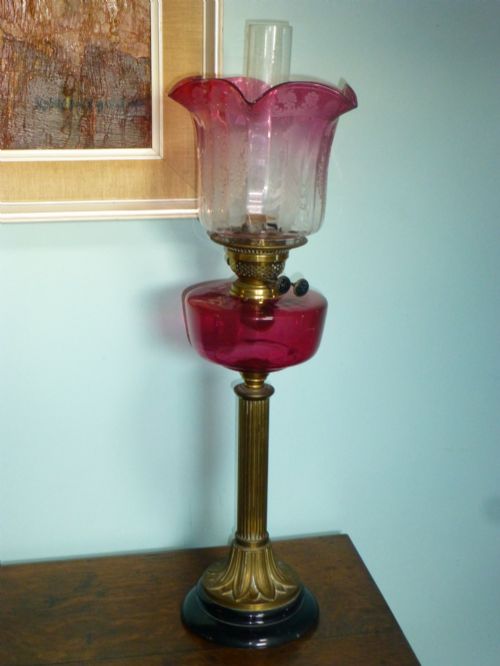
Finishes varied according to the period and style, ranging from polished bright brass to gilt surfaces and darkened patination. Oil lamp reservoirs utilised blown glass, cranberry glass, or painted ceramic bowls mounted directly to the metal columns. Wiring and rewiring in later periods introduced modern electrical fittings into structures originally designed for liquid fuel or wax.
The inventory records multiple object types, ranging from small table candlesticks to tall adjustable oil lamp standards.
What varies in quality
Quality rests heavily upon the crispness of the casting in the capitals and the weight of the metal used in the shaft and base. Superior examples display sharply defined acanthus leaves on Corinthian capitals and heavy, stable brass bases rather than thin, pressed sheet metal. Finer pieces also integrate secondary materials like marble or gilt bronze with tight joints and well-proportioned heights.
Maker marks and patent stamps stamped into the metal distinguish workshop production from standard commercial output. The complexity of the column design, such as four-pillar configurations or reeded shafts with intricate collars, separates standard domestic lighting from more ambitious revival pieces.
Mc Gary·Hinks
The Brass Column Lighting Glossary
- Corinthian column
- A classical architectural order featuring an ornate capital decorated with rows of carved acanthus leaves, frequently used on the top of nineteenth-century lamps. This style provides the most common silhouette found in antique brass column lighting.
- Duplex burner
- A double-wick mechanism developed in the nineteenth century to increase the brightness of oil lamps. It appears on many converted standard lamps from the Victorian period.
- Opaline glass
- A pale, translucent milk glass often used for the shades or reservoirs of Victorian oil lamps. It diffuses light softly and comes in various pastel shades.
- Ionic column
- A classical column style distinguished by scroll-like spiral volutes on the capital. This form offers a slightly simpler profile than the Corinthian order.
- Ormolu
- Finely detailed gilt bronze or brass mounted on decorative objects and furniture, used on French column lamps from the early nineteenth century. The technique involves applying a gold amalgam to the base metal.
Brass Column Lighting: Frequently Asked Questions
Were these lamps converted from oil?
Many brass column lamps listed here began as nineteenth-century oil lamps using duplex burners. They were subsequently adapted for electricity during the twentieth century.
This conversion process means most retain their original metal reservoirs and heavy weighted bases.
How do I date a brass column lamp?
Dating relies on stylistic clues such as the specific neoclassical revival period, the form of the capital, and accompanying materials like opaline glass or marble. Patent stamps and maker marks also provide precise chronological markers.
Most surviving examples cluster around the Victorian, Edwardian, and early twentieth-century decades.
Where should I place a floor lamp?
Standard and floor lamps suit corners of rooms or beside seating areas where their height can project light downward. Their solid brass construction provides natural stability in open spaces.
Pairing them with appropriate fabric shades balances the visual weight of the metal column.