




Brass Cherub Figure
A brass cherub figure brings character to a room through cast metalwork from the nineteenth and early twentieth centuries.
Brass Cherub Figure
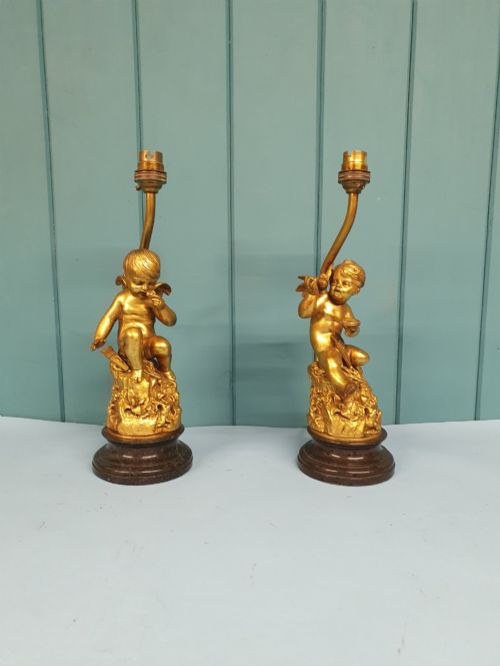
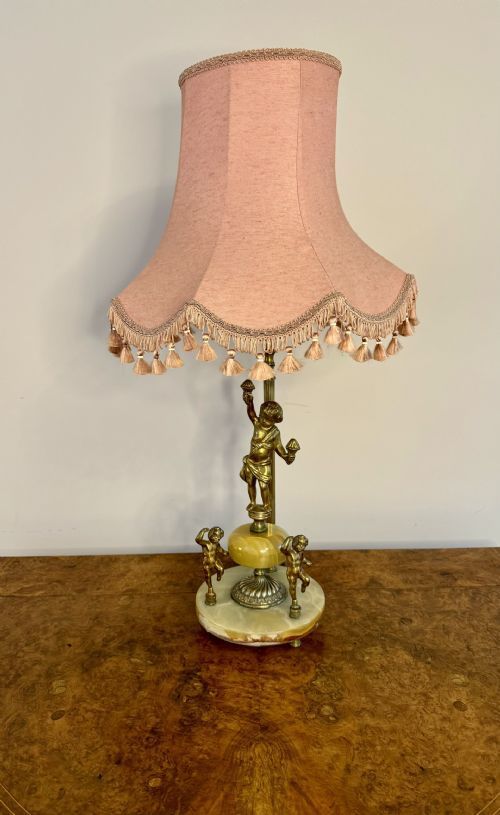
A brass cherub figure appears across various domestic objects from the nineteenth century up to nineteen twenty, including table lamps, mantel clocks, and candelabra. These pieces often incorporate styles such as French Rococo Revival, Louis XVI Revival, and Neoclassical design, reflecting historical European tastes.
The figures frequently serve a functional role rather than standing purely as independent sculptures, integrated into lamp bases or clock housings alongside materials like marble, bronze, and ormolu. Table lamps and mantel clocks dominate the available forms, representing the common ways makers utilised these winged motifs in period interiors.
How they were made
Makers utilised casting techniques in brass, bronze, and gilt bronze to shape the figures and their surrounding mounts, often combining metals with natural stone bases like marble or onyx. The construction frequently involves multiple cast components joined together to form functional items such as multi-arm candelabra or electrified table lamps.
Surface finishes range from polished brass to gilt bronze and ormolu, while some pieces integrate enamel work or fabric elements within their overall design. These varied treatments allowed workshops to achieve distinct decorative effects suited to Victorian and Edwardian salons.
Brass Cherub Figure Retail Price Guide 2026
Typical asking prices for brass cherub figure among the pieces listed under this phrase on Sellingantiques today, from the lower quarter to the upper quarter. They describe what is for sale here now, not the wider market.
Several cherubs double as timekeepers or lamp bearers, proving that even celestial infants had to earn their keep in the Victorian parlour.
What varies in quality
The crispness of the metal casting defines the upper tier of these pieces, where facial expressions and wing feather details remain sharp and well-defined. Lesser examples exhibit softer contours and shallower chased work resulting from worn moulds or hurried finishing.
The integration of secondary materials also separates standard production from superior output, seen in the selection of substantial marble or onyx plinths and the refinement of subsidiary mounts. Signed clock movements and works by known makers add a layer of distinction to the overall object.
F Marti·P H Mourey
The Brass Cherub Figure Glossary
- Ormolu
- Gilded bronze applied to decorative hardware and furniture mounts. The technique involves creating a mercury-gilt finish on a bronze base.
- Candelabra
- A branched candlestick holder designed for multiple candles. These objects often incorporate figurative stems in bronze or brass.
- Putto
- A plump, winged child figure used in classical and revival art. The motif appears frequently in Renaissance and nineteenth-century decorative works.
Brass Cherub Figure: Frequently Asked Questions
What periods do these pieces date from?
The pieces span from the mid-nineteenth century through to the Edwardian era and nineteen twenty. They include Victorian interpretations of earlier French styles.
Manufacturing dates often rely on stylistic indicators or maker marks stamped onto the metal or clock movements.
How were these figures used originally?
Many figures formed part of functional household objects like mantel clocks, candelabra, and lighting fixtures. They provided decorative embellishment for formal reception rooms.
Some standalone statuettes were later adapted into table lamps as domestic lighting technology changed.
What materials are typically found alongside the brass?
Common companion materials include gilt bronze, marble, onyx, and ormolu. Some examples also incorporate enamel or fabric components.
These mixed media constructions were characteristic of nineteenth-century decorative arts.
How do French revival styles influence the design?
French Rococo and Louis XVI revivals bring ornamental scrollwork and classical symmetry to the metalwork. These styles dictate the postures of the figures and the shape of the bases.
Such designs mirror the historicism popular in European interiors during the Victorian period.