



Brass Castored Writing Desk
A brass castored writing desk is a functional workspace mounted on smooth-rolling metal wheels, offering period charm and practical mobility for the study.
Brass Castored Writing Desk
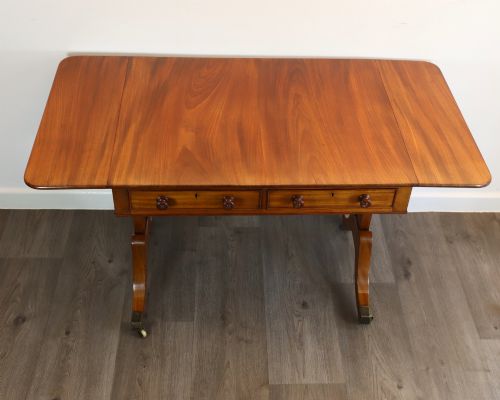
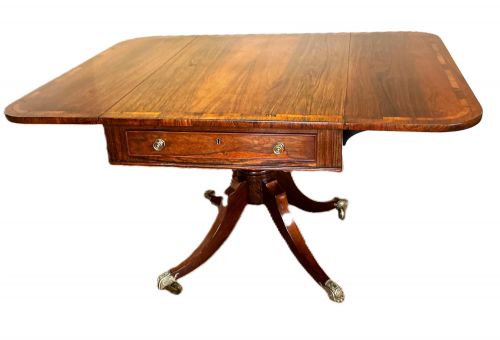
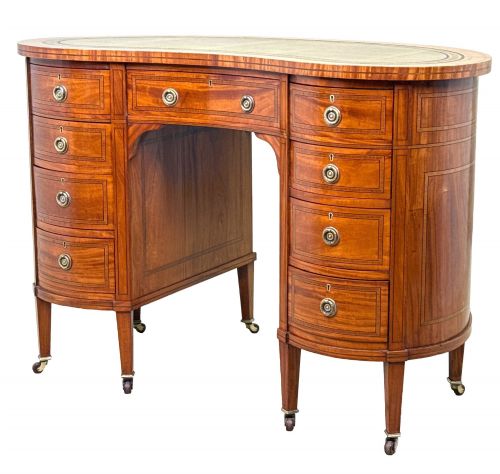
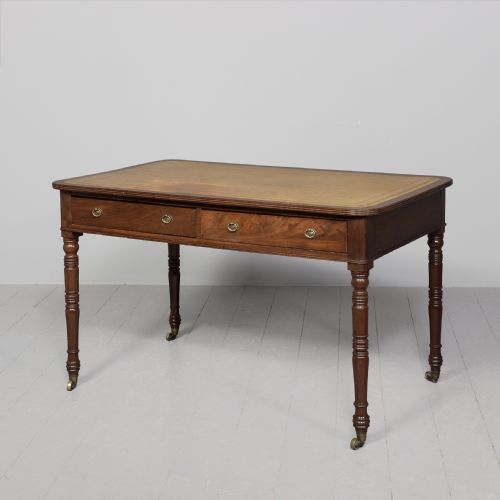
A brass castored writing desk encompasses a variety of writing surfaces and tables designed for study or correspondence, frequently featuring the mobility of small metal wheels. When searching this phrase, a buyer encounters forms ranging from compact kidney-shaped desks to expansive library tables and drop-flap sofa tables.
The pieces appearing on this page span several distinct periods including the Georgian, Regency, Victorian, and Edwardian eras. Mahogany, rosewood, and walnut form the primary timber bodies, often enhanced by boxwood inlay and paired with leather writing surfaces.
Makers and workshops from these historical periods utilised native and exotic timbers to construct freestanding furniture intended to sit centrally within a room. The inclusion of castors allowed these heavy timber desks to be repositioned easily across carpets and parquet floors.
How they were made
Cabinet makers constructed these desks using solid and veneered timbers such as mahogany, rosewood, and satinwood over sturdy oak or pine carcases. Fine boxwood stringing and contrasting inlay frequently decorate the drawer fronts and borders.
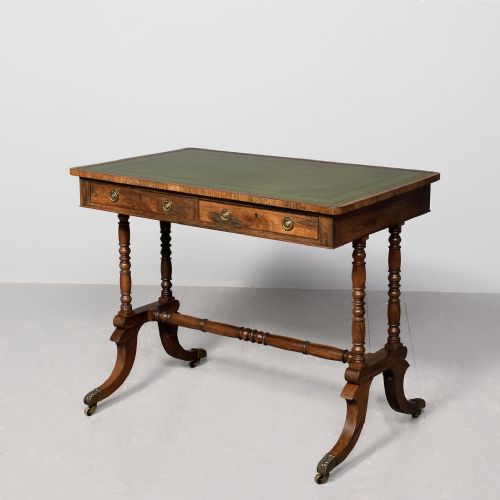
Writing surfaces were typically inset with tooled leather panels to provide a durable and smooth plane for quill or pen. Metal brass castors were screwed securely to the base of each leg to facilitate movement.
Brass Castored Writing Desk Retail Price Guide 2026
Typical asking prices for brass castored writing desk among the pieces listed under this phrase on Sellingantiques today, from the lower quarter to the upper quarter. They describe what is for sale here now, not the wider market.
What varies in quality
The selection of timber grain heavily dictates the distinction between standard examples and exceptional pieces, with figured flame mahogany and richly grained rosewood commanding greater visual depth. Finely executed boxwood inlay and precise dovetail joinery in the drawers reflect higher standards of period craftsmanship.
Proportion and the integration of original hardware, including brass castors and pulls, separate utilitarian items from bespoke commissions. Pieces bearing maker stamps or originating from documented cabinet makers demonstrate superior workshop provenance.
W Williamson & Sons of Guildford
The Brass Castored Writing Desk Glossary
- Castor
- A small wheel mounted on a swivel assembly attached to the bottom of a furniture leg to allow easy rolling. These fittings are commonly cast in brass on period tables.
- Drum table
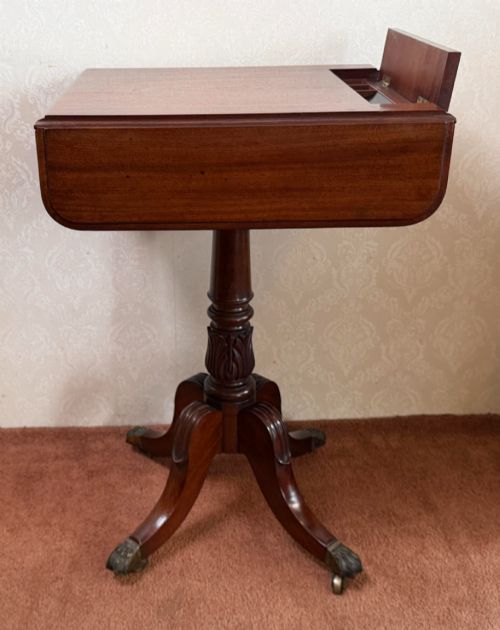
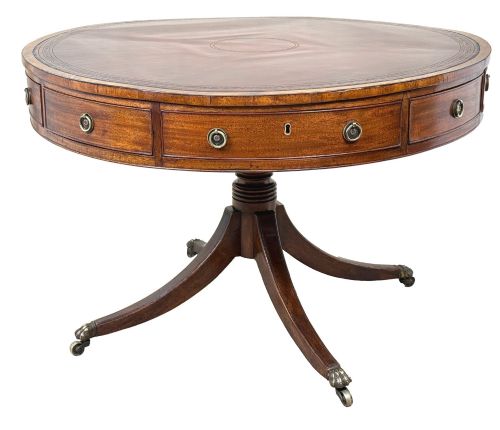
- A circular library or writing table with a deep top containing multiple drawers, often rotating on a central pillar and four sarked legs. They date prominently from the Regency and Georgian periods.
- Sofa table
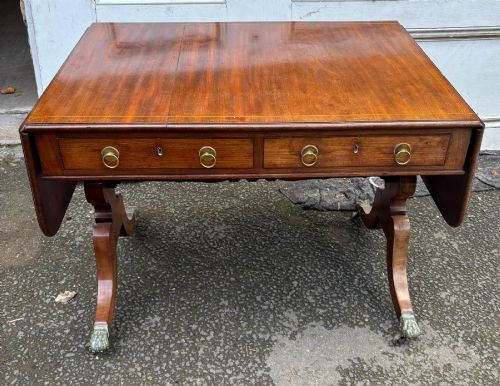
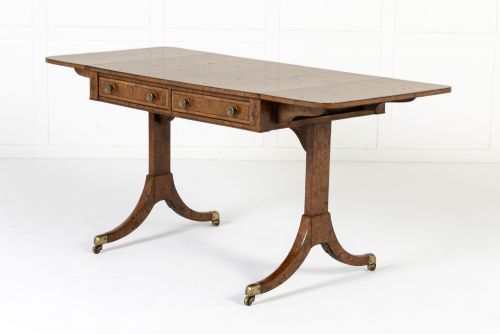
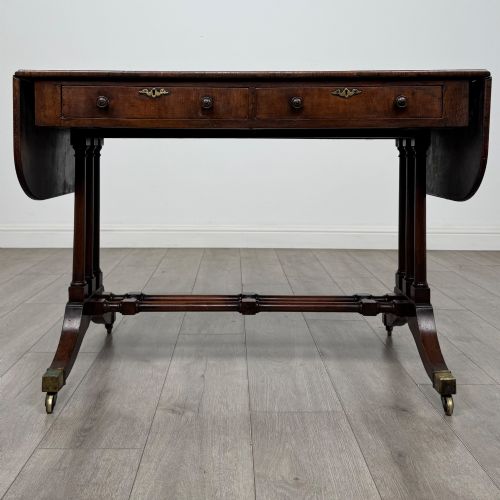
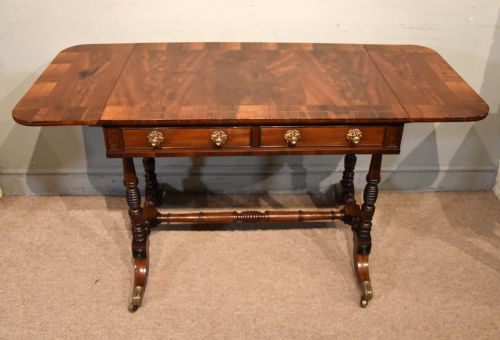
- A rectangular occasional or writing table designed to stand in front of a sofa, typically featuring drop flaps on either end and two small drawers. They emerged in the late eighteenth century and remained popular through the Regency era.
- Kidney shaped desk
- A writing desk featuring a curved, kidney-like indentation at the front for the user, popular during the Victorian and Edwardian periods. They often incorporate leather inserts and multiple peripheral drawers.
- Boxwood inlay
- A decorative technique involving the insertion of thin strips of pale boxwood into contrasting darker timbers like mahogany or walnut to create geometric or floral borders.
Brass Castored Writing Desk: Frequently Asked Questions
How do I identify a Regency writing desk?
Regency desks typically display classical proportions, dark flame mahogany or rosewood timbers, and clean architectural lines influenced by ancient Greek and Roman design.
They frequently feature brass inlay, reeded legs, and brass castors that allow the freestanding pieces to be moved about the library or study.
Were brass castors original to these desks?
Most period desks retain their original brass castors, which were engineered to lift the heavy timber legs slightly off the floor for effortless relocation.
Makers utilised brass for its durability and warm metallic tone, matching key escutcheons and drawer pulls across the piece.
What is the difference between a library table and a writing desk?
Library tables are generally larger, freestanding pieces designed to be viewed from all sides, often incorporating drawers around the entire perimeter of the top.
Writing desks focus specifically on a single seated workspace, sometimes featuring a leather-toothed panel and a more compact footprint suitable for smaller rooms.
How should I care for a mahogany writing table?
Protect the timber and leather surfaces from direct sunlight and excessive heat fluctuations to prevent the wood from splitting and the leather from drying out.
Apply traditional beeswax periodically to nourish the mahogany grain and maintain the natural lustre of the antique finish.