
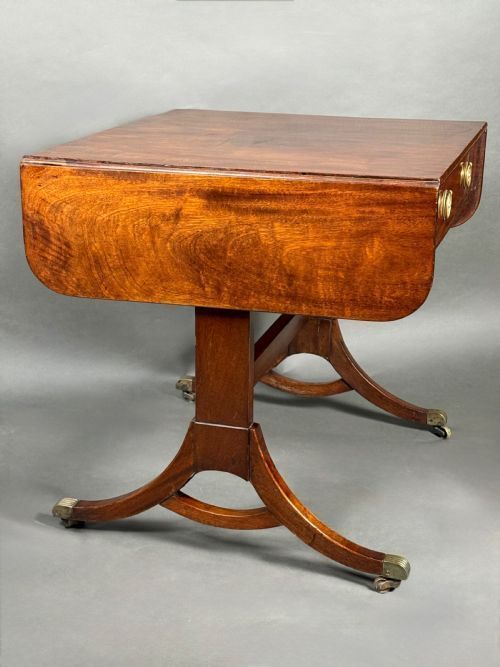
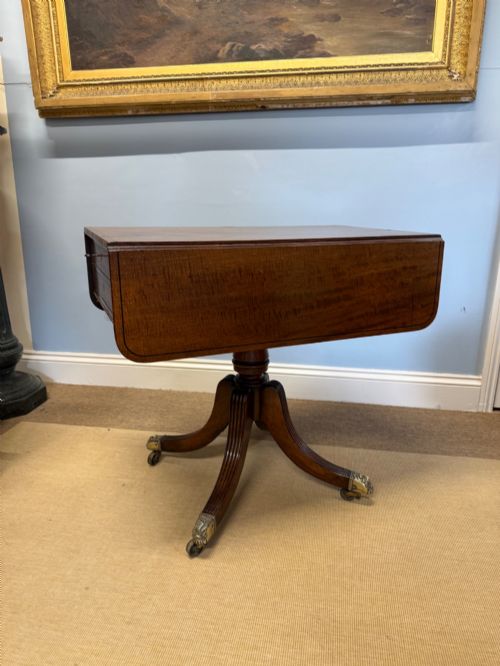
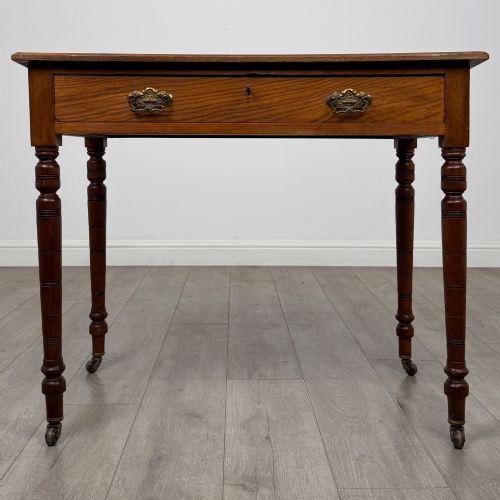
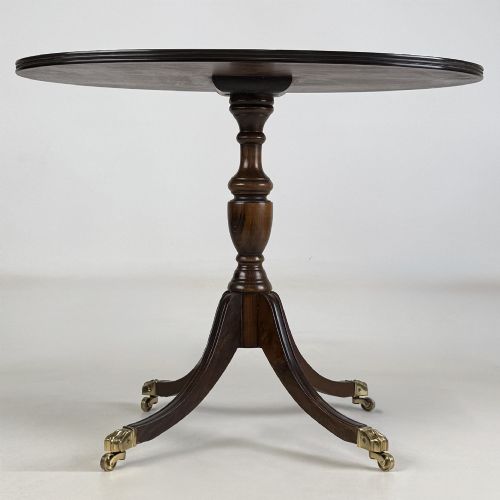
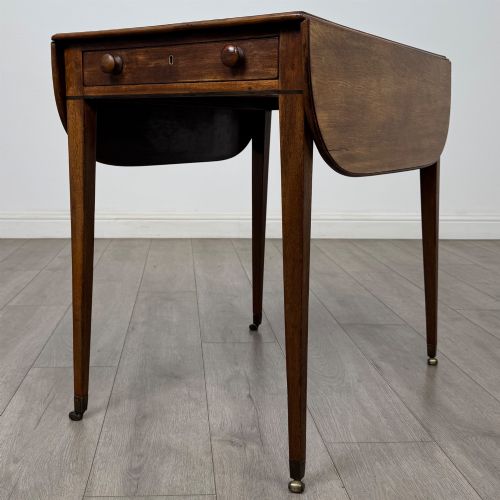

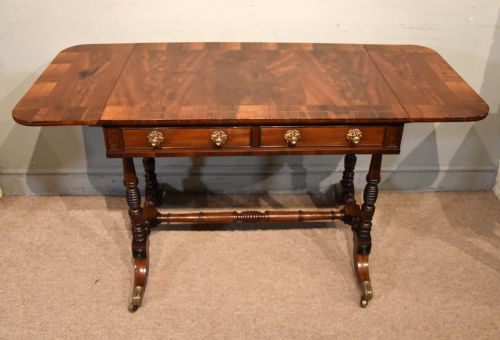
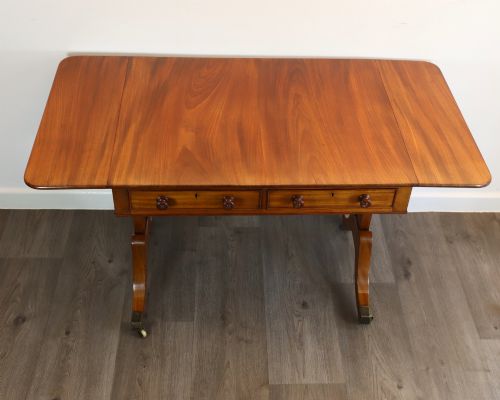
Brass Castored Side Table
A brass castored side table brings flexible mobility and rich timber figure to a room, moving easily on metal wheels.
Brass Castored Side Table
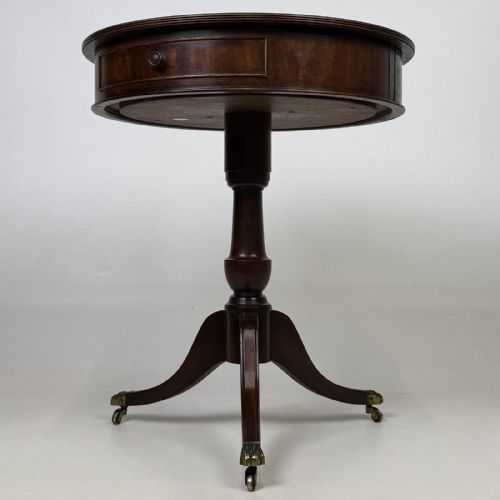
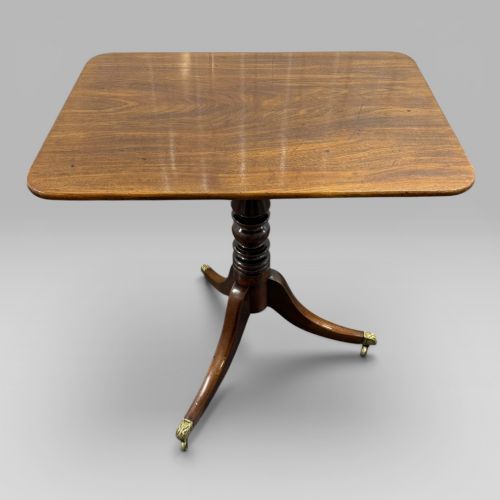
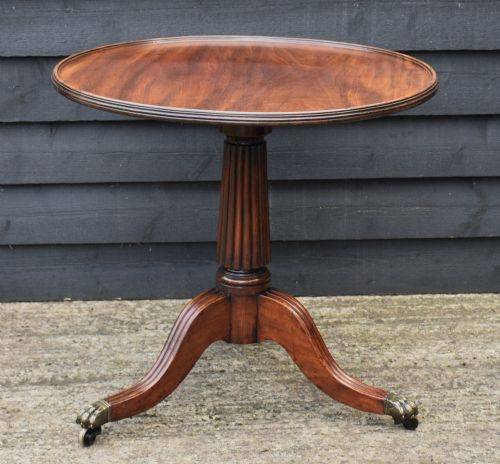
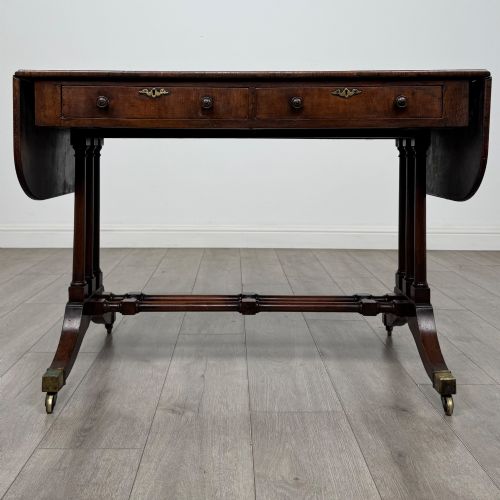
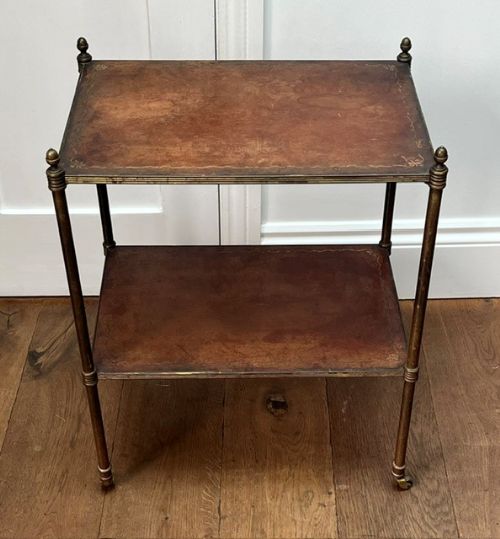
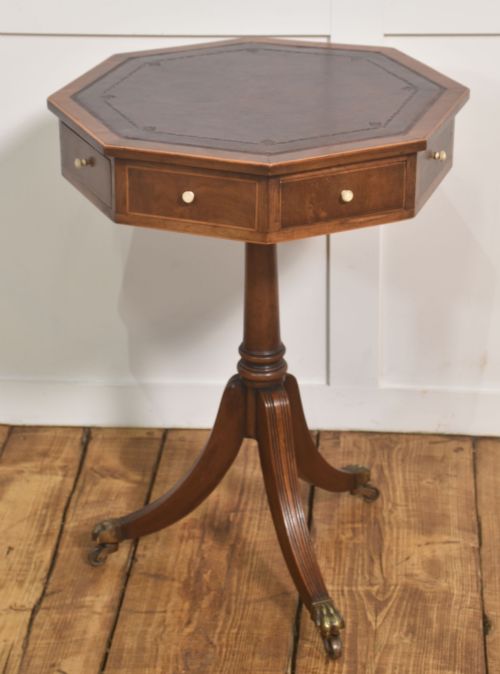
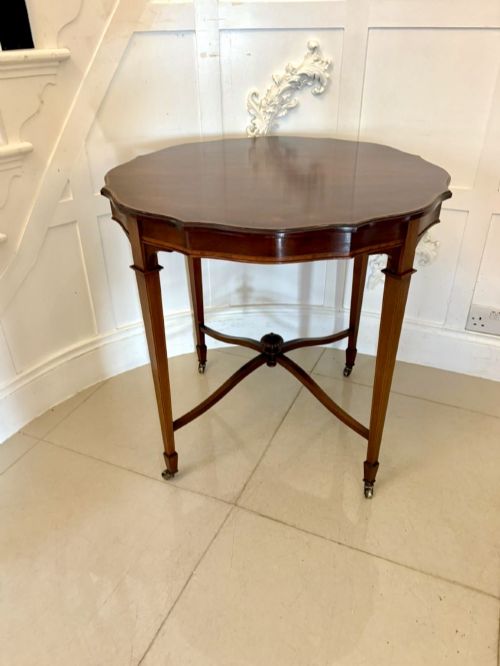
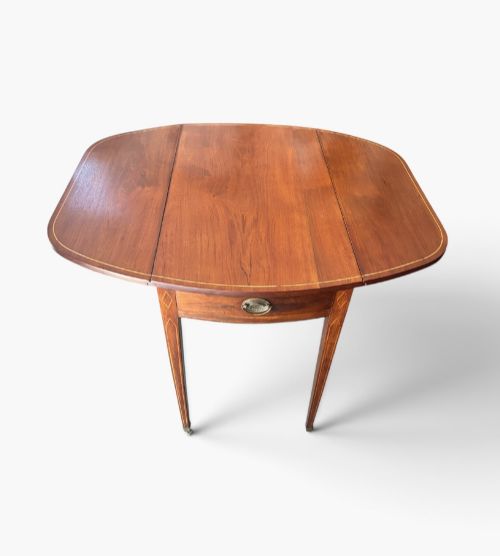
A brass castored side table is a movable piece for domestic use, designed to shift position easily on small metal wheels attached to the feet. When you search for a brass castored side table, you encounter a variety of forms spanning the Georgian, Regency, Victorian, and Edwardian periods.
The selection here runs from Pembroke tables and sofa tables to occasional tables, writing desks, and tea tables. Mahogany is the most frequent timber you will find, alongside rosewood, satinwood, oak, and yew wood.
Regency and George III examples dominate the selection, often featuring drop leaves, tilt tops, or multiple tiers. These tables served practical functions in sitting rooms and libraries, providing a sturdy surface that could be repositioned as needed.
How They Were Made
Cabinet makers constructed these pieces primarily from solid and veneered hardwoods, using flame mahogany, rosewood, and oak over sturdy pine or secondary carcases. Timbers were selected for distinct grain patterns, including figured mahogany, burr oak, and birdseye maple.
Inlays of boxwood and satinwood provide linear contrast on borders and friezes, whilst leather inserts appear on writing and library tables. Solid brass castors and sabots are fitted to the base of the legs to allow smooth rolling across carpets and timber floors.
Periods represented span from the eighteenth-century George III era through the Regency, William IV, Victorian, and Edwardian periods up to the nineteen-thirties.
What Varies in Quality
Quality rests in the selection of the timber veneers, the crispness of the boxwood or satinwood inlay, and the retention of original brass castors. Superior pieces exhibit fine figuring in the mahogany or rosewood, balanced proportions, and careful jointing in the drawers and drop leaves.
Secondary elements such as tooled leather inserts, solid brass sabots, and secondary drawer timbers indicate the care taken during manufacture. Tables that retain their original castors and smooth operating mechanisms hold greater integrity than those with replaced hardware.
Andrew Thomson And Sons·W Williamson And Sons
The Brass Castored Side Table Glossary
- Castor
- A small wheel mounted on a swivel at the foot of a leg, allowing the table to be moved across the floor. They are commonly cast from brass on these tables.
- Pembroke table
- A small rectangular table with two hinged drop leaves on opposing sides. It was introduced in the eighteenth century for breakfast or light work.
- Sofa table
- A rectangular table designed to stand in front of a sofa, typically featuring two small drop leaves and twin pillar supports. They frequently incorporate drawers on the frieze.
- Étagère
- A set of open shelves for displaying small objects or books, often fitted with castors for mobility. They appear in two-tier and multi-tier formats.
- Sabot
- A metal sleeve or mount fitted over the foot of a table leg for protection and decoration. They are usually made of brass to match the castors.
- Tilt top
- A tabletop hinged to the pedestal, allowing it to be folded vertically when not in use to save space. This mechanism is common on occasional and occasional tea tables.
Brass Castored Side Table: Frequently Asked Questions
How do I use a Pembroke table?
A Pembroke table functions well as a small desk, breakfast table, or side table against a wall. Raising the drop leaves expands the surface area when you need extra space.
Lowering the flaps allows the table to tuck neatly into a corner or beside a sofa without blocking a room's walkway.
Were these tables meant to be moved?
The inclusion of brass castors indicates that these tables were designed for frequent repositioning around a library or drawing room. Servants and residents could shift them closer to a hearth or light source as the day progressed.
Their lightweight construction relative to larger dining furniture made mobility a key aspect of their daily utility.
How do I tell a Regency table from a Victorian one?
Regency tables, dating from the early nineteenth century, often display classical restraint, sabre legs, and fine brass inlay or castors. Timbers like rosewood and flame mahogany were favoured for their rich grain.
Victorian tables generally exhibit heavier proportions, bolder turning, and occasionally lighter golden oak or walnut, reflecting changing tastes later in the century.
What is the difference between a side table and an occasional table?
A side table typically stands against a wall or beside furniture with a fixed purpose, such as holding a lamp or writing materials. They often feature drawers or a more substantial carcase.
An occasional table is generally lighter and designed to be moved about a room for temporary use as the occasion demands.