


Brass Castored Chair
A brass castored chair brings mobility and heavy timber frames together, grounding any room with period weight and ease of movement.
Brass Castored Chair
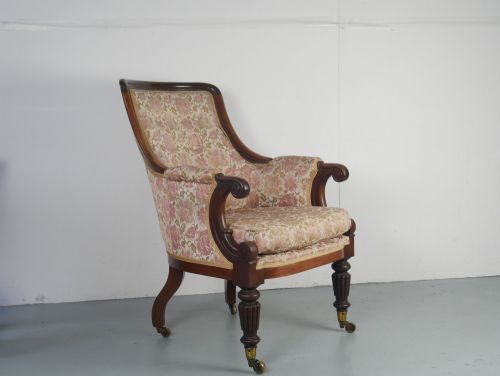
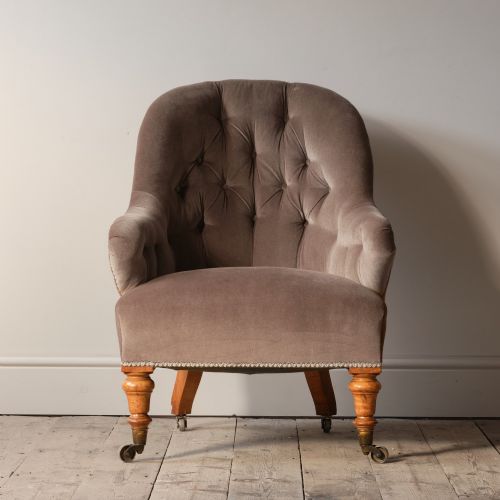
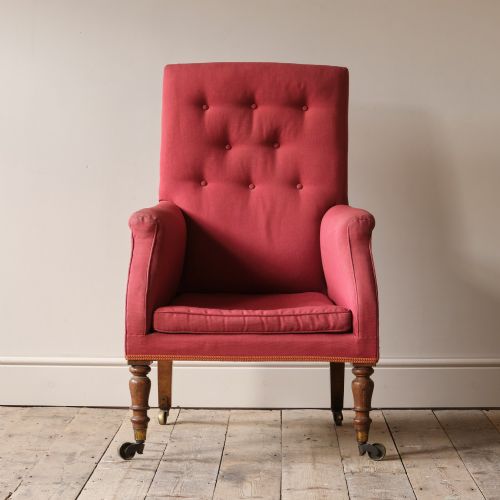
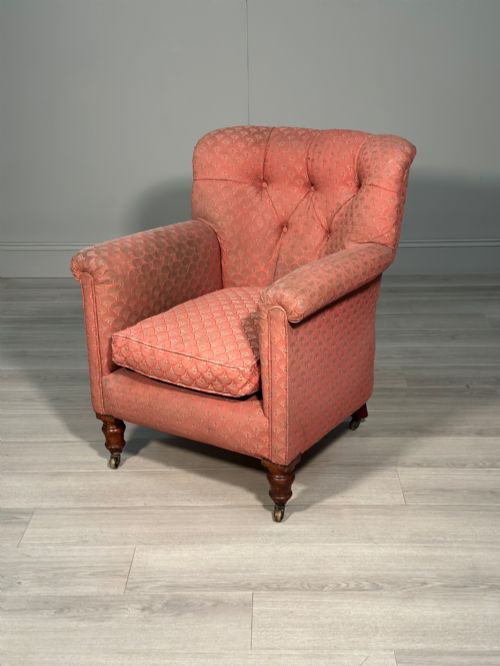
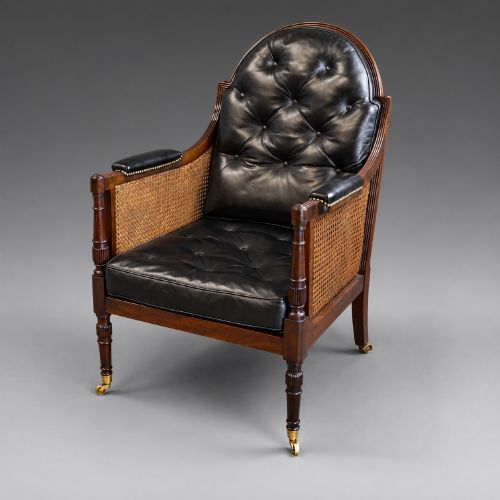
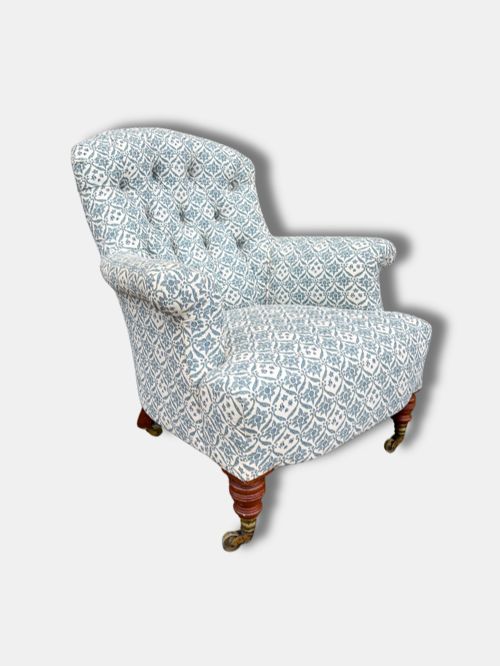
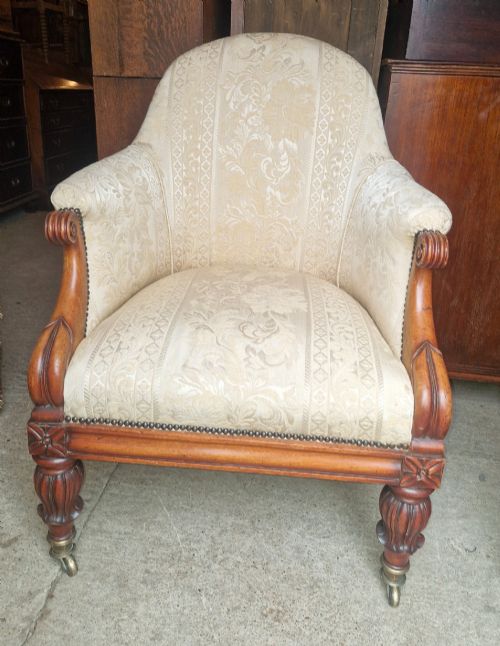
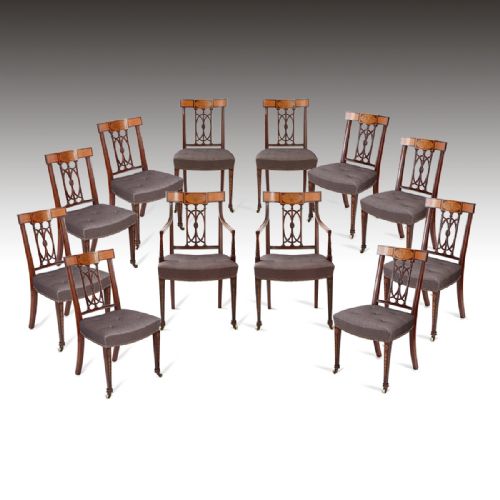
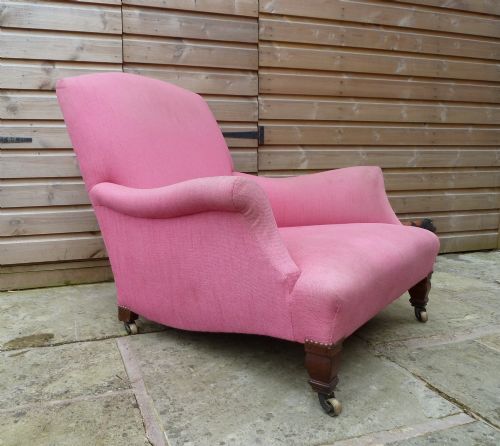
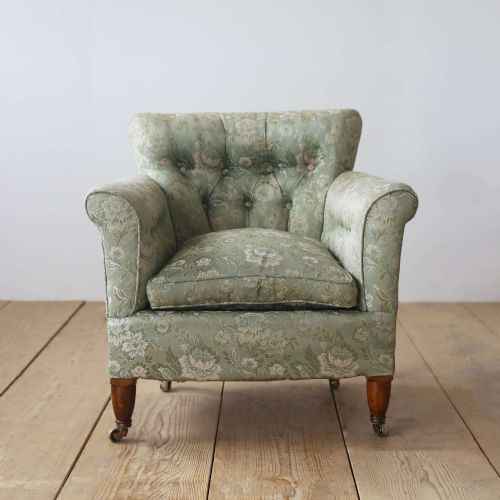
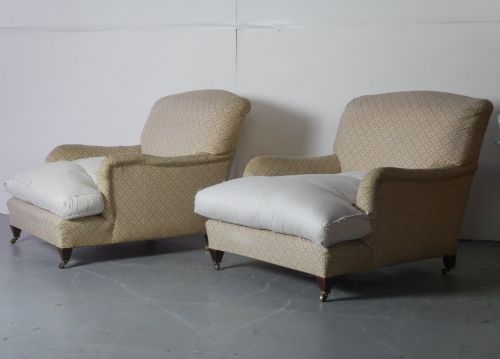
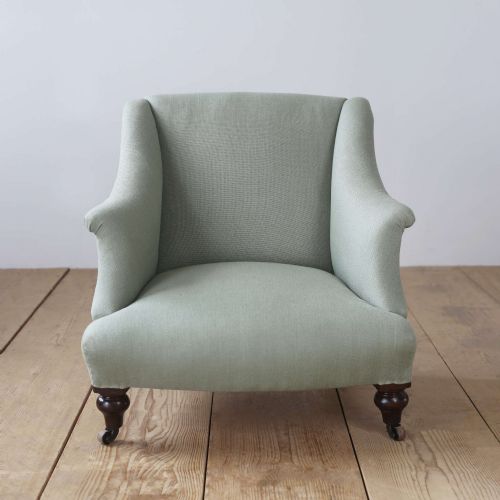
Every brass castored chair listed here pairs a sturdy hardwood frame with small metal wheels beneath the legs, designed to protect heavy carpets and ease movement across the floor. You will encounter various seating forms under this heading, ranging from substantial library armchairs and deep country house seats to slender dining chairs and chaise longues.
The selections span multiple historical periods, with Victorian and Regency examples appearing alongside Edwardian, George III, and George IV pieces. Mahogany forms the backbone of these frames, often paired with upholstered cushions or exposed timber rails.
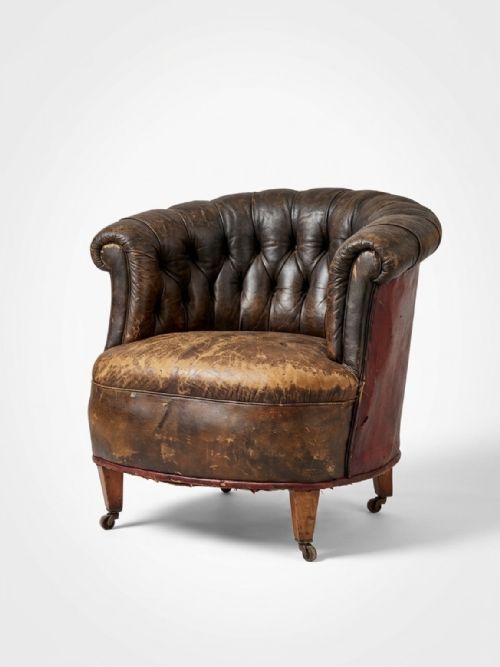
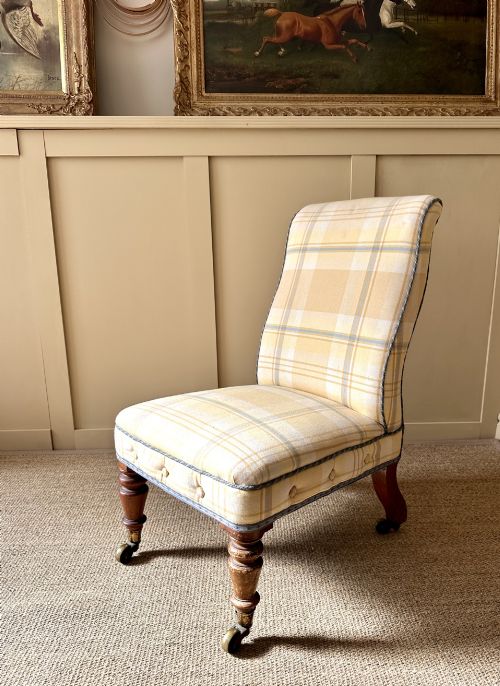
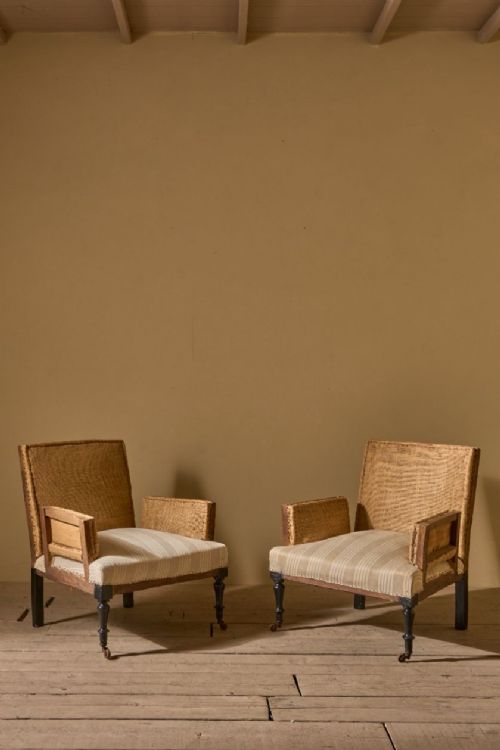
Armchairs dominate the selection, offering deep seats covered in fabric, calico, hessian, or leather. Smaller side chairs and dining chairs also feature these rolling feet, showing how makers integrated mobility into everyday seating across the nineteenth and early twentieth centuries.
Materials and construction methods
Makers built these frames using dense timbers like mahogany and assorted hardwoods, ensuring the structure could withstand the daily strain placed upon rolling feet. Turned or reeded legs received metal sockets to secure the castors, which allowed heavy library and lounge seating to shift smoothly.
Upholstery methods involved stuffing interiors with traditional materials before finishing the exterior in leather, button-backed fabric, calico, or hessian. Brass castors were pinned or screwed directly into the base of each leg, combining utilitarian function with polished metal detail.
Brass Castored Chair Retail Price Guide 2026
Typical asking prices for brass castored chair among the pieces listed under this phrase on Sellingantiques today, from the lower quarter to the upper quarter. They describe what is for sale here now, not the wider market.
Some diminutive armchairs were built smaller for nineteenth-century reading rooms, keeping readers neatly tucked away from draughts.
What separates the finest examples
Quality rests in the proportion of the timber frame and the crispness of the turning on the legs above the castors. A well-proportioned library armchair or bergere shows careful shaping in the arms and back, where timber and upholstery meet in balanced harmony.
The integration of the brass castor itself matters greatly, as original mounts sit flush and firm within the timber without splitting the grain. Maker attribution, visible in stamped frames or recognised workshop designs, elevates certain pieces well above standard domestic seating.
Howard & Sons·Charles Hindley & Sons·Whytock & Reid·George Jack For Morris & Co·Gillows
The Brass Castored Chair Glossary
- Castor
- A small wheel mounted on a swivel at the base of a chair leg. It allows heavy furniture to move across floor coverings without dragging.
- Bergere
- An enclosed upholstered armchair with wooden framing and cane or upholstered sides. This form often appears in Regency and nineteenth-century collections.
- Library chair
- A heavy, substantial armchair designed for reading rooms and studies. These typically feature deep cushioning and supportive armrests.
- Reeded
- A decorative moulding consisting of parallel convex strips resembling bundled reeds. Cabinet makers carved these profiles onto the legs of tables and chairs.
Brass Castored Chair: Frequently Asked Questions
How do I identify a Regency period piece?
Regency seating often displays classical restraint through clean mahogany lines, reeded legs, and sabre or turned supports fitted with brass castors. These chairs reflect architectural influences from the early nineteenth century.
Examine the joinery and timber grain underneath to confirm the period construction methods used before the Victorian era.
Were brass castors added later to chairs?
Makers frequently fitted castors during the initial construction of heavy library and dining chairs to aid movement. Original brass mounts fit snugly into shaped timber recesses.
Inspect the screws and the timber around the socket to determine whether the fittings belong to the original build date.
What is a country house armchair?
Country house armchairs are deep, generously proportioned seats built for comfort in large domestic interiors. They often feature sprung upholstery covered in leather, calico, or heavy fabric.
These chairs prioritise relaxation and scale, frequently standing on low wooden legs with brass castors.
How should I care for leather upholstery?
Leather upholstery requires regular dusting and occasional treatment with appropriate conditioning balms to prevent drying. Keep these chairs away from direct sunlight and heat sources.
Maintaining the leather preserves the rich patina developed over decades of use.