

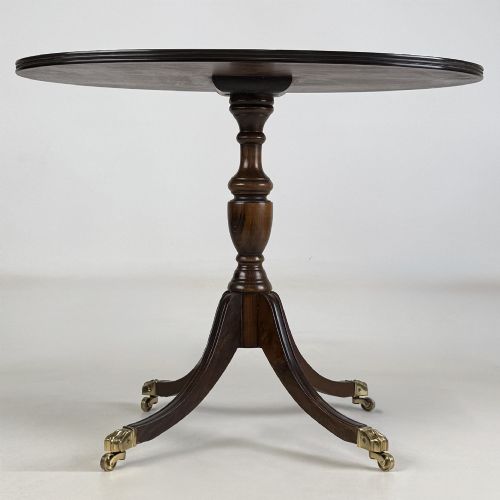
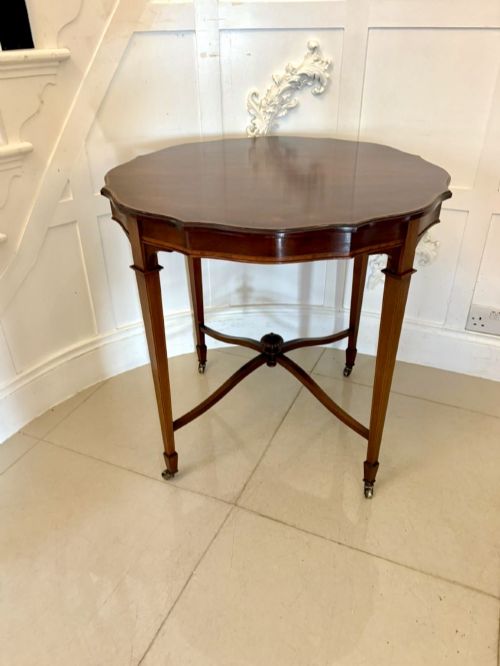
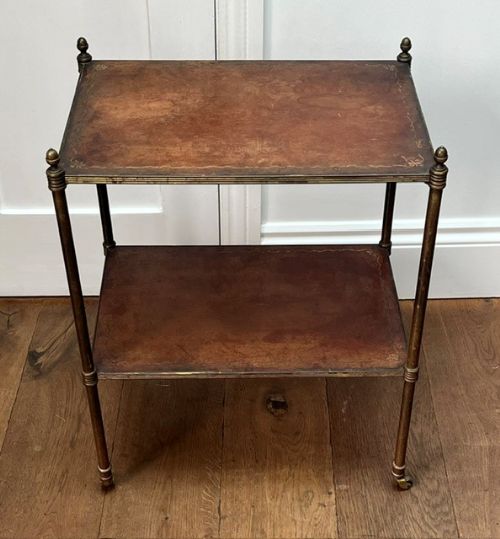
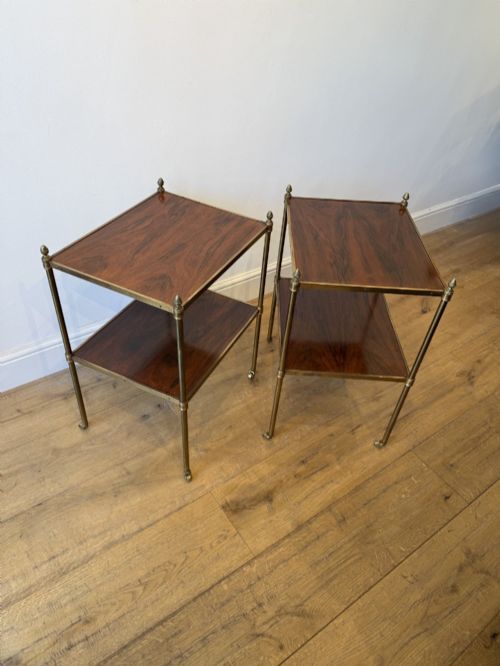


Brass Castor Lamp Table
A brass castor lamp table brings a warm metal gleam and mobility to a corner, combining timber frames with smooth-rolling castors.
Brass Castor Lamp Table
A brass castor lamp table serves as a sturdy surface for lighting and small objects, frequently appearing across Regency, Victorian, and Edwardian periods. Buyers encounter compact side tables, two-tier etageres, drop-leaf occasional pieces, and Pembroke forms during their search.
The materials span mahogany, rosewood, burr oak veneer, and satinwood inlay, often featuring tooled leather inserts on the tops. These pieces originate from the eighteenth, nineteenth, and early twentieth centuries, reflecting classic neoclassical and revival styles.
Most examples function as side or occasional tables designed to sit beside seating or in smaller rooms. The inclusion of castors allows easy repositioning across a floor while protecting the timber legs from scuffs.
Materials and construction
Cabinet makers utilised dense hardwoods such as mahogany and rosewood for the structural frames, applying finer veneers like burr oak and satinwood for visual contrast. Inlaid stringing and brass mounts provide decorative detail without compromising the clean lines.
The distinctive metal fittings involve cast brass castors fixed to the base of each leg, allowing the furniture to glide smoothly across carpets and wooden floors. Tooled leather panels are frequently inset into the table surfaces to provide a durable writing or display area.
Brass Castor Lamp Table Retail Price Guide 2026
Typical asking prices for brass castor lamp table among the pieces listed under this phrase on Sellingantiques today, from the lower quarter to the upper quarter. They describe what is for sale here now, not the wider market.
Listings span the eighteenth, nineteenth, and early twentieth centuries, featuring mahogany, rosewood, and satinwood alongside brass and leather elements.
Judging quality and finish
Superior execution shows in the crispness of the satinwood inlay, the tight grain of the mahogany or rosewood timbers, and the substantial weight of the cast brass fittings. The precision of the joinery around drop leaves and drawers distinguishes finer cabinet work from simpler production.
The integrity of the surface polish and the original patination on both the timber and the brass elements indicate how well a piece has survived over the centuries. Finer examples retain matching castors and crisp leather tooling that has aged evenly.
HOLLAND & SONS·Mallett of London
The Brass Castor Lamp Table Glossary
- Castor
- A small swiveling wheel attached to the base of a table leg to allow smooth movement. These are frequently made of cast brass on nineteenth-century pieces.
- Pembroke table
- A small rectangular drop-leaf table with hinged flaps on either side. It often includes a single drawer and stands on legs fitted with castors.
- Etagere
- A set of open shelves or tiers designed for displaying small objects or lamps. These multi-level pieces often incorporate brass supports and castors.
- Stringing
- A narrow strip of contrasting wood or light-coloured inlay set into the surface of furniture. It is commonly found on Edwardian and Regency satinwood-inlaid tables.
- Patina
- The deep gloss and surface change developed on timber and metal through age and handling. A rich patina indicates long-term care and use.
Brass Castor Lamp Table: Frequently Asked Questions
What is a brass castor lamp table?
A brass castor lamp table is a compact surface designed to hold lighting, featuring small metal wheels on the feet for easy movement.
These pieces typically date from the eighteenth to the early twentieth centuries and appear in woods like mahogany, rosewood, and satinwood.
How were these tables used originally?
They served as movable stands for oil lamps, candles, or reading materials beside seating areas in reception rooms.
The drop-leaf and multi-tiered versions provided extra surface space when needed without taking up permanent room.
How do I care for the leather top?
Tooled leather surfaces require light dusting and occasional treatment with suitable leather balms to prevent drying and cracking.
Keep them away from direct sunlight and excessive moisture to preserve the gold tooling and the surrounding timber.
How can I tell a Regency table from an Edwardian copy?
Regency tables from the early nineteenth century exhibit denser timbers, hand-cut joinery, and specific patination built up over decades of use.
Edwardian revival pieces from around nineteen hundred often show lighter construction methods, brighter brasswork, and distinct inlay styles.