


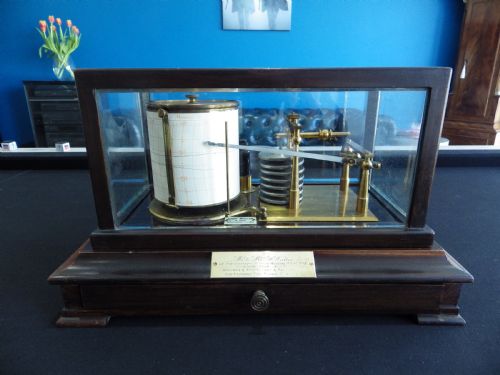


Brass Cased Barometer
A brass cased barometer measures atmospheric pressure within a metallic housing, offering practical utility and period mechanical character to an interior.
Brass Cased Barometer
When you search for a brass cased barometer, you are examining a category of scientific apparatus that records atmospheric conditions through mechanical movement. These instruments span periods from the nineteenth century through the mid twentieth century, encompassing Victorian and Edwardian examples.
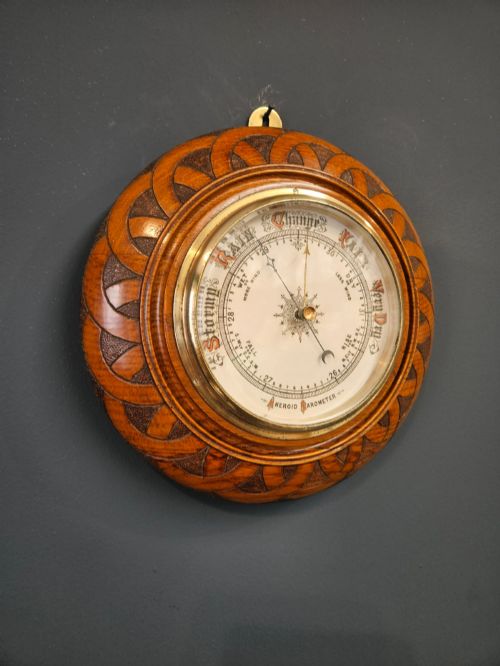
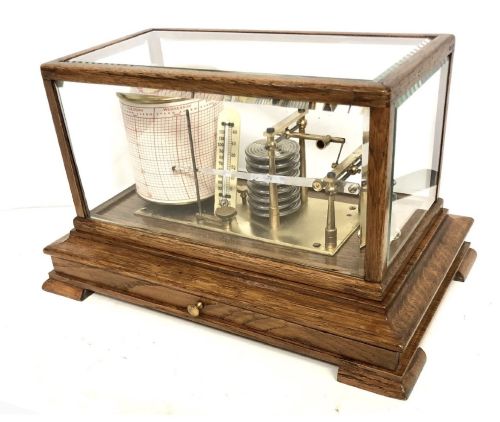
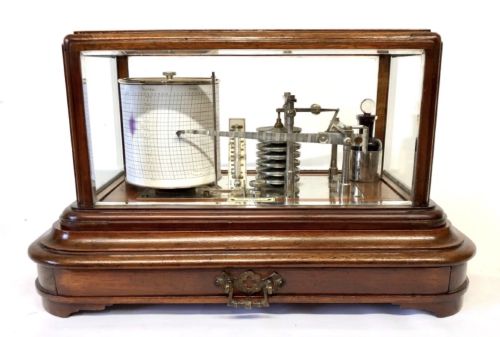
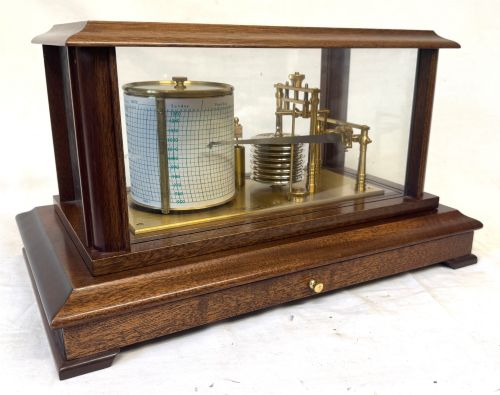
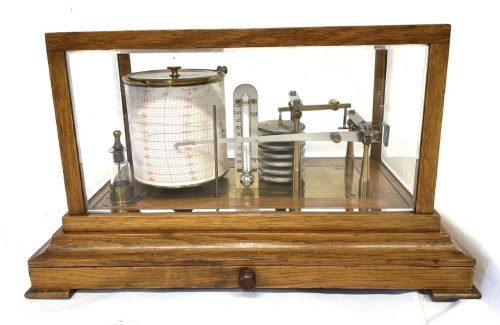
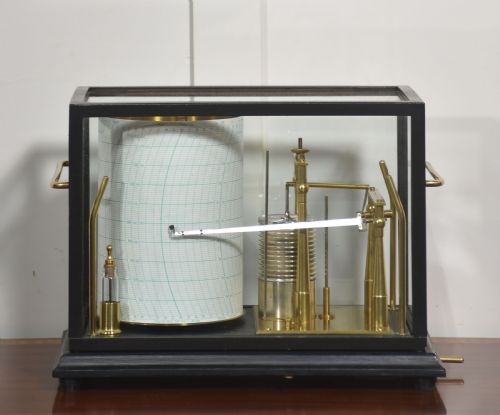
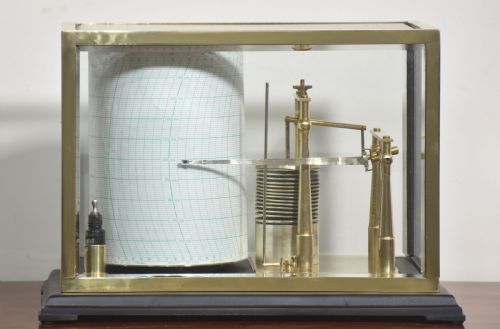
The objects take several forms, including stick barometers, wheel barometers, and recording barographs housed in glass and wooden chassis with metallic fittings. Many combine aneroid movements with thermometers and chart drawers, reflecting domestic and scientific utility from past eras.
Materials and Construction
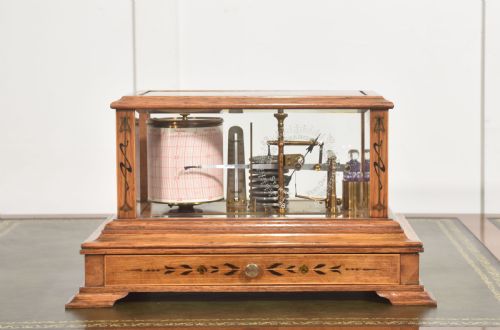
Enclosures utilise timber frames in mahogany, oak, walnut, and turned finishes, paired with bevelled glass panels to protect the internal mechanisms. Cast brass provides the structural housing and bezels, while silvered metal forms the engraved dials.
Paper charts record pressure changes in barograph models, driven by clockwork movements of steel and brass. Makers incorporate specialised movements and thermometers into fitted wooden cases with lower storage drawers.
Weatherproof clothing manufacturers retailed display barometers, ensuring shoppers checked local air pressure before buying a new coat.
Markers of Distinction
The standard of execution rests on the precision of the mechanical movement and the crispness of the engraved silvered dial. Maker reputation influences worth, with established scientific houses demonstrating superior refinement in gear-cutting and casing joinery.
Intricate woodwork, such as Art Nouveau inlay or geometric turning on oak and mahogany housings, separates standard utilitarian pieces from more ambitious commissions. Original paper paperwork and intact chart drawers contribute to the completeness of the surviving object.
Short And Mason·Negretti And Zambra·Alexander Wright·Casella London·Jules Richard
The Brass Cased Barometer Glossary
- Barograph
- A self-recording aneroid barometer that plots atmospheric pressure onto a rotating paper chart over a weekly period. These instruments sit within glass and timber cases.
- Aneroid barometer
- A device for measuring pressure without liquid, using a flexible metal box that expands or contracts with atmospheric changes. The movement translates via levers to a dial pointer.
- Stick barometer
- A tall, vertical barometer utilising a column of mercury balanced against atmospheric pressure. They often feature exposed scales and protective wooden backplates.
- Bevelled glass
- Glass panes with angled, polished edges fitted into the observation windows of instrument cases. This technique adds depth and catches light across the enclosure.
Brass Cased Barometer: Frequently Asked Questions
How does a barograph work?
A barograph operates through stacked vacuum metal capsules that expand and contract as air pressure shifts. Levers transfer this motion to an inked arm that traces a line onto a rotating drum holding a paper chart.
Clockwork mechanisms inside the drum rotate the cylinder once every seven days. This continuous recording distinguishes the barograph from standard dial barometers.
Where were these instruments placed?
These instruments occupied domestic halls, libraries, and scientific offices where residents could monitor impending weather changes. Their polished timber and brass housings suited formal interior decor.
Larger examples sometimes sat in commercial shops or public spaces for local observation. Many included chart drawers to store spare weekly recording papers.
How do I date an instrument?
Dating relies on stylistic clues in the timber cabinetry, such as Edwardian inlay or Victorian geometric turning. Maker signatures and patent dates engraved on the silvered metal dials also establish manufacture periods.
Paperwork left inside chart drawers occasionally records original purchase dates or calibration stamps. Case construction methods, including the use of five-glass panel configurations, help narrow the timeframe.
Can these instruments still measure weather?
Many surviving examples retain functioning mechanical movements capable of tracking local atmospheric pressure shifts. Calibration against current local readings allows them to indicate weather trends accurately.
Clockwork chart drums require careful winding and occasional maintenance by specialists to function correctly. The aneroid capsules inside also need proper adjustment to match regional altitude.