



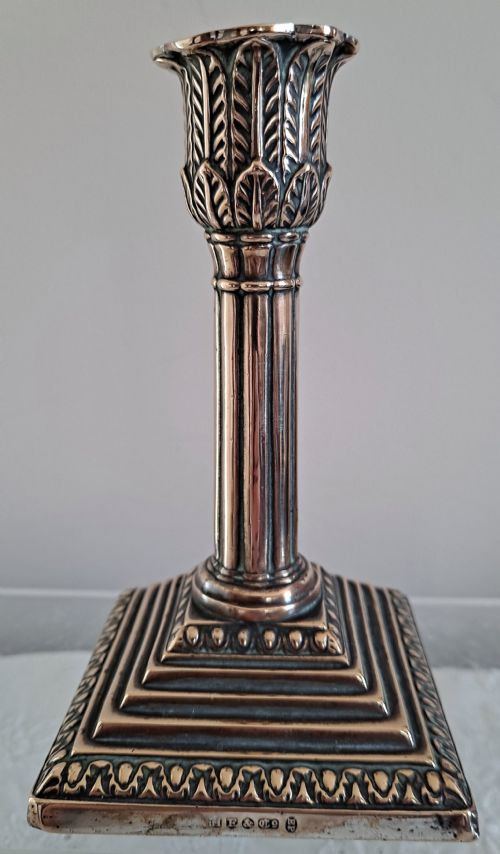
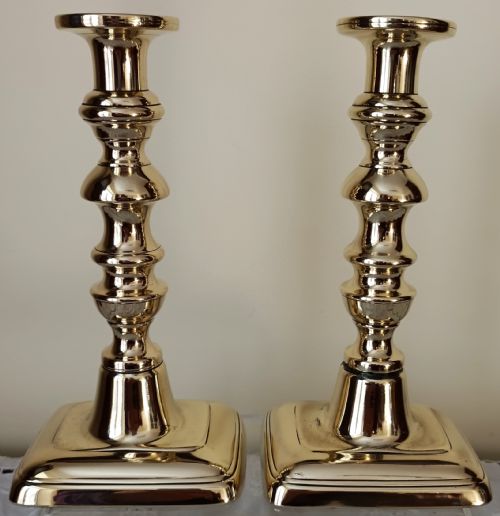
Brass Candle Stick Holders
These brass candle stick holders bring period warmth to a room, offering functional illumination through cast and turned metal forms spanning multiple centuries.
Brass Candle Stick Holders
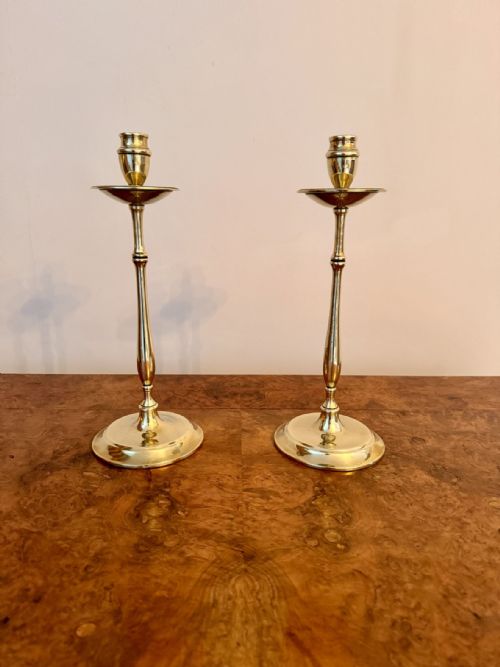
Brass candle stick holders appear in forms ranging from simple domestic ejector pairs to large church candlesticks, chamber sticks with trays, and grand tour candelabras. Buyers exploring this page encounter domestic and ecclesiastical designs originating from the seventeenth, eighteenth, and nineteenth centuries.
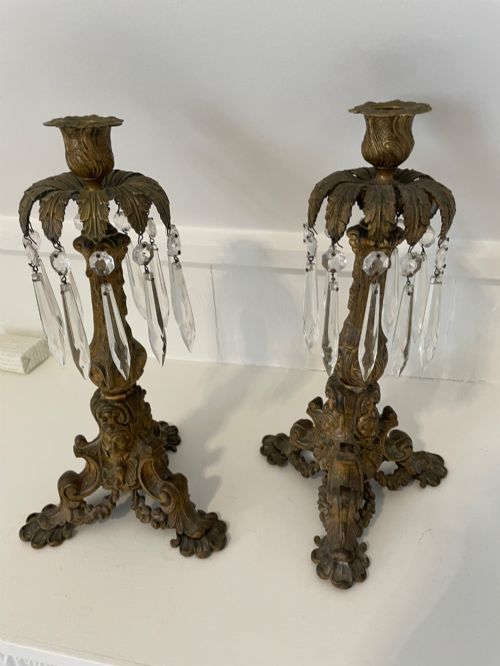
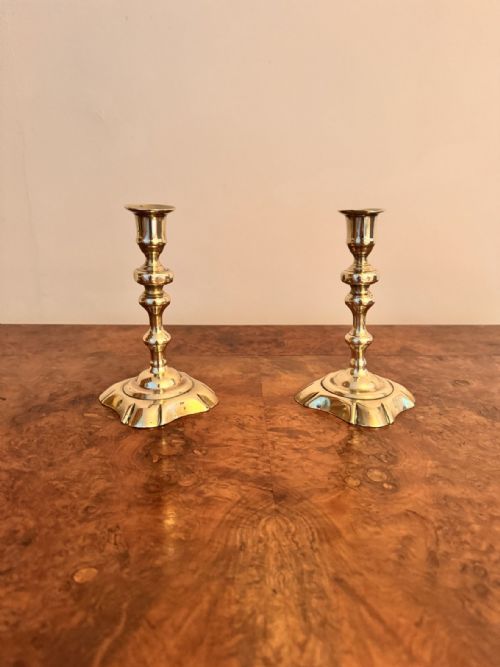
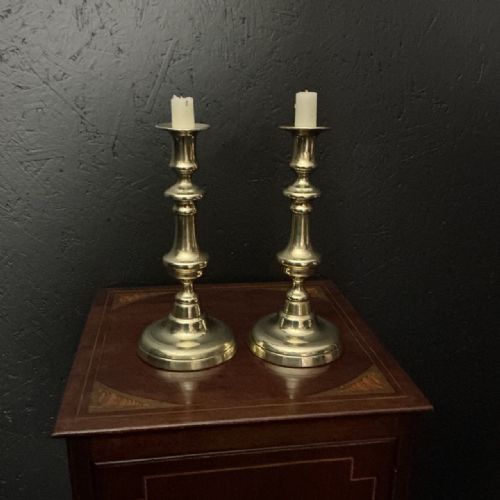
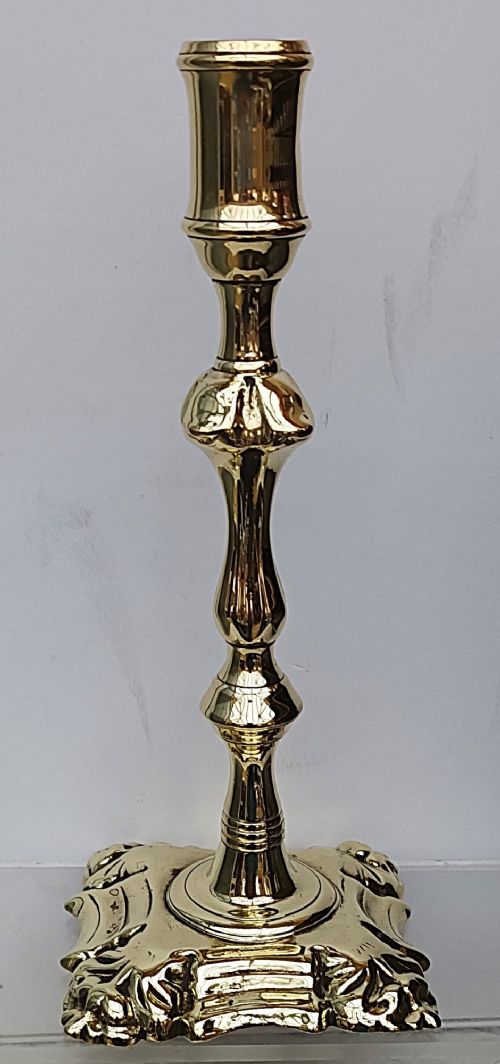
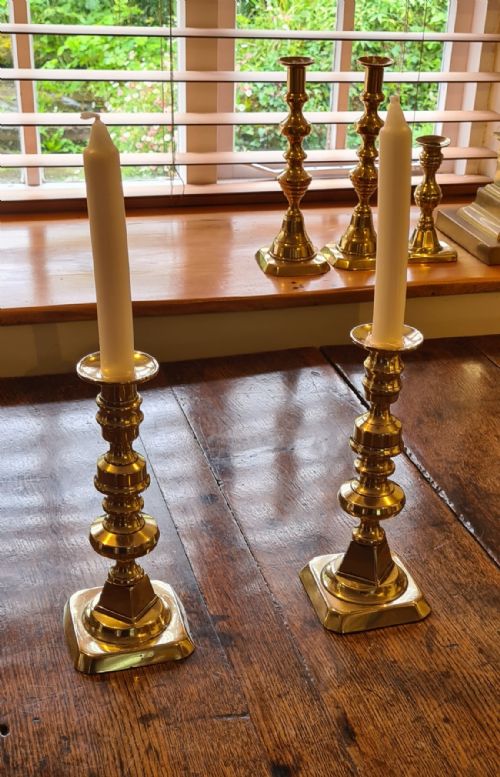
The selection includes Georgian petal-based examples, Victorian barley twist designs, and heavy tavern candlesticks alongside French revival pieces. Workshops produced these items in matched pairs and single formats utilising brass, bronze, gilt metal, and occasional combinations with mahogany and walnut.
Materials and Construction
Maker operations utilised cast brass, sheet brass, and gilt bronze, often combining multiple components through threaded joints or pinned sockets. Mid-eighteenth-century examples frequently employ seamed construction methods where cylindrical shafts join shaped bases.
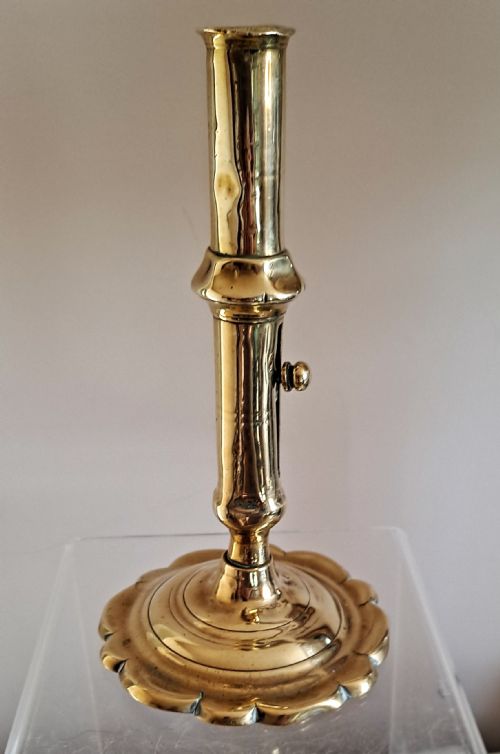
Makers integrated mechanical elements into specific domestic forms, such as internal ejector mechanisms that push spent wax out of the socket. Secondary materials like oak, walnut, and treen appear alongside metal, while silver plating and gilding provide decorative surface finishes.
Brass Candle Stick Holders Retail Price Guide 2026
Typical asking prices for brass candle stick holders among the pieces listed under this phrase on Sellingantiques today, from the lower quarter to the upper quarter. They describe what is for sale here now, not the wider market.
Materials across the inventory include cast brass, solid bronze, gilt metal, silver plate, and mixed elements featuring mahogany and walnut treen.
Design and Proportion
Quality rests in the crispness of casting detail, the weight of the metal, and the harmonious balance of the base, stem, and drip pan. Superior examples display careful hand-finishing on turned mouldings rather than flat, uniform machine lines.
Proportion and integrity define the upper tier, where bases remain stable and sockets retain their original depth without excessive wear from service. The presence of matching components in a pair, alongside legible maker marks or distinct period characteristics, elevates an individual piece.
J.T. & Co·J. Miller
The Brass Candle Stick Holders Glossary
- Ejector candlestick
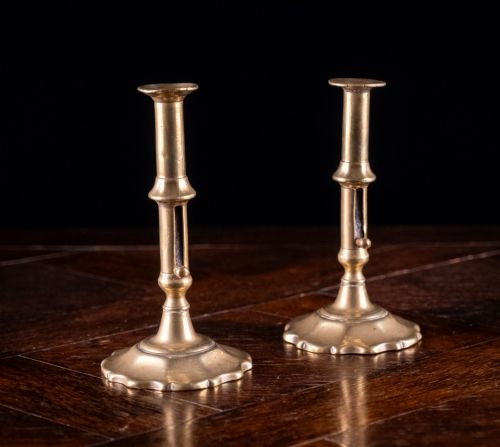
- A domestic design featuring an internal sliding plate controlled by a thumbpiece on the stem to remove stub ends of wax. This mechanism allowed users to clear spent wax cleanly from the socket.
- Pricket candlestick
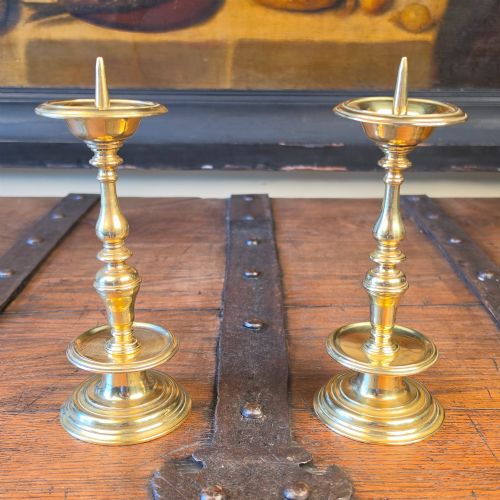
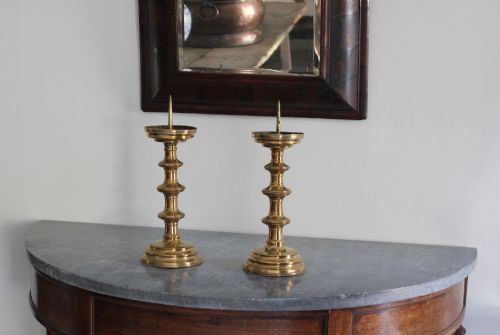
- A form terminating in an upward-pointing metal spike rather than a socket to secure the candle. Such pieces are frequently found in ecclesiastical or church contexts.
- Chamber stick
- A low-profile candle holder fitted with a wide saucer base and a loop handle for carrying room to room. These often include a conical snuffer resting in a dedicated clip.
- Gilt bronze
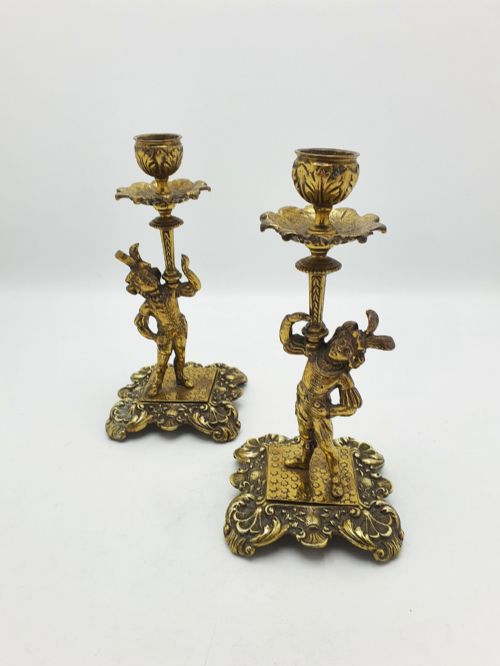
- An alloy of copper and zinc treated with a surface application of gold leaf or mercury gilding. This technique provides a lustrous metallic finish seen on decorative revival pieces.
- Barley twist
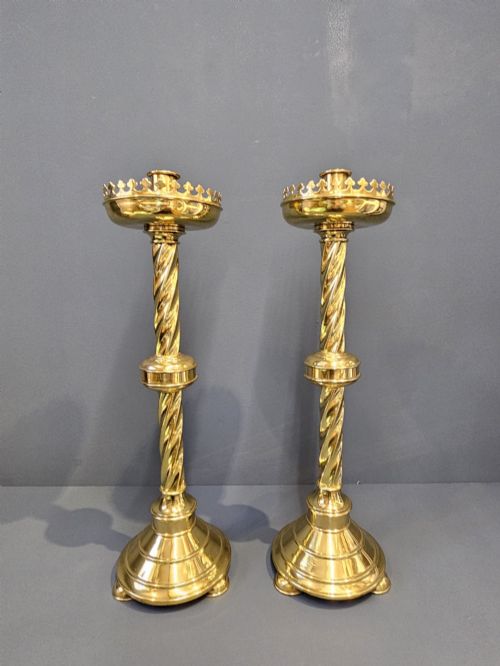
- A spiral column turned or cast into the stem of a candlestick. The design creates diagonal movement and catches ambient light across the facets.
Brass Candle Stick Holders: Frequently Asked Questions
How do I date a brass candlestick?
Dating relies on manufacturing techniques, base shapes, and stem profiles that shifted across the Georgian and Victorian eras. Earlier eighteenth-century pieces often feature wider petal bases and seamed shafts, while later nineteenth-century items introduce heavy machine-turned barley twists and complex cast figural motifs.
Examining the construction inside the socket and base reveals assembly methods specific to certain decades. Comparing the weight and casting seams helps separate eighteenth-century examples from later revival productions.
What is an ejector mechanism?
An ejector mechanism is a sliding internal disk linked to a small exterior knob on the stem of domestic candlesticks. Pushing this lever upward lifts the remaining wax disk above the socket rim for easy removal.
This clever device became common during the mid-eighteenth century to prevent damage to the socket interior. Finding a fully functioning ejector adds utility and interest to period examples.
How were chamber sticks used?
Chamber sticks served as portable lighting for navigating dark hallways and bedrooms before the widespread adoption of gaslight or electricity. The wide tray caught melting wax drips while the handle allowed safe transport.
People placed these on bedside tables for evening reading and morning routines. Many retain small cone-shaped snuffers designed to extinguish the flame safely.
Are church candlesticks different from domestic ones?
Church candlesticks are substantially larger, heavier, and taller than domestic variants to illuminate altars and large spaces. They frequently incorporate pricket tops or wide drip pans suited for thick, long-burning candles.
These pieces often display Gothic revival details, heavy brass or bronze casting, and robust proportions designed for institutional use. Their scale makes them striking decorative objects in modern residential settings.