

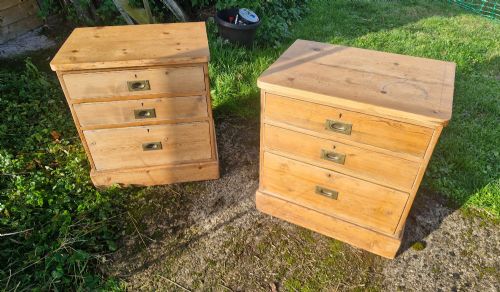
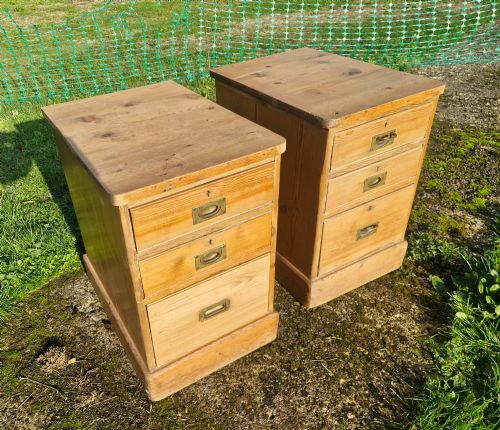
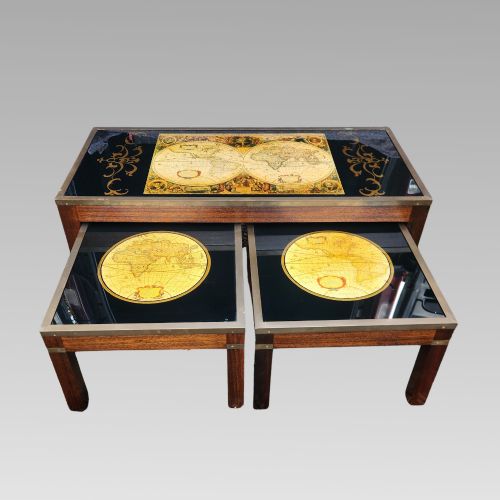
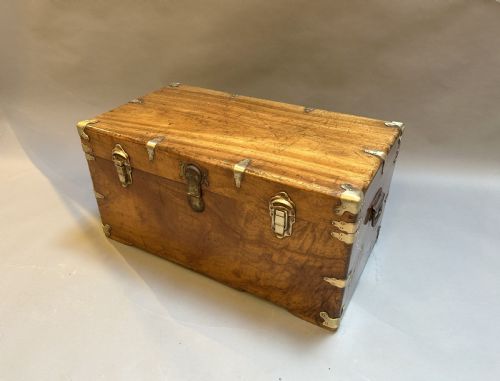


Brass Campaign Tables
Brass campaign tables combine folding utility with robust timbers, designed for movement and built to endure years of active service.
Brass Campaign Tables
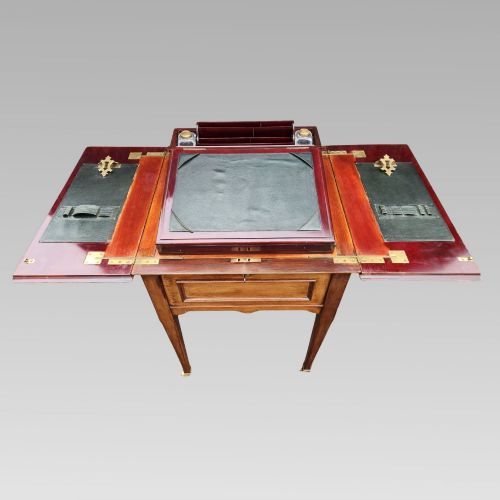
Brass campaign tables encompass portable folding furniture and utilitarian desks originating from military, naval, and colonial contexts. These pieces span periods from the Georgian era through to the early twentieth century, reflecting a sustained demand for adaptable household furnishings.
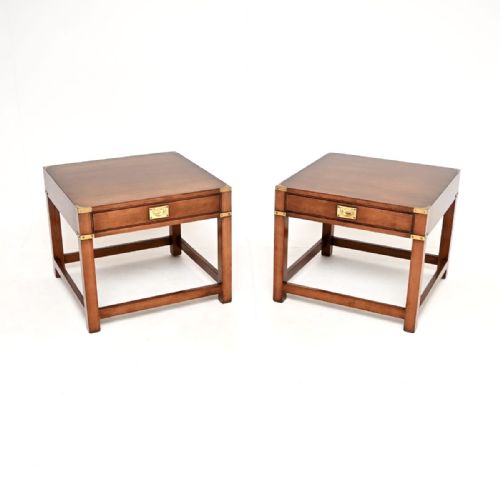
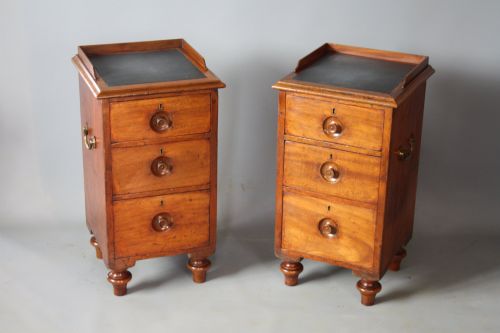
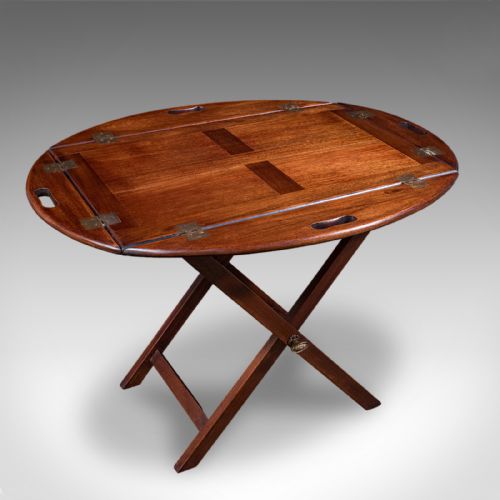
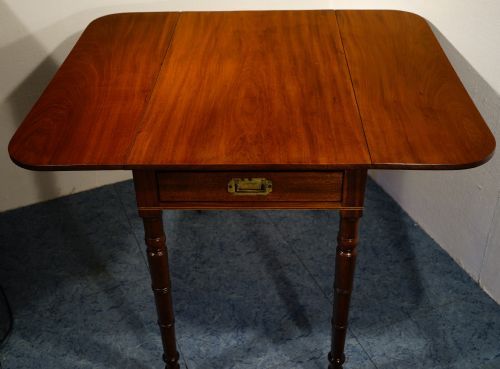
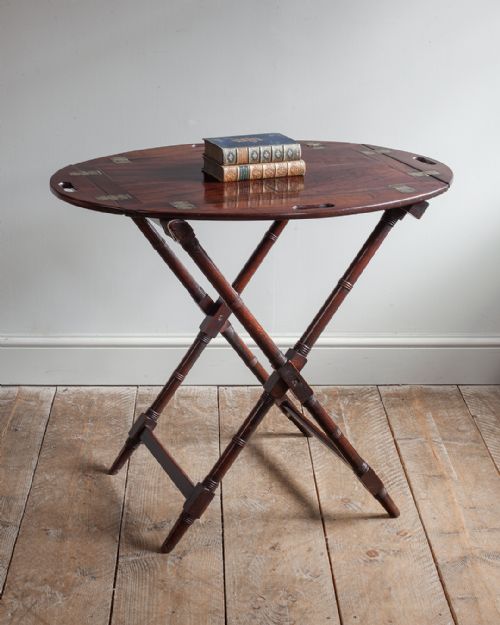
Buyers frequently encounter variations such as butler's trays on folding stands, occasional tables, and coffee tables adapted from earlier forms. Mahogany, camphor wood, and pine appear regularly alongside polished brass mounts and corner bindings.
Originating for travel, these items suit modern interiors needing flexible placement, compact side tables, and sturdy serving surfaces. Their portable design prioritises efficient storage without sacrificing stability or visual presence.
How they were made
Construction relies heavily on dense timbers like mahogany, camphor wood, padauk, and teak, chosen for their ability to withstand climatic shifts during transit. Workshops paired these durable woods with structural pine linings and secondary elements.
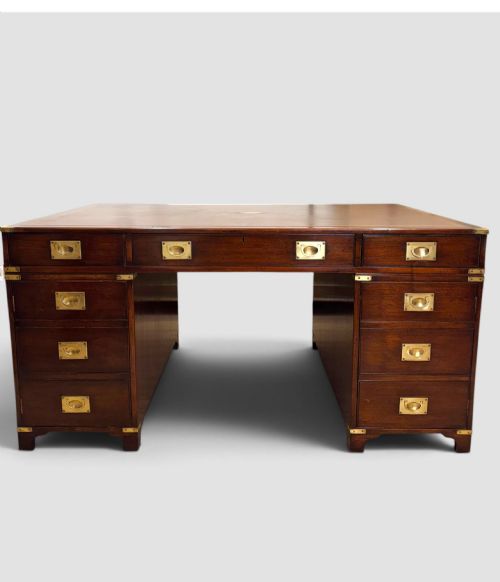
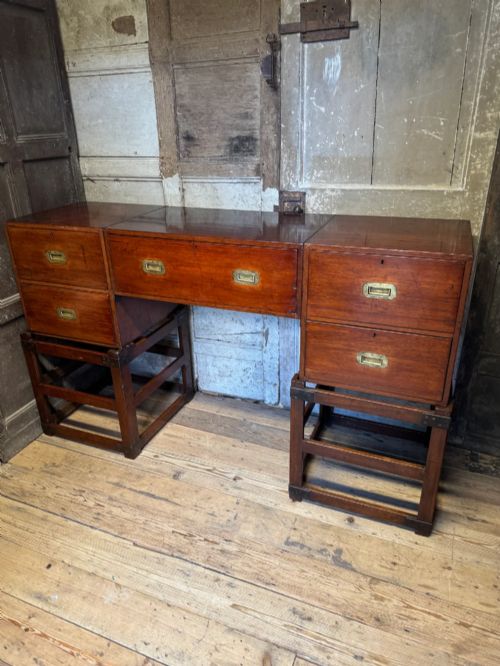
Brass fittings protect corners, edges, and joints from heavy impacts, while inset handles and flush hinges maintain smooth exterior profiles for packing. Frames frequently utilise folding or demountable mechanisms secured by clever peg and slot joints.
Brass Campaign Tables Retail Price Guide 2026
Typical asking prices for brass campaign tables among the pieces listed under this phrase on Sellingantiques today, from the lower quarter to the upper quarter. They describe what is for sale here now, not the wider market.
Listings feature items spanning the Georgian period, Victorian era, and early twentieth century up to the 1950s.
What varies in quality
Quality rests on the integrity of the timber selection and the precision of the brass hardware integration. Superior examples display tightly fitted corners, robust hinge mechanisms that lock securely, and rich, unblemished wood grain.
The hand of the maker dictates distinction, visible in clean dovetail joints, well-cast brass hardware that sits completely flush with the wood, and refined proportions that balance utility with elegance.
The Brass Campaign Tables Glossary
- Butler's tray
- A removable wooden tray with hinged or shaped sides, originally designed for carrying food and drink. It typically rests on a folding X-frame stand when in use.
- Campaign style
- A genre of portable furniture designed for easy dismantling and transport by military officers or travellers. It is characterised by recessed brass hardware, folding legs, and durable timbers.
- Camphor wood
- An aromatic hardwood native to Asia, prized for its insect-resistant properties and distinct scent. It frequently forms the primary material for travel trunks and storage chests.
- Recessed brass
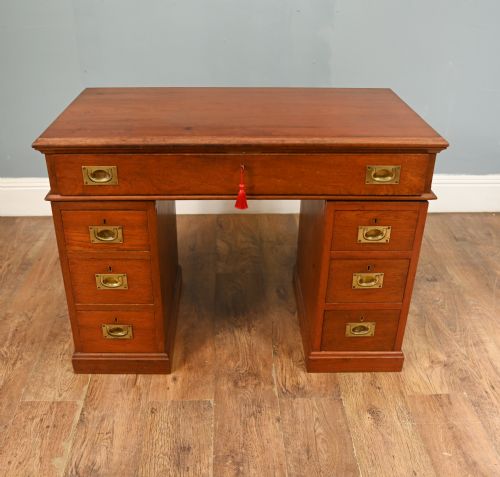
- Hardware such as handles, corners, and straps set flush into the surface of the timber. This prevents the metal from catching on other items during transport.
- Partners desk
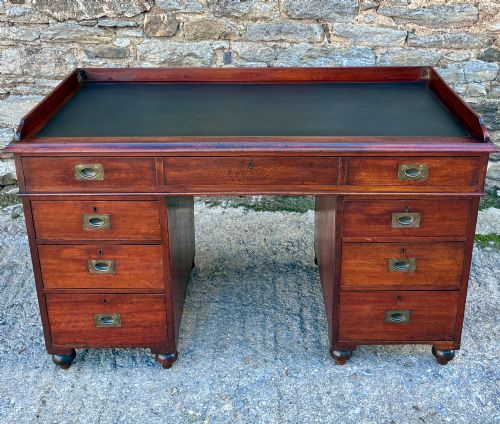
- A large desk designed with drawers and cupboards on both sides to accommodate two people working face to face. These often feature brass bindings and leather writing surfaces.
Brass Campaign Tables: Frequently Asked Questions
What defines a brass campaign table?
These tables are portable furnishings constructed from dense timbers and reinforced with brass mounts for travel. They often feature folding bases or removable trays designed for easy packing.
Originally built for military officers on the move, they translate well into modern spaces needing flexible, sturdy occasional furniture.
How were campaign tables used historically?
Officers, diplomats, and travellers utilised these pieces to maintain orderly living and working conditions while on active service. The folding mechanisms allowed rapid packing into crates or wagons.
Today, these tables serve as versatile side surfaces, coffee tables, or serving stands in contemporary homes.
Which woods appear most often?
Mahogany is the predominant timber found across these listings, alongside aromatic camphor wood and teak. Pine frequently appears as a secondary wood for internal framing.
These materials were selected for strength, weight distribution, and resistance to splitting during long journeys.
How do I care for campaign furniture?
Maintain the timber by applying appropriate natural wax polish and avoiding direct exposure to strong heat sources. Keep brass components clean with a dry cloth to preserve their finish.
Regularly check folding hinges and joints to ensure moving parts remain properly aligned and secure.