


Brass Bound Wine Cistern
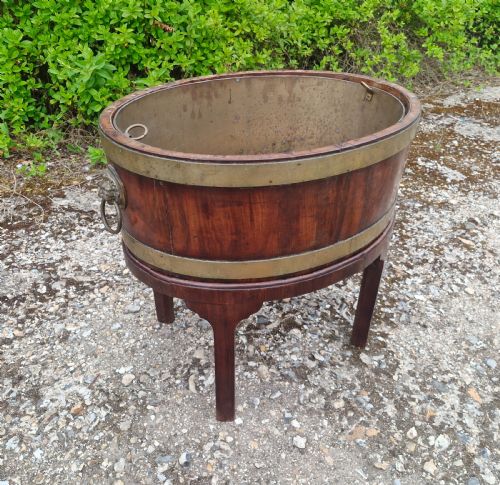
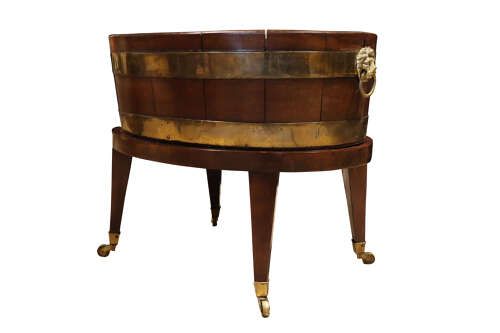
A brass bound wine cistern offers heavy timber and gleaming metal straps to hold ice and bottles with unmistakable Georgian presence.
Brass Bound Wine Cistern
A brass bound wine cistern is a heavy timber vessel designed for chilling bottles at the dining table during the eighteenth and nineteenth centuries. The pieces collected under this search phrase span the Georgian, Regency, and Victorian periods, with origins stretching back to seventeen-fifty.
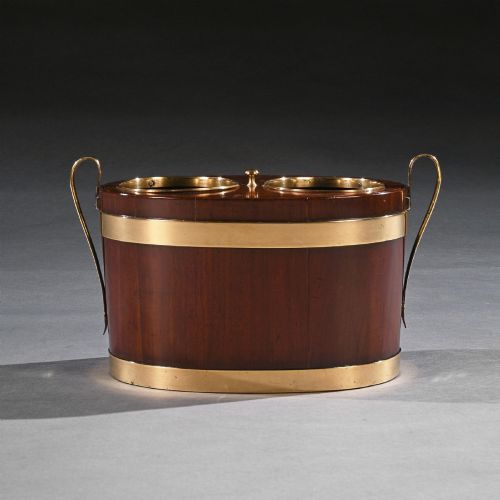
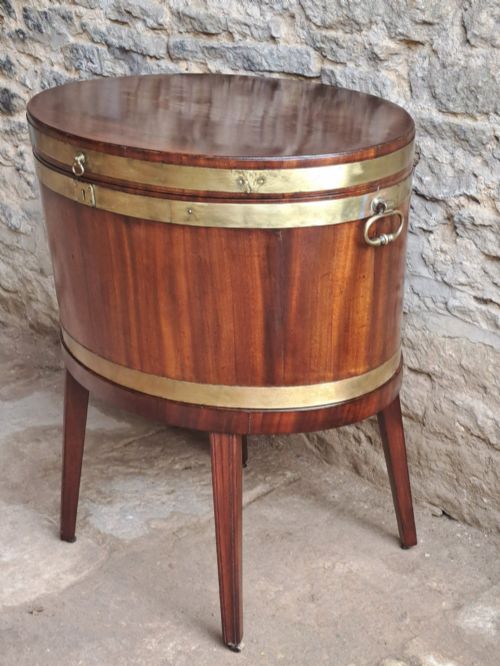
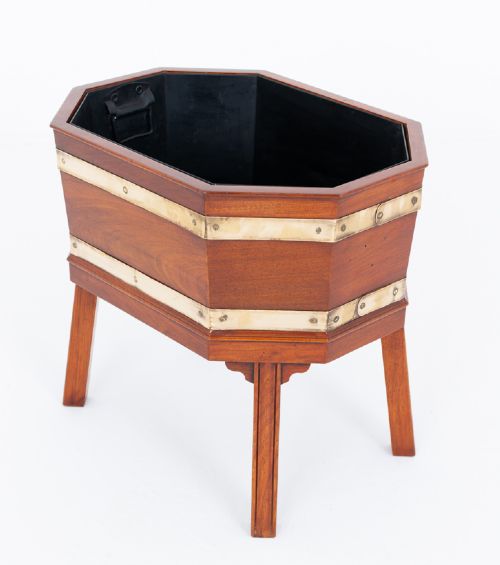
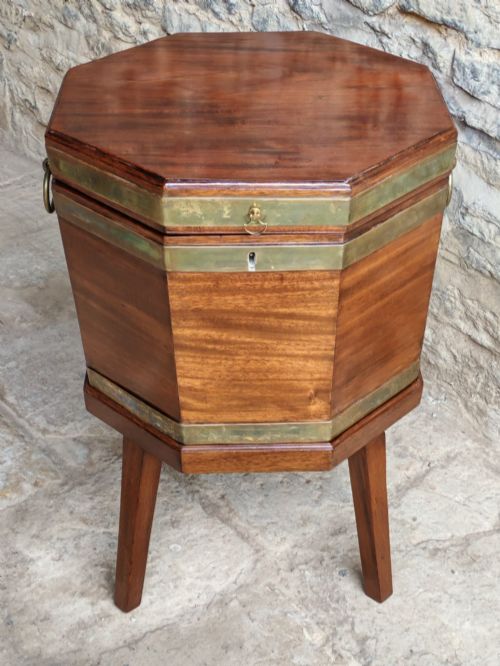
The most common form on this page is the mahogany oval or octagonal wine cooler, frequently reinforced with metal bands and occasionally raised on a dedicated stand. Many examples double in function as planters or jardinières, adapting their deep watertight interiors for modern botanical displays.
Materials and construction
Makers constructed these vessels primarily from solid mahogany or walnut, employing traditional cooperage techniques with tight stave construction to hold liquid securely. Interiors often feature zinc linings designed to contain melting ice alongside the bottles.
Stout brass bands encircle the timber bodies, secured with countersunk pins to provide structural strength against the outward pressure of ice and water. Detail work incorporates subtle boxwood stringing and fine inlay across the exterior surfaces.
Several sturdy vessels originally built to frost claret now spend their retirement quietly holding ferns.
Assessing the craftsmanship
Quality rests upon the integrity of the timber selection and the precision of the cooperage, where tightly fitted staves maintain structural soundness without warping. The weight and gauge of the brass bands also dictate the standard, alongside the survival of original stands and internal linings.
Finer examples display careful proportioning in oval and octagonal shapes, paired with crisp inlay work such as boxwood stringing. Later revival pieces from the twentieth century or Victorian eras follow earlier George III and George II patterns with varying degrees of decorative ambition.
Samual Norman
The Brass Bound Wine Cistern Glossary
- Coopered
- Constructed from curved wooden staves bound together with metal hoops, much like a traditional barrel. This method gave the vessels the waterproof integrity required for holding melting ice.
- Cellarette
- A lockable container used for storing wine bottles near the dining table. They frequently share the same heavy timber and brass-bound construction as open coolers.
- Jardiniere
- An ornamental stand or container designed to hold growing plants. Many deep wine coolers transitioned to this secondary role in later centuries.
- Stringing
- A narrow inlaid line of contrasting timber, such as boxwood, used to edge panels and borders. It provides delicate linear decoration on mahogany surfaces.
- Stand
- A raised frame or table base supporting the main vessel. Certain coolers sit permanently fixed to these original timber legs.
Brass Bound Wine Cistern: Frequently Asked Questions
What did they use a brass bound wine cistern for?
These vessels stood beside the dining table filled with ice and water to chill bottles of wine during large meals.
Servants later repurposed the deep watertight interiors for holding large floral displays or potted plants once dining habits shifted.
How do I tell an 18th-century piece from a later revival?
Eighteenth-century examples display authentic patina, hand-cut joinery, and timber shrinkage appropriate to their age.
Later revival pieces from the Victorian era or nineteen-twenty often show machine tooling and less natural wear to the brass and wood.
Can I use an antique wine cooler as a planter?
Many of these vessels already served as plant jardinières in the nineteenth century due to their deep proportions and zinc linings.
Inserting a protective plastic liner inside the original zinc prevents modern moisture damage to the antique timber.
Did all wine coolers originally have stands?
Some designs sat directly on the floor or sideboard, while others rested upon dedicated timber legs.
Pieces described as being on an original stand retain their matched base from the period of manufacture.