

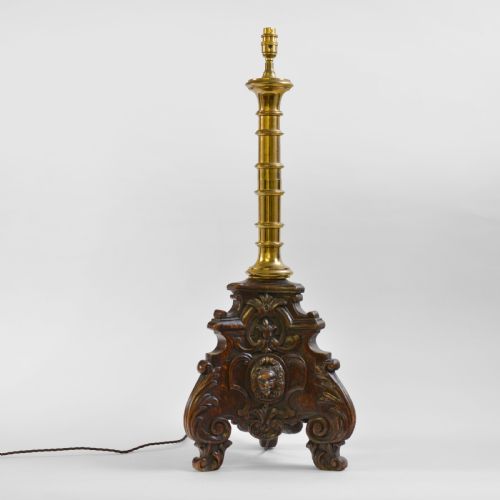


Brass and Wood Candlesticks
These brass and wood candlesticks combine warm timber and bright metal to bring distinct character and ambient light to any room.
Brass and Wood Candlesticks
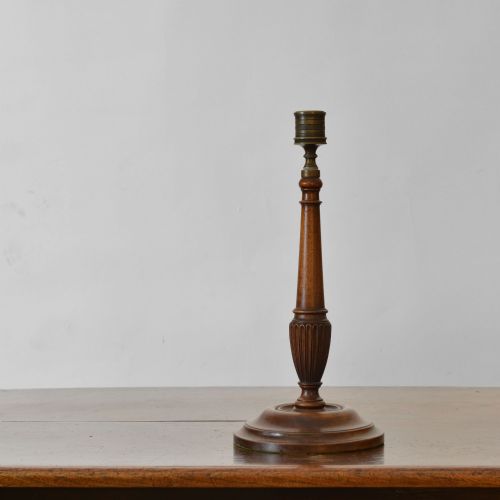
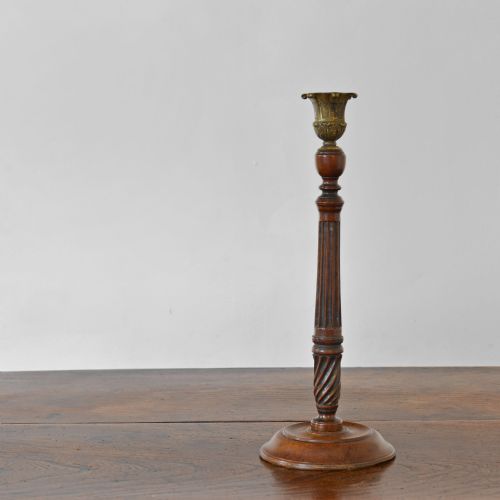
Brass and wood candlesticks unite turned timber columns with metal sconces and bases, appearing in forms ranging from early George III style mahogany pairs to robust oak barley twists. You will frequently encounter early twentieth century examples, particularly Edwardian and nineteen-twenties pieces shaped from oak, mahogany, and walnut.
Many survivors show a domestic use for dining tables and mantelpieces, while heavier seventeenth century carved oak lamps and large pricket candlesticks point to more ecclesiastical or formal origins. Turning is the dominant method of shaping the wood, creating smooth columns or spiralling twists that complement the cooler gleam of brass nozzles.
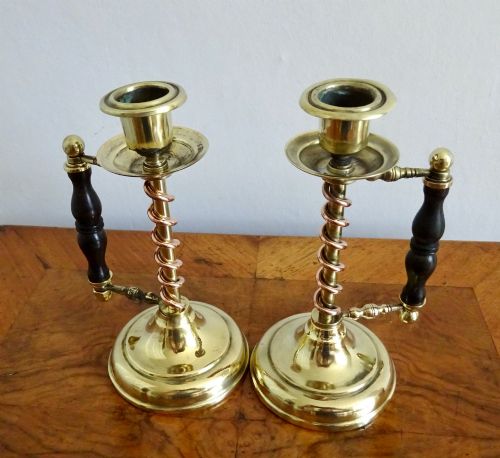
Pairs dominate the available selection, offering symmetrical balance for mantelpieces and sideboards alongside solitary chamber sticks fitted with handle trays. The combination of brass and wood spans multiple design revivals, bringing together traditional cabinetmaking and metalworking skills in functional household objects.
How they were made
Turned timber provides the structural core for most of these pieces, utilising hardwoods like mahogany, oak, walnut, teak, and rosewood shaped on a lathe into columns, bobbin shapes, and open barley twists. Craftsmen secured metal components directly to the wood, fitting cast brass sconces, nozzles, and drip pans to the upper terminals.
Joinery and turning techniques define the period character, from the precise proportions of nineteenth century mahogany shafts to the pronounced ridges of early twentieth century oak twists. Copper elements sometimes accompany the brass, fixed with small pins or screws into the hardwood bodies.
What varies in quality
The quality of these pieces rests primarily on the crispness of the woodturning and the weight of the brass fittings, with superior examples showing deep, clean twists and heavy, well-cast metal components. Well-chosen timber figures, such as the rich grain of mahogany or figured walnut, elevate simpler turned shafts into striking decorative objects.
Proportion and stability separate finer items from ordinary production, ensuring the weighted metal base securely anchors the taller wooden column without listing. Original matching pairs display uniform turning and consistent patination across both timber and brass, whereas lesser or married items often reveal subtle discrepancies in height and colour.
Erhard and Sons
The Brass and Wood Candlesticks Glossary
- Sconces
- The metal cup or nozzle fitted to the top of a candlestick to hold the candle and catch dripping wax. They are frequently cast from brass or copper.
- Barley twist
- A spiral carving resembling a barley sugar stick, popular on wooden furniture and candlestick stems during the seventeenth century and revived around nineteen-hundred.
- Pricket
- A sharp metal spike set into the centre of a tray or sconce to secure a large candle, often found on heavier altar or church candlesticks.
- Chamber stick
- A short candlestick mounted in a shallow pan with a small handle, designed for carrying safely around a house at night.
- Bobbin turned
- A series of rounded wooden spheres or discs carved along the length of a shaft, resembling a string of beads or textile bobbins.
Brass and Wood Candlesticks: Frequently Asked Questions
How do I date an oak barley twist candlestick?
Examine the timber grain, the method of turning, and the style of the brass fittings to determine the age. Early twentieth century examples often feature machine-tooled precision, whereas older nineteenth century pieces display hand-finished tool marks.
The base construction and any visible screws or fixings also help distinguish Edwardian revivals from seventeenth century originals, which tend to show denser oak and heavier hand-carving.
Were these candlesticks originally wired for electricity?
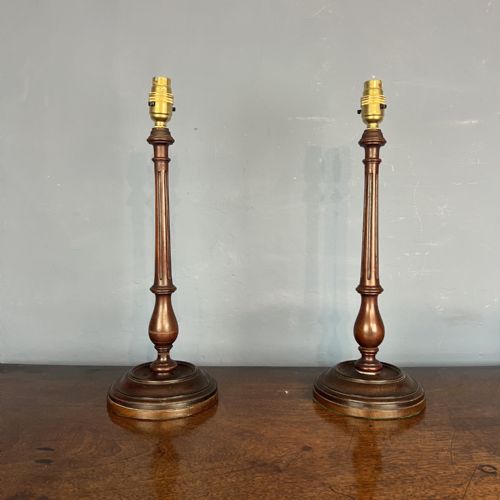
Most of these pieces started life holding wax candles, though many were subsequently converted into table lamps during the twentieth century. The conversion usually involves running a cord down a central bored channel or alongside the timber shaft.
Buyers find both traditional candle holders and converted lamp versions, allowing for a choice between historical lighting methods and modern electrical use.
How should I clean the brass and wood?
Maintain the timber by applying a light coat of beeswax to nourish the grain and preserve the aged patina. Avoid harsh polishes that strip character from old oak or mahogany.
Clean the brass components gently with a soft cloth, taking care not to let metal cleaners stain or damage the surrounding wood surfaces.