

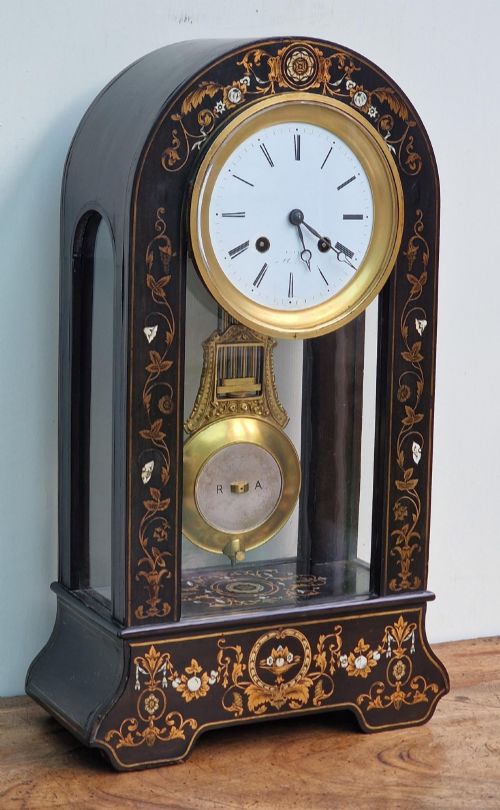


Brass and Pearl Glasses
Brass and pearl glasses are fine optical and decorative objects that bring tactile elegance to the theatre box and the collector's cabinet.
Brass and Pearl Glasses
Brass and pearl glasses primarily take the form of opera glasses dating from the Victorian and Edwardian eras, combining optical utility with decorative flair.
The current selection spans from the mid nineteenth century through to nineteen ten, encompassing styles such as Victorian, Edwardian, and Belle Epoque.
While the search phrase suggests optical instruments, the broader evidence reveals related desk accessories and timepieces featuring similar materials.
How they were made
Maker construction relies on lacquered brass or metal frames housing functional lenses, paired with delicate mother-of-pearl plates along the barrels or hand-wheels.
Enamel work frequently enhances the pieces, incorporating golden guilloche enamel to add rich colour alongside the shimmering natural iridescence of mother-of-pearl.
Brass and Pearl Glasses Retail Price Guide 2026
Typical asking prices for brass and pearl glasses among the pieces listed under this phrase on Sellingantiques today, from the lower quarter to the upper quarter. They describe what is for sale here now, not the wider market.
Many pairs carry the whispers of the nineteenth-century stalls, having watched countless dramatic curtain-calls from velvet-lined boxes.
What varies in quality
Quality rests in the crispness of the brass casting and the depth of the guilloche enamel, distinguishing standard items from pieces with finer decorative detail.
The matching and iridescence of the mother-of-pearl plates dictate visual success, alongside the clarity and preservation of the original signed optics.
Iris Paris
The Brass and Pearl Glasses Glossary
- Mother-of-pearl
- A smooth, iridescent inner layer of mollusc shell used to panel the barrels of optical instruments. It provides a luminous surface that catches the light differently from every angle.
- Guilloche enamel
- A decorative technique where transparent enamel is laid over engine-turned metalwork. This creates a repeating geometric pattern beneath a rich coloured gloss.
- Opera glasses
- Low-power binocular magnifiers designed specifically for theatrical and musical performances. They are sized to be held easily in one hand during a show.
- Regency
- A stylistic period spanning the early nineteenth century defined by classical restraint and elegance. Pieces from this aesthetic often incorporate rich woods and subtle metal mounts.
Brass and Pearl Glasses: Frequently Asked Questions
What are brass and pearl glasses?
These pieces are compact optical instruments, chiefly opera glasses, manufactured during the Victorian and Edwardian periods for theatre and concert use.
They combine brass metalwork with shimmering mother-of-pearl panels to create functional items that doubled as social accessories.
How do I date these glasses?
Dating relies on stylistic cues, materials, and mechanical signatures typical of the nineteenth and early twentieth centuries. Edwardian and Victorian examples often feature distinct enamel colours and barrel shapes.
Maker signatures or patent stamps engraved on the brass focusing wheel also help establish the exact period of manufacture.
Were they only used at the theatre?
While primarily designed to bring distant stage action closer in auditoriums, owners utilised them at various public gatherings and sporting events.
Their decorative nature meant they were as much a part of evening fashion as they were practical optical tools.
How should I display them?
These items suit small display stands or glass-fronted cabinets where the iridescent mother-of-pearl and polished brass can catch ambient light.
Keep them away from direct sunlight and damp conditions to preserve both the delicate enamel and the natural shell panels.