





Brass and Oak Hall Stand
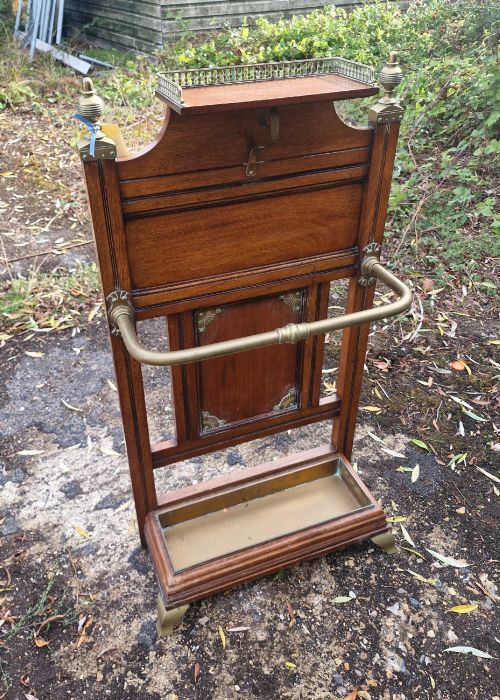
A brass and oak hall stand brings utilitarian warmth to an entrance, combining sturdy timber framework with bright metal hooks, bands, or bowls.
Brass and Oak Hall Stand
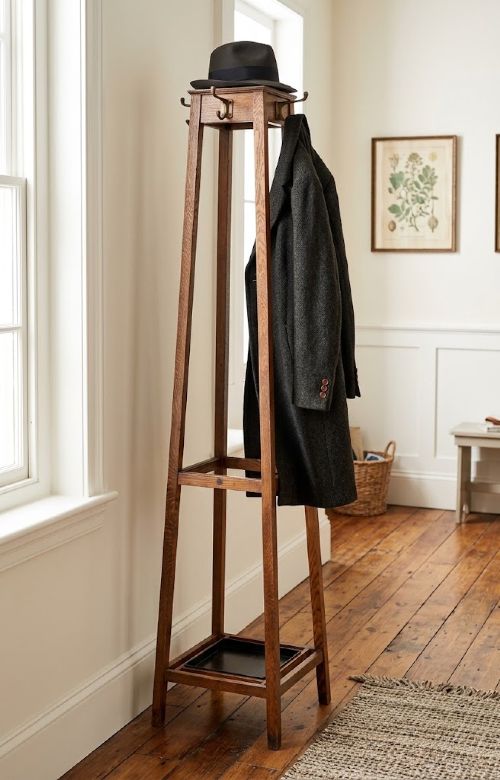
A brass and oak hall stand serves the practical purpose of organising coats, hats, umbrellas, and walking sticks in a domestic entranceway. The form spans several periods, appearing across Victorian, Edwardian, and Georgian eras with distinct stylistic interpretations.
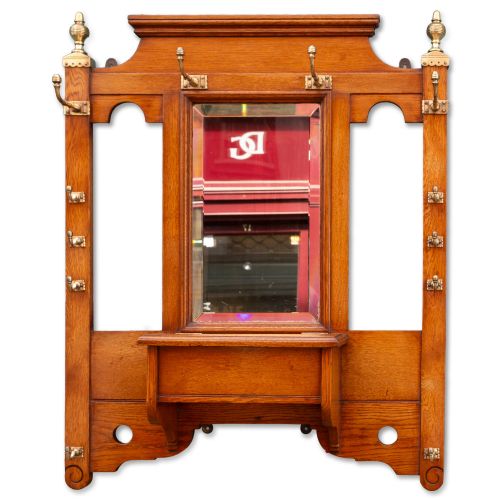
The most common variants on this page include coopered barrel stick stands, wall-mounted coat racks, and multi-functional revolving hall stands designed for compact spaces. These pieces combine substantial timber structures with functional metal hardware.
Examples range from restrained Arts and Crafts designs to ornate Gothic Revival and Late Victorian incarnations, reflecting changing domestic requirements for hallway storage over successive decades.
Materials and construction
Makers utilised solid oak for the primary structural framework, panels, and coopered staves, selected for its density and durability. Brass provides contrasting functional elements such as hat hooks, drip pans, decorative mountings, and coopered retaining bands.
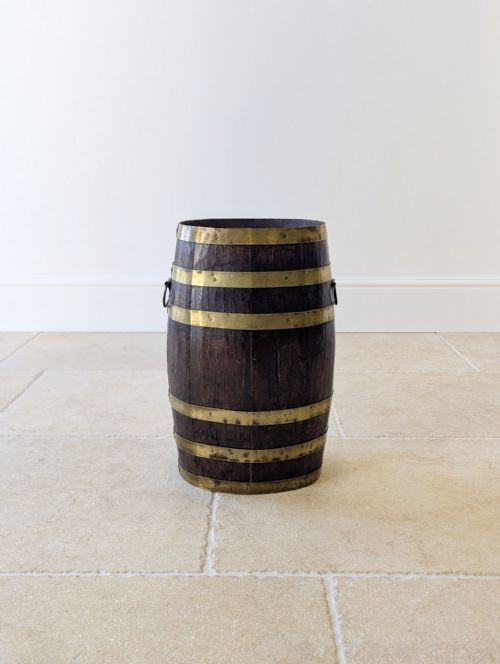
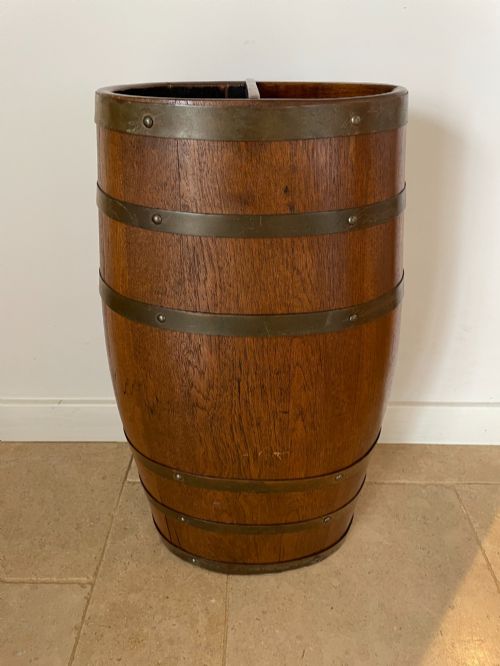
Coopered staves are joined tightly together and bound with heavy brass hoops to form watertight umbrella barrels, mirroring traditional barrel-making techniques. Additional materials such as cast iron, glass, ceramic, and marble occasionally appear in structural supports, panels, or backing tiles.
Brass and Oak Hall Stand Retail Price Guide 2026
Typical asking prices for brass and oak hall stand among the pieces listed under this phrase on Sellingantiques today, from the lower quarter to the upper quarter. They describe what is for sale here now, not the wider market.
Listings feature oak and brass in Victorian, Edwardian, and Georgian periods, alongside materials like marble, ceramic, and cast iron.
Judging quality
Quality rests upon the weight of the timber and the gauge of the brass used in construction, distinguishing substantial domestic furnishings from lighter utilitarian items. Joinery methods, such as pegged mortise and tenon joints or precise cooperage, dictate structural longevity.
The integrity of original brass fixtures, including hooks, drip trays, and maker's patents or stamps, determines the authenticity and completeness of the piece. Well-balanced proportions and refined carving or turning separate standard production items from finer workshop examples.
James Shoolbred·John Wylde·Thomas Baker·R.A. Lister
The Brass and Oak Hall Stand Glossary
- Coopered
- Constructed from narrow strips of oak fitted together edge-to-edge and bound with metal hoops, typical of barrel-form stick stands.
- Arts and Crafts
- A design movement prioritising traditional craftsmanship, visible construction methods, and simple utility over excessive ornamentation.
- Gothic Revival
- A nineteenth-century architectural and decorative style incorporating pointed arches, heavy carvings, and medieval ecclesiastical motifs.
- Patent
- An official protection granted to an invention, often stamped into metalwork on nineteenth-century hardware to denote a registered mechanical improvement.
Brass and Oak Hall Stand: Frequently Asked Questions
How do I maintain oak and brass?
Clean the oak timber using a soft dry cloth and feed the grain periodically with traditional beeswax to preserve the finish.
Polish the brass elements carefully with a non-abrasive metal cleaner, taking care to avoid staining the surrounding wood.
Were these stands used in homes?
These furnishings were standard fixtures in domestic entrance halls during the nineteenth and early twentieth centuries.
Households utilised them for shedding wet outerwear and storing walking accessories before entering main reception rooms.
How do I identify an Edwardian piece?
Edwardian examples often lean towards lighter Arts and Crafts aesthetics, favouring simplified geometric lines and exposed construction.
They frequently incorporate brass-bound coopered barrels combined with rotating or wall-mounted coat hook configurations.
What is a coopered stick stand?
A coopered stick stand is constructed using curved wooden staves bound together with horizontal brass bands, resembling a miniature barrel.
This method provided a sturdy, watertight vessel specifically designed to hold wet umbrellas and walking sticks.