

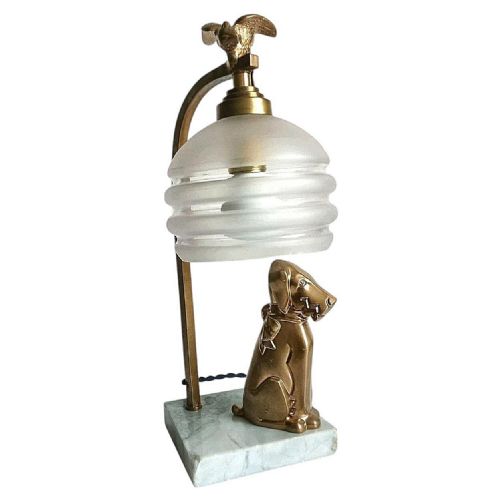


Brass and Marble Lights
Brass and marble lights combine metalwork and stone bases across Victorian, Edwardian, and Art Deco periods, bringing heavy proportion and warm illumination to interiors.
Brass and Marble Lights
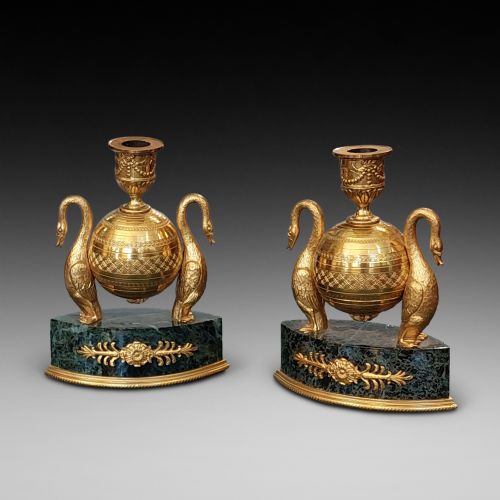
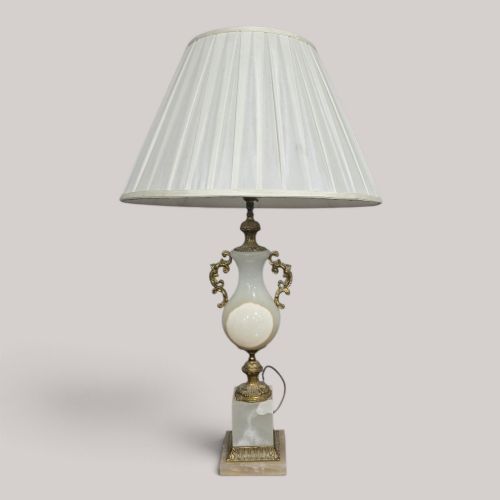
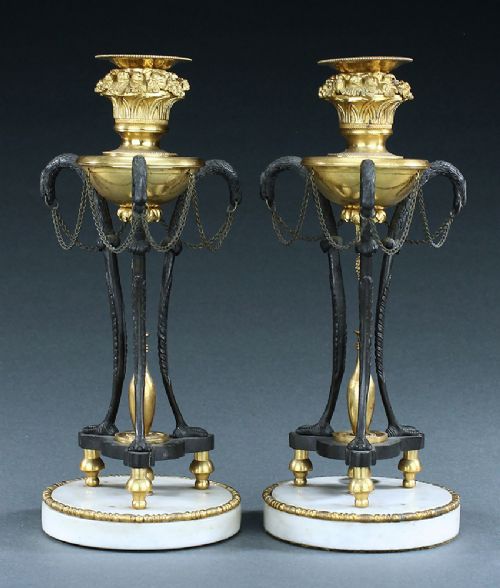
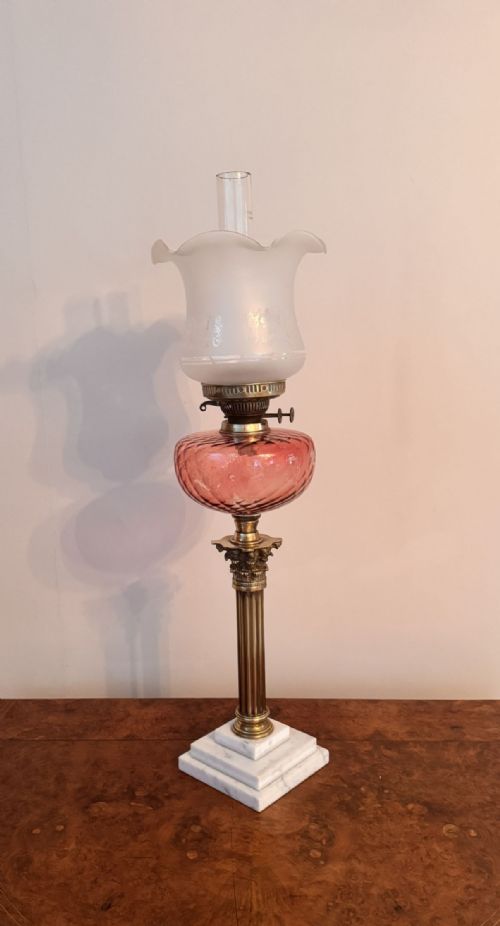
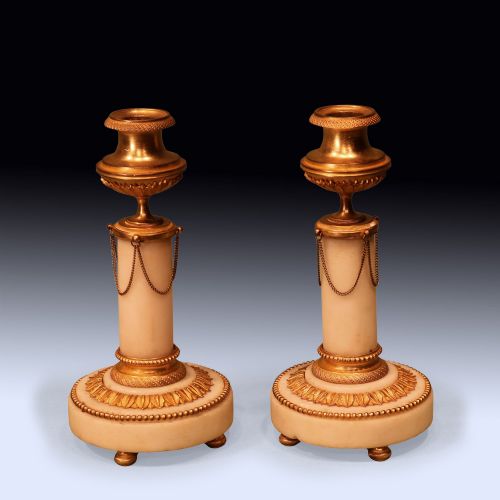
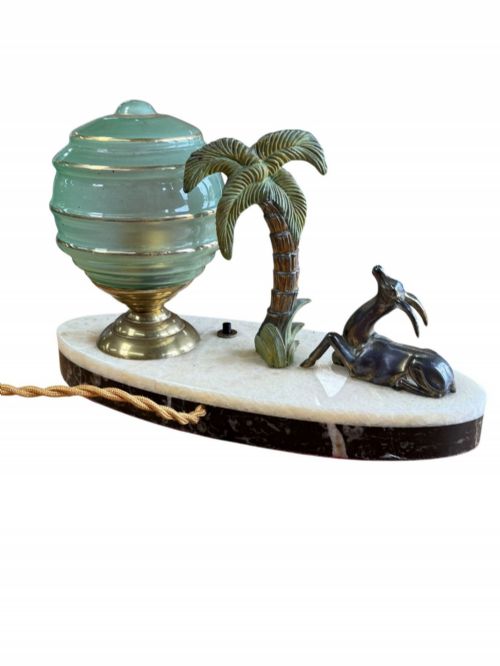
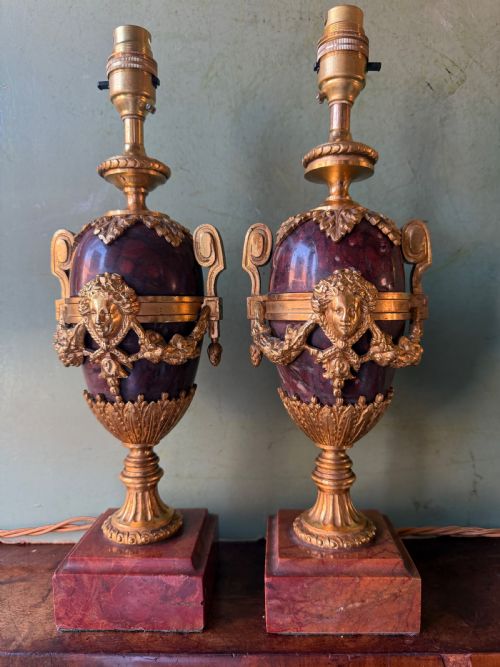
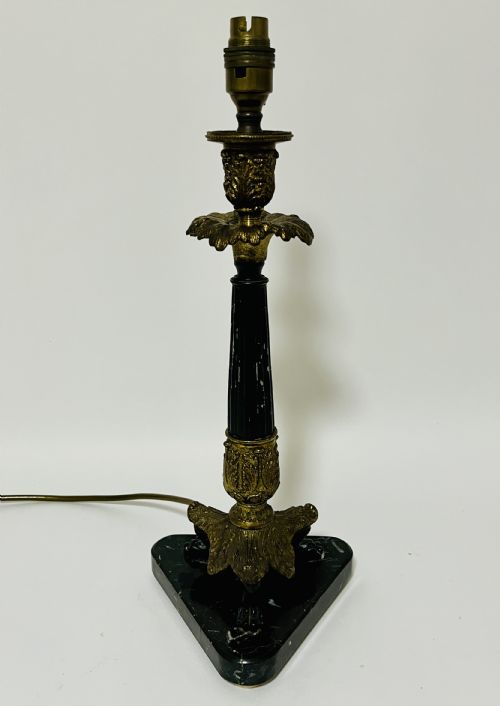
Brass and marble lights encompass table lamps, standard floor lamps, candelabras, and candlesticks originating from the nineteenth and early twentieth centuries. These pieces frequently pair heavy stone plinths with cast metal mounts, figures, or oil reservoirs.
The selections span distinct stylistic revivals, including French Neoclassical, Louis XVI style, Empire, Rococo, and Art Deco designs. Standard lamps and converted oil lamps provide height, while pairs of smaller candlesticks and table lamps offer symmetrical placement.
Origin points lean heavily towards French workshops alongside British Victorian production. Materials alternate between white, green, and rouge marble bases paired with brass, gilt bronze, ormolu, and onyx structures.
Materials and Construction
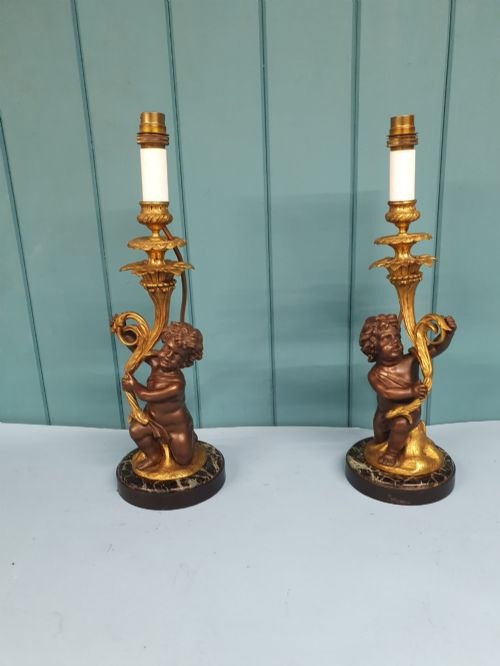
Foundry work utilises cast brass, bronze, and gilt metal shaped into figural mounts, cherubs, and paw feet. Ormolu applications provide gilded surface highlights across structural mounts and candle nozzles.
Bases combine turned or polished marble and onyx blocks to anchor the weight of taller stems and branches. Fabric shades, metal fittings, and oil lamp mechanisms complete the functional lighting structures.
Brass and Marble Lights Retail Price Guide 2026
Typical asking prices for brass and marble lights among the pieces listed under this phrase on Sellingantiques today, from the lower quarter to the upper quarter. They describe what is for sale here now, not the wider market.
Dogs and parrots frequently share lamp bases with cherubs, proving that historical artisans enjoyed playful animal companions.
Evaluating the Pieces
Casting definition separates standard production from finer examples, visible in the sharpness of chased details on bronze cherubs, acanthus leaves, and cast brass mounts. Hand-finishing on ormolu creates depth that mechanical polishing obscures.
The selection and turning of the stone base dictate visual balance, with dense rouge, green, or white marble slabs offering superior stability compared to lighter composite alternatives. Matching pairs demonstrate higher initial workshop investment than single surviving items.
The Brass and Marble Lights Glossary
- Ormolu
- A technique of applying finely ground high-carat gold to a bronze base using mercury. This mercury gilding creates a deep, durable surface lustre characteristic of French decorative metalwork.
- Cassolette
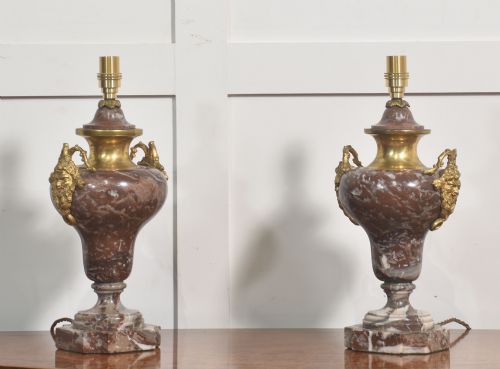
- A decorative vase or urn featuring a reversible lid that functions as a candleholder or solid vessel. These are frequently mounted on marble bases with metal collars.
- Candelabra
- A multi-branched lighting fixture designed to hold several candles or bulbs simultaneously. They often feature central decorative stems flanked by symmetrical arms.
- Standard Lamp
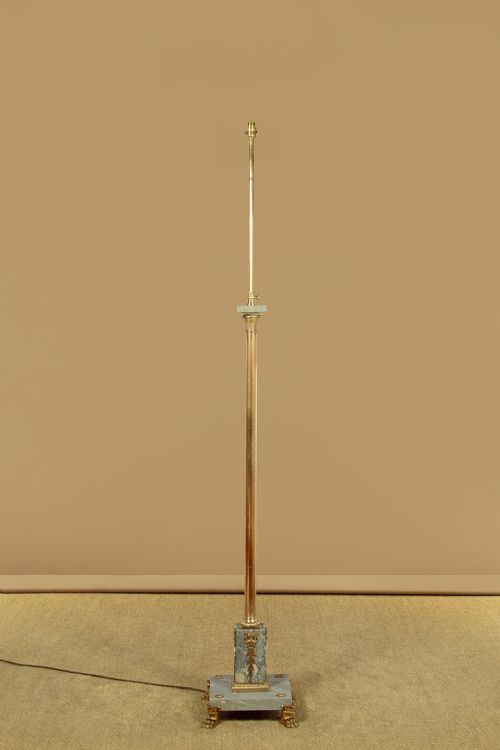
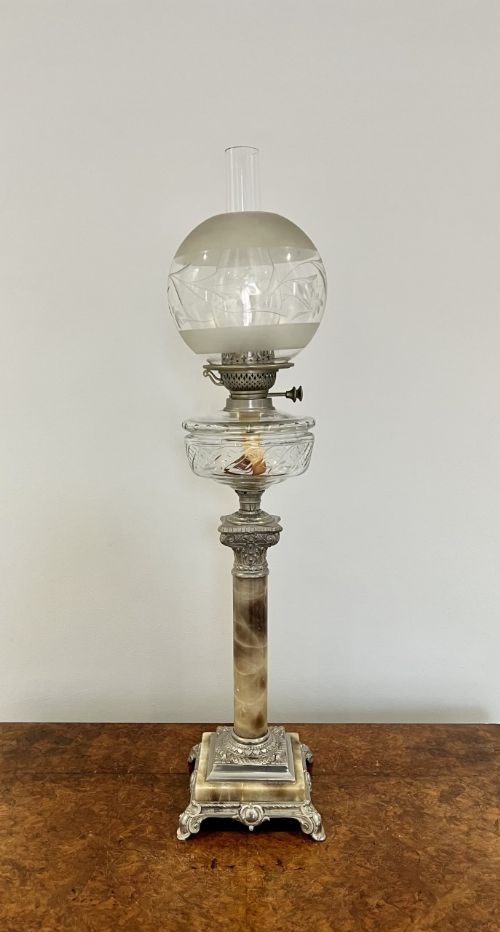
- A tall freestanding floor lamp designed to illuminate a room from standing height. Victorian examples frequently adapt heavier oil lamp columns for electrical use.
- Neoclassical
- A design style inspired by classical Greece and Rome emphasising symmetry, proportion, and classical motifs. Pieces in this style often incorporate columns, urns, and foliate brass mounts.
Brass and Marble Lights: Frequently Asked Questions
How do I date a brass and marble lamp?
Dating relies on combining stylistic markers, manufacturing techniques, and material choices recorded across the Victorian, Edwardian, and Art Deco eras. Cast brass details and specific marble types help narrow the period of origin.
French Empire and Louis XVI revival pieces from the nineteenth century display hand-chased ormolu and heavy stone plinths. Later twentieth-century items shift toward streamlined Art Deco onyx forms and simplified electrical adaptations.
Were these lights originally wired for electricity?
Most nineteenth-century pieces began life as oil lamps, candlesticks, or candelabras before later conversion to electricity. Manufacturers adapted existing metal and stone structures to accommodate modern wiring.
Converted pieces retain their original cast bronze figures, urns, or oil reservoirs while concealing modern internal wiring channels. This adaptation allows period decorative objects to function as contemporary table or floor lamps.
What is the difference between ormolu and gilt brass?
Ormolu specifically denotes mercury-gilded bronze where powdered gold amalgam is fired onto the bronze base. This historical process yields a warm, layered finish distinct from later electroplating.
Gilt brass or gilt metal utilises different base alloys and coating methods, often appearing brighter and less nuanced under close inspection. Nineteenth-century French pieces predominantly employ traditional ormolu on bronze mounts.
How should I clean marble bases?
Cleaning requires gentle wiping with a soft, damp cloth to remove surface dust without dulling the polished stone. Avoid acidic or abrasive cleaners that etch marble and onyx surfaces.
Metal components like brass and ormolu should remain untouched by harsh chemical polishes to preserve their patination. Regular dry dusting maintains the finish of both the stone plinths and the metal mounts.