








Brass and Glass Candlesticks
Brass and glass candlesticks bring together metalwork and crystal to catch the light on a table.
Brass and Glass Candlesticks
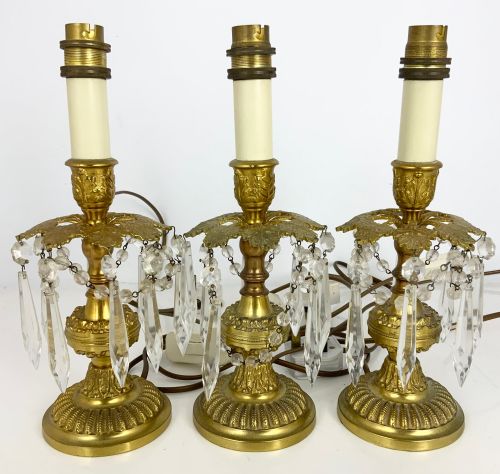
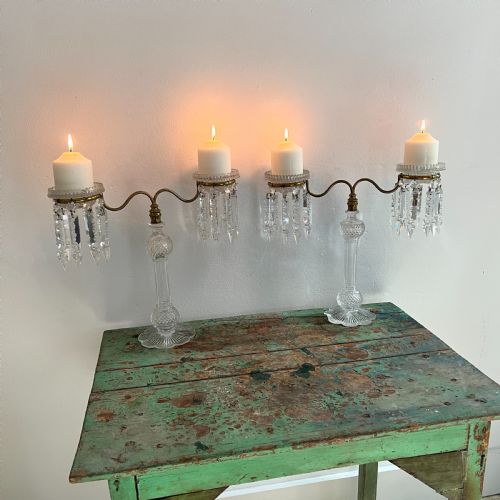
Brass and glass candlesticks combine solid metal bases with transparent or coloured glass elements, often taking the form of table lamps, candelabra, and lustres. These pieces span periods from the eighteenth century through the Victorian and Edwardian eras up to the nineteen-thirties.
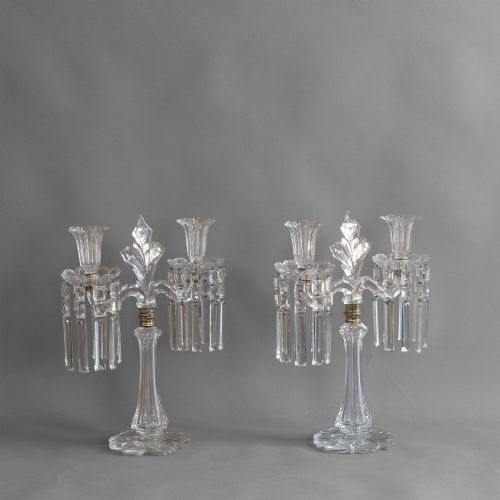
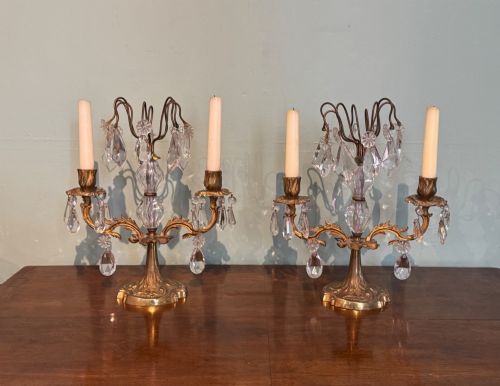
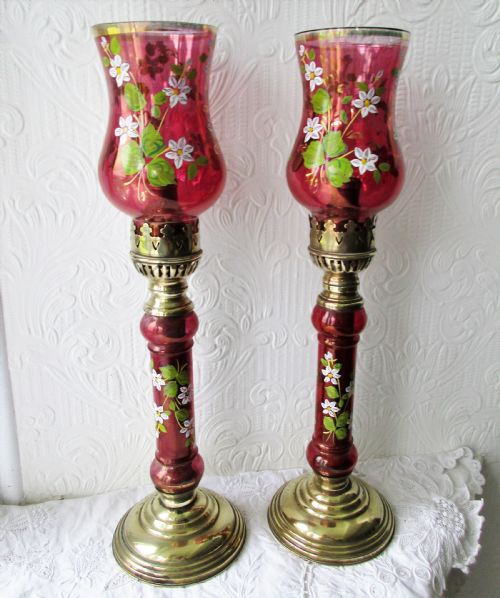
The combination relies heavily on cast or turned brass paired with cut glass, crystal, opaline, or cranberry glass. Buyers frequently encounter pairs of lustres adorned with hanging crystal drops or candle lamps fitted with glass chimneys and storm shades.
Origins stretch from English workshops to French makers influenced by empire and rococo revival styles. Functional items such as oil lamps and patent cricklites also appear within this group alongside traditional candle holders.
How they were made
Makers utilised cast and turned brass for the structural components, creating stable weighted bases and slender stems that could support heavy glass top sections. Gilt finishes and bronze mounts were applied to enhance the decorative metalwork.
Glass elements were mouth-blown, moulded, or heavily cut and polished to create facets that refracted candlelight. Coloured variants like blue, green, and cranberry glass were achieved through specific mineral additions during the glassmaking process.
Brass and Glass Candlesticks Retail Price Guide 2026
Typical asking prices for brass and glass candlesticks among the pieces listed under this phrase on Sellingantiques today, from the lower quarter to the upper quarter. They describe what is for sale here now, not the wider market.
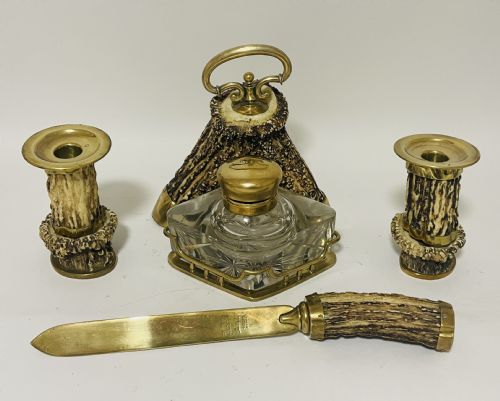
Some nineteenth-century desk sets cleverly mount deer antlers directly into the brass work alongside the glass inkwells.
What varies in quality
Quality rests upon the crispness of the brass casting and the depth of hand-cutting on the glass components. Superior examples display precise turning on the metal and flawless clarity or rich saturated colour in the glass.
The completeness of the hanging lustres and the originality of the brass mounts or chimneys determine the standing of a piece. Finer items integrate the metal and glass securely with well-matched components rather than mismatched replacements.
Clarke
The Brass and Glass Candlesticks Glossary
- Lustre
- A decorative tabletop piece featuring glass pendants or drops hung around the rim to reflect candlelight. These are often found in pairs.
- Cricklite
- A patented nineteenth-century night light and candle lamp system utilising a specific form of glass shade and base, often associated with Clarke.
- Opaline
- An opaque or translucent pale glass popular in the nineteenth century, ranging in tone from white to soft pastels.
- Storm shade
- A tall glass cylinder placed around a candle flame to prevent drafts and flickering in hallways or dining rooms.
- Cut glass
- Glassware shaped and patterned by grinding facets into the surface on a wheel to increase light refraction.
Brass and Glass Candlesticks: Frequently Asked Questions
What are brass and glass candlesticks?
These are decorative lighting items that combine metal bases with glass components to hold candles or burn oil.
They range from simple nineteenth-century brass sticks with glass chimneys to elaborate multi-branch candelabra hung with crystal drops.
How do you clean glass lustres?
Cleaning requires removing the hanging glass drops and washing them individually in lukewarm soapy water.
The brass parts should be wiped gently with a dry or slightly damp cloth to avoid disturbing the aged patina.
Where were these candlesticks used?
They sat upon dining tables, mantelpieces, and desks in period homes to provide illumination before electric lighting became common.
Tall candelabra and table lamps also stood on sideboards where their glass pendants would catch the ambient room light.
How can I date a candlestick?
Dating relies on observing the manufacturing techniques, such as the style of brass casting and the depth of the glass cutting.
Victorian and Edwardian pieces often display distinct revival styles or patent markings that help narrow down their period of origin.