





Boxed Silver Forks
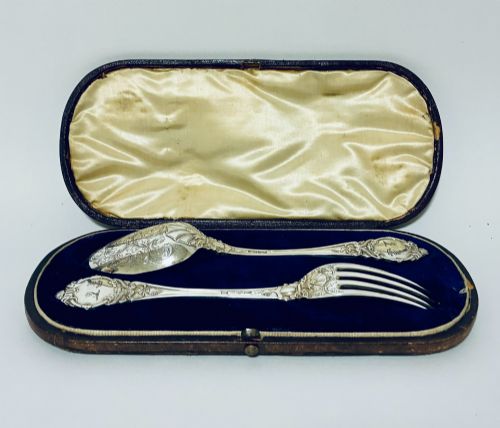
These boxed silver forks unite fine dining cutlery with dedicated presentation cases across Victorian, Edwardian, and Georgian eras.
Boxed Silver Forks
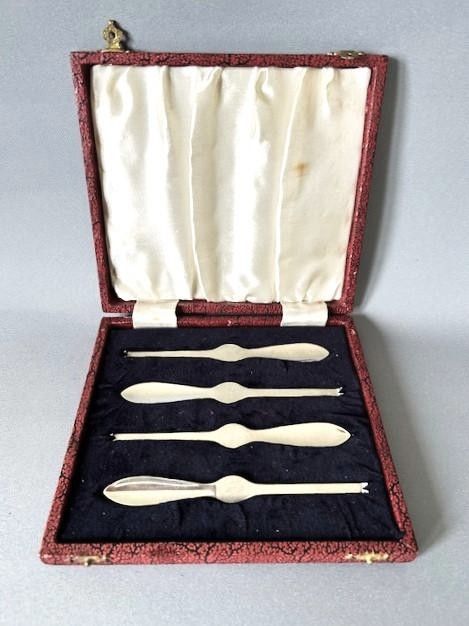
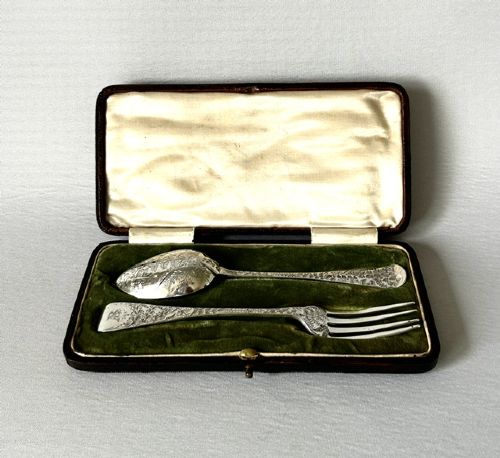
When you search for boxed silver forks, you find fitted cases containing everything from individual fruit knives and dessert sets to specialised seafood picks and Christening gifts. These sets span periods from the Georgian era through to the 1920s, reflecting formal dining traditions where specialised cutlery had its own designated storage.
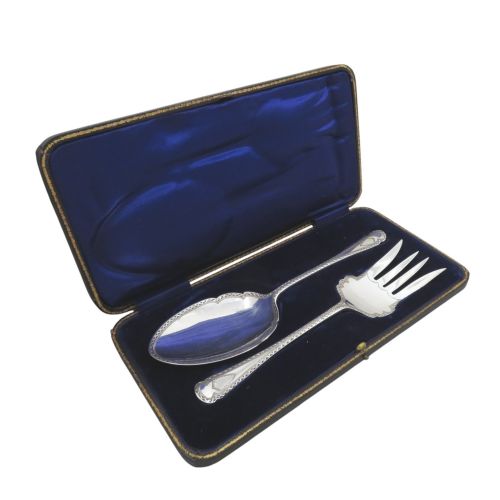
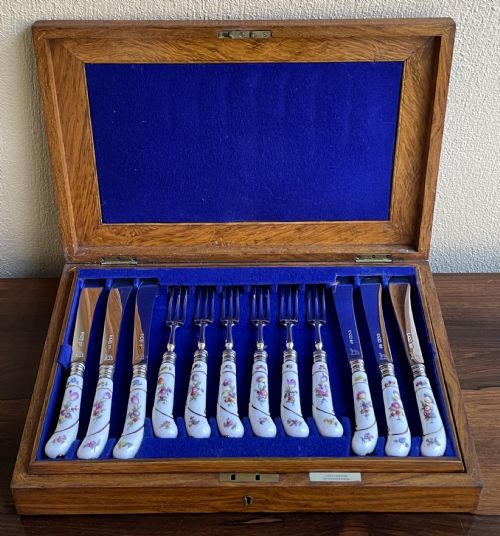
The most common examples on this page are Victorian and Edwardian dessert sets, fruit sets, and Christening cutlery. You will also encounter serving cutlery, cake forks, lobster picks, and pickle forks, often nestled in custom velvet or silk lined boxes.
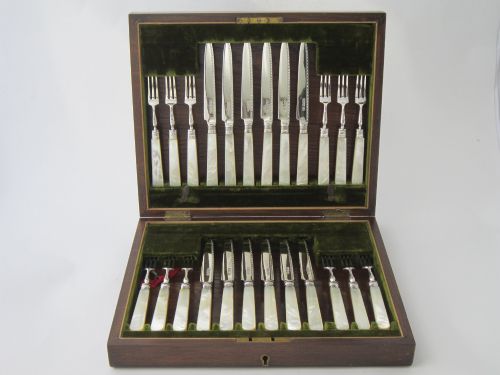
Materials extend beyond solid metal to include mother of pearl, wood, leather, porcelain, and horn. Sets range from small pairs of pickle forks to large canteens and service sets for multiple persons.
Materials and construction
Cutlery pieces in these sets are fashioned from sterling silver or silver plate, sometimes enhanced with silver gilt and guilloche enamel. Handles frequently incorporate natural materials such as mother of pearl, ivory, horn, and porcelain alongside traditional metals.
The protective cases themselves are constructed from wood covered in leather, with interiors lined in silk or velvet to cradle each fork and knife securely in fitted slots.
Boxed Silver Forks Retail Price Guide 2026
Typical asking prices for boxed silver forks among the pieces listed under this phrase on Sellingantiques today, from the lower quarter to the upper quarter. They describe what is for sale here now, not the wider market.
Listings feature sterling silver and silver plate items spanning Victorian, Edwardian, Georgian, and Art Deco periods, accompanied by velvet and silk lined wood cases.
Assessing the grade
Quality in these sets rests upon the weight and purity of the silver, the integrity of the fitted case, and the matching of components. Sterling silver sets command higher regard than silver plated alternatives, though exceptional plating by recognised makers holds strong appeal.
The condition of the interior velvet or silk lining and the preservation of natural handle materials like mother of pearl or ivory significantly influence the overall standard of a set.
Carrington·Harrods·Georg Jensen·Waring & Gillows·George Unite·Boulenger
The Boxed Silver Forks Glossary
- Sterling silver
- A silver alloy containing 92.5 percent pure silver and 7.5 percent other metals, usually copper, ensuring durability for cutlery use.
- Silver plate
- A layer of silver applied to a base metal core, offering the appearance of solid silver at a different production tier.
- Fiddle pattern
- A traditional nineteenth-century cutlery handle shape featuring a narrow stem that widens toward a squared, shoulders-down terminal.
- Mother of pearl
- The iridescent internal layer of pearl oyster shells, shaped and polished to form smooth, decorative knife and fork handles.
- Guilloche enamel
- A decorative technique where a precise geometric pattern is engraved beneath a translucent layer of coloured enamel.
Boxed Silver Forks: Frequently Asked Questions
What are boxed silver forks used for?
These forks were designed for specific dining rituals, including dessert courses, fruit consumption, seafood, pickles, and ceremonial Christening gifts. Each set matched the specific food being served at formal Victorian and Edwardian tables.
The fitted boxes kept the delicate items protected between meals, often preserving delicate materials like mother of pearl and ivory from damage.
How do I care for silver cutlery?
Keep your silver forks clean by washing them by hand in warm soapy water and drying them immediately with a soft cloth. Avoid using harsh abrasive dips that can strip away fine detail or damage natural handle materials.
Store the pieces within their original fitted boxes to prevent scratching and to minimise exposure to air which accelerates tarnishing.
Why do some sets include knives?
Many period dining sets were produced as matched pairs of knives and forks to handle specific foods like fruit, fish, and dessert courses. The knife and fork were designed to complement each other in both decorative style and material.
Cases were custom fitted with specific indentations to hold both utensils securely side by side.
How can I date my cutlery set?
Dating relies on hallmarks stamped on the silver, stylistic cues of the handles, and the construction of the presentation box. British silver hallmarks include date letters and maker's marks that pinpoint the exact year of manufacture.
Design styles like Georgian, Victorian, Edwardian, and Art Deco also provide clear chronological boundaries for when a set was produced.