

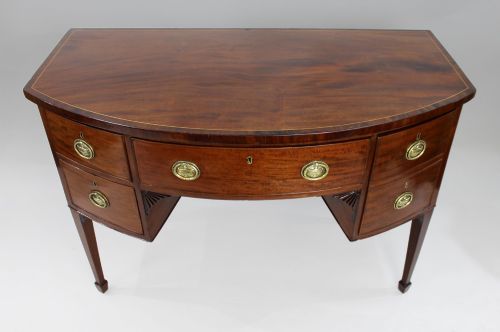
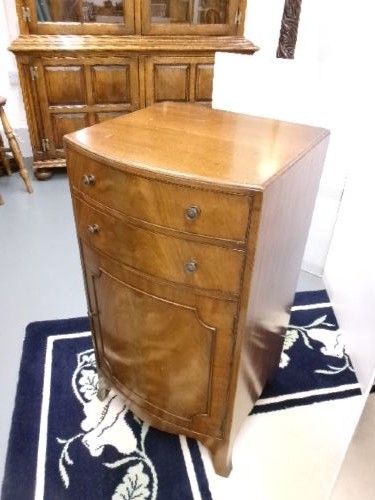
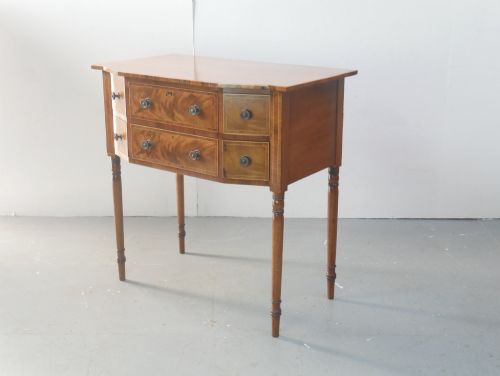
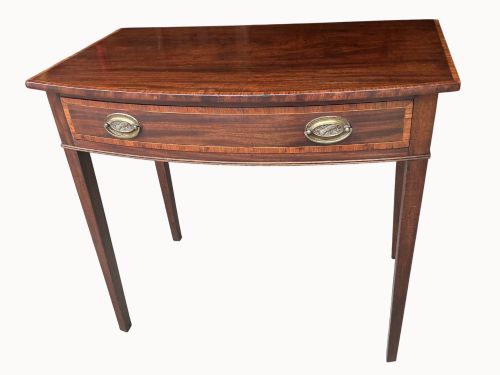



Bowfronted Side Table
A bowfronted side table brings a curved mahogany silhouette to an interior, offering practical surface space alongside refined proportions.
Bowfronted Side Table
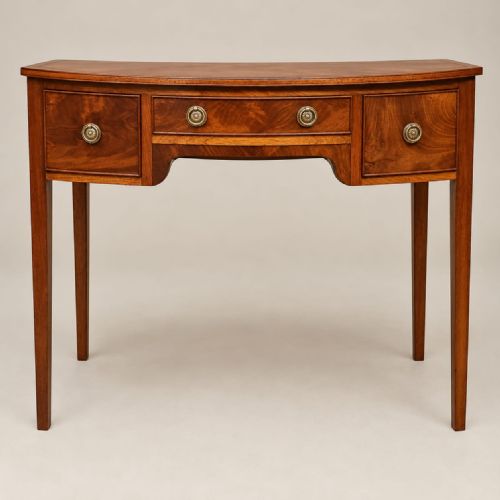
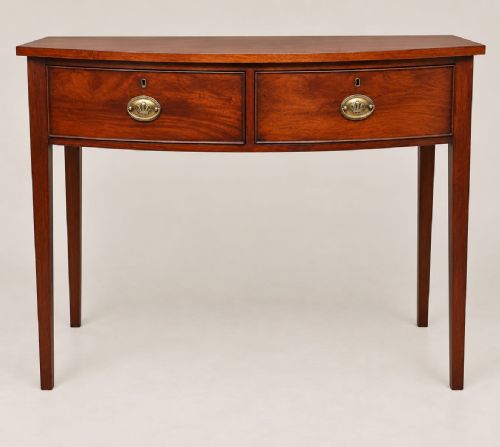
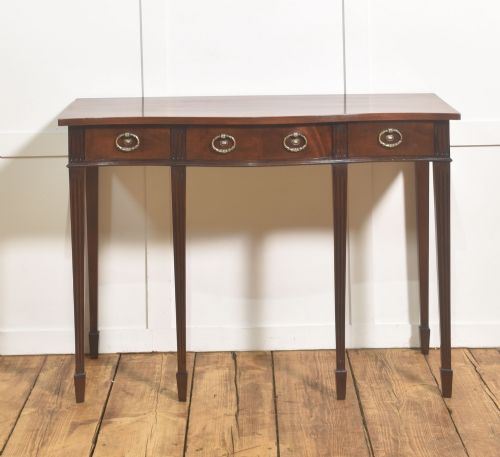
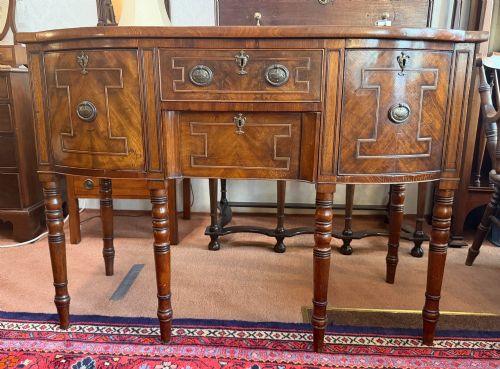
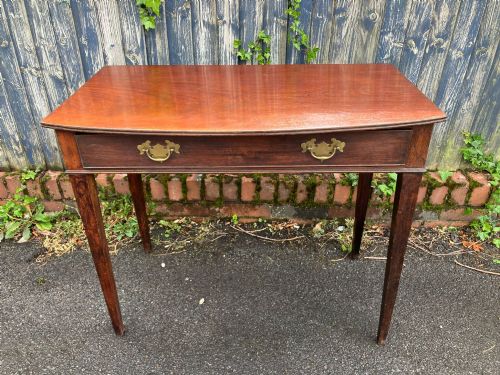
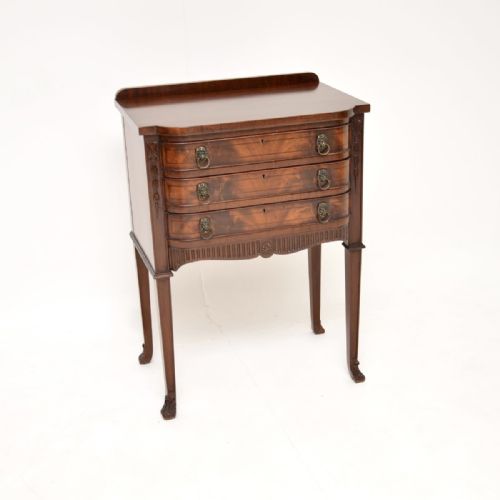
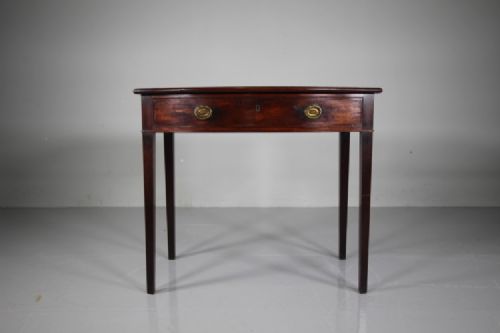
A bowfronted side table presents a convex curved front facade that softens the linear feel of a traditional room. These versatile pieces appear frequently across Georgian, Regency and Edwardian periods, serving as side tables, servers or hall tables.
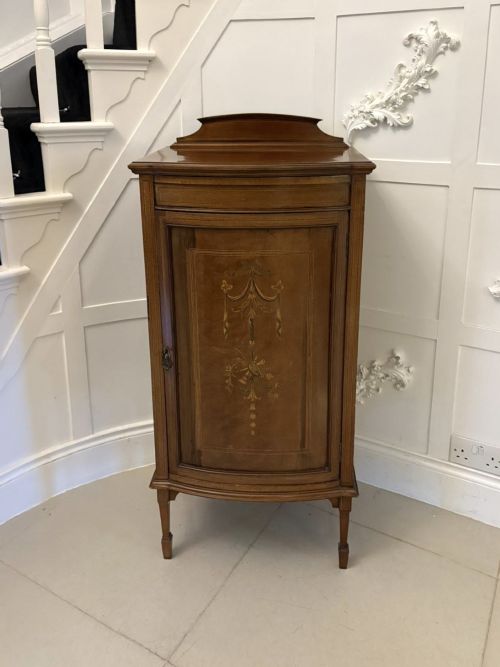
The dominant material in this selection is mahogany, often enhanced by satinwood, boxwood inlay or contrasting ebonised details. Examples range from simple two-drawer designs to more elaborate side cabinets and writing tables featuring marble tops.
Buyers will find both genuine period items dating back to the eighteenth and nineteenth centuries alongside later Edwardian and twentieth-century interpretations in the Sheraton or Georgian style.
Assessing quality and craftsmanship
The distinction between tiers of quality rests in the crispness of the curved woodwork and the precision of the inlay work. Finer examples display seamless timber matching across the convex front drawers and restrained, balanced proportions.
Subtleties in secondary timbers, the neatness of dovetail joints on the drawers and the original patination of the mahogany finish separate standard utility pieces from high-status cabinet work.
Bowfronted Side Table Retail Price Guide 2026
Typical asking prices for bowfronted side table among the pieces listed under this phrase on Sellingantiques today, from the lower quarter to the upper quarter. They describe what is for sale here now, not the wider market.
Periods represented span from the 18th century through the Georgian and Regency eras into Edwardian times and the 1930s.
Maples
The Bowfronted Side Table Glossary
- Bowfront
- A convex curved front facade characteristic of cabinets, sideboards and tables designed to soften room angles.
- Inlay
- A decorative technique where contrasting woods like satinwood or boxwood are embedded into the primary mahogany surface.
- Serving table
- A large side table traditionally utilised in dining rooms for presenting dishes before or during meals.
- Console table
- A table designed to stand against a wall, frequently supported by wall brackets or decorative legs.
- Ebonised
- Wood treated with a dark finish to imitate expensive ebony, used for contrast on mouldings and trims.
Bowfronted Side Table: Frequently Asked Questions
Where should I place a bowfronted side table?
A bowfronted side table suits a hallway, dining room or living space where its curved front provides a softer profile than a standard rectangular table. It functions effectively as a serving surface, a lamp table or a compact writing desk.
Because the front projects outward in an arc, ensure the placement allows sufficient clearance for walking past the curve in narrower corridors or smaller rooms.
How do I date a mahogany bowfront table?
Dating relies on examining construction methods, timber choice and style markers such as leg shapes and inlay patterns. Georgian and Regency pieces typically show hand-cut dovetails and older patination on the mahogany.
Later Edwardian or twentieth-century reproductions often feature more uniform factory-cut joints and lighter internal framing while still adhering to classic Sheraton or Georgian proportions.
Can I use a bowfronted side table as a desk?
Many surviving examples double as writing tables or dressing tables, particularly those equipped with fitted drawers and flat timber tops. Some variations incorporate fold-down panels or leather inset writing surfaces for everyday utility.
Check the kneehole clearance underneath the drawer frame to ensure comfortable seating if you intend to use the piece regularly for writing or computer work.
What is the difference between a side table and a serving table?
Serving tables are generally longer and deeper pieces designed for dining rooms to hold food and silverware during meals. Side tables are typically more compact and versatile, suited for general placement against any wall in the house.
Both forms utilise the curved bowfront design to maximise surface space while maintaining a graceful footprint.