

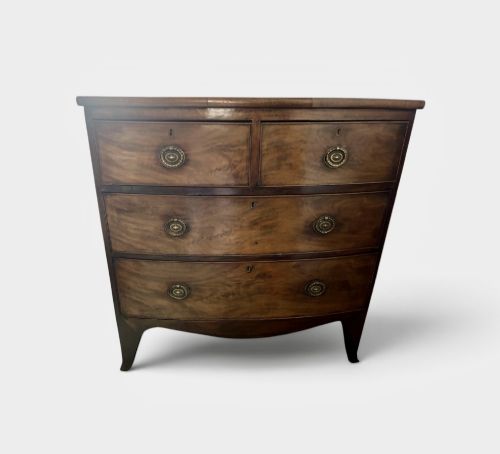
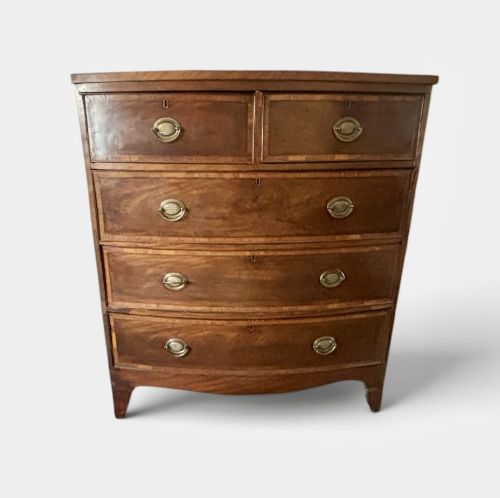
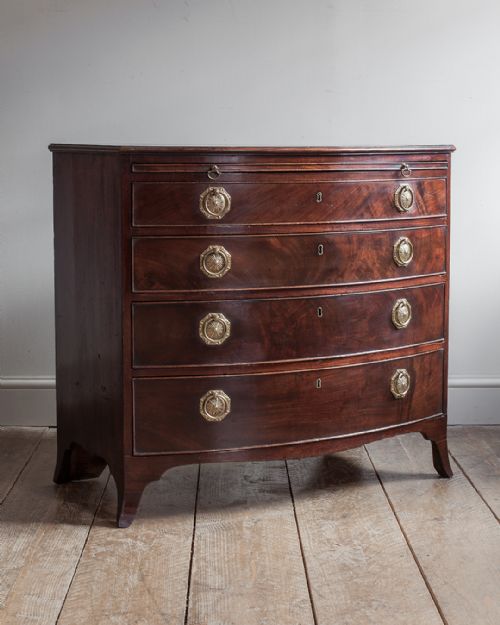
Bowfront Storage Chest
A bowfront storage chest offers curved elegance and substantial capacity, uniting practical bedroom utility with classic period craftsmanship.
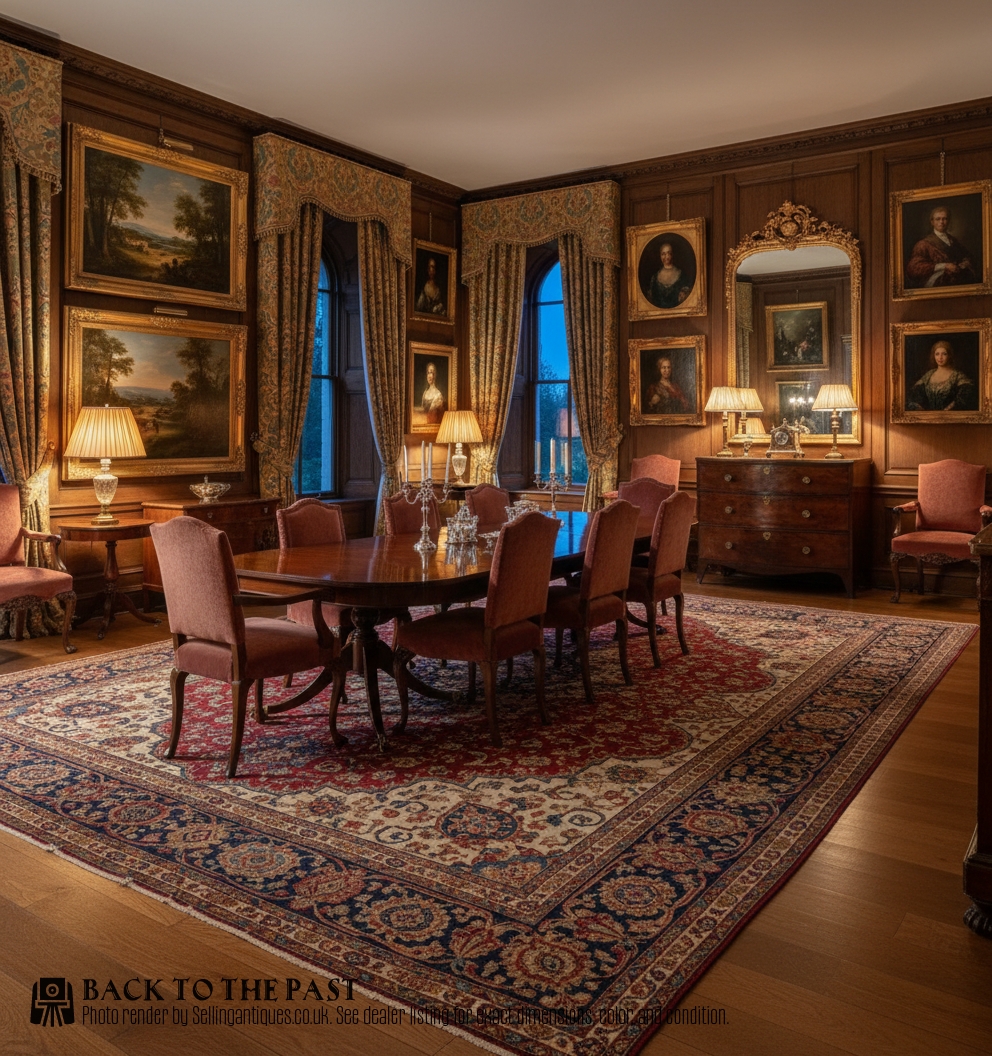
Bowfront Storage Chest
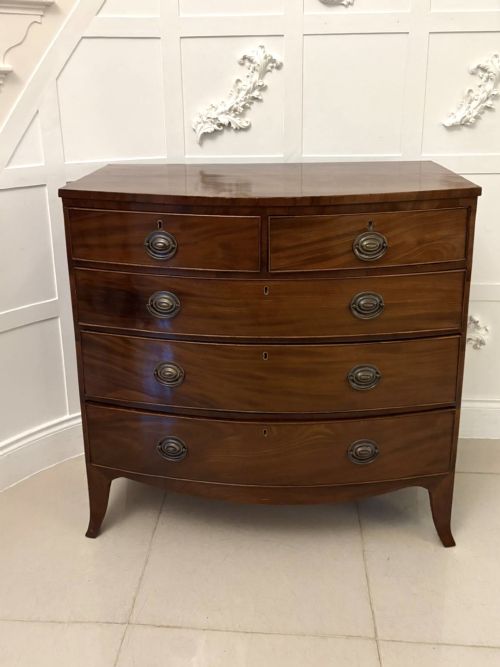
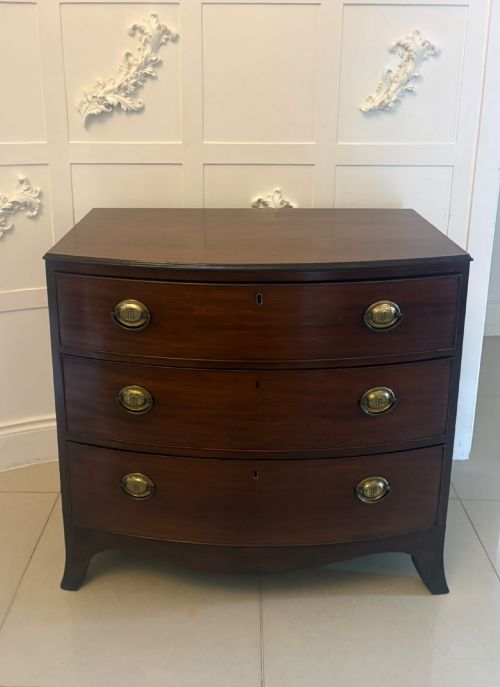
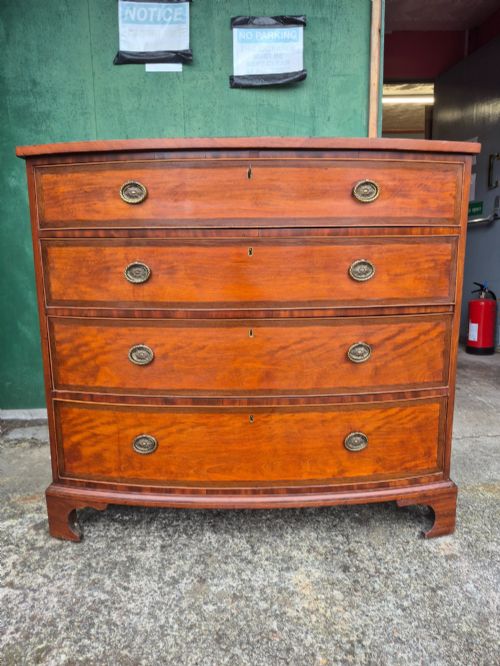
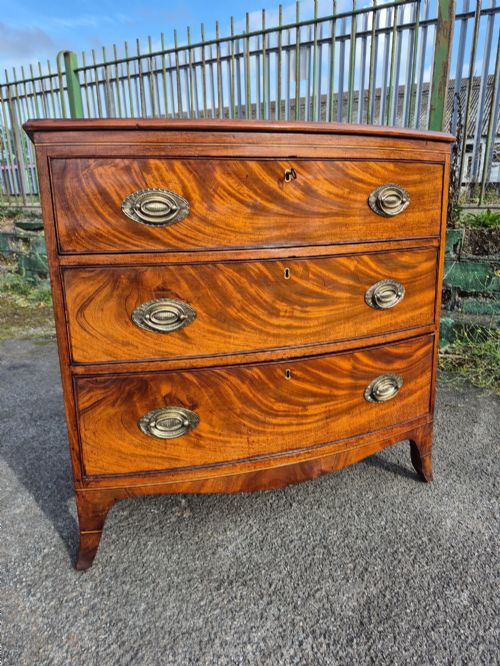
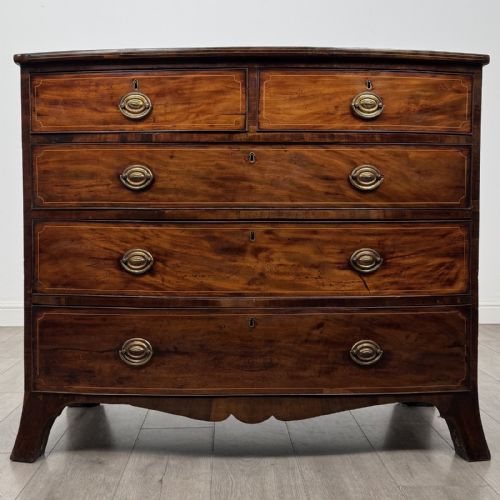
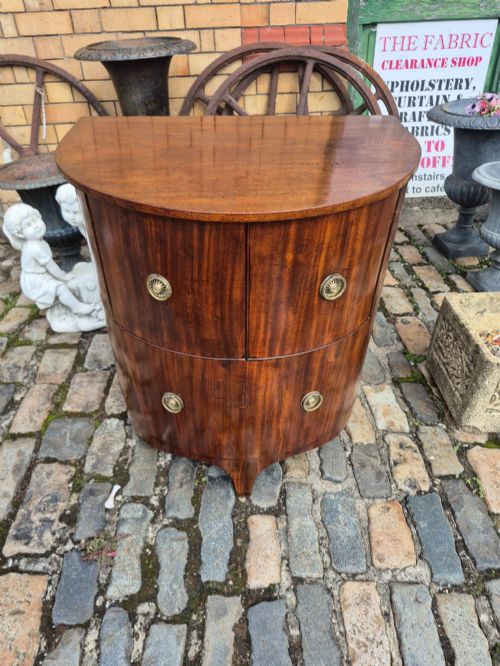
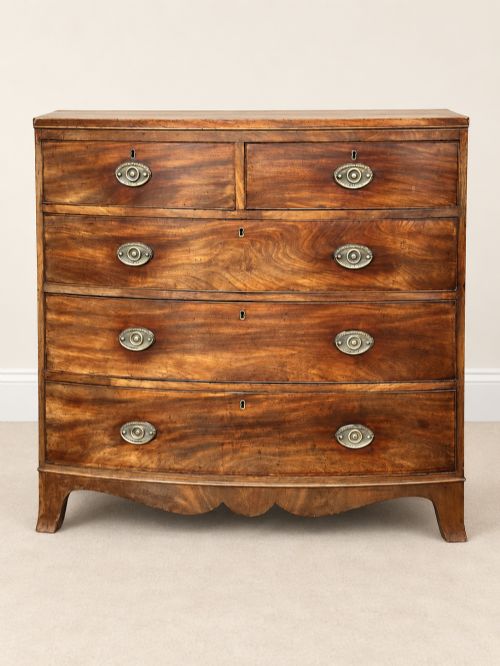
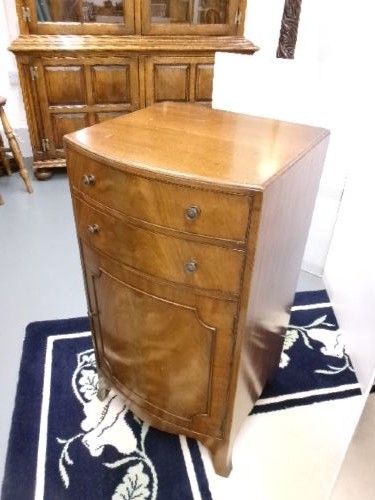
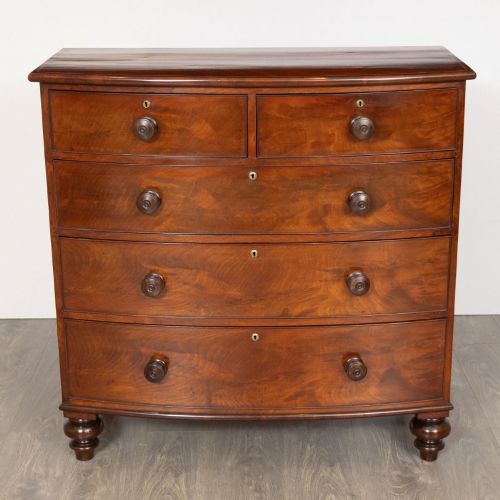
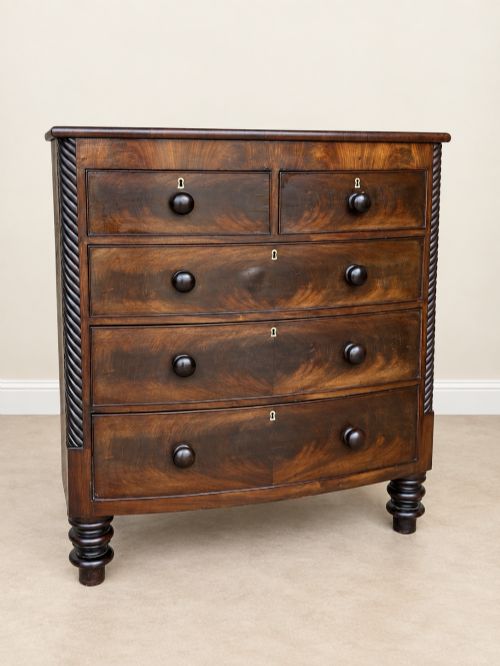
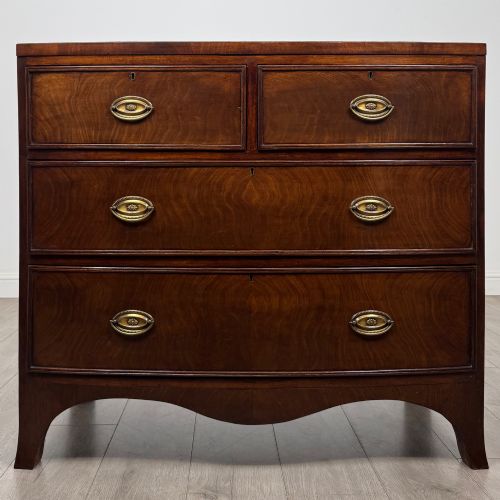
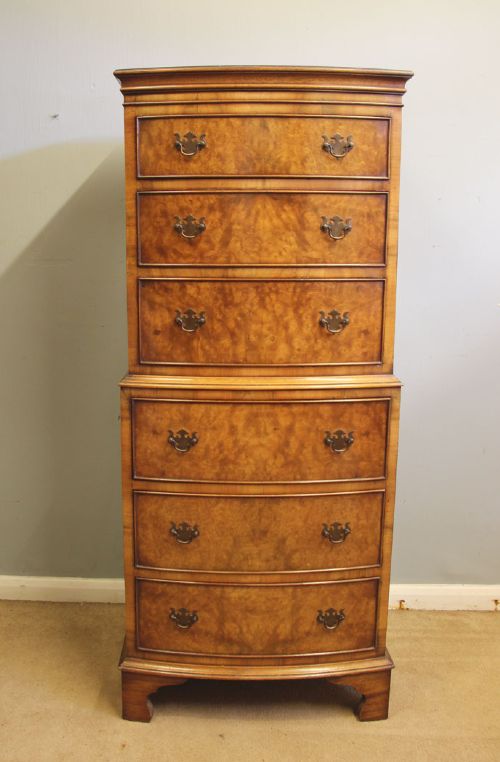
When you search for a bowfront storage chest, you encounter a distinct form of case furniture defined by a rounded, convex front profile that projects forward from the wall. These pieces primarily manifest as chests of drawers, alongside taller chest on chest structures, linen presses, and occasional sideboards.
The versions most frequently met on this page span the Georgian, Regency, and Victorian periods, supplemented by later twentieth-century interpretations from the nineteen-twenties and thirties. Proportions range from compact small chests to narrow and tall formats designed to maximise floor space.
Origins stretch across regional British workshops, encompassing distinct Georgian cabinet-making traditions as well as Scottish and Welsh interpretations. The primary function remains domestic storage, housed within a silhouette that softens the rigid corners typical of standard rectangular furniture.
Materials and construction methods
Cabinet-makers relied heavily on solid timber and carefully selected veneers to achieve the curved facade of a bowfront storage chest. Mahogany forms the backbone of surviving examples, often paired with contrasting decorative timbers such as satinwood for banding or crossbanding.
Flame mahogany veneer and burr walnut are utilised on primary surfaces to introduce striking grain patterns and visual depth. Secondary structural timbers such as oak and pine appear within drawer linings and internal framing, providing stable support for the curved drawer fronts.
Listings feature pieces spanning the eighteenth to the twentieth century, constructed primarily in mahogany, oak, and burr walnut.
Distinctions in quality and execution
The standard of a bowfront storage chest is governed by the precision of its joinery and the selection of its timber figures. Superior examples display seamless integration of curved drawer fronts that maintain smooth operational clearance along the rounded frame.
Finer pieces incorporate thoughtful details such as stringing, satinwood banding, and substantial brass hardware that complement rather than overpower the grain. The integrity of the internal drawer construction and the matching of veneer patterns across the front further separate standard utility items from master cabinet-work.
The Bowfront Storage Chest Glossary
- Bow front
- A convex, curved front facade that projects outward, softening the linear profile of a case piece. This curved design requires specialist joinery to shape drawers and frames accurately.
- Crossbanding
- A decorative border of veneer laid perpendicular to the grain of the primary surface. It frames drawer fronts and top panels with a contrasting directional grain.
- Caddy top
- A raised, moulded table top design with stepped edges resembling the lid of a tea caddy. This profile is frequently encountered on eighteenth and early nineteenth-century case pieces.
- Chest on chest
- A tall storage unit comprising two distinct chests stacked vertically, with a smaller upper section resting on a wider base. Also known as a tallboy, it maximises vertical storage capacity.
- Satinwood
- A durable, yellowish timber native to the tropics, utilised for contrasting inlays and banded details. Its lustrous grain provides a bright visual accent against darker mahogany.
Bowfront Storage Chest: Frequently Asked Questions
How do I date a bowfront chest?
Dating relies on observing construction methods, timber choices, and hardware styles across periods ranging from the Georgian era to the twentieth century. Early pieces often feature hand-cut dovetails and native mahogany, while later revival pieces incorporate different internal framing.
Examining the secondary woods inside the drawers and the style of the bracket feet or apron provides further clues to the decade of manufacture.
Where should I place a bowfront chest in my home?
The curved profile makes these pieces well suited for bedrooms, hallways, or living rooms where linear furniture might feel too blocky. Their rounded front projects into the room, creating a softer visual focal point.
Ensure adequate clearance in narrow walkways to accommodate the protruding convex shape.
How do I care for mahogany and walnut veneers?
Maintain timber surfaces by dusting with a dry, soft cloth and avoiding placement near direct heat sources or strong sunlight. Excessive warmth can dry out old veneers and cause lifting.
Periodically feeding the wood with an appropriate wax polish preserves the natural lustre and protects the grain.