

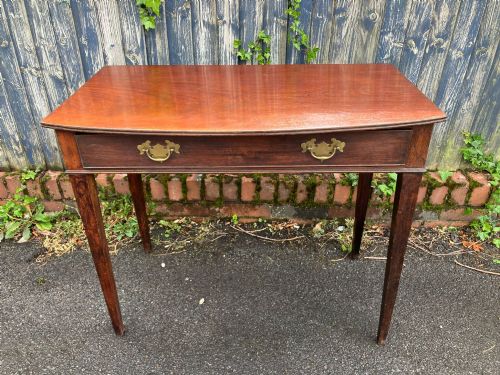
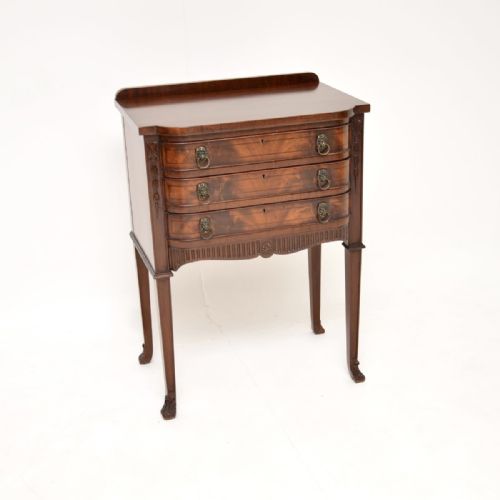


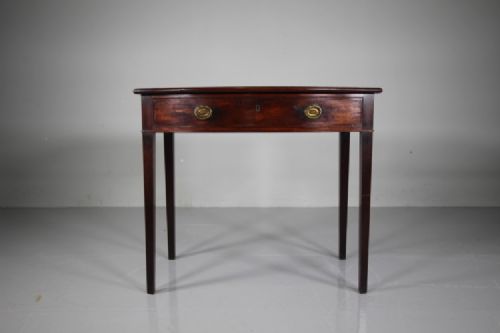


Bowfront Mahogany Side Table
A bowfront mahogany side table brings together graceful curved lines and rich timber grain, serving as a practical and elegant surface for a room.
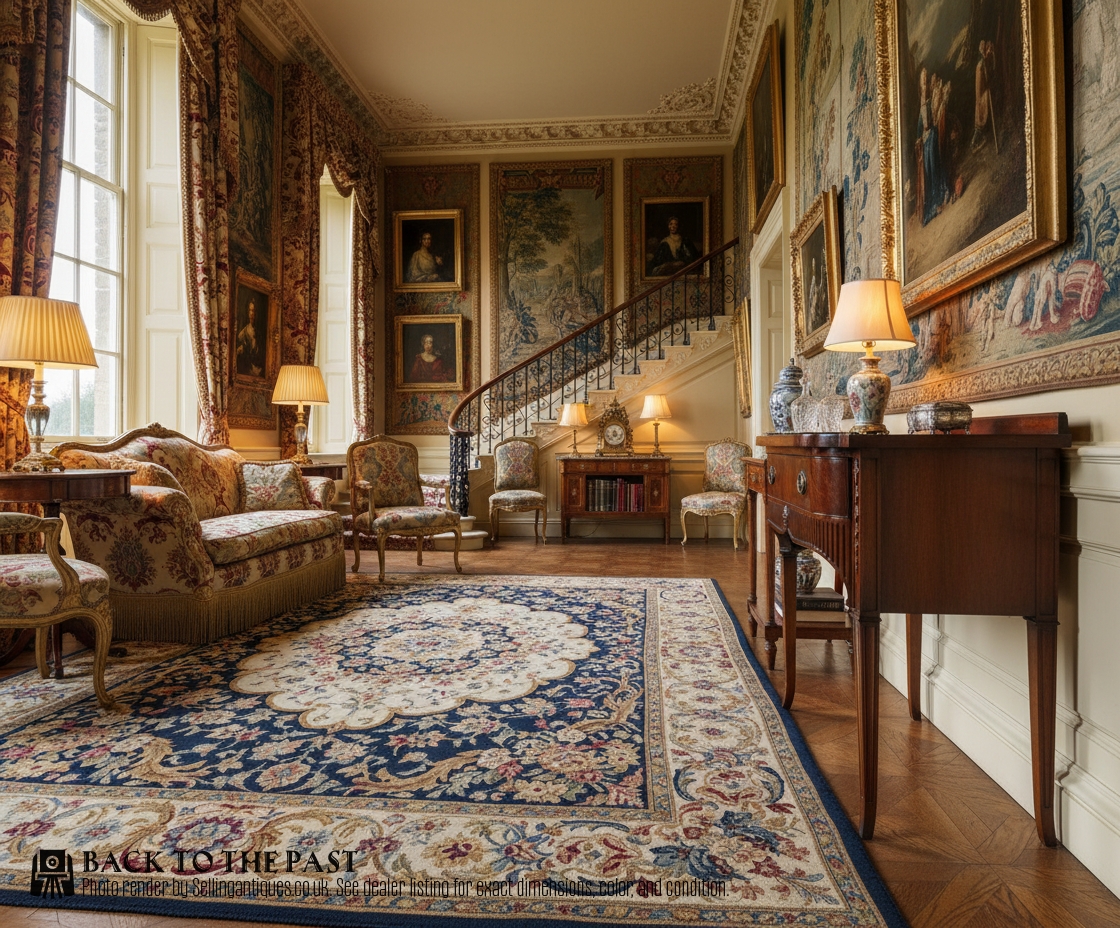
Bowfront Mahogany Side Table
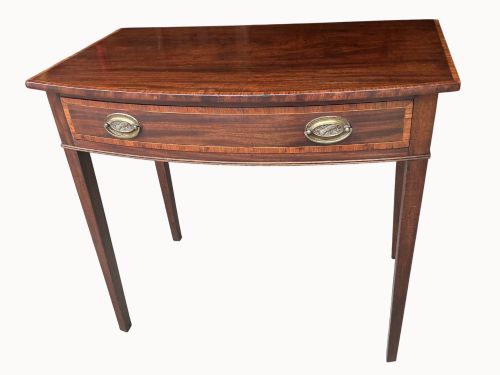
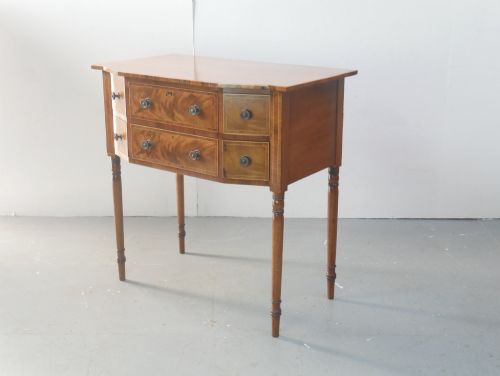
A bowfront mahogany side table is defined by its distinctive convex curving front and solid timber construction, appearing frequently in Georgian and nineteenth century examples. These versatile pieces function effectively as serving tables, hall tables, or compact writing desks depending on their height and drawer configuration.
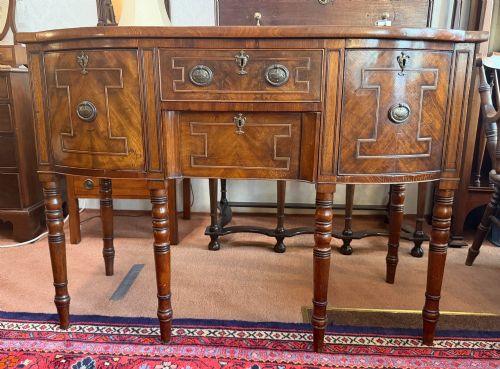
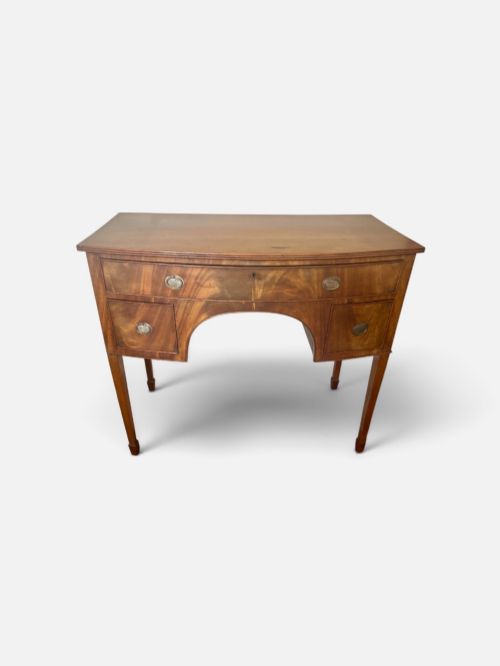
The versions met most often on this page date from the Georgian and Regency periods, alongside later nineteenth and early twentieth century revivals. They range from small single drawer variants to larger kneehole formats and serving tables designed to fit neatly against a wall.
Materials and construction methods
Makers utilised dense mahogany timbers, often selecting flame mahogany veneer for the curved drawer fronts to create striking visual depth. Secondary woods such as oak or pine appear in drawer linings, while decorative detailing frequently incorporates boxwood and satinwood inlay.
Constructing a curved front required precise carpentry, bending or cutting solid timber and veneers to follow the sweeping radius without distortion. Brass hardware, including handles and escutcheons, completes the construction of period pieces.
Listings feature mahogany, satinwood, and boxwood inlay alongside marble tops and leather writing surfaces across Georgian and later revival periods.
Judging quality and proportion
Quality rests heavily on the crispness of the inlay work, the matching of veneer grains across the curved drawer fronts, and the integrity of the original brass hardware. Superior examples maintain balanced proportions where the gentle sweep of the bowfront complements the height of the slender legs.
The thickness and rich patina of the primary timber distinguish finer items from later revivals, alongside the neatness of internal drawer dovetails. Pieces that retain their original polished surfaces and structural solidity represent the upper tier of the range.
The Bowfront Mahogany Side Table Glossary
- Bowfront
- A convex curved front contour popular in cabinet making from the late eighteenth century onward. This shape softens the corners of a room and adds visual movement to case furniture.
- Crossbanding
- A narrow strip of veneer laid around the border of a table top or drawer front with the grain running at right angles to the central panel. This technique creates a neat framing effect.
- Kneehole
- A recessed central space beneath a desk or table top, often flanked by small drawers. It allows a person to sit comfortably close to the writing surface.
- Frieze drawer
- A drawer located immediately beneath the top surface of a table, often integrated into the structural rail. These drawers typically feature hand cut dovetails in older examples.
- Satinwood
- A pale, hard timber utilised for contrasting stringing and inlay details on mahogany furniture. Its lustrous grain catches the light effectively.
Bowfront Mahogany Side Table: Frequently Asked Questions
How were these tables used originally?
These tables served primarily in dining rooms and halls as serving surfaces for food, silver, or lighting. Their shallow depth allowed them to sit against walls without obstructing pathways.
Over time, smaller versions found purpose in bedrooms and drawing rooms as dressing tables or writing desks, holding stationery or personal items.
How do I tell a Georgian piece from a later revival?
Early pieces from the eighteenth and early nineteenth centuries display hand cut dovetails, aged timber patination, and construction methods characteristic of period workshops. Secondary woods inside the drawers usually consist of native oak or pine.
Later revival pieces from the Edwardian era or the nineteen twenties often show machine cut elements, uniform modern finishes, and differing interior timbers despite following traditional styles.
Where should I place a bowfront table in my home?
A narrow hall or landing makes an ideal spot for a bowfront table, offering a decorative surface for lamps or keys without taking up much floor space. Their curved profile prevents sharp corners from jutting into walkways.
They also function effectively behind sofas or as compact dressing units in bedrooms, pairing well with a small mirror hung above.
What maintenance do mahogany surfaces require?
Mahogany benefits from occasional application of quality furniture wax to nourish the timber and maintain its deep lustre. Avoid placing these tables in direct sunlight or near heat sources to prevent the wood from drying out.
Regular dusting with a soft, dry cloth keeps the polished finish clear and protects the delicate veneers from abrasive particles.