
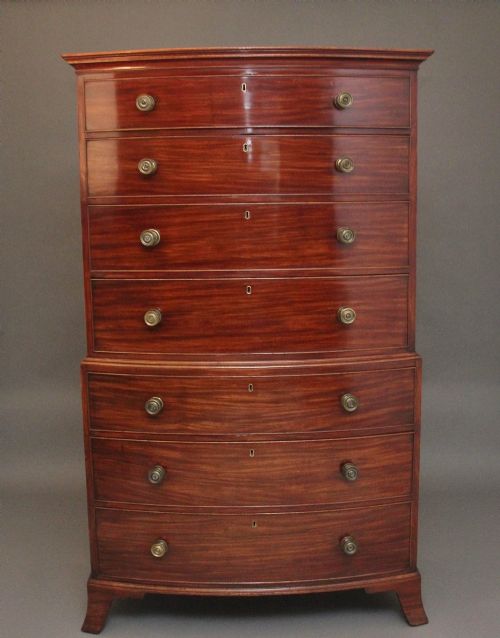
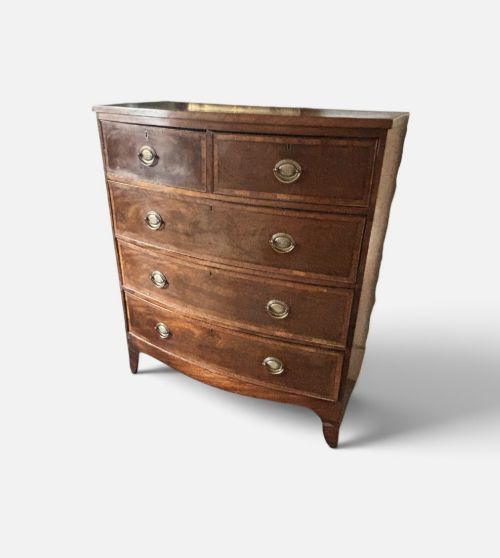
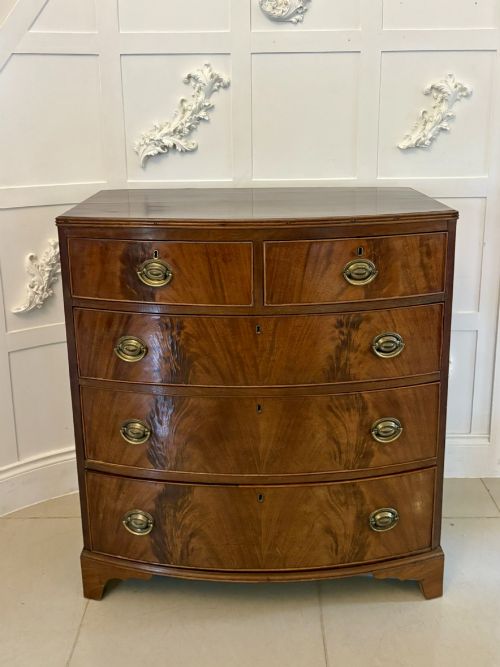
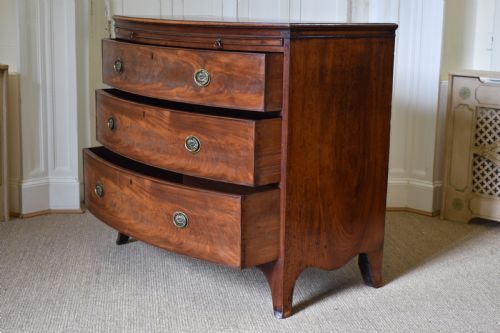
Bowed Front Mahogany Chest
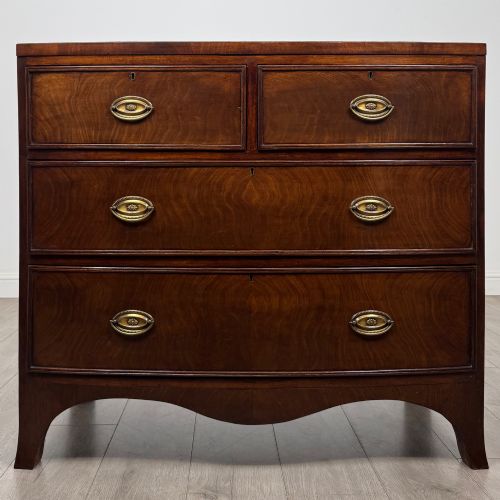
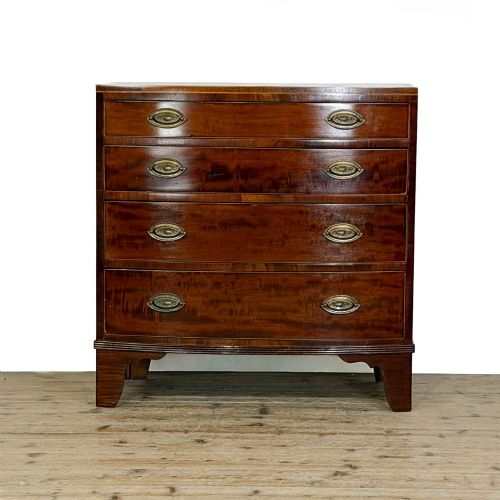
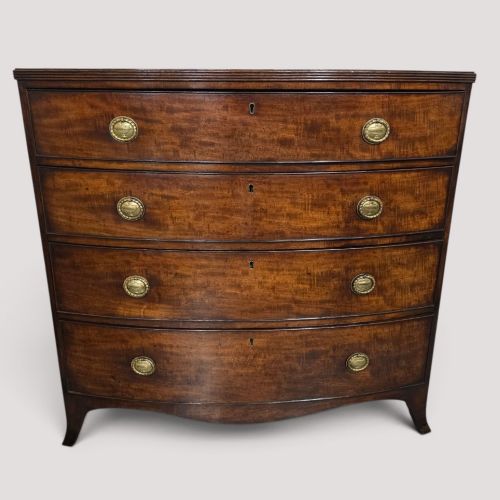
A bowed front mahogany chest brings together curved timber and generous proportions, offering practical storage with a softened silhouette.
Bowed Front Mahogany Chest
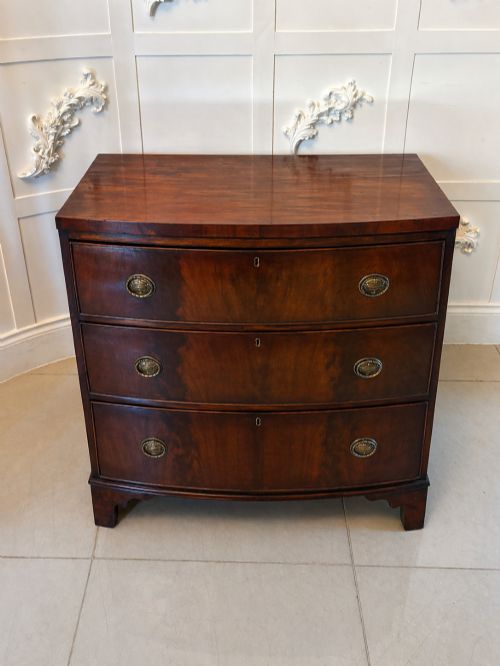
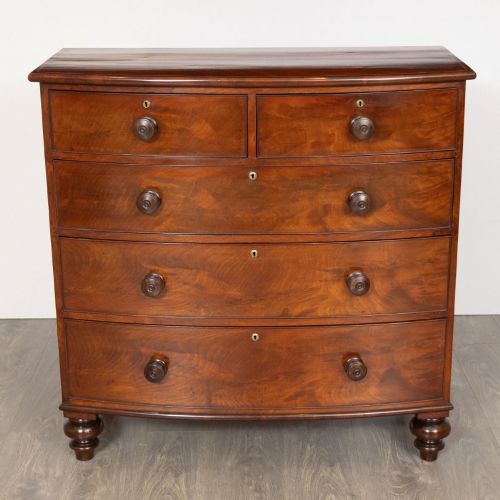
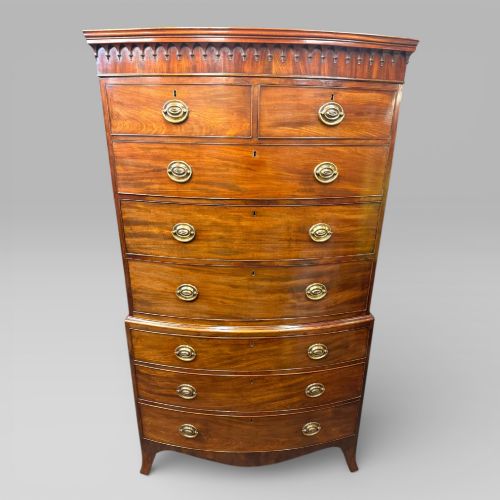
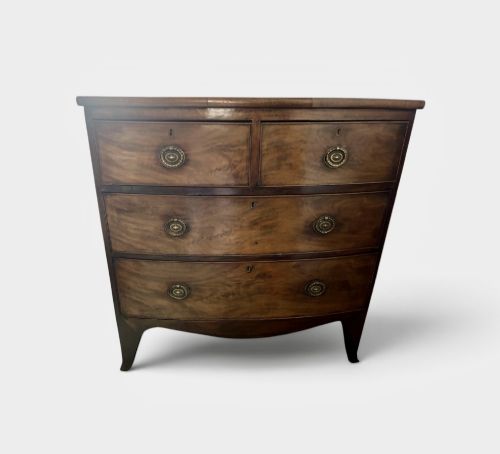
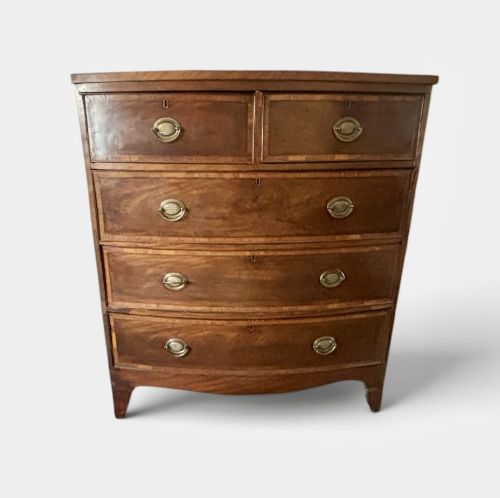
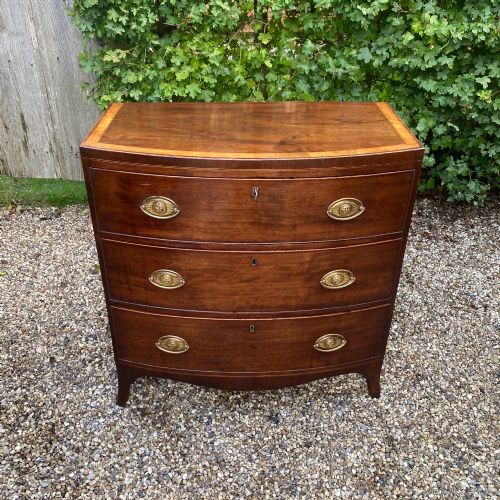
A bowed front mahogany chest presents a curved profile that projects outward at the centre, replacing rigid linear edges with a sweeping line. You encounter this form most frequently in pieces from the Georgian, Regency, and Victorian periods, where cabinet makers utilised the natural warmth of timber to enhance domestic interiors.
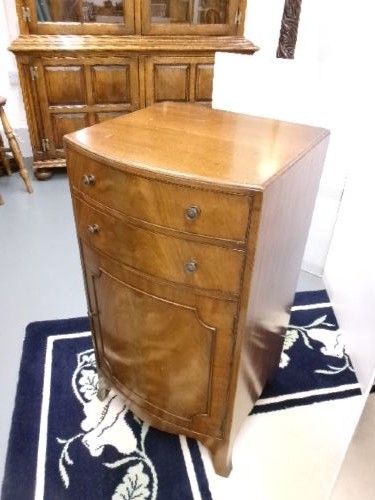
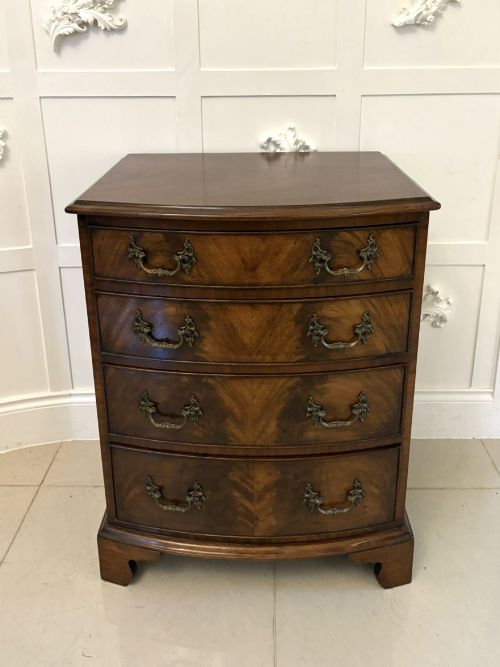
The primary form is the chest of drawers, though variants include tallboys, dressing chests, and smaller bedside cabinets. These items span the eighteenth and nineteenth centuries, occasionally extending into early twentieth-century interpretations.
Construction relies on solid timbers and veneers arranged to follow the curve of the carcass. Makers integrated graduated drawers and occasional secret compartments, balancing decorative ambition with utility.
Materials and Construction Techniques
Construction centres on mahogany, frequently selected in figured or flame grains to create lively patterns across the curved drawer fronts. Workshops paired this primary timber with secondary woods such as pine for internal framing and drawer linings.
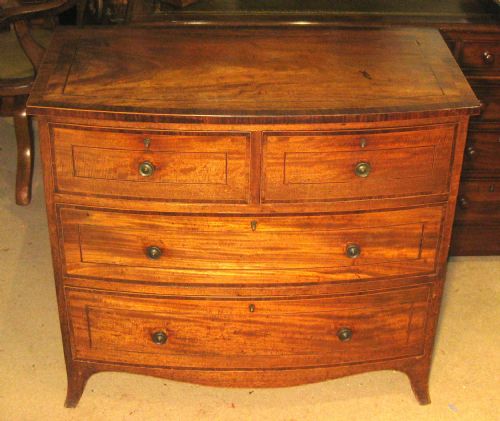
Satinwood banding and crossbanding appear along borders and edges, providing a sharp tonal contrast against the deeper brown of the mahogany body. Brass handles and escutcheons punctuate the drawer fronts, fixed securely through prepared plates.
Bending and shaping the timber required precise joinery to maintain structural integrity along the convex facade. Cabinet makers laid flame mahogany veneers over stable backing boards, ensuring the curved surfaces resisted warping over time.
Object forms include standard chests of drawers, tallboys, dressing tables, bedside cabinets, and miniature furniture.
Factors That Distinguish Quality
Quality rests in the selection of the mahogany veneer and how evenly its grain flows across the curved expanse of the drawers. Superior examples display symmetrical flame patterns or crisp satinwood banding that follows the contour without distortion.
Construction standards reveal themselves in the drawer linings, where hand-cut dovetails and solid timber bases demonstrate meticulous execution. The smoothness of the drawer action and the snugness of the fit within the bowed frame indicate the maker's precision.
The depth of the patina and the preservation of original brass hardware contribute significantly to the standing of a piece. Subtle details, such as graduated drawer depths and well-integrated feet, separate workshop production from mass fabrication.
The Bowed Front Mahogany Chest Glossary
- Flame mahogany
- A veneer cut from the fork of the mahogany tree, producing a distinctive flickering flame pattern across the timber surface. This decorative figure was favoured for principal drawer fronts.
- Caddy top
- A tabletop shaped with a raised moulding around the perimeter, resembling the lid of a tea caddy. This profile appears frequently on eighteenth and nineteenth-century case furniture.
- Crossbanding
- A decorative border technique where strips of veneer are laid so the grain runs perpendicularly to the surrounding wood. It frames the central panels of drawer fronts and tabletops.
- Graduated drawers
- A set of drawers decreasing in depth from bottom to top, creating balanced visual proportions. This arrangement is standard in traditional chests of drawers.
Bowed Front Mahogany Chest: Frequently Asked Questions
What periods do these chests come from?
The pieces span the eighteenth, nineteenth, and early twentieth centuries, with significant representation from the Georgian and Regency eras. Cabinet makers during these periods established the classic proportions and curved profiles.
Later Victorian and Edwardian examples adapted these traditional forms, maintaining the use of mahogany while introducing varied decorative banding and alternative scale.
How do I care for mahogany furniture?
Maintain the timber by keeping it away from direct sunlight and consistent heat sources, which can dry out the wood and veneers. Dust regularly with a soft, dry cloth and apply quality beeswax periodically to nourish the surface.
Avoid silicone-based polishes that build up over time and dull the natural patina developed across the decades.
Where were these chests used in a home?
These chests served primarily in bedrooms and dressing rooms for storing clothing and personal linens. Their decorative presence also suited them for placement in hallways and drawing rooms.
Smaller variants functioned as bedside cabinets or sideboards, adapting to different domestic rooms while retaining the signature curved front.
How do I distinguish Regency from Georgian pieces?
Georgian pieces often display restrained classical proportions with understated bracket feet and solid mahogany construction. The focus rests on architectural balance and quality timber selection.
Regency items frequently incorporate bolder flame mahogany veneers, contrasting satinwood stringing, and turned feet or sabre legs, reflecting changing decorative tastes.