



Bow Fronted Writing Desk
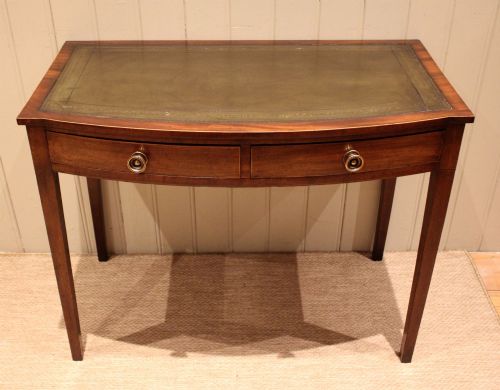
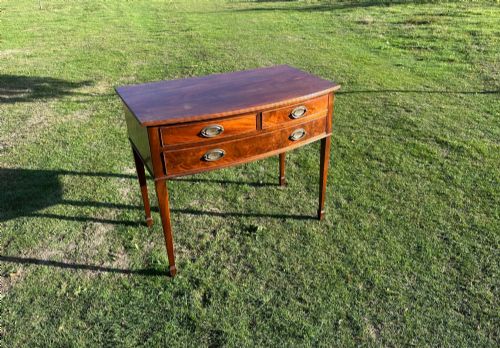
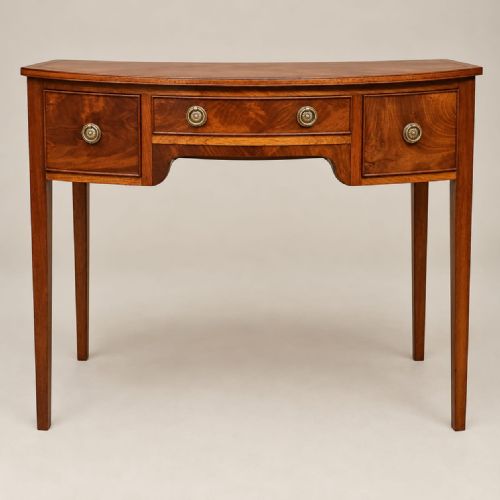
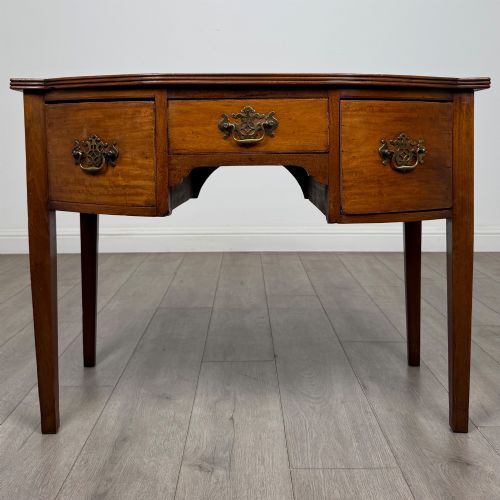
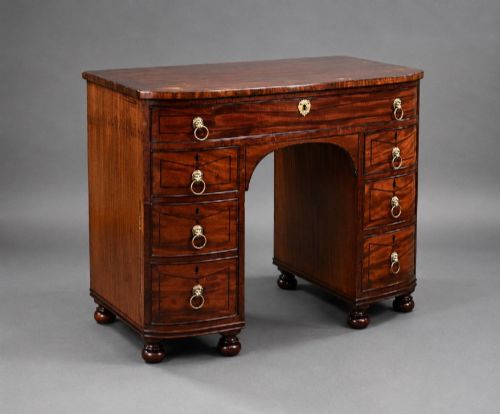
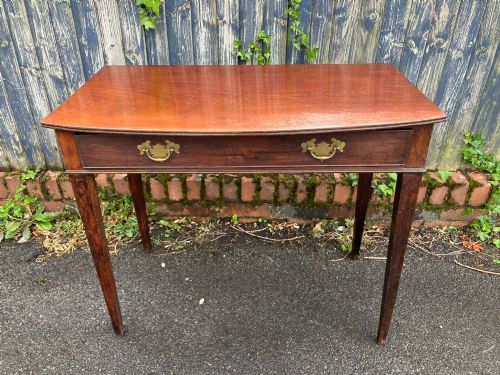
These bow fronted writing desk pieces combine curved mahogany timber with practical drawers, offering a compact surface for correspondence.
Bow Fronted Writing Desk
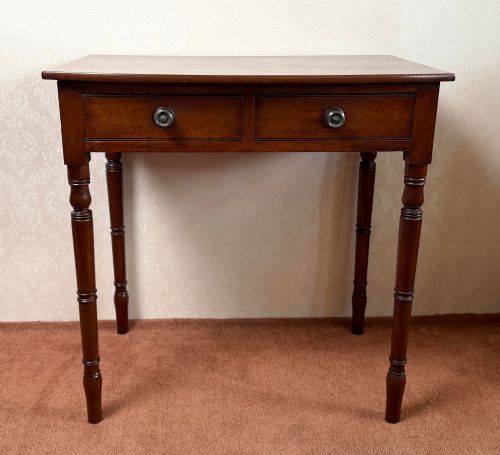
A bow fronted writing desk takes many forms across the inventory, appearing as side tables, dressing chests, and dedicated writing tables with curved fronts. These items emerge from various periods including the Georgian era, the Regency period, and later revivals from the nineteenth and early twentieth centuries.
The pieces often feature multiple drawers beneath a polished top, designed to fit compactly into domestic spaces while providing a functional writing surface. Mahogany forms the primary structure of these items, frequently paired with lighter wood inlays or marble tops depending on the specific period of manufacture.
Materials and construction
Makers utilised solid mahogany and flame mahogany veneers over secondary timbers, shaping the characteristic curved front using steam or specialised cutting techniques. Fine brass handles and leather inserts add functional detail to the writing surfaces.
Inlaid decoration incorporates boxwood and satinwood stringing, creating geometric borders along the drawer fronts and table edges. Marble tops also appear on select nineteenth-century variants, providing a durable and cool working surface.
Bow Fronted Writing Desk Retail Price Guide 2026
Typical asking prices for bow fronted writing desk among the pieces listed under this phrase on Sellingantiques today, from the lower quarter to the upper quarter. They describe what is for sale here now, not the wider market.
Listings feature mahogany, satinwood, boxwood, brass, and marble across Georgian, Regency, and Victorian periods.
Assessing quality
The standard of timber selection largely dictates the quality of a bow fronted writing desk, with richly figured flame mahogany commanding greater interest than plain stock. Crispness in the wood inlay and the precision of the curved drawer joints further distinguish finer examples from simpler provincial work.
Original hardware, sound drawer construction, and intact leather writing surfaces elevate an individual piece. The integration of secondary woods and the subtlety of the brass fittings reveal the level of craftsmanship invested by the maker.
Maples·Edwards and Roberts·JAS Shoolbred
The Bow Fronted Writing Desk Glossary
- Bow front
- A convex, outward-curving front elevation on a cabinet or table that softens the rectilinear appearance of furniture. This curved profile requires skilled carpentry to shape the drawers and frame accurately.
- Flame mahogany
- A veneer cut from the fork of the mahogany tree where the branch meets the trunk, producing a distinctive, flamy pattern. This figured wood is prized for its decorative visual impact.
- Stringing
- Thin lines of contrasting wood inlay used to outline panels, drawers, or table tops. Boxwood and satinwood are commonly employed for this linear ornamentation.
- Secretaire
- A piece of furniture incorporating a writing drawer or drop-front desk compartment. It conceals pigeonholes and small drawers for correspondence materials.
Bow Fronted Writing Desk: Frequently Asked Questions
What is a bow fronted writing desk?
A bow fronted writing desk is a piece of furniture featuring a convex curved front and a surface dedicated to writing or correspondence. These items frequently incorporate multiple drawers and rest on slender legs or pedestals.
Such furniture evolved through the Georgian and Regency periods, persisting into later revival styles. They provide practical surface area while maintaining a compact footprint in a room.
How do I date a mahogany desk?
Dating a mahogany desk involves examining the construction methods, secondary timbers, and decorative styles present in the piece. Georgian and Regency examples often display hand-cut dovetails and specific handle types that differ from later nineteenth-century work.
Inlays and veneers also offer clues, as Sheraton Revival and Edwardian pieces often imitate earlier motifs using distinct manufacturing techniques. Comparing the hardware and internal timber to known period standards helps clarify the age.
Where should I place this desk?
These desks suit studies, living rooms, and bedrooms due to their shallow curved profile and modest proportions. Placing them against a flat wall allows the convex curve to stand out as a focal point.
Keeping the timber away from direct heat sources and strong sunlight preserves the polish and prevents the mahogany veneer from drying out. Proper placement also ensures comfortable access to the drawers and writing surface.
How do I care for leather inserts?
Leather writing surfaces benefit from regular dusting with a soft, dry cloth to prevent grit accumulation. Conditioning the leather periodically with specialised balms maintains flexibility and stops the material from cracking.
Avoiding excessive moisture and keeping sharp objects away from the surface protects the integrity of the writing insert. Gentle maintenance preserves both the leather and the surrounding wood inlay.