


Bow Fronted Display Cabinet
When you search for a bow fronted display cabinet, you find timber cabinetry shaped with a curved front to showcase porcelain and curios.
Bow Fronted Display Cabinet
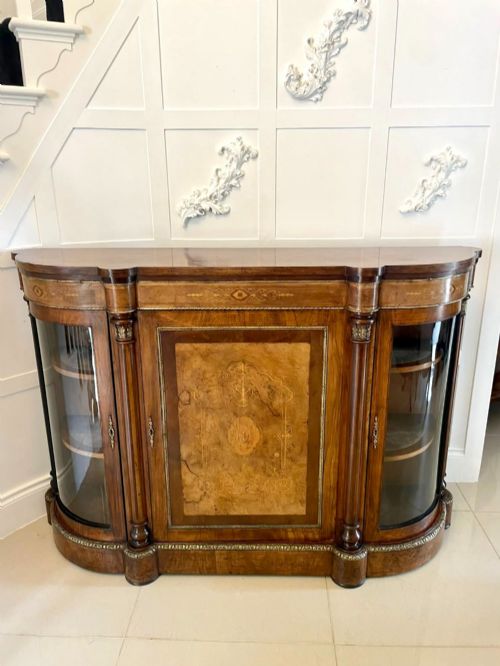
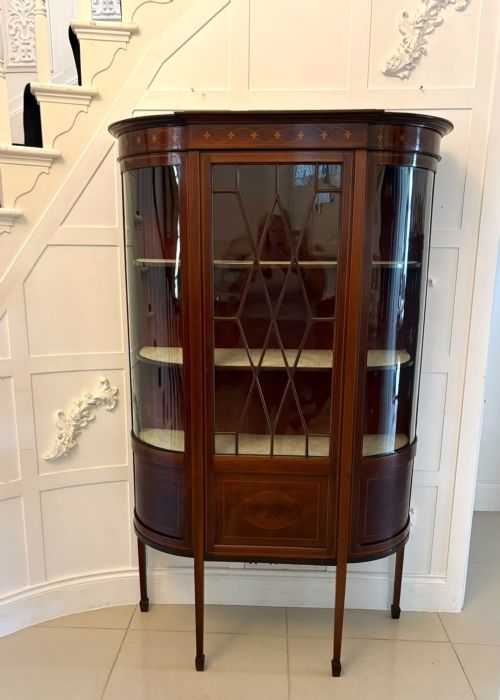
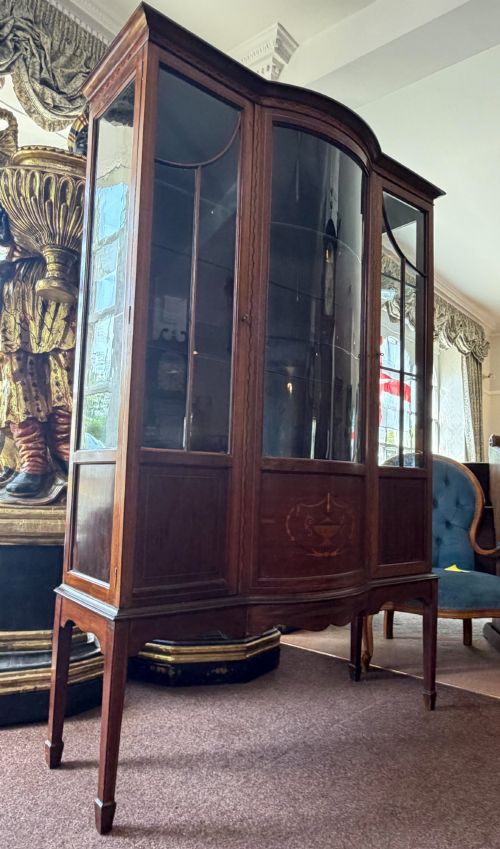
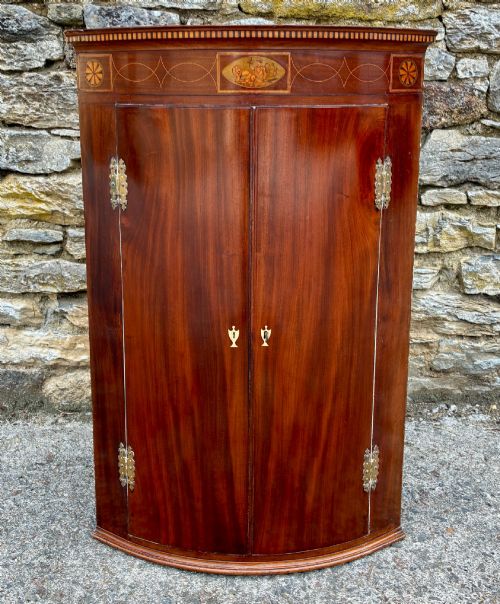
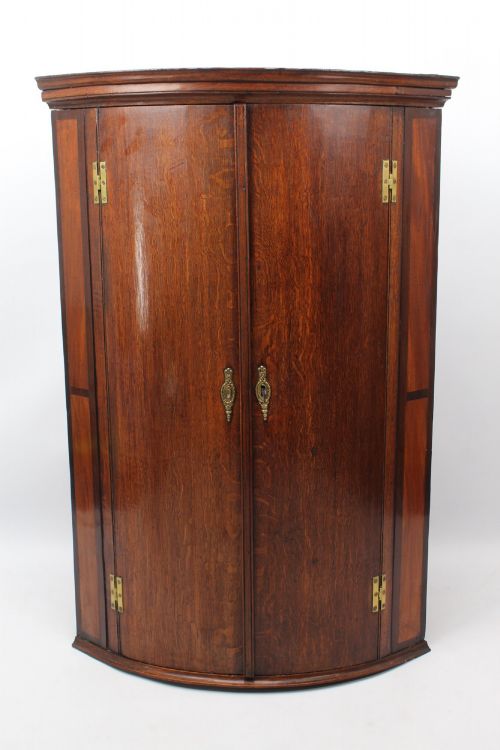
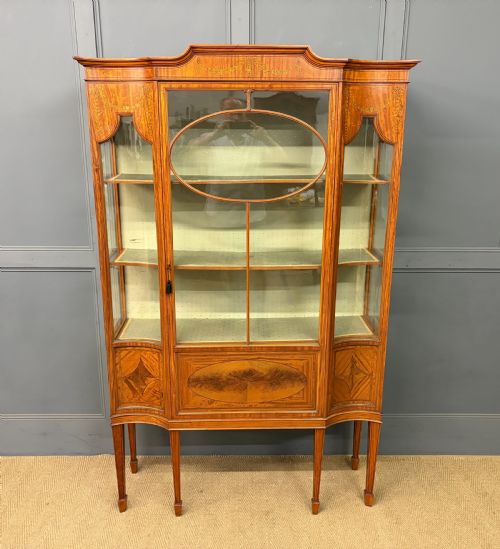
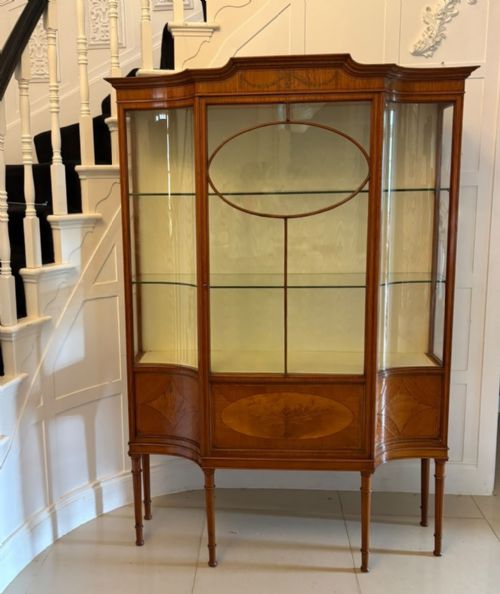
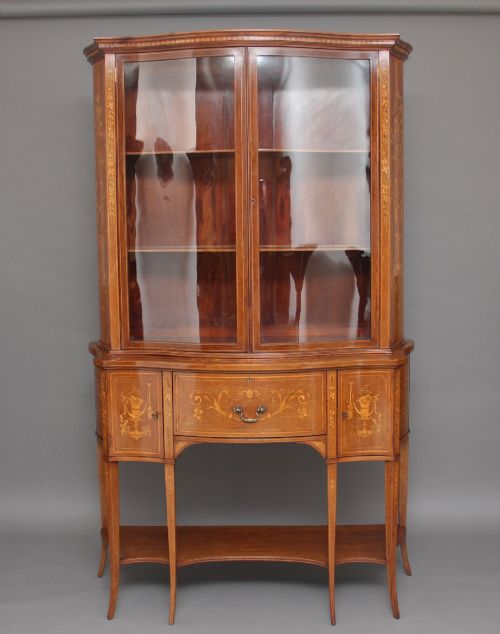
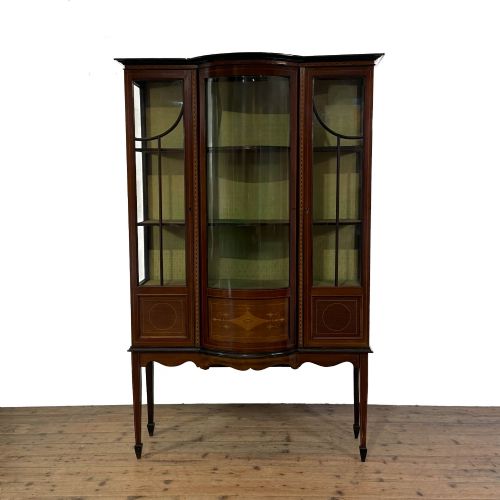
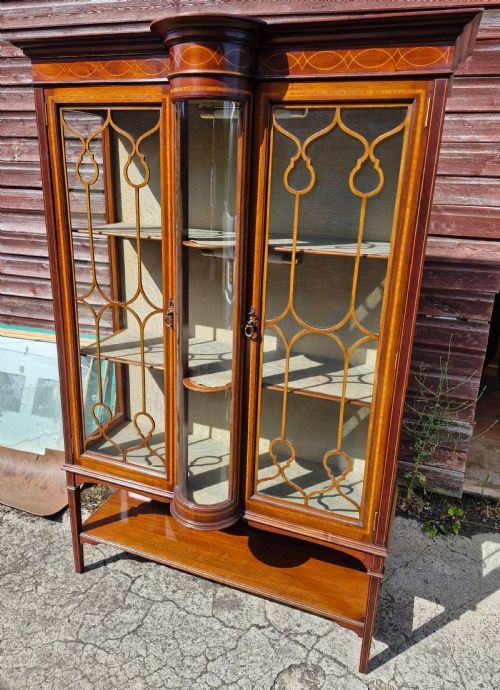
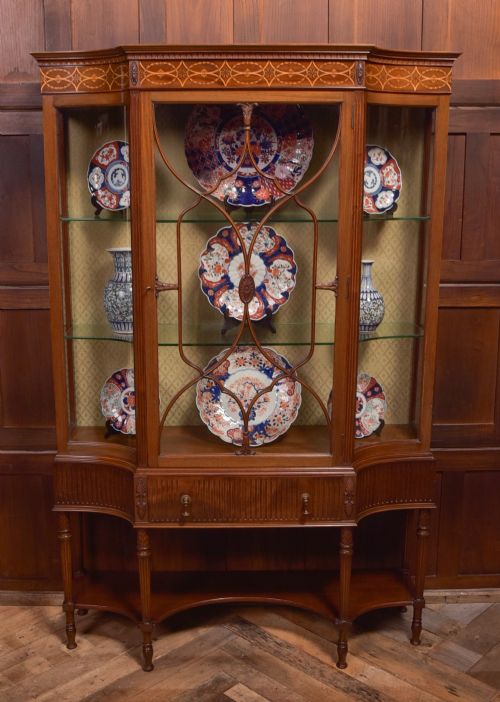
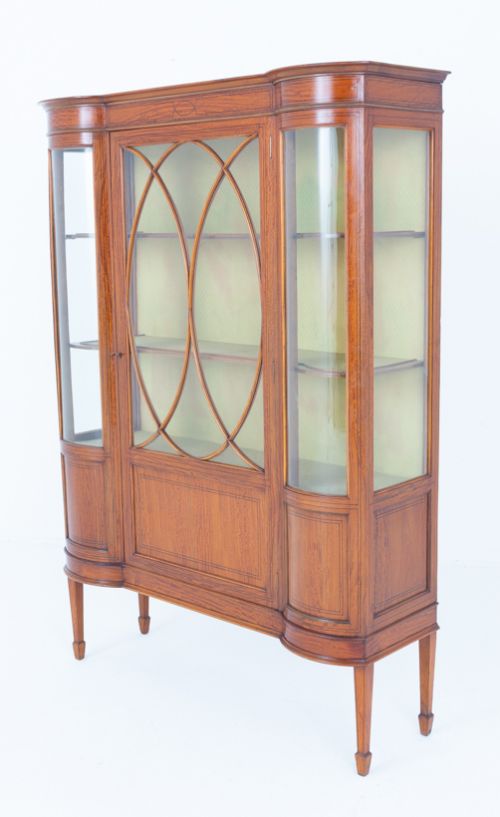
A bow fronted display cabinet is a piece of case furniture designed to exhibit prized possessions behind glazed doors while projecting forward in a gentle convex curve. You will most frequently encounter Edwardian and Victorian examples on this page, alongside Georgian corner cupboards and credenzas.
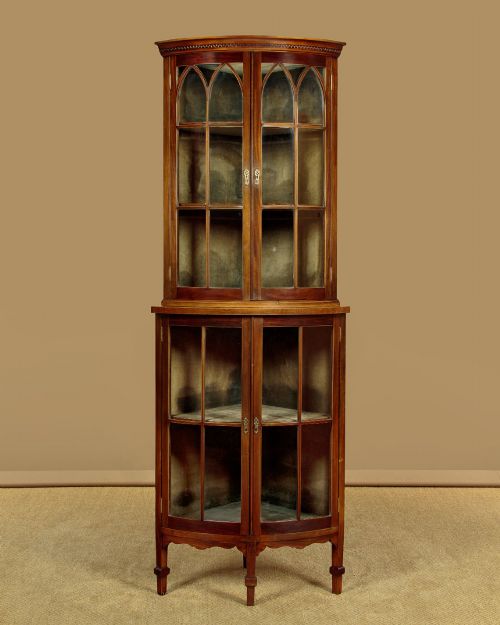
The form spans tall freestanding cabinets, smaller table top versions, and corner units built to fit room angles. These pieces use their curved glass and timber frames to catch the light from different angles in a room.
How they were made
Cabinet makers constructed these pieces primarily using solid and veneered mahogany, alongside burr walnut, satinwood, and oak. Curved frames required specialist bending techniques for both the timber rails and the glazed doors.
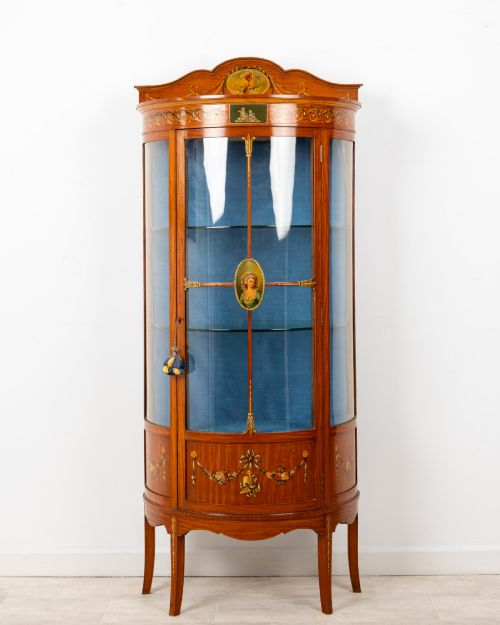
Surface decoration frequently relies on fine satinwood inlay, fruitwood marquetry, painted motifs, and brass mounts. Interior shelving is often glass or wood, supported sometimes by fabric linings.
What varies in quality
The distinction between standard utility furniture and superior pieces lies in the choice of timber grains and the crispness of the inlay. Finely figured mahogany and intricate marquetry indicate workshops that employed master artisans.
Construction details such as dovetailed drawers, substantial brass hardware, and the clarity of the curved glass elevate the status of a cabinet. The integration of the curved door into the overall frame requires precise joinery that separates workshop tiers.
Maple & Co·Edwards and Roberts·Shapland & Petter·Epstein
The Bow Fronted Display Cabinet Glossary
- Bow front
- A convex, outward-curving front section on a piece of furniture. This curved profile softens the corners of a room and creates dynamic visual reflections.
- Inlay
- Pieces of contrasting timber, shell, or metal fitted into recesses in the wood surface to form decorative patterns. This technique defines much of the Edwardian and Sheraton Revival work seen here.
- Credenza
- A low cabinet, often featuring glazed doors or curved ends, originating for dining room service and display. Victorian examples frequently combine timber warmth with extensive display capacity.
- Vitrine
- A glass-sided cabinet specifically designed for displaying fine porcelain, objects d'art, or curiosities. The term highlights the primary function of light admission from multiple angles.
- Marquetry
- Elaborate veneer patterns composed of various woods and other materials assembled to create pictorial or geometric designs. It represents a high level of decorative woodwork.
Bow Fronted Display Cabinet: Frequently Asked Questions
Where should I place a bow fronted display cabinet?
These cabinets suit drawing rooms, dining spaces, or hallways where natural light can strike the curved glass panels. Corner variants make efficient use of dead space while adding architectural interest to a room.
Ensure the piece sits away from direct sunlight to protect interior fabrics and polished timber surfaces from fading over time.
How do I clean the curved glass doors?
Use a soft microfiber cloth and a mild glass cleaner sprayed onto the cloth rather than directly onto the glass. This prevents excess liquid from seeping into the wooden glazing bars or internal fabric linings.
Take care around older putty or wooden beads holding the glass panes in their curved rebates.
Can I adjust the internal shelves?
Many Edwardian and Victorian cabinets feature fixed wooden or glass shelving, though some later pieces incorporate adjustable supports. Check the interior vertical battens for peg holes if shelf height reconfiguration is a priority for your collection.
Avoid overloading older glass shelves with heavy ceramic or metal objects to prevent structural strain.
How do I distinguish Edwardian from Georgian examples?
Georgian pieces, particularly corner cupboards and bookcases, generally display heavier timber construction, simpler architectural cornices, and deeper patination in the mahogany or oak. They date from the eighteenth century and lack the lighter satinwood stringing typical of later eras.
Edwardian and Sheraton Revival pieces from around nineteen hundred favour brighter inlay, painted satinwood highlights, and lighter framing designed for refined drawing room display.