





Boulle Sideboard
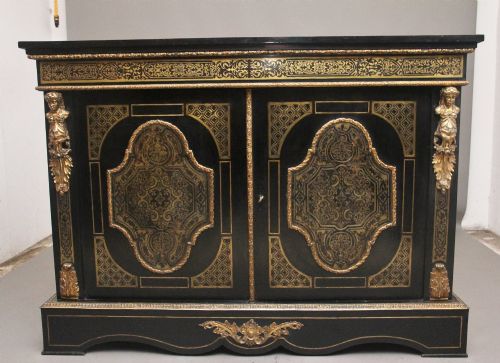
A boulle sideboard brings magnificent tortoiseshell and brass marquetry into a room, offering both display space and striking nineteenth-century French revival presence.
Boulle Sideboard
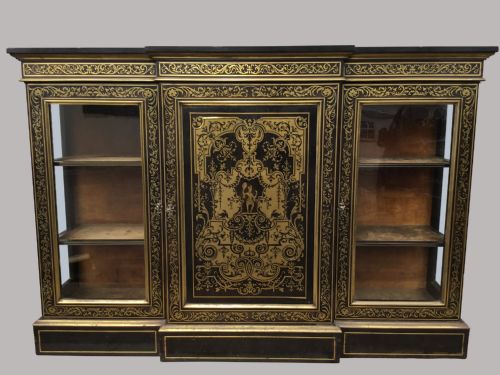
A boulle sideboard combines the functions of a side cabinet, credenza, and display cabinet within nineteenth-century French Napoleon III and Victorian revival designs. Buyers searching for a boulle sideboard encounter ebonised and rosewood carcasses fitted with distinctive metallic and tortoiseshell detailing.
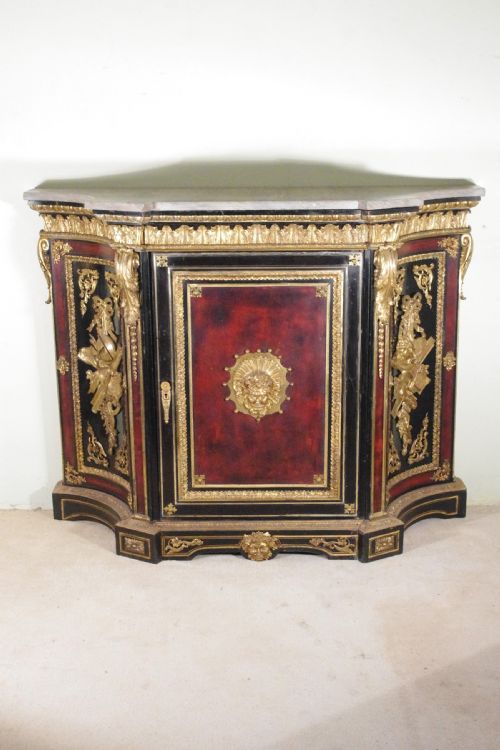
The pieces listed on this page span the nineteenth century, including specific dates such as eighteen-sixty, eighteen-seventy, and eighteen-eighty. Most examples feature breakfront or serpentine shapes, often topped with marble and mounted with ormolu or gilt bronze.
How they were made
Craftsmen built these cabinets using ebonised wood, ebony, or rosewood as a dark ground for intricate brass and tortoiseshell marquetry. This technique required precise cutting of thin metal and shell sheets fitted together in contrasting patterns.
Finished surfaces received heavy mounts of ormolu, gilt bronze, or gilt metal to accent corners and borders. Many iterations also incorporated fitted glass panels for display cabinets and marble tops on serpentine or breakfront credenzas.
Boulle Sideboard Retail Price Guide 2026
Typical asking prices for boulle sideboard among the pieces listed under this phrase on Sellingantiques today, from the lower quarter to the upper quarter. They describe what is for sale here now, not the wider market.
What varies in quality
Quality depends upon the intricacy of the brass and tortoiseshell inlay and the precision with which the marquetry meets the ebonised wood. Finer examples display tight, seamless patterns across curved serpentine fronts.
The weight and chasing of the ormolu or gilt bronze mounts distinguish higher grade cabinets from simpler productions. Better pieces also integrate heavier marble tops and superior timber choices like ebony and rosewood.
The Boulle Sideboard Glossary
- Boulle
- A form of marquetry using brass and tortoiseshell developed during the seventeenth century and revived in the nineteenth century. It creates a rich, shimmering contrast of metal against dark shell.
- Ormolu
- Gilt bronze applied to furniture mounts and decorative hardware. It adds bright metallic highlights to the dark ebonised wooden surfaces.
- Marquetry
- The art of applying pieces of veneer to a structure to form decorative patterns. In these pieces, it combines brass, tortoiseshell, and wood.
- Credenza
- A side cabinet designed for storage and display, frequently seen in nineteenth-century French revival interiors. They often feature central doors flanked by curved glass cabinets.
- Serpentine
- A furniture front curving inward and outward in a wave shape. This contour requires careful carpentry and specialised fitting of marble tops.
Boulle Sideboard: Frequently Asked Questions
What periods do these cabinets come from?
The listings show pieces originating primarily in the nineteenth century, with specific dates noted around eighteen-sixty, eighteen-seventy, and eighteen-eighty. Styles span French Napoleon III and Victorian revival designs.
Buyers will find that these dates place the furniture firmly in the Victorian era of ornate revivalism. The construction methods and materials align closely with mid to late nineteenth-century European workshops.
What materials make up a boulle sideboard?
Primary materials include ebonised wood, ebony, and rosewood, which form the dark structural body of each cabinet. Brass and tortoiseshell provide the signature inlay work.
Secondary elements incorporate ormolu, gilt bronze, and gilt metal mounts alongside glass panels and marble tops. These mixed media components define the visual weight of the furniture.
How do credenzas differ from side cabinets?
Credenzas generally feature a long low profile with central doors flanked by curved side compartments, often incorporating glass for display. Side cabinets can adopt taller or more compact breakfront proportions.
Both forms serve similar storage and display functions within a grand interior setting. The nomenclature in nineteenth-century pieces often overlaps depending on the exact configuration.
Where were these nineteenth-century pieces made?
Evidence points to French origins, specifically reflecting Napoleon III and French revival aesthetics alongside Victorian production. Workshops in France and England produced these elaborate pieces for affluent nineteenth-century homes.
The stylistic crossover between French design and Victorian tastes remains prominent throughout the available selection. Makers utilised imported materials like tortoiseshell to achieve the desired continental look.