




Botanical Textile Wall Hanging
A botanical textile wall hanging brings centuries of woven leaf and floral work into a room, offering rich texture and historic pattern for modern interiors.
Botanical Textile Wall Hanging
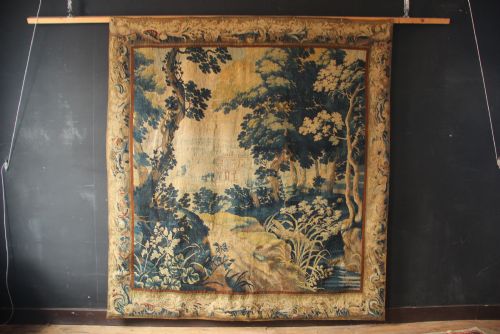
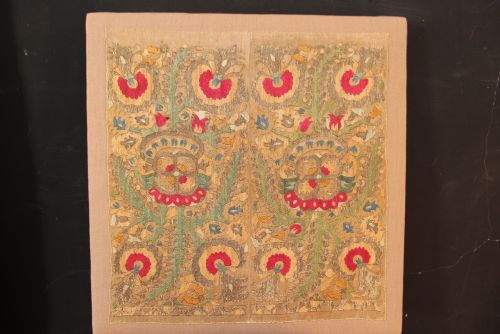
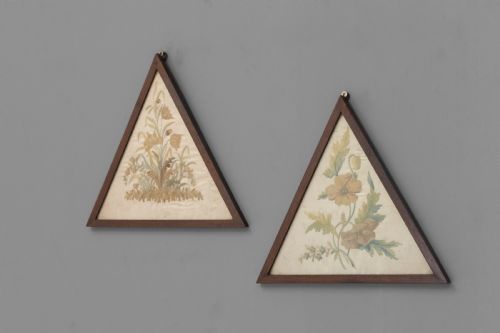
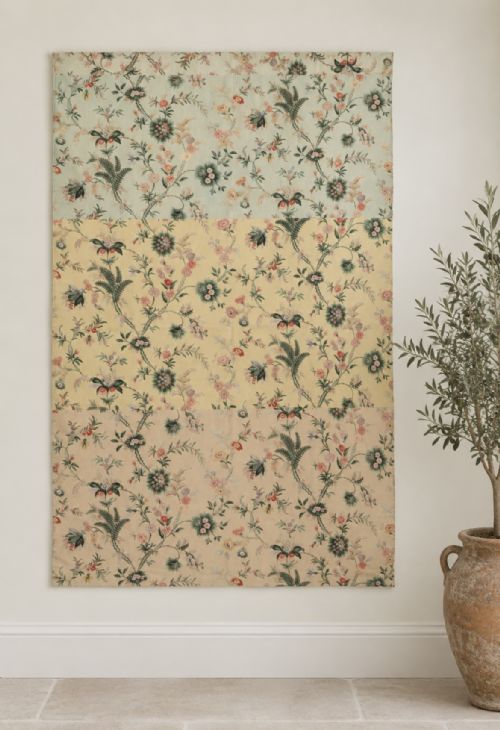
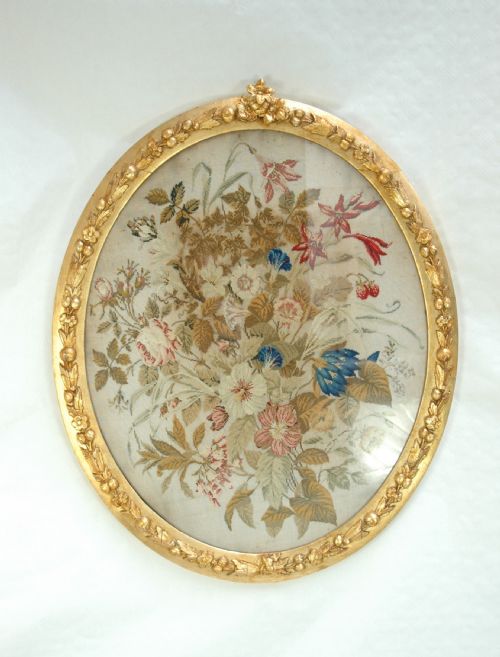
A botanical textile wall hanging encompasses a diverse group of woven, embroidered and needlework pieces featuring plant motifs. When searching this phrase, a buyer encounters everything from large Flemish verdure panels to smaller framed folk art panels and embroidered Suzanis.
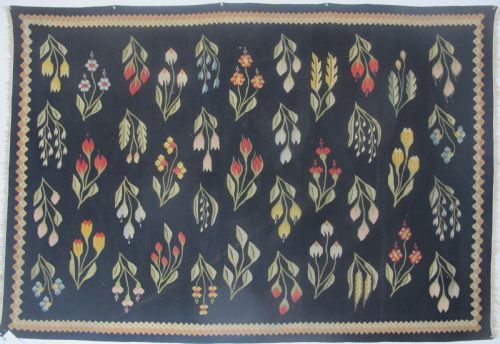
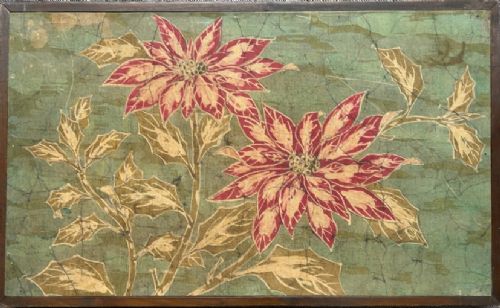
The selection on this page ranges widely across centuries and regions, featuring styles such as Flemish Baroque, Aubusson, Central Asian, and Eastern European Folk Art. Forms span from substantial wall tapestries and textile panels to framed batik art and embroidered bed covers adapted for display.
Origins vary from English country houses and French workshops to Greek, Romanian, and Uzbek traditions. Pieces date from the seventeenth century through to the mid-twentieth century, showing how different cultures expressed floral and foliage designs in textile form.
Materials and construction methods
Makers utilised natural fibres including silk, wool, cotton, and linen, often combined with metallic threads and silk thread for added dimension and lustre. These textile supports received intricate needlework, embroidery, or specialised weaving techniques.
Weaving traditions such as Aubusson and Flemish Baroque employed complex loom methods to build dense pictorial scenes of foliage and flora. Meanwhile, Central Asian Suzanis and Greek folk art panels relied on skilled hand embroidery using dyed threads on cotton or linen grounds.
Listings feature works spanning from the seventeenth century through to the mid-twentieth century, using silk, wool, cotton, linen, and metallic thread.
Assessing quality in botanical textiles
Quality rests upon the density of the weave or the precision of the needlework, alongside the complexity of the botanical design. Finer works display intricate shading, sophisticated colour palettes, and well-preserved structural integrity across the fabric.
The integrity of the original materials and the skill of the execution distinguish exceptional examples from simpler decorative pieces. Superior pieces retain their vibrant thread colours and show careful handling of scale within floral and leaf motifs.
The Botanical Textile Wall Hanging Glossary
- Verdure tapestry
- A type of tapestry featuring a heavily wooded landscape or garden scene dominated by plants, trees, and foliage. These pieces often serve as large-scale wall hangings.
- Suzani
- A type of embroidered and decorative tribal textile made in Tajikistan, Uzbekistan, and other Central Asian countries. They frequently feature bold floral and botanical motifs worked in silk on a cotton or linen ground.
- Aubusson
- A style of tapestry woven in the French town of Aubusson, known for pastoral scenes and floral designs. These works typically lack metallic threads, relying on fine wool and silk.
- Needlework
- Textile art created by using a needle to apply thread or yarn to a ground fabric. This category covers various historical embroidery and canvas work techniques.
Botanical Textile Wall Hanging: Frequently Asked Questions
How do I hang a heavy antique tapestry safely?
Large textile panels require weight to be distributed evenly across a support system rather than hung from isolated points. Professional framing or a custom-stitched hanging sleeve attached to a hidden batten protects the fabric fibres over time.
Avoid placing textile wall art in direct sunlight or damp spaces. Natural fibres like wool and silk react poorly to humidity and ultraviolet rays.
What is the difference between a verdure tapestry and a Suzani?
A verdure tapestry is typically a European woven wall hanging dominated by stylised trees, leaves, and garden foliage, often produced on a large scale. They rely on loom-woven wool and silk to create deep, shadowy forest scenes.
In contrast, a Suzani is a hand-embroidered textile from Central Asia featuring vibrant floral roundels and botanical vine patterns worked with silk thread on a lighter cloth base.
Can I clean an antique botanical textile panel?
Surface dust can be gently removed using low suction through a mesh screen, but immersion washing or chemical cleaning should be left to textile conservation specialists. Household detergents and water can damage aged threads and cause dyes to run.
Frequent handling strains fragile historical fibres. Minimal physical intervention helps preserve the structural integrity of older cotton, linen, and silk pieces.
How are different centuries of textiles identified?
Dating relies on examining the specific weave structure, the type of dye used, and the stylistic characteristics of the botanical motifs. Seventeenth and eighteenth-century pieces often show specific regional colour palettes and hand-spun thread irregularities.
Later nineteenth and twentieth-century examples introduce different backing materials, chemical dye signatures, and distinct folk art interpretations. Comparing construction methods against documented museum pieces helps confirm the period.