


Bone and Wood Tables
Bone and wood tables combine dense carved timbers with luminous geometric inlay, bringing intricate global craftsmanship into domestic interiors.
Bone and Wood Tables
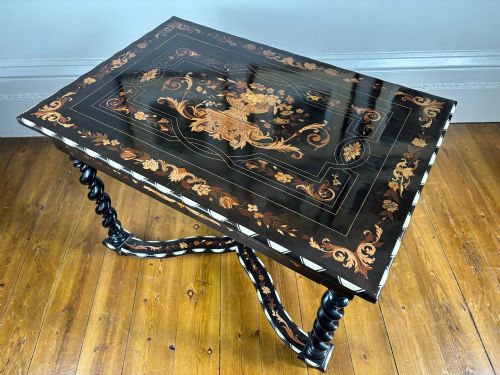
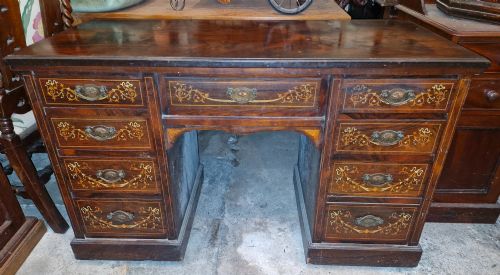
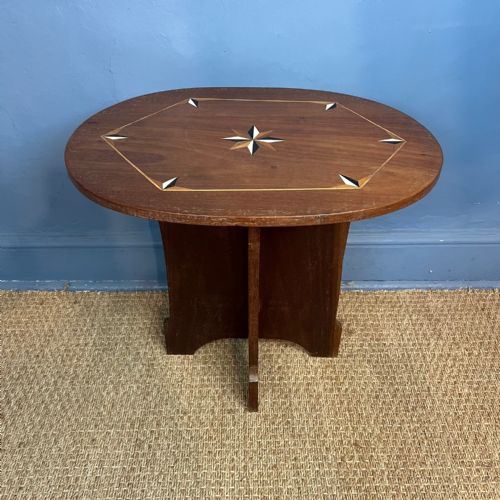
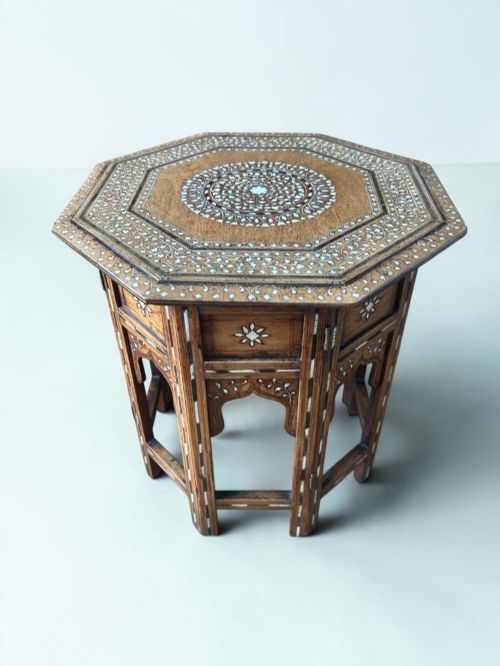
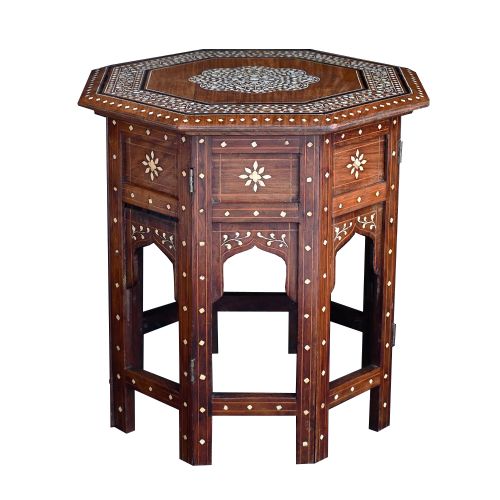
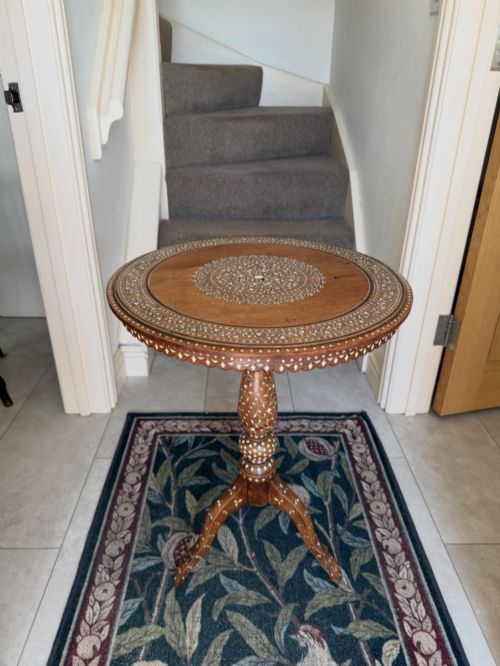
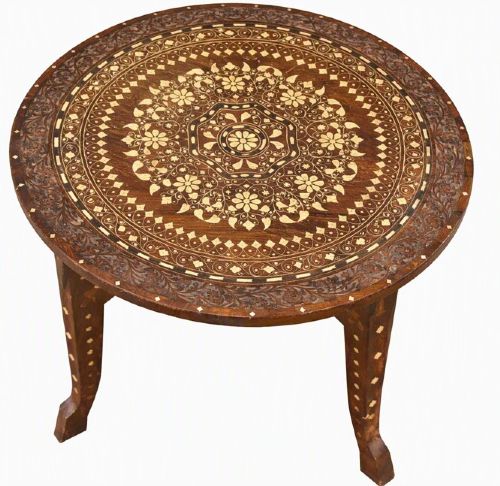
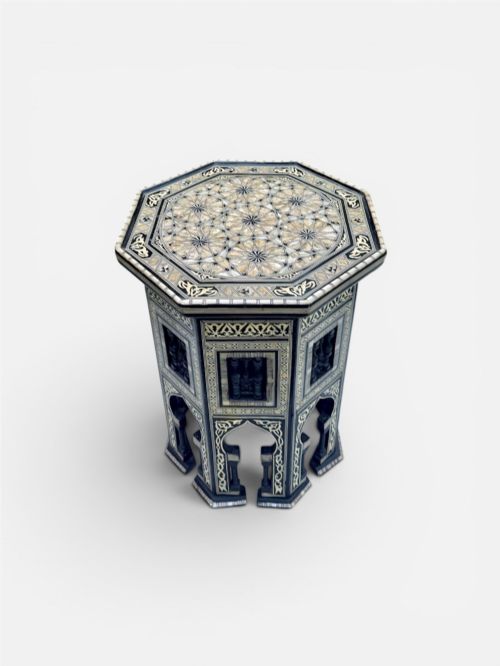
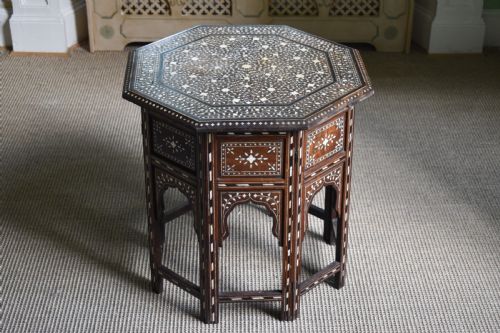
When you search for bone and wood tables, you encounter richly decorated surfaces originating from nineteenth-century workshops across India, the Middle East, and Europe. These decorative furnishings appear primarily as small occasional, side, or coffee tables, alongside folding, pedestal, and octagonal forms designed for versatile placement.
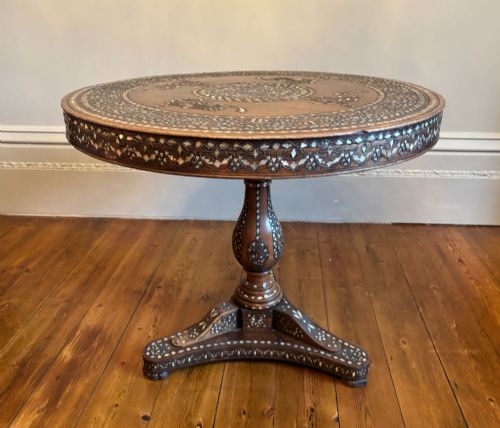
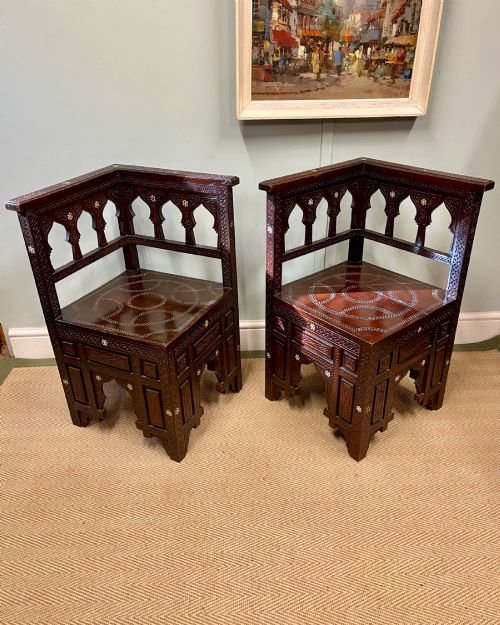
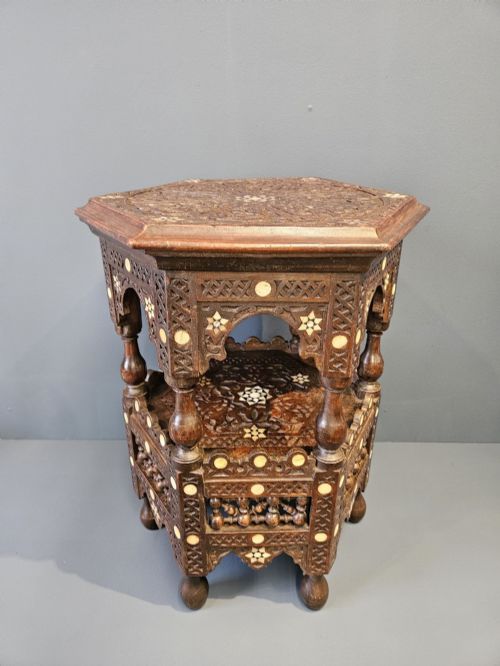
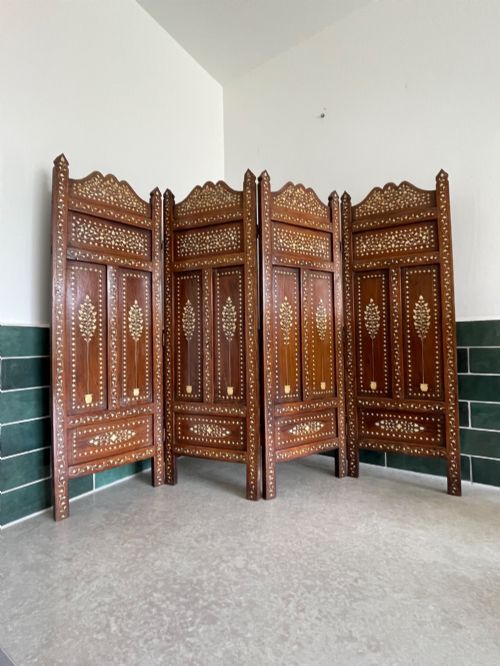
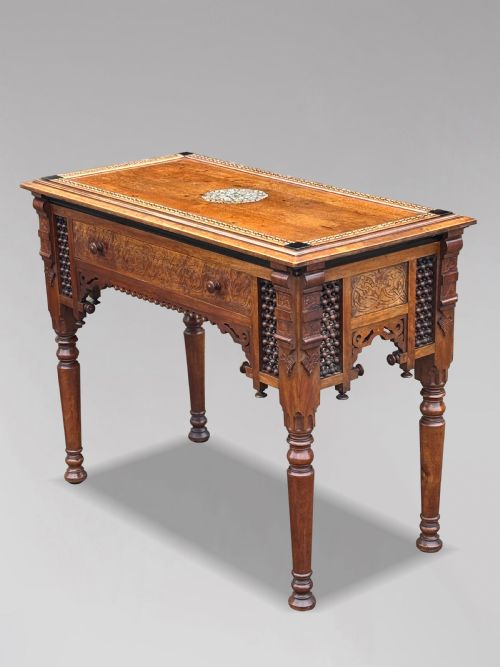
The regional styles represented span Anglo-Indian Hoshiarpur production, Moorish Revival, Syrian craftsmanship, and Dutch Baroque Revival. Pieces frequently utilise dense dark woods combined with intricate bone inlay to create striking geometric and floral patterns across the top and sides.
How they were made
Artisans constructed these pieces using hardwoods, rosewood, teak, padauk, and ebonised wood as a dark foundation for surface decoration. Small pieces of bone and mother of pearl were meticulously hand-cut and pressed into recesses carved directly into the timber.
Carved relief work frequently accompanies the inlay, particularly on Indian and Moorish examples where structural elements feature dense floral motifs or animal figures. Frameworks often utilise folding or collapsible joinery to allow functional portability without sacrificing decorative complexity.
Bone and Wood Tables Retail Price Guide 2026
Typical asking prices for bone and wood tables among the pieces listed under this phrase on Sellingantiques today, from the lower quarter to the upper quarter. They describe what is for sale here now, not the wider market.
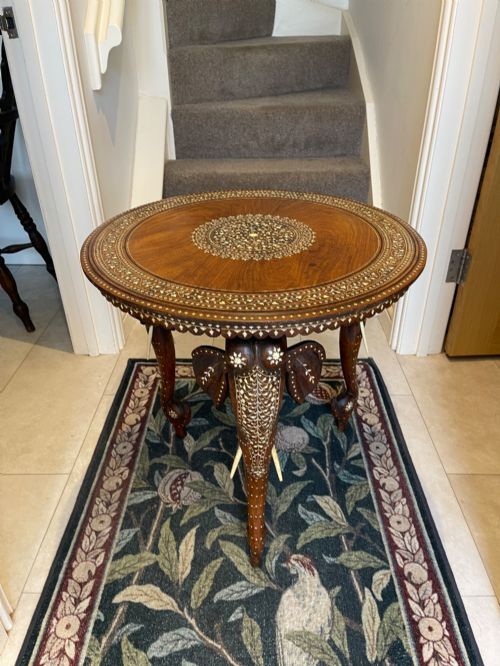
Several tables feature carved wooden elephants supporting the top surface, bringing an exotic touch to Victorian parlours.
What varies in quality
The standard of execution depends heavily on the precision of the inlay work and the depth of the timber carving. Superior examples display tight, seamless joins between the bone elements and the surrounding wood, whilst lesser pieces show gaps or hasty filler materials.
Design complexity also distinguishes finer specimens, where intricate geometric tessellation covers entire structural surfaces rather than just central table panels. The choice of base timber, from plain hardwoods to rich rosewood or ebonised surfaces, further elevates the visual weight of the piece.
Liberty and Co·Holtzapffel
The Bone and Wood Tables Glossary
- Bone inlay
- A decorative technique where small shaped pieces of animal bone are embedded into carved channels within a wooden surface to form patterns.
- Hoshiarpur
- A region in Punjab renowned for intricate wood carving and geometric bone and shisham wood inlay work exported globally during the nineteenth century.
- Moorish Revival
- An architectural and decorative style popular in the nineteenth century that incorporates traditional Islamic design motifs, horseshoe arches, and detailed geometric inlay.
- Marquetry
- The art of applying small pieces of veneer to a structure to form decorative patterns, often combining bone with contrasting dark timbers.
- Octagonal
- Having eight sides, a common geometric plan for small occasional and side tables designed to display complex surface patterns.
Bone and Wood Tables: Frequently Asked Questions
What woods are typically used?
Makers relied on dense hardwoods, teak, padauk, rosewood, and walnut to provide a dark, stable contrast against pale bone inlay. Ebonised wood also appears frequently on European interpretations of the style.
These durable timbers supported intricate relief carving without splitting along the grain during the inlay process.
How do I date these pieces?
Dating relies on stylistic markers such as nineteenth-century Aesthetic Movement influences or specific regional export characteristics from Hoshiarpur and Damascus. Construction methods like hand-cut joinery and material combinations offer further clues.
Most surviving examples date from the Victorian era up through the early twentieth century.
Are these tables sturdy?
Many examples use lightweight folding frames or tripod bases designed for occasional use rather than heavy daily service. Octagonal and pedestal forms offer stable footprints despite their intricate surface decoration.
Careful placement away from direct heat sources helps preserve the stability of the wood and bone components.
How do I clean the bone inlay?
Dusting with a dry, soft cloth prevents particulate buildup in the tiny crevices between the bone and timber. Avoid liquid cleaners or harsh chemicals that might discolour the natural bone elements or loosen the adhesive.
Gentle maintenance preserves the delicate contrast between the dark wood and pale inlay over time.