






Bombe Vitrine Cabinet
A bombe vitrine cabinet brings together swelling curves and glazed display space, offering a grand stage for porcelain and silver.
Bombe Vitrine Cabinet
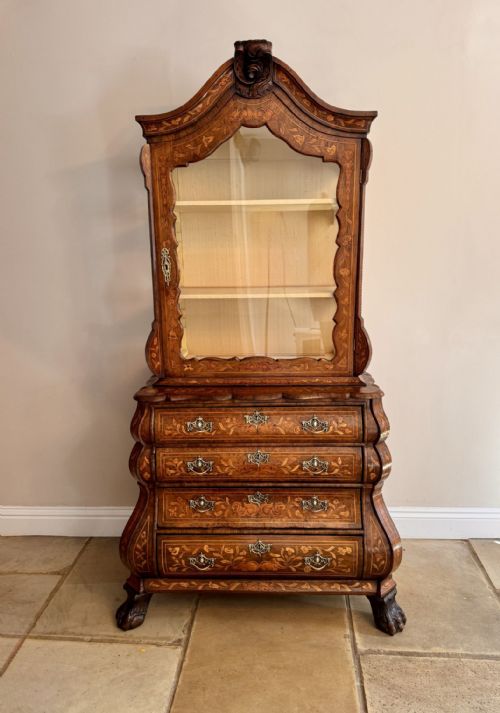
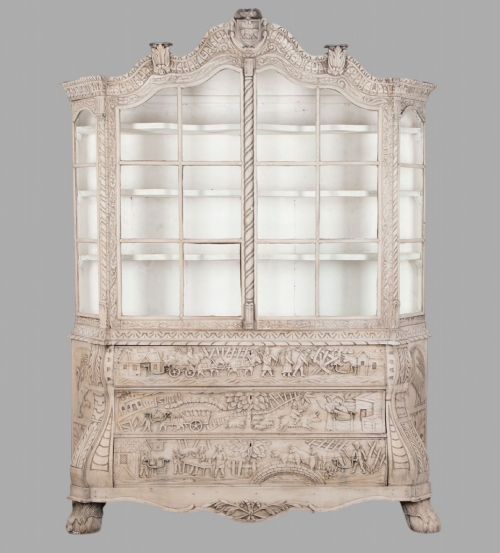
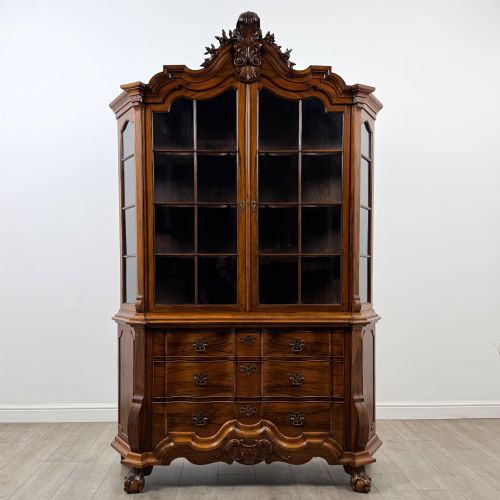
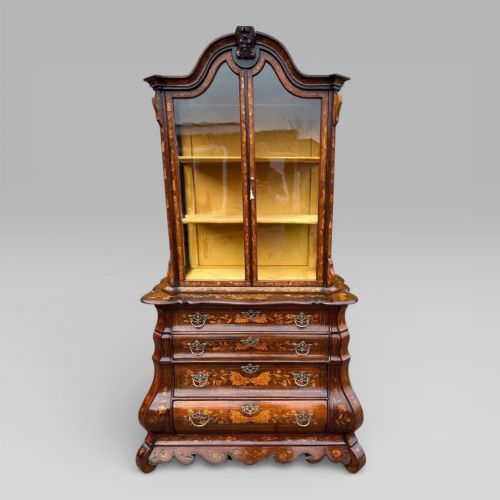
When you search for a bombe vitrine cabinet, you encounter display furniture characterised by its pronounced swelling base and glass-fronted upper section. These pieces function primarily to display collectibles while offering substantial enclosed storage beneath.
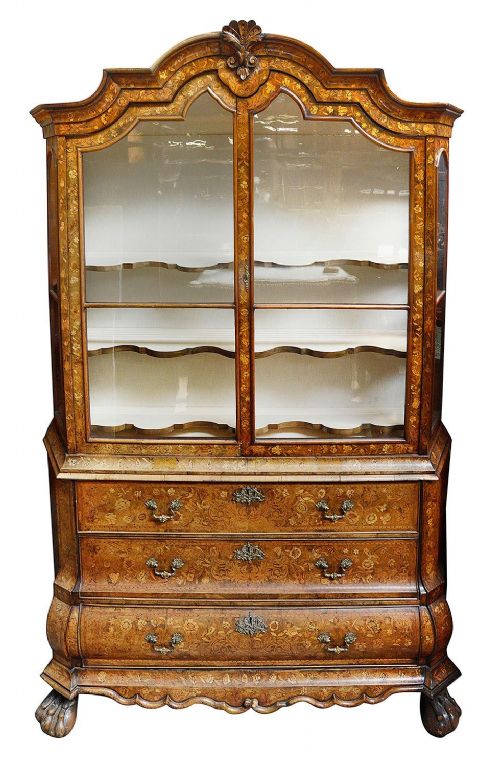
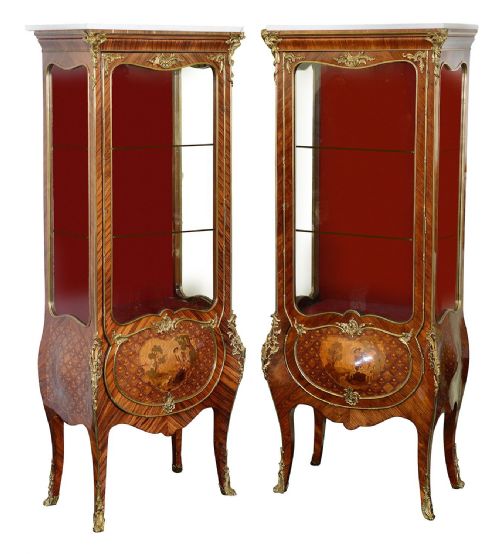
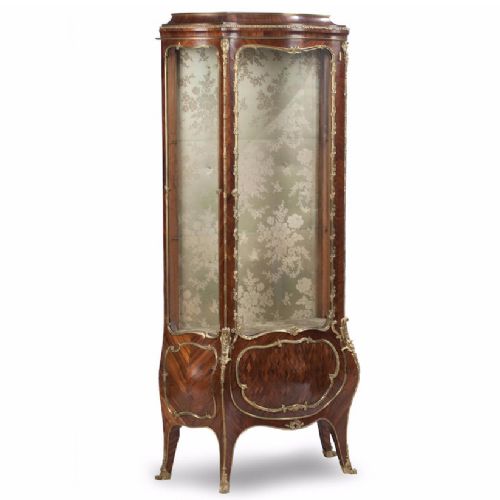
The versions most commonly met on this page span the 18th century to the Victorian era, heavily influenced by Dutch Baroque, Louis XV Revival, and Rococo styles. Walnut and kingwood dominate the materials, frequently finished with intricate marquetry or painted lacquer.
Makers designed these items as central focal points for formal rooms, combining the sculptural presence of a bombe chest with the lighter silhouette of a display cabinet. The upper vitrine doors provide clear sightlines from multiple angles.
How they were made
Cabinetmakers constructed these frames using solid timbers such as oak and fruitwood as carcase foundations, applying fine decorative veneers like walnut and kingwood over the top. The curved bombe profile required expert timber bending and shaping to achieve the swelling contours without compromising structural integrity.
French examples often incorporate Vernis Martin lacquer techniques for painted panels, whereas Dutch iterations lean heavily on complex floral marquetry. Glass panels are set individually into wooden or brass-mounted framework to complete the upper vitrine.
Bombe Vitrine Cabinet Retail Price Guide 2026
Typical asking prices for bombe vitrine cabinet among the pieces listed under this phrase on Sellingantiques today, from the lower quarter to the upper quarter. They describe what is for sale here now, not the wider market.
Some cabinets swell out so enthusiastically they seem ready to waddle across the floor on their short cabriole legs.
What varies in quality
The refinement of the marquetry inlay and the boldness of the swelling timber curves dictate the aesthetic standing of each piece. Stronger examples display deeply saturated walnut or kingwood grain with seamless veneer matching across the curved drawer fronts.
The execution of the ormolu mounts and cast brass fittings separates standard production from finer workshop output, with crisper chasing showing superior craftsmanship. Furthermore, the structural stability of heavy glass doors mounted onto curved bombe bases demands exceptional joinery to prevent sagging.
Edwards and Roberts·Gouffel
The Bombe Vitrine Cabinet Glossary
- Bombe
- A bulging, swelling contour found on the lower chests of these cabinets, requiring complex curving woodwork. This profile originates from mid-18th-century continental furniture design.
- Marquetry
- The art of applying decorative pieces of veneer to a structure to form intricate pictorial patterns. Craftsmen use various coloured woods to achieve floral and scroll motifs.
- Ormolu
- Gilt-bronze mounts applied to the exterior angles, feet, and aprons of cabinets. This decorative metalwork enhances the rococo and revival styling.
- Vernis Martin
- A simulated Japanese lacquer technique developed in France, utilised on painted panels depicting pastoral scenes. It gives surfaces a deep, polished finish.
Bombe Vitrine Cabinet: Frequently Asked Questions
What is a bombe vitrine cabinet?
A bombe vitrine cabinet is a combination piece featuring a convex, bulging lower chest supporting a glass-fronted display upper section. These items were designed to showcase valuable collections while providing secure storage.
They bridge the gap between heavy storage chests and light display furniture, originating largely from continental European traditions.
How do I date a cabinet?
Dating relies on examining the underlying secondary woods, the style of the marquetry, and the construction techniques of the carcase. Eighteenth-century models show hand-cut joinery and specific regional veneer choices, whereas revival pieces from the Victorian era use more standardised internal framing.
Stylistic shifts between Dutch Baroque and French Rococo also offer clear chronological markers for attribution.
Where should I place it?
These cabinets require a prominent wall space where their three-dimensional swelling curves can be appreciated without obstruction. Because they combine deep bases with glass displays, they command attention in principal reception rooms.
Keep them away from direct sunlight to protect vintage wood veneers and delicate lacquer work from fading.
What woods were used?
Walnut and kingwood serve as the primary decorative veneers across most examples, underlined by structural carcase timbers like oak and fruitwood. Marquetry panels incorporate various contrasting species to create detailed floral patterns.
Ormolu mounts and brass hardware are frequently integrated into the wooden framework to accent the silhouette.