



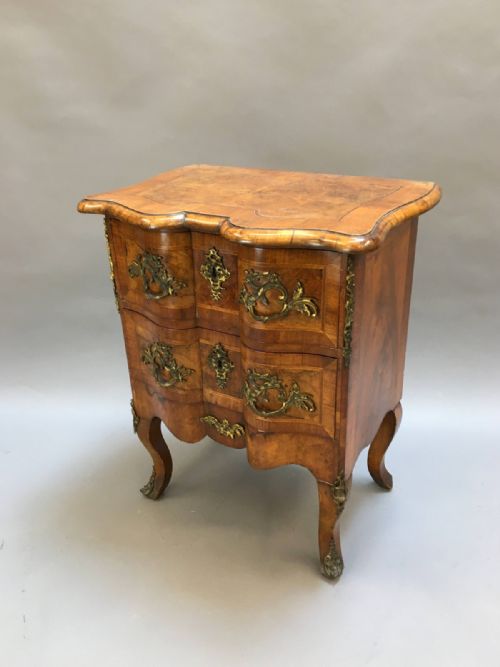

Bombe Front Chest
A bombe front chest delivers swelling, rounded lines that command a room through pure sculptural presence and masterly cabinetwork.
Bombe Front Chest
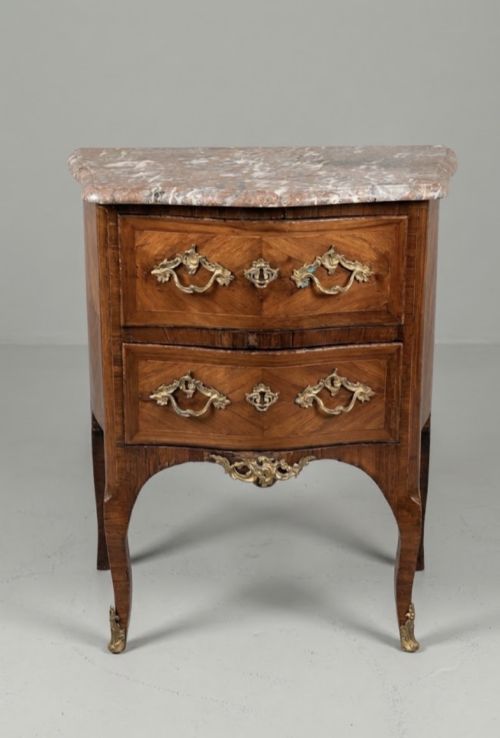
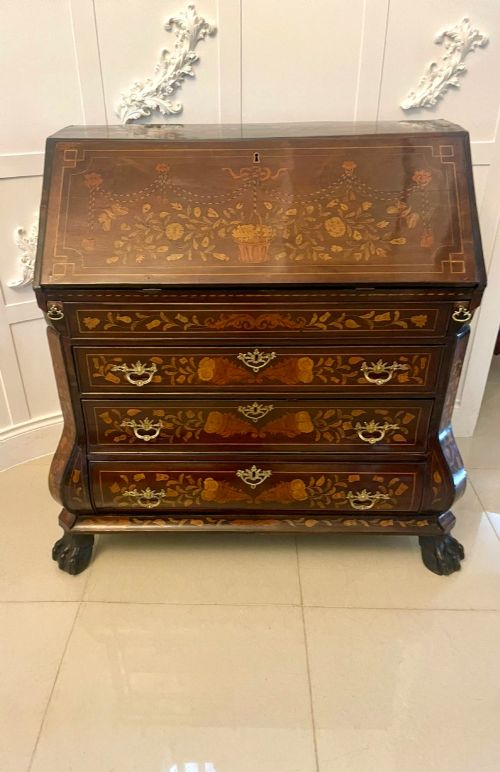
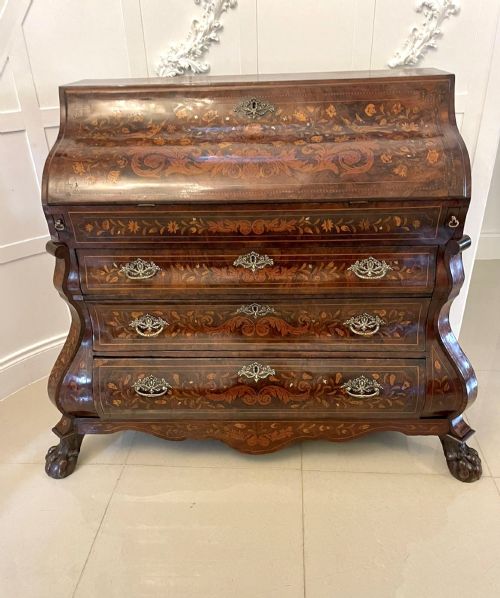
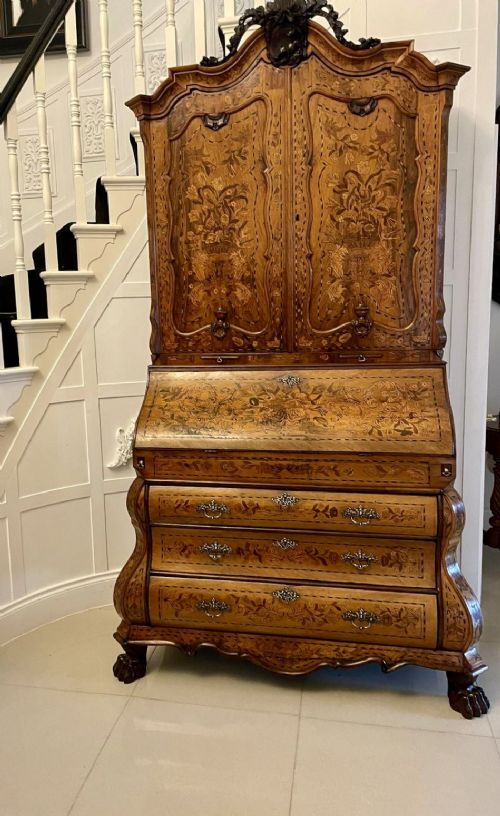
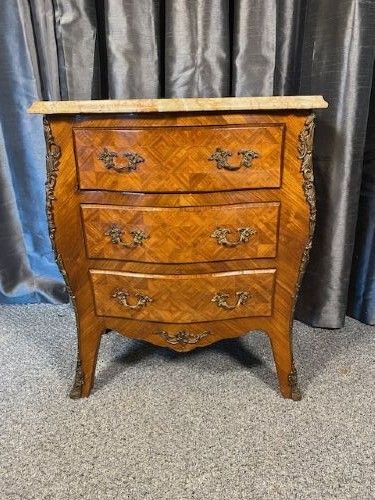
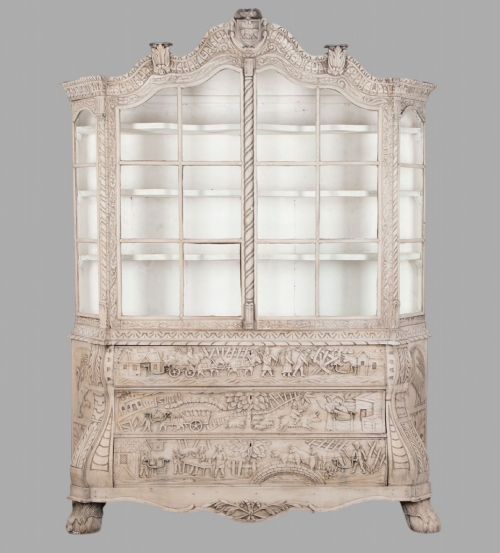
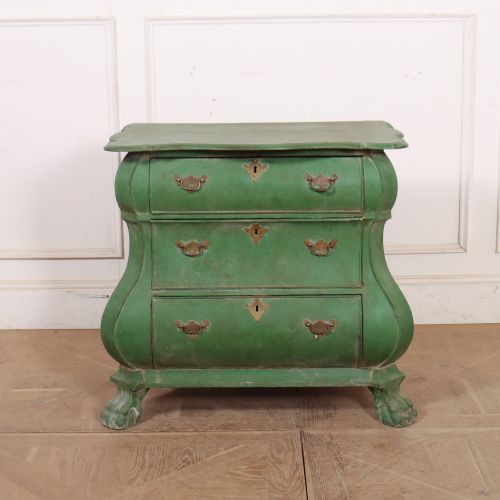
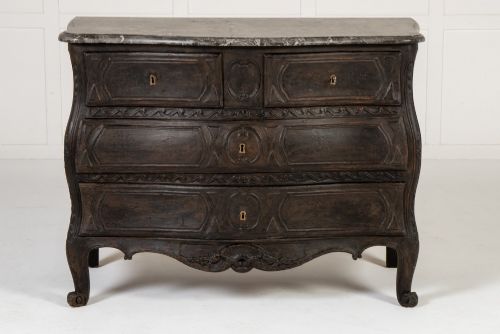
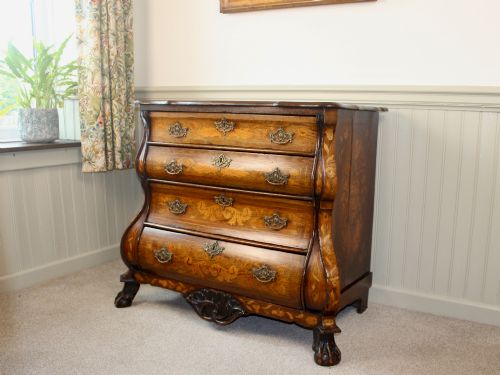
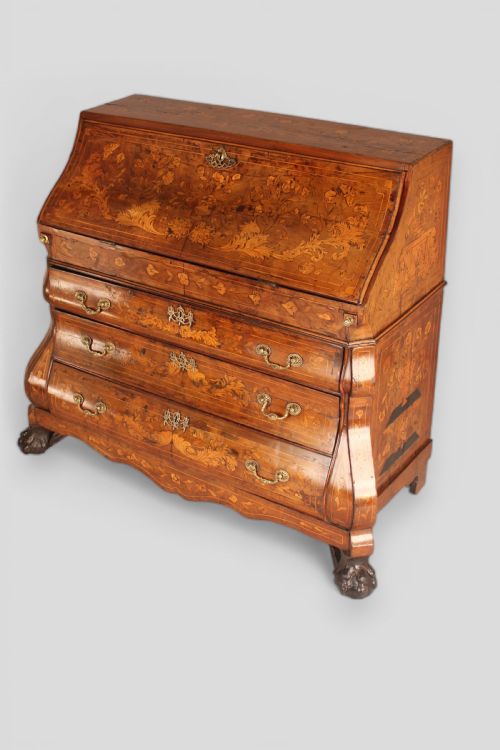
A bombe front chest stands as a striking example of swelling cabinetry, where the wooden frame curves outward in convex sweeps from top to bottom. When searching for a bombe front chest, buyers encounter substantial commodes, bureaus, and bureau bookcases originating primarily from eighteenth-century Dutch and French workshops. These pieces appear in forms ranging from compact bedside chests to monumental display cabinets.
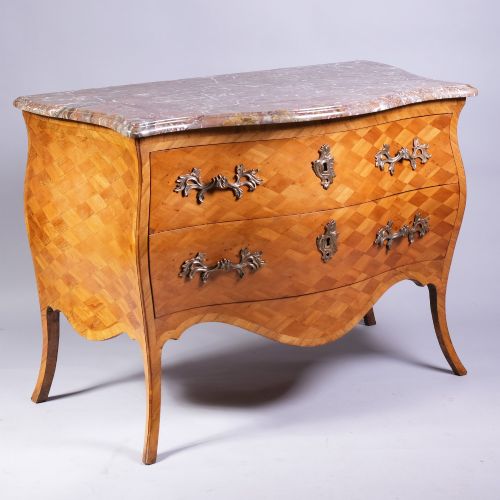
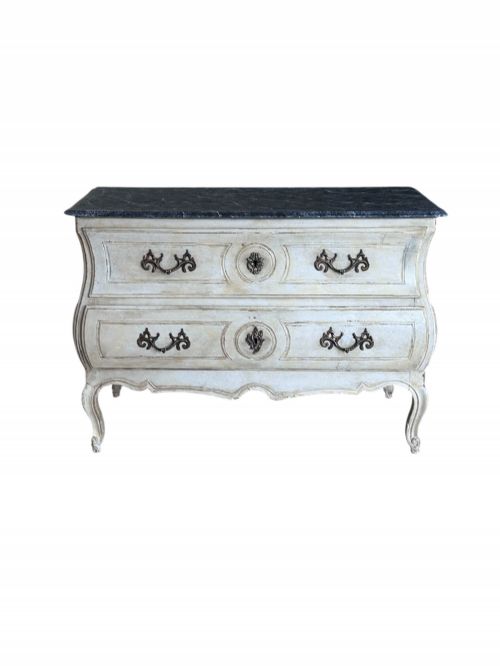
The Dutch and French variants dominate the available selections, defined by distinct regional ornament and silhouette. Dutch pieces frequently display elaborate floral marquetry in burr walnut or oak, supported by claw feet. French examples tend to favour kingwood, mahogany, or painted finishes, often paired with marble tops and ormolu mounts that reflect Louis XV and transitional taste.
How they were made
Cabinetmakers achieved the characteristic outward swell of a bombe front chest through complex joinery and shaped internal framing. Artisans layered expensive veneers such as burr walnut, kingwood, and mahogany over stable secondary timbers, securing the curved panels with precision.
Surface ornament relied heavily on intricate floral marquetry inlay, hand-carved oak details, and painted finishes. French iterations incorporated cast ormolu mounts and gilt bronze fittings, while marble tops added functional weight and polish to the upper surfaces of commodes.
Bombe Front Chest Retail Price Guide 2026
Typical asking prices for bombe front chest among the pieces listed under this phrase on Sellingantiques today, from the lower quarter to the upper quarter. They describe what is for sale here now, not the wider market.
Listings feature walnut, oak, fruitwood, kingwood, and mahogany timbers alongside marble and ormolu.
What varies in quality
The success of a bombe front chest rests upon the harmony of its swelling proportions and the precision of its veneering. Superior examples display seamless continuity of floral marquetry across undulating drawer fronts, where wood grains align despite the complex curves.
Hardware and secondary materials further distinguish the tiers of craftsmanship. Finer pieces integrate chased ormolu mounts, substantial marble slabs, and deep drawer linings in secondary woods, whereas simpler provincial versions rely on painted decoration or modest brass handles.
The Bombe Front Chest Glossary
- Bombe
- A French term describing furniture with a convex, bulging front and sides. This sweeping contour requires advanced woodworking skill to construct.
- Marquetry
- The art of applying small pieces of veneer to a structure to form decorative patterns. Craftsmen utilised walnut, fruitwood, and exotic timbers to create floral designs.
- Ormolu
- Gilded bronze used for decorative mounts and furniture hardware. Makers cast and chased these metal fittings to accent the corners and aprons of commodes.
- Commode
- A low chest of drawers developed in France during the seventeenth century. These items served both decorative and storage functions in principal rooms.
Bombe Front Chest: Frequently Asked Questions
Where did bombe chests originate?
The bombe contour emerged in European cabinetmaking centres during the late seventeenth and early eighteenth centuries. Dutch and French workshops developed the form simultaneously to demonstrate mastery over curved wood.
Craftsmen in these regions refined the swelling silhouette into distinct national styles, with Dutch makers favouring marquetry and French makers integrating gilt bronze mounts.
How do I clean a marble top?
Marble surfaces require gentle maintenance using warm water and a soft cloth. Avoid acidic cleaners that etch the polished stone.
Dry the marble thoroughly after washing to preserve the natural sheen and protect the surrounding wood veneers from moisture.
Are these chests heavy?
Solid timber construction combined with thick marble slabs and bronze mounts makes these pieces exceptionally heavy. Moving them requires multiple people and careful handling.
The substantial weight stems from dense secondary woods and the robust framing needed to maintain the curved shape.
How do I tell Dutch and French styles apart?
Dutch examples generally showcase dense floral marquetry across burr walnut or oak surfaces, often finishing in carved claw feet. French pieces tend toward kingwood or painted finishes paired with marble tops and ormolu mounts.
Examining the secondary woods and decorative hardware quickly reveals the geographic workshop tradition.