

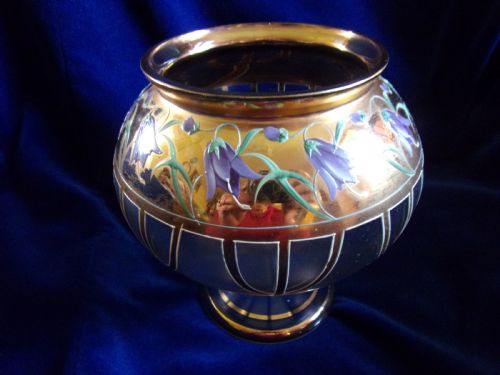


Bohemian Painted Glass
Bohemian painted glass brings together vibrant coloured vessels and intricate hand-painted decoration from the nineteenth and early twentieth centuries.
Bohemian Painted Glass
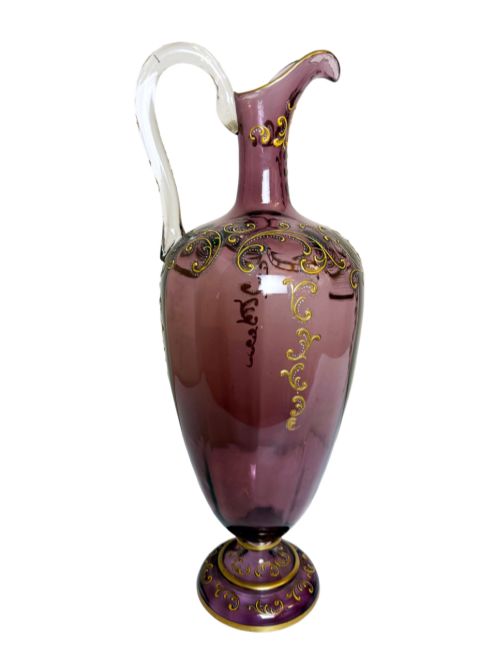
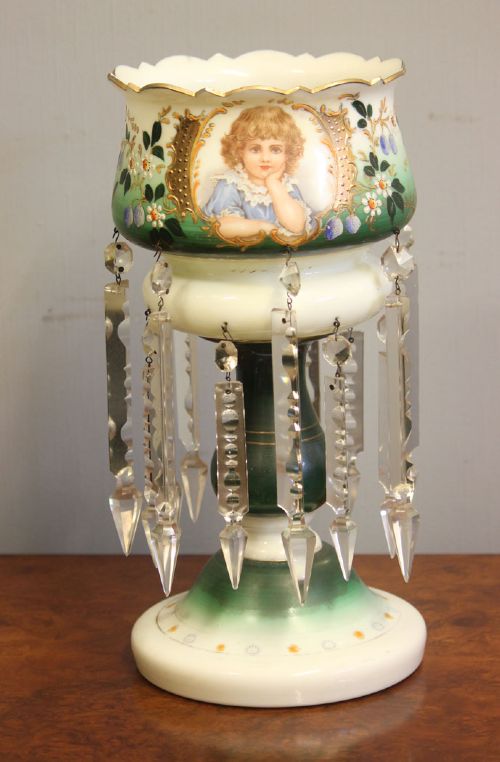
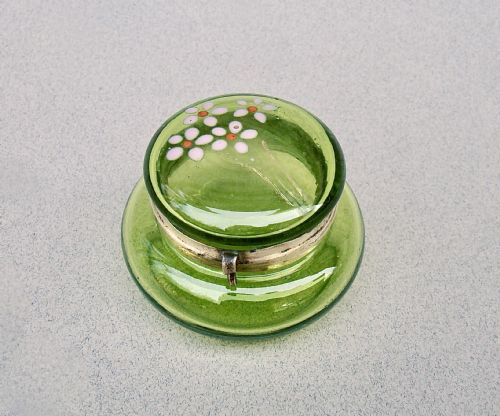
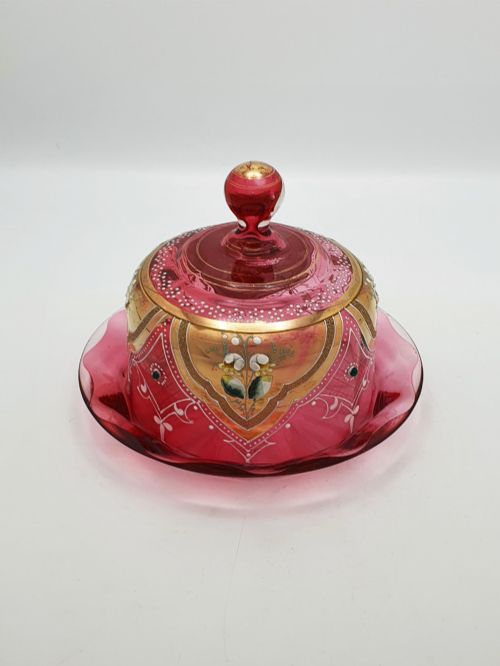
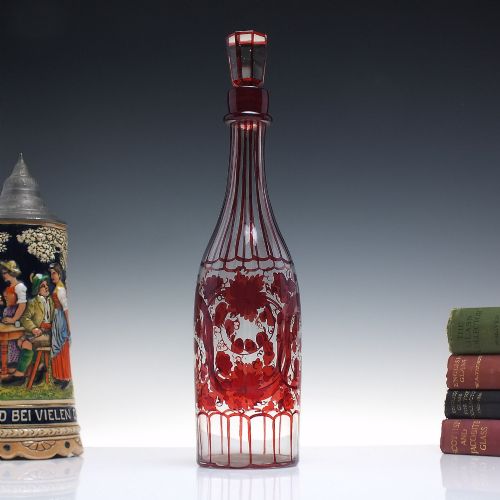
When you search for bohemian painted glass, you encounter decorative vessels ranging from vibrant vases and mantel lustres to decanters, pitchers and trinket boxes. These pieces display a rich variety of colours including cranberry, ruby, green and white opaline glass.
The selection on this page centres predominantly on Victorian and late nineteenth-century examples, alongside pieces stretching into the early twentieth century. Forms span from simple handled pitchers to elaborate multi-piece punch bowl sets and covered cheese dishes.
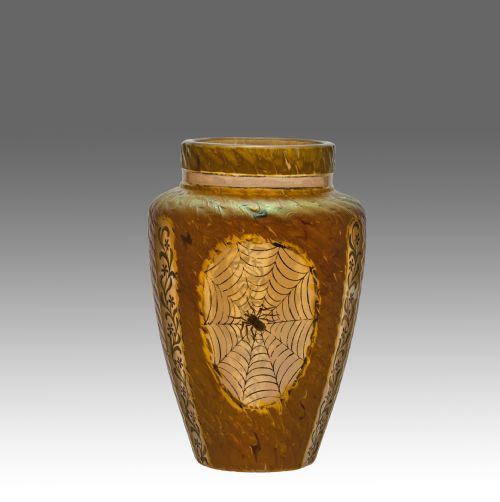
Makers and decorators utilised distinct regional traditions, applying detailed enamel work and gilding to blown glass bodies. Many surviving examples reflect Victorian taste alongside continental Art Nouveau aesthetics.
How they were made
Glassmakers shaped these objects using traditional blown glass techniques, creating heavy bases and smooth vessel walls suited to subsequent decoration. Some pieces employ overlaid glass, combining multiple colour layers before cutting or polishing.
Decorators applied hand-painted enamel and gold leaf directly onto the glass surface, often depicting floral motifs, figures or hunting scenes. Firing fixed the enamels permanently to the glass body, while gilding added metallic highlights to rims and panels.
Listings feature blown glass, crystal and overlaid glass decorated with enamel and gold leaf across Victorian and twentieth-century periods.
What varies in quality
Quality in these pieces rests upon the crispness of the glass-forming and the skill of the enamel painting. Finer examples display precise brushwork, well-defined figures and secure application of gold leaf rather than hasty stenciling.
The weight of the glass, the depth of colour and the complexity of the overlay work differentiate standard production from superior workshop output. Well-preserved gilding and undamaged enamelling elevate the standing of any vessel.
Kralik Glass·Lobmeyer·Fritz Heckert·Moser·Salviati·Harrach
The Bohemian Painted Glass Glossary
- Cranberry glass
- A rich pinkish-red glass coloured with gold chloride during production. It is frequently seen in Victorian vases and jugs.
- Mantel lustre
- A decorative glass vase hung with prismatic crystal pendants. These were designed to sit on fireplace mantels and catch the light.
- Enamel
- A durable coloured glass paste applied to the surface of a vessel and fired. It allows for detailed opaque painting on transparent or coloured glass.
- Opaline glass
- An opaque pale glass that mimics porcelain. It provides a smooth white background for polychrome enamel painting.
- Gilding
- The application of gold leaf or powdered gold to the surface of the glass. It highlights rims, handles and painted panels.
Bohemian Painted Glass: Frequently Asked Questions
How do I identify Mary Gregory glass?
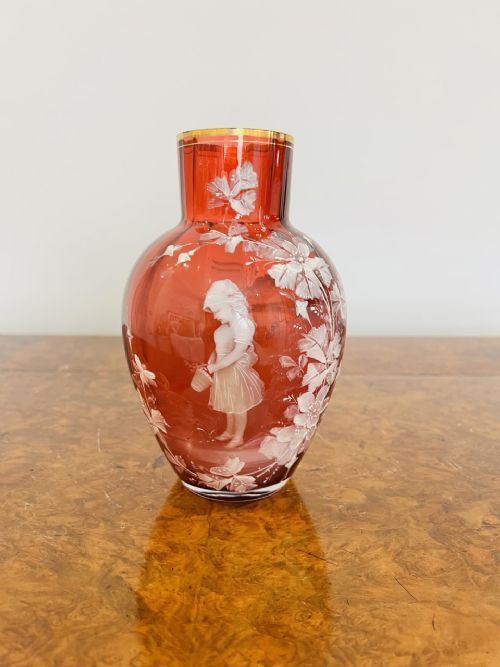
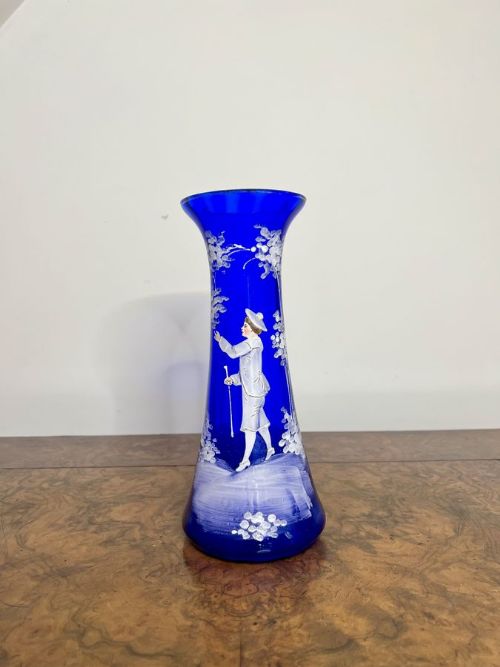
Mary Gregory pieces are characterised by white enamel silhouettes of children playing amidst foliage, typically set against cranberry, green or blue glass grounds.
The style gained popularity during the Victorian era and was produced across various European workshops rather than by a single decorator named Mary Gregory.
What are mantel lustres used for?
Mantel lustres served primarily as decorative garnitures on nineteenth-century fireplaces, designed to reflect candlelight from the attached glass prisms.
Pairs were positioned symmetrically on either side of a mantelpiece to enhance the formal appearance of a room.
Are these pieces safe to wash with water?
Enamelled and gilded glass requires careful handling and should be washed gently in lukewarm water without harsh detergents. Soaking can damage applied gold leaf and nineteenth-century enamels.
How can I tell Victorian glass from later pieces?
Victorian examples often feature deep saturated colours like cranberry and ruby, combined with heavy gilding and pastoral or armorial enamel scenes.
Later pieces from the twentieth century frequently incorporate smoother Art Nouveau curves or iridescent finishes characteristic of the period.