


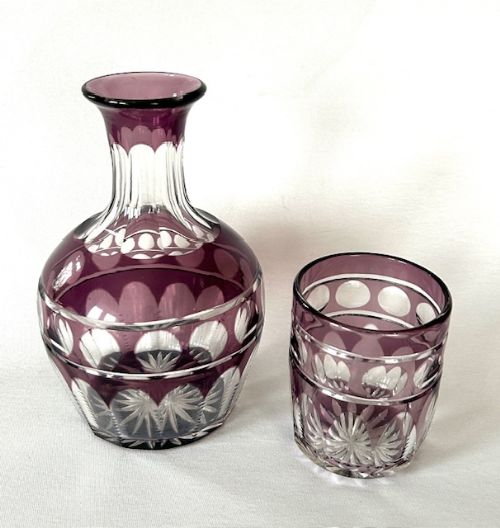


Bohemian Glass Set
A bohemian glass set brings together matched vessels and stemware that display centuries of European craftsmanship.
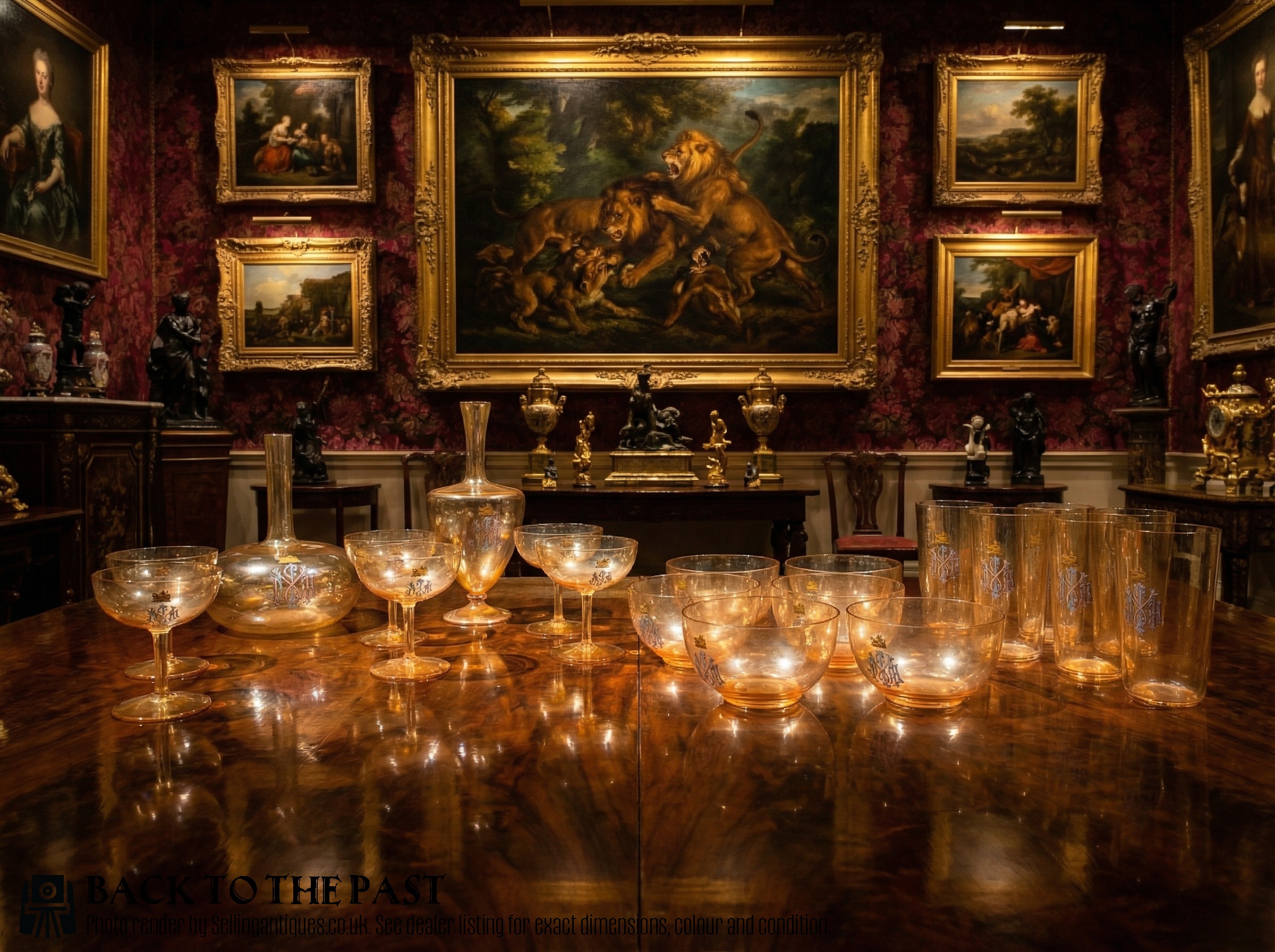
Bohemian Glass Set
When you search for a bohemian glass set, you encounter matched groups of drinking vessels, decanters, and table services originating from Central European traditions. The listings range widely from nineteenth-century Victorian green glass trios and cranberry liquor stands to twentieth-century Art Deco geometric crystal decanter sets.
The most common versions met on this page are structured around drinks service, including decanter sets with matching glasses, liqueur sets, punch bowl sets, and wine glass services. These groupings span diverse stylistic periods such as Biedermeier, Bohemian Historicism, Art Nouveau, and Art Deco.
Vessels span both functional tableware and display pieces, taking forms such as carafes, roemers, hock glasses, teacups, and garniture sets. Pieces originate from distinct eras reaching back to the Georgian period through the Victorian age and into the 1930s.
How they were made
The physical construction relies heavily on lead crystal, cut crystal, and heavy glass manipulated through cutting techniques to produce faceted surfaces. Overlay glass techniques create layered colour effects, seen in green, amber, amethyst, and ruby red tones applied over clear or contrasting glass bodies.
Decoration is executed through hand-gilding, gold leaf application, and detailed enamel work often depicting portraits, playing cards, or floral garden scenes. Some pieces incorporate chrome or silver-plated stands alongside the glass elements.
Listings feature items from the Victorian era up to the 1930s Art Deco period, constructed from cut crystal, lead crystal, and overlay glass.
What varies in quality
The standard of a set is determined by the precision of the glass cutting and the clarity of the crystal foundation. Crisp facets and substantial weight distinguish superior pieces from lighter, simpler press-moulded alternatives.
Surface ornamentation separates standard production from exceptional examples, particularly the fineness of hand-enamelling and the application of genuine gold leaf. Complete matching sets with their original trays or matching glasses maintain greater consistency than assembled collections.
Karl Palda·Moser·Salviati·Hermanova·Emmy Seyfried
The Bohemian Glass Set Glossary
- Roemer
- A traditional Germanic wine glass featuring a large bowl resting on a cylindrical stem decorated with applied prunts. These are frequently found in green glass variants.
- Hock glass
- A tall-stemmed wine glass traditionally used for German white wine, often produced in coloured or overlay glass varieties. They appear frequently in harlequin sets of varied hues.
- Overlay glass
- A technique where a layer of coloured glass is fused over a base of clear or contrasting glass, then partially cut away to reveal the contrasting underlayer. This method creates deep visual contrast and complex patterns.
- Prunt
- A small, applied blob of molten glass melted onto the stem of a vessel to provide a secure grip and decorative texture. They are characteristic of traditional Germanic and Bohemian glassware.
- Garniture set
- A matched group of ornamental vases or vessels designed to be displayed together on a mantelpiece or sideboard. These coordinate in material and decorative style with table services.
Bohemian Glass Set: Frequently Asked Questions
What is a bohemian glass set?
A bohemian glass set comprises matched vessels, decanters, and drinking glasses created in Central European glassworks. These groupings range from twentieth-century Art Deco cocktail services to nineteenth-century Victorian wine glasses.
The materials span cut crystal, overlay glass, and coloured glass enhanced with enamel and gold leaf. They are collected for their decorative utility and historical craftsmanship.
How do I identify Art Deco sets?
Art Deco sets, frequently associated with makers like Karl Palda, display geometric forms, clean lines, and stylised motifs from around 1930. They often utilise clear lead crystal paired with minimal black or coloured enamel decoration.
These pieces contrast sharply with the ornate, floral, and heavily gilt Victorian or Bohemian Historicism items from earlier decades. The silhouette and cutting style immediately signal this modernist shift.
How were decanter sets used?
Decanter sets served spirits, liqueurs, and wines in domestic settings, often arranged on matching glass or metal trays for easy transport. They formed part of formal entertaining during the Victorian and Art Deco periods.
The inclusion of matching glasses ensured a unified presentation when hosting guests in the drawing room or dining parlour.
How should I care for antique glass?
Antique glass requires gentle hand washing in lukewarm water with mild detergent, avoiding sudden temperature changes that can stress the material. Enamelled and gilt surfaces demand particular caution to prevent abrasion.
Storing pieces away from direct sunlight protects coloured glass from fading and preserves delicate gold leaf details over time.