

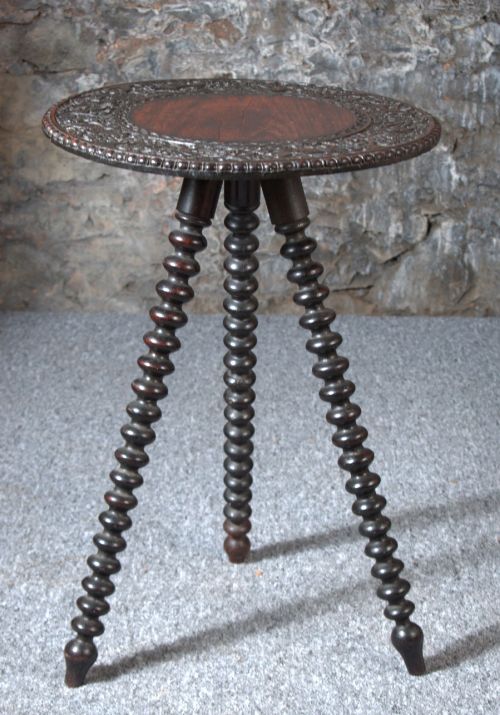


Bobbin Turned Accent Table
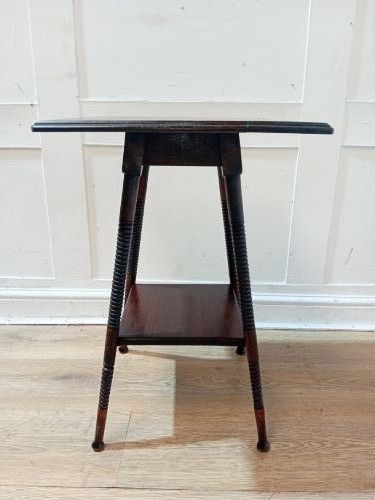
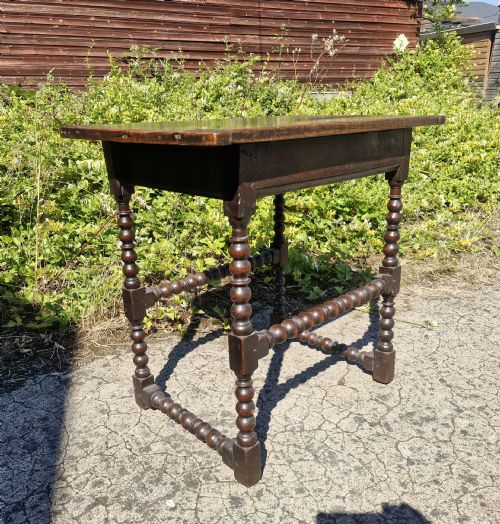
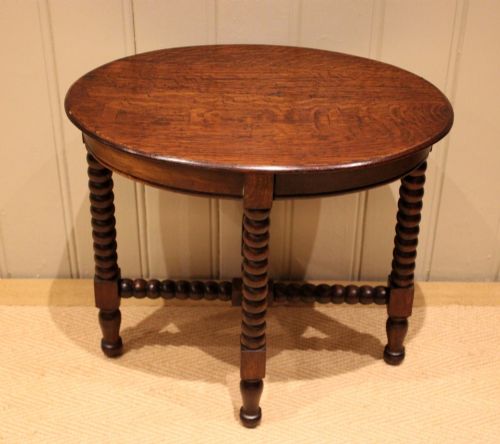
A bobbin turned accent table brings distinctive spool-moulded character to a room, offering practical surface space paired with tactile timber detail.
Bobbin Turned Accent Table
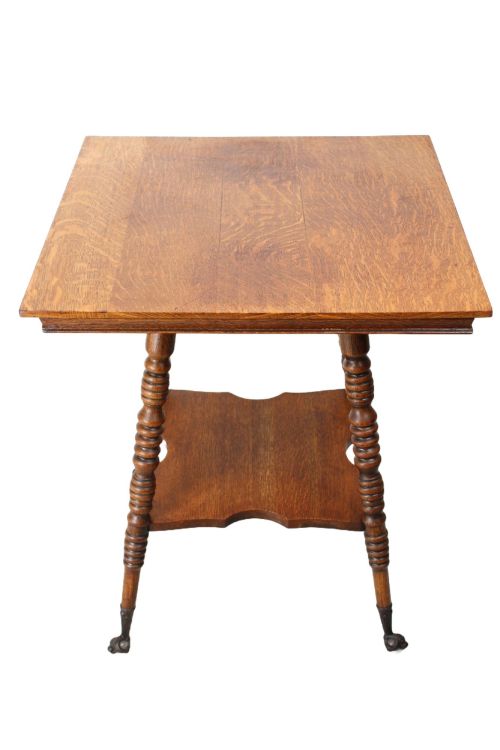
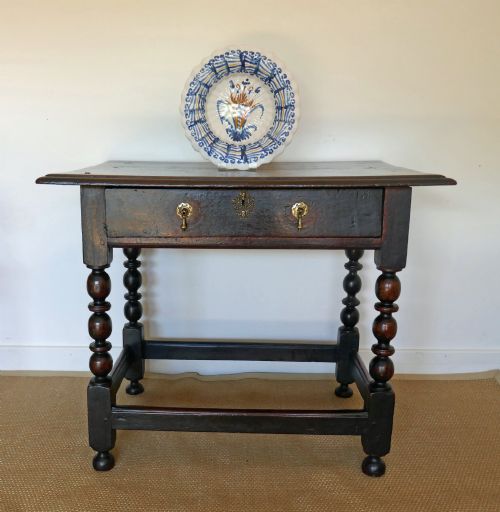
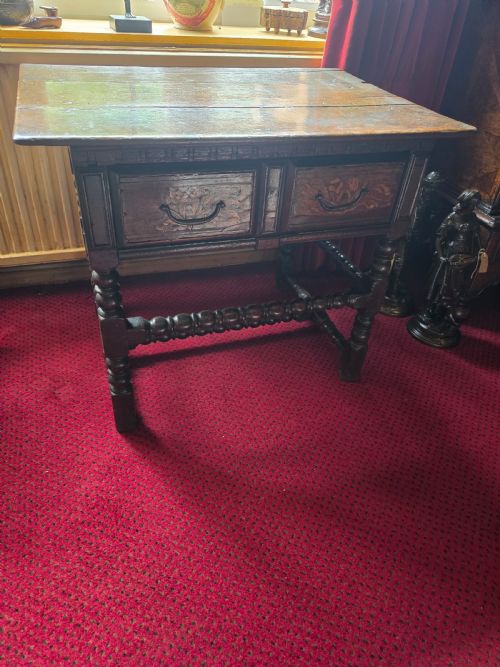
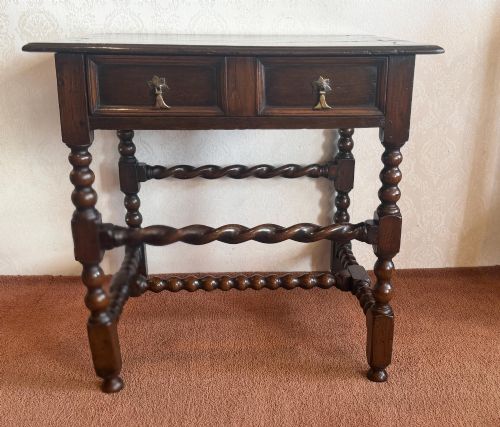
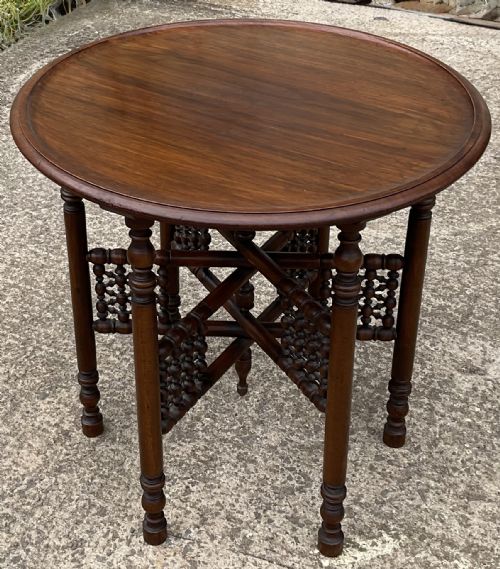
A bobbin turned accent table is defined by its signature spool-shaped turned legs and supports, functioning primarily as a compact side, lamp, or occasional table. These pieces span centuries of cabinetmaking, ranging from seventeenth-century oak originals to nineteenth-century revival interpretations.
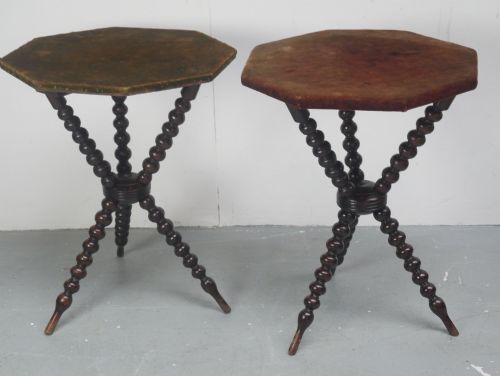
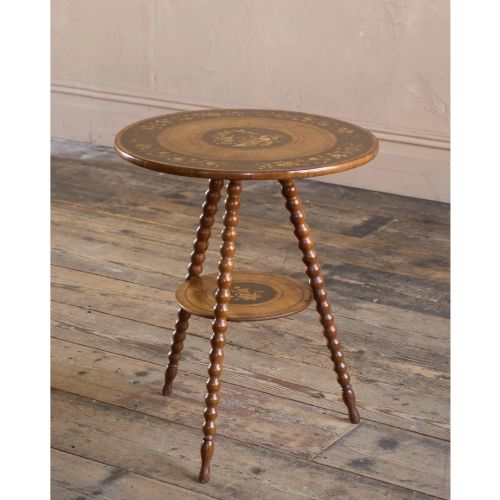
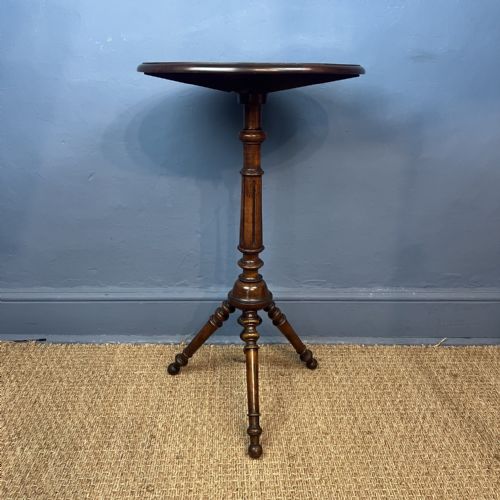
The selection here includes diverse forms such as occasional tables, gateleg tables, and tripod gipsy tables, alongside related stools and coffee tables. Oak and mahogany appear frequently alongside walnut and yew wood.
Buyers most commonly encounter nineteenth-century examples and Jacobean revival interpretations, though earlier seventeenth-century forms and twentieth-century pieces also feature.
How they were made
Makers utilised solid timbers including oak, walnut, mahogany, yew wood, and cherry, often shaping the distinctive bobbin legs on a lathe before assembling the frame with traditional joinery. Surface finishes range from natural polished grain to ebonised treatments and gilding.
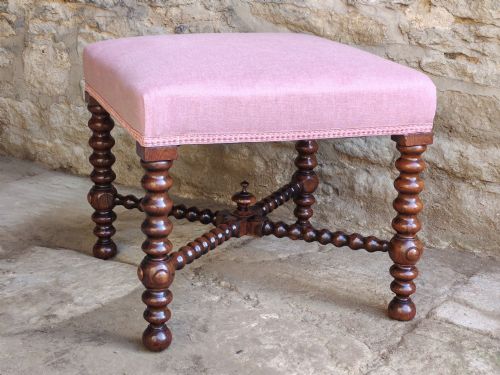
Some examples incorporate marquetry inlay or fabric elements such as velvet and tweed linen upholstery, particularly on stools and gipsy tables.
The listings feature timbers spanning oak, mahogany, walnut, yew wood, cherry, and pine across multiple centuries.
What varies in quality
Quality in a bobbin turned accent table rests on the crispness of the lathe work and the selection of timber. Crisp, well-defined spool turnings demonstrate superior craftsmanship compared to softer, worn profiles.
The integrity of the structural joints and the choice of dense hardwoods like oak or walnut separate robust, enduring examples from lighter, purely decorative pieces.
WILLIAM BIRCH·LIBERTY of LONDON
The Bobbin Turned Accent Table Glossary
- Bobbin turning
- A form of woodturning where a series of rounded, spool-like shapes are cut sequentially along the length of a leg or stretcher. This technique gained prominence in seventeenth-century furniture production.
- Gateleg table
- A table with hinged drop leaves supported by legs that swing outward like a gate. This construction allows the table to expand or fold down.
- Gipsy table
- A lightweight occasional table featuring three splayed legs, often draped with fabric or finished with hand-painted surfaces. Popularity peaked during the late nineteenth and early twentieth centuries.
- Marquetry
- The art of applying small pieces of wood veneer to a structure to form decorative patterns or pictures. It adds visual complexity to table tops.
- Jacobean style
- A heavy, dark wood furniture style originating from the early seventeenth century and later revived in the nineteenth century. It frequently incorporates turned components and panels.
Bobbin Turned Accent Table: Frequently Asked Questions
What is a bobbin turned accent table?
A bobbin turned accent table is a small piece of furniture characterised by legs shaped to resemble a string of bobbins or spools. These tables function as side, lamp, or occasional surfaces.
Originating in various periods from the seventeenth century onward, they combine utilitarian function with decorative turned woodwork.
How do I date an antique table?
Dating involves examining the timber species, construction joints, and turning style. Seventeenth-century pieces typically feature heavy oak and hand-carved joinery.
Later nineteenth-century revivals often utilise softer turnings, mahogany, or ebonised finishes while imitating earlier motifs.
Where should I place a side table?
These compact tables fit well beside seating areas, in hallways, or serving as bedside lamp stands. Their modest proportions allow them to occupy tight corners.
They provide convenient surface space without overwhelming smaller rooms.
What woods were commonly used?
Oak is the predominant timber found in earlier pieces, particularly from the seventeenth and eighteenth centuries. Walnut, mahogany, yew wood, and cherry appear increasingly in nineteenth-century examples.
Some decorative pieces also feature ebonised or gilded finishes over hardwood bases.