


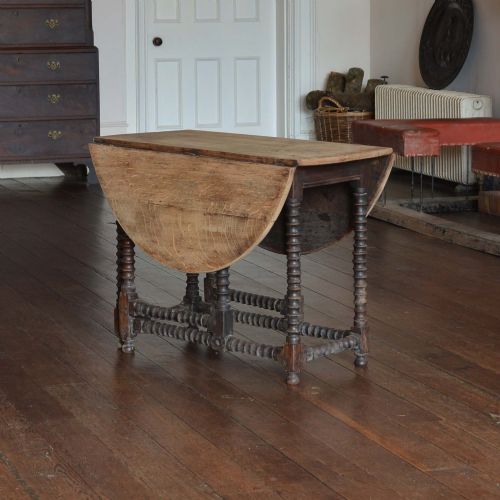

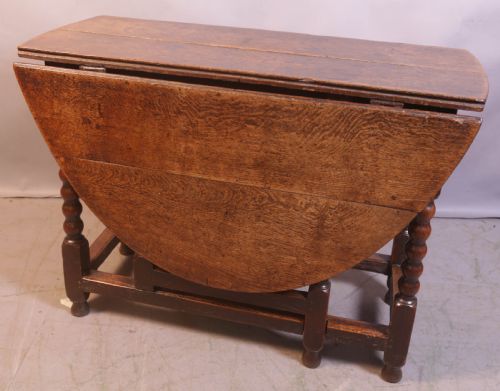


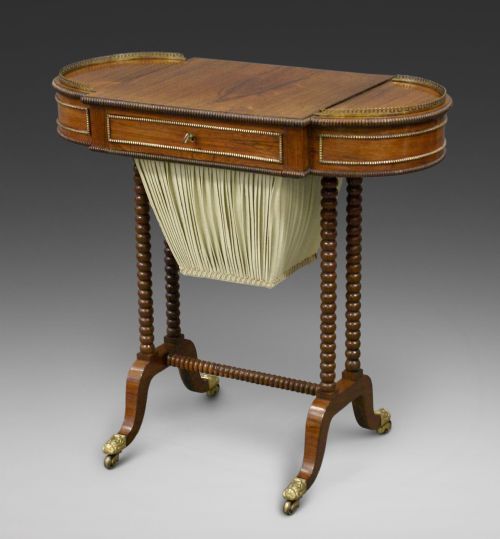
Bobbin Drop Table
A bobbin drop table offers ingenious space-saving utility combined with the tactile warmth of turned wood.
Bobbin Drop Table
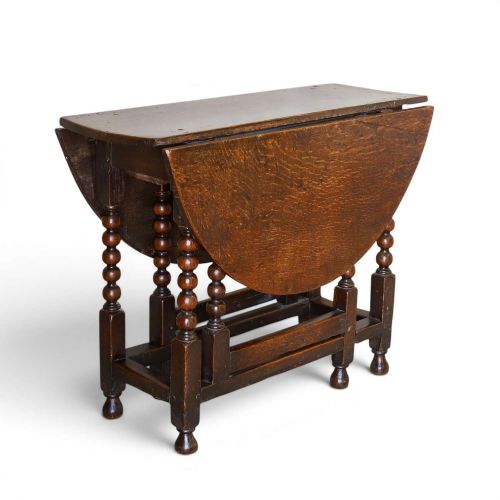
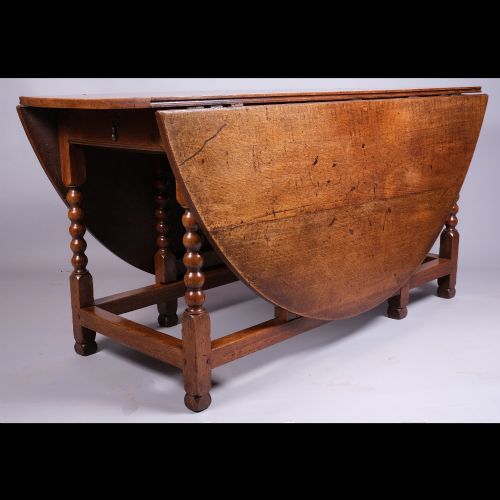
A bobbin drop table is fundamentally a space-saving piece built with hinged leaves that lower when not in use. The search phrase covers gateleg dining tables, occasional tables, and side tables that utilise folding mechanisms.
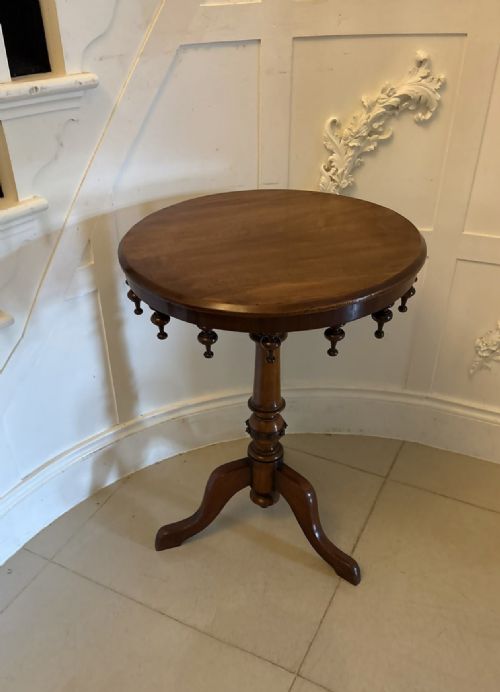
Most examples encountered on this page date from the seventeenth century through to the Victorian era, spanning styles such as Jacobean, Regency, and English country. These forms range from compact lamp tables to six-seater dining pieces.
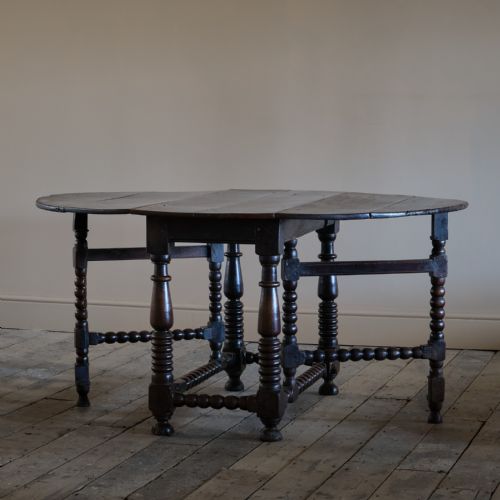
The defining characteristic across these historical periods is the turned support, shaped to resemble bobbins or spools, which grounds the furniture with rhythmic, decorative silhouettes.
Materials and construction
Solid timber forms the structural core of these pieces, with oak predominating in seventeenth-century examples alongside rich walnut and rosewood appearing in later Victorian and Regency variants. These hard-wearing woods provided the necessary strength for hinged flaps and pivoting gate legs.
Turnery was executed on a lathe to create the characteristic spool or bobbin profiles along the legs and stretchers. Joinery relied on traditional pegging and mortise and tenon methods to endure the daily movement of dropping and raising the leaves.
Listings feature robust seventeenth-century oak gateleg designs alongside refined nineteenth-century walnut and rosewood Sutherland formats.
Judging quality and character
Quality rests in the crispness of the turnery and the integrity of the timber figure, particularly when burr walnut or figured oak is employed. Superior pieces maintain tight joints at the hinges and pivots, ensuring the leaves hang level when extended.
Proportion and scale dictate the desirability of a table, as smaller occasional versions and substantial six-seater dining formats each require balanced leg placement to remain stable in both open and closed positions.
The Bobbin Drop Table Glossary
- Bobbin turnen
- A style of woodturning featuring a succession of rounded, spool-like shapes reminiscent of thread bobbins. This decorative profile creates a highly textural support structure.
- Gateleg table
- A table featuring hinged flaps supported by legs that swing out like a gate. This design allows the surface area to expand or contract significantly.
- Drop leaf
- A hinged table leaf that hangs vertically down when lowered and locks horizontally when raised. It provides flexible utility for changing spatial requirements.
- Sutherland table
- A narrow-profile drop leaf table where the leaves comprise a large portion of the top surface. The hinged legs swing outward to support these wide flaps.
- Stretcher
- A horizontal wooden bar connecting the legs of a table to provide structural rigidity. In earlier pieces, these often act as footrests.
Bobbin Drop Table: Frequently Asked Questions
What is a bobbin drop table?
A bobbin drop table is a functional piece of furniture featuring hinged leaves and turned wooden supports shaped like spools. These tables provide flexible surface area through folding flaps.
Historically constructed from timbers such as oak, walnut, and rosewood, they appear in forms ranging from compact side tables to large dining pieces.
How do you use a gateleg table?
A gateleg table functions by lifting the drop leaves and swinging the pivoting legs outward to lock the flaps into place. This mechanism transforms a narrow console or side piece into a full dining surface.
When not needed for entertaining, the leaves drop down and the legs fold back inward to conserve floor space in smaller rooms.
How do I date an antique oak table?
Dating an antique oak table involves examining the construction methods, joinery marks, and the style of the turnery. Seventeenth-century examples often display hand-pegged joints and dense, oxidised timber surfaces.
Later nineteenth-century interpretations tend to feature cleaner internal mechanics and softer patination while emulating earlier seventeenth-century forms.
Where should I place a drop leaf table?
A drop leaf table fits well against a wall with both leaves lowered to serve as a narrow side or lamp table. This placement preserves walkways in tighter hallways or living spaces.
When guests arrive, the table pulls into the centre of the room and opens fully to accommodate additional seating without permanently dominating the floor plan.