
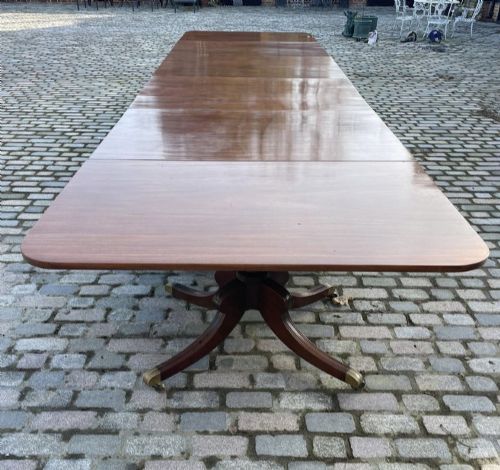
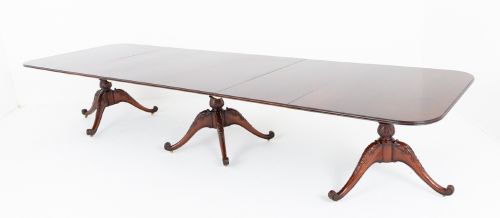
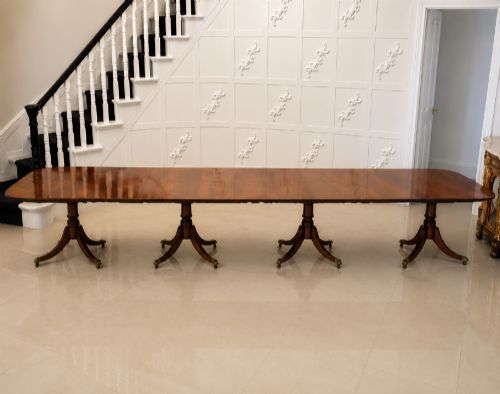
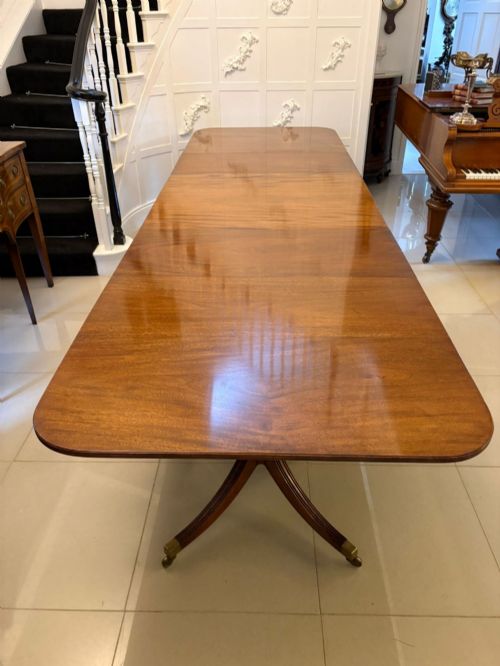

Boardroom Dining Table
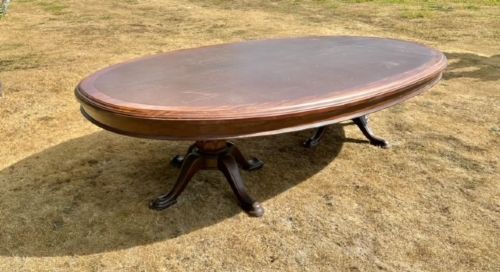
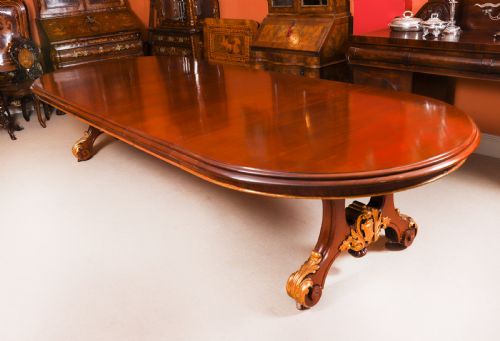
A boardroom dining table commands a large room, offering substantial timber surfaces designed to seat many guests for grand meals and meetings.
Boardroom Dining Table
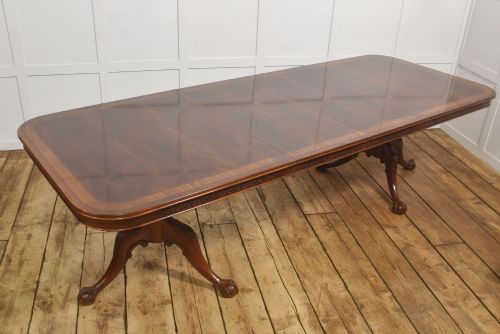
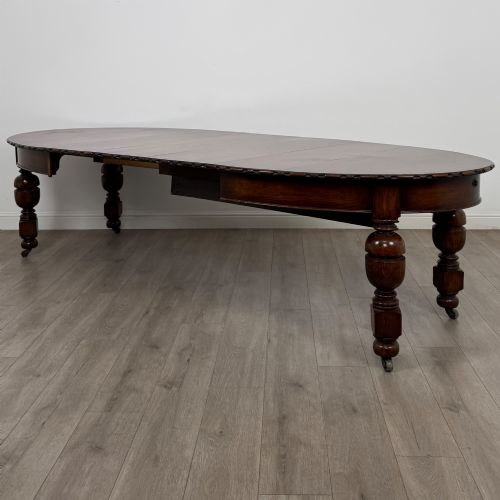
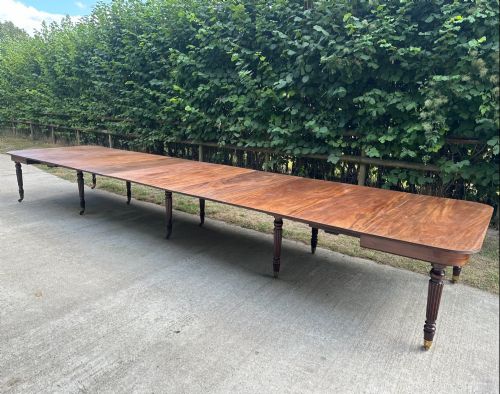
A boardroom dining table provides a massive surface intended for large gatherings, often measuring twelve to twenty-eight feet in length to accommodate numerous diners or colleagues. These pieces originate from periods spanning the Georgian, Regency, Victorian, and Edwardian eras, extending into the early twentieth century with Art Deco examples.
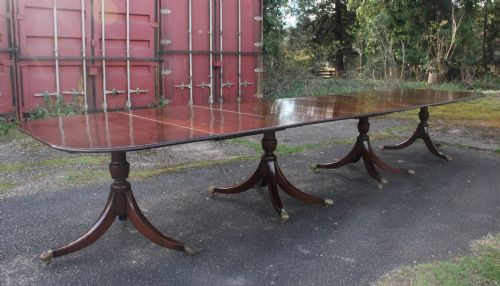
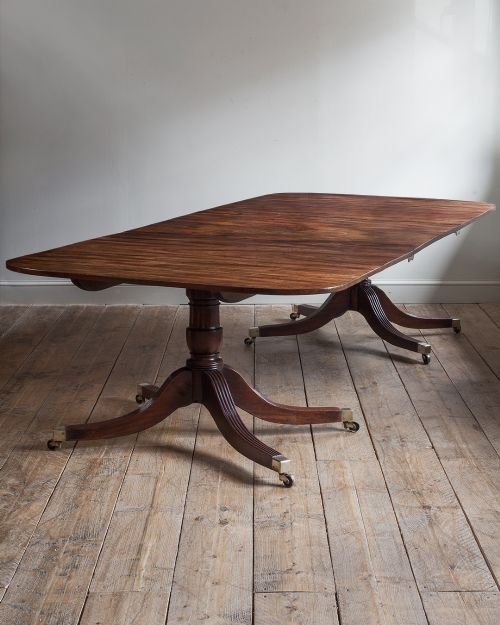
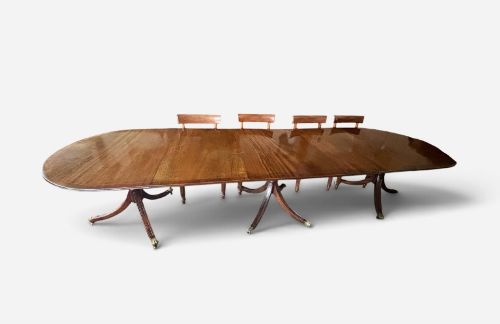
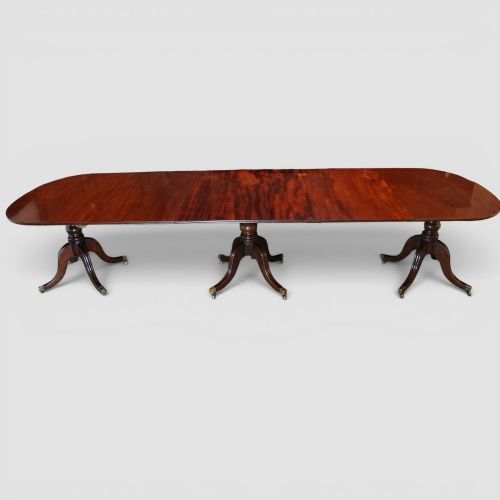
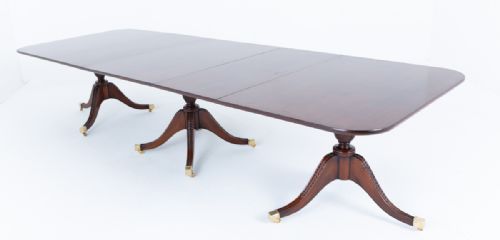
The dominant form on this page is the extending multi-pedestal table, constructed with multiple timber pillars and removable leaves. Such tables shift between compact daily lengths and sprawling banquet proportions using brass mechanisms.
Makers designed these grand objects for institutional rooms and large country houses, pairing robust oak, elm, or mahogany construction with seating sets.
How they were made
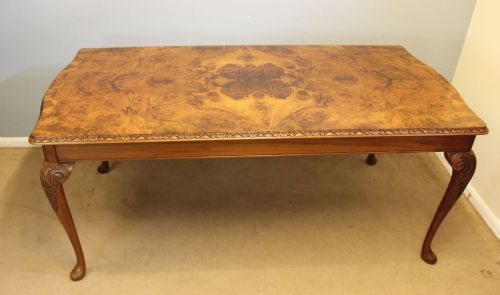
Cabinet makers built boardroom dining tables primarily from dense timbers like mahogany, Cuban flame mahogany, walnut, burr walnut veneer, rosewood, and oak, often reinforced with internal brass tracks and clips to secure the extending leaves.
Workshops constructed these large frames using multiple wooden pedestals, sometimes numbering up to six pillars, supporting thick tabletops finished with polished veneer or solid boards.
Some tables require up to six pillars and five leaves just to seat a modest rugby team.
What varies in quality
Quality rests on the selection of timber figure, such as figured mahogany, plum pudding mahogany, or burr walnut veneer, alongside the precision of the extending mechanism and the stability of multiple pedestals.
Master cabinet makers produced pieces with intricate brass inlays, carved pillars, and balanced proportions that maintain rigidity even when extended to seat over twenty people with multiple leaves inserted.
Gillows·Wylie & Lochead·Whytock & Reid
The Boardroom Dining Table Glossary
- Pedestal
- A central timber support column resting on feet, used to hold up large tabletops without crowding the seating space.
- Extending table
- A table designed with removable leaves and internal tracks that increase surface length.
- Plum pudding mahogany
- A dense tropical timber figuring showing circular markings resembling Christmas pudding fruit.
- Leaf
- A separate wooden board inserted into the centre of an extending table to increase seating capacity.
- Veneer
- A thin layer of figured wood applied over a secondary timber base to create decorative surfaces.
Boardroom Dining Table: Frequently Asked Questions
How do I seat twenty people?
A boardroom dining table often includes multiple leaves and several pedestals to support lengths exceeding fifteen feet. Inserting these extra panels expands the surface evenly for large gatherings.
Ensure your room has adequate clearance around the extended perimeter for chairs and guests to move comfortably.
Are these tables for dining?
These large objects served both grand banquets and formal meetings in institutional settings or country houses. Their robust proportions accommodated large groups for dining or business.
Today, they function equally well as expansive boardroom desks or primary dining surfaces in spacious rooms.
How do pedestal tables extend?
Makers constructed these tables with sliding wooden frames and brass mechanisms that pull apart to accept drop-in leaves. Multiple pillars distribute weight across the floor.
Additional central pillars prevent sagging when the table reaches its maximum length with all leaves inserted.
What timber was used?
Cabinet makers utilised dense hardwoods like mahogany, Cuban flame mahogany, oak, walnut, and rosewood for durability. Some examples feature decorative burr walnut veneer or plum pudding grain.
These heavy materials provide the structural integrity required for tabletops spanning up to twenty-eight feet.