


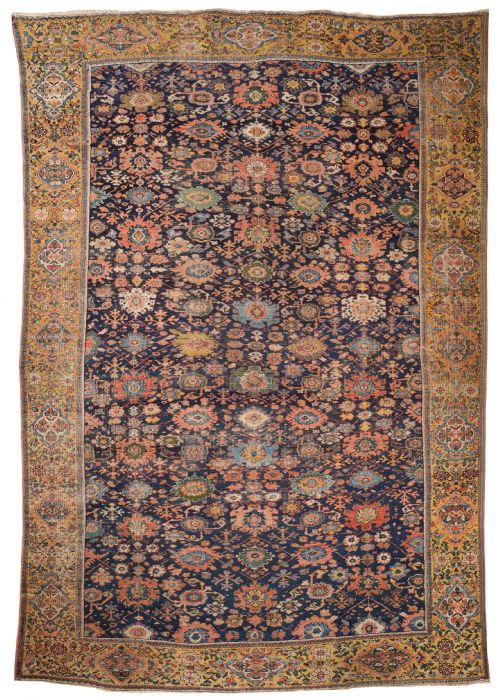


Blue Yellow Carpet
A blue yellow antique carpet brings warmth and striking contrast to a room through centuries of traditional weaving.
Blue Yellow Carpet
A blue yellow antique carpet spans regional traditions from Anatolia, China, Persia, and the Caucasus, alongside European Arts and Crafts interpretations. These floor coverings arrive in various formats, including larger carpets, area rugs, seating mats, and pillar rugs.
The most common examples on this page date from the nineteenth century into the early twentieth century. Each piece reflects the specific decorative vocabulary and knotting techniques of its origin, whether tribal, village, or workshop production.
How they were made
Makers utilised natural dyes on wool and cotton foundations, creating the characteristic blue and yellow colour palettes seen across these rugs. Artisans knotted or wove the textiles by hand using traditional regional looms and techniques.
Pile carpets employ wool knotting over cotton or wool warps and wefts, while flatweaves and certain Indian dhurries utilise cotton structures without pile.
Blue Yellow Carpet Retail Price Guide 2026
Typical asking prices for blue yellow carpet among the pieces listed under this phrase on Sellingantiques today, from the lower quarter to the upper quarter. They describe what is for sale here now, not the wider market.
A meticulous copy of a Transylvanian prayer rug made around nineteen-twenty proves that imitation truly remains the sincerest form of flattery.
What varies in quality
The fineness of the weave and the precision of the design execution set superior examples apart from standard work. Better pieces display greater density in the knotting and a more harmonious balance of the blue and yellow tones.
The integrity of the foundation materials and the retention of original borders influence the overall standing of an antique carpet.
Gavin Morton·Tuduc
The Blue Yellow Carpet Glossary
- Warp
- The stationary vertical threads stretched on a loom before weaving begins. These form the structural foundation of the carpet.
- Weft
- The horizontal threads passed through the warp to hold the knots in place. Together they create the body of the textile.
- Pile
- The upright cut or looped fibres forming the soft surface of a carpet. This layer displays the patterned design.
- Soumac
- A flatweaving technique involving wrap-sewn wefts that produce a durable structure with a braided appearance on the reverse.
Blue Yellow Carpet: Frequently Asked Questions
How do I care for an antique carpet?
Keep the carpet out of direct sunlight to protect the natural dyes from fading. Vacuum gently with a suction-only attachment without using a rotating brush.
Rotate the rug periodically to ensure even wear across the surface. Professional cleaning should be undertaken only by specialists in antique textiles.
Where were these rugs used originally?
Many of these pieces served as floor coverings in domestic rooms, reception halls, and tents across different regions. Specific formats like seating mats and pillar rugs fulfilled distinct architectural and functional roles in their local cultures.
Prayer rugs were utilised for ritual daily worship, often featuring architectural mihrab designs. Larger carpets anchored the main living spaces of substantial homes and palaces.
How can I tell different regional styles apart?
Regional styles are distinguished by their specific motifs, border arrangements, and structural materials. Persian and Anatolian pieces often feature complex floral or geometric medallions, while Caucasian rugs display bolder, highly stylised geometric forms.
Chinese pieces utilise distinct iconography such as dragons, pillars, and restrained field patterns. Examining the weave structure and palette provides further clues to geographic origin.
Are cotton dhurries different from pile rugs?
Indian cotton dhurries are flatwoven textiles without a raised pile surface. They offer a lighter, reversible structure compared to traditional knotted carpets.
Pile rugs build depth and texture through thousands of individual hand-tied knots. This gives them a heavier hand and a distinct surface pile that changes appearance with the light.