


Blue Wingback Armchairs
Blue wingback armchairs offer deep upholstery and high side panels to keep out draughts, turning a fireside seat into a private enclosure.
Blue Wingback Armchairs
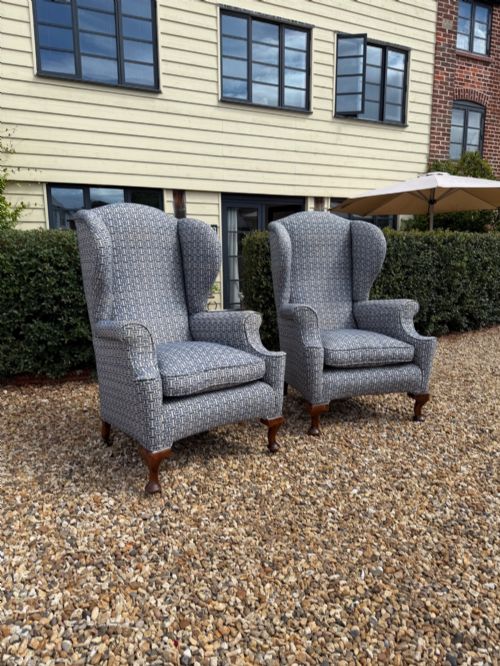
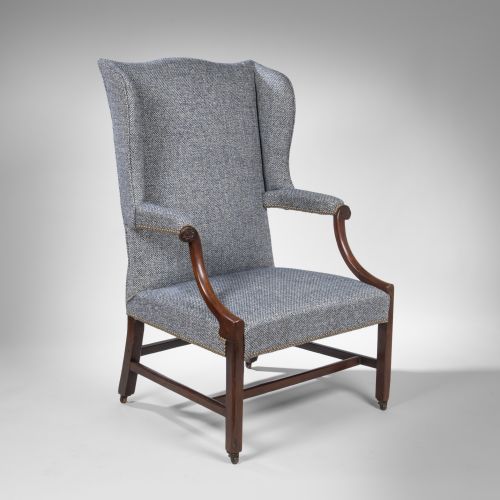
Blue wingback armchairs span centuries of design, covering forms from the Georgian period through to the 1920s. These seating pieces combine substantial timber frames with sheltering upholstered wings designed originally to trap heat around the head and shoulders.
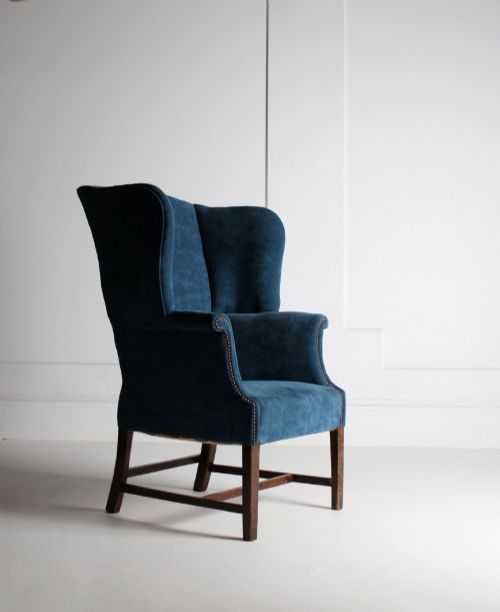
Buyers will encounter various proportions, from country house pieces to smaller Scottish designs and grand continental armchairs. Upholstery choices visible across the inventory include textile, damask, velvet, and silk finishes in distinctive blue tones.
Materials and Construction
Frames rely on sturdy timbers such as mahogany, walnut, and hardwood to support the considerable weight of the padded structure. Joinery techniques connect these structural elements securely beneath the upholstery.
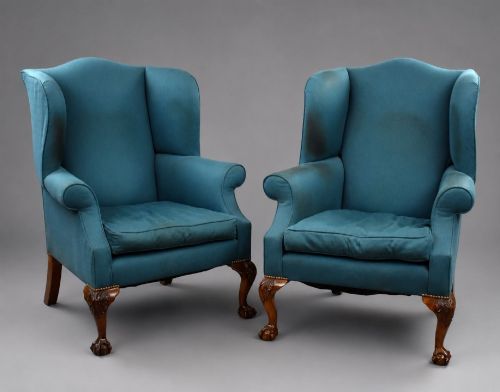
Outer coverings utilise textiles including velvet, damask fabric, and silk, often secured with brass detailing or subtle framing. Exposed woodwork frequently displays hand-carved elements, claw and ball feet, or gilded finishes on continental pieces.
Materials documented across the inventory include mahogany, walnut, hardwood, brass, silk, velvet, and damask fabric.
Judging Quality and Craftsmanship
Distinction in these armchairs rests upon the integrity of the timber frame and the depth of hand-carved detail on the woodwork. Finer examples exhibit crisp carving on the legs, such as claw and ball motifs, alongside robust structural timber like mahogany.
Upholstery choices and fabric execution also divide standard production from exceptional pieces. The use of high-grade textiles like damask or silk, combined with balanced proportions and maker attribution, elevates the standing of an individual chair.
Whytock & Reid·Howard & Sons·William Morris·Thomas Chippendale
The Blue Wingback Armchairs Glossary
- Wingback
- A traditional chair design featuring projecting side panels attached to the arms or back to block cold draughts. These panels also served to retain warmth from a hearth fire.
- Bergère
- An enclosed upholstered armchair with wooden framing visible around the sides and back. This style gained popularity across various European and British workshops.
- Damask
- A reversible figured fabric woven on a jacquard loom with patterns formed by contrasting warp and weft threads. It appears frequently as a high-end upholstery choice on period seating.
- Giltwood
- Timber coated with a thin layer of gold leaf or metallic powder. This finish is commonly found on continental or decorative revival seating frames.
- Claw and ball
- A carved furniture foot depicting a bird's talon clutching a spherical object. This motif originates from Chinese design and became prominent in British furniture during the eighteenth century.
Blue Wingback Armchairs: Frequently Asked Questions
What is a wingback armchair used for?
These chairs were historically placed near hearths to protect sitters from cold air currents. The side wings trapped heat from the fire while providing a comfortable headrest for reading or resting.
Today, they serve as prominent accent seating in studies, libraries, and living rooms. Their high backs create a distinct visual anchor within a room's layout.
How do I identify an Edwardian wing chair?
Edwardian examples typically date from the early twentieth century and often lighter proportions than their Victorian predecessors. They frequently utilise mahogany or hardwood framing influenced by earlier revival styles.
Examining the underframe, upholstery tacking methods, and timber ageing helps confirm the period. Many retain maker labels or specific regional construction traits.
Are blue wingbacks authentic antiques?
The inventory includes pieces originating from the nineteenth century, the Edwardian era, and the 1920s. Upholstery fabrics like damask or velvet may reflect later reupholstery work while the underlying wooden frame remains period.
Reviewing the listed date ranges and material descriptions clarifies the age of each specific piece. Older examples often display hand-carved woodwork and traditional joinery.
How do I clean velvet upholstery?
Velvet requires gentle handling to preserve the pile and prevent crushing the fabric fibres. Regular light brushing with a soft-bristled brush removes surface dust without damaging the textile.
Professional specialist cleaning is recommended for deeper stains to avoid water marks or fabric distortion. Harsh chemical treatments should be avoided entirely.