

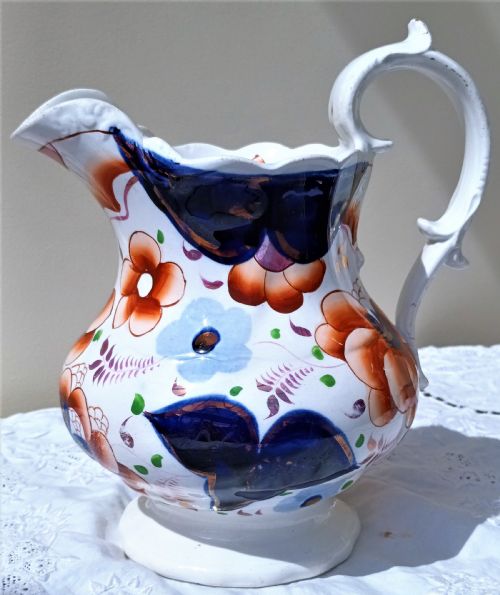
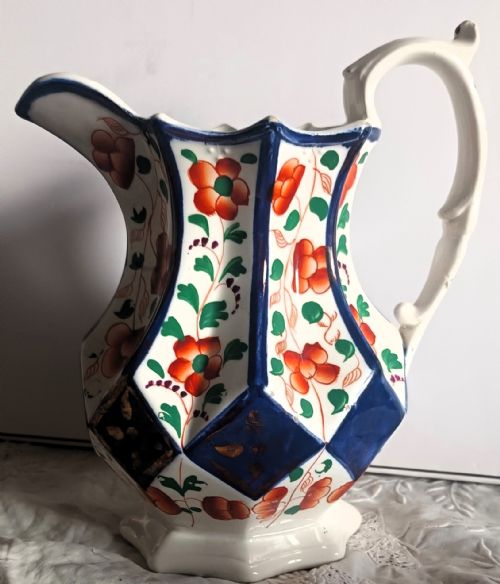
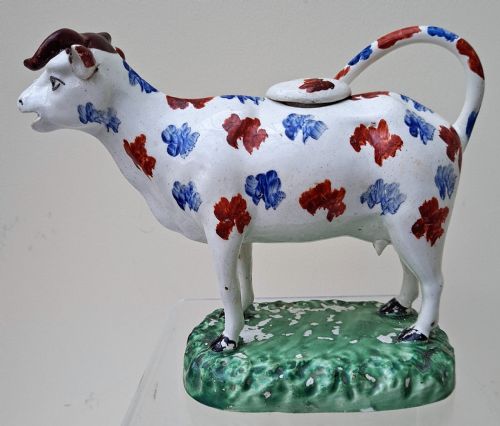


Blue White Pottery Jug
A blue white pottery jug brings centuries of pigment and form to a room, holding everything from Georgian transfer scenes to Dutch delftware.
Blue White Pottery Jug
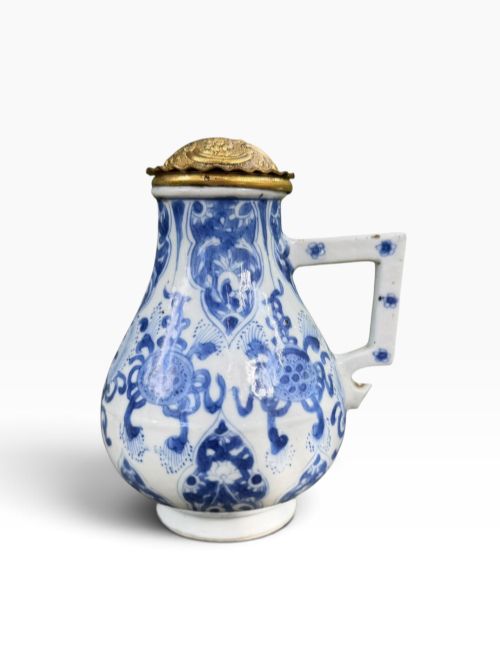
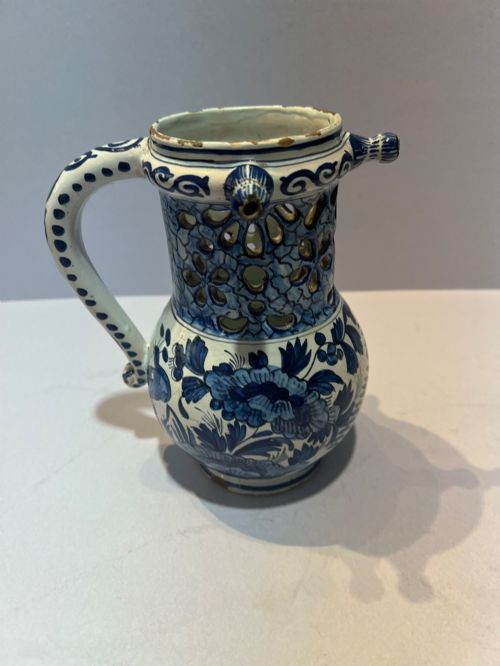
A blue white pottery jug spans centuries of production, taking forms from utilitarian water vessels and creamers to decorative puzzle jugs and toby jugs. Buyers encounter examples ranging from 17th-century Dutch delftware and Persian Safavid kendis to 19th-century Staffordshire transferware and Victorian ironstone.
The most common pieces on this page are 19th-century earthenware and ironstone jugs featuring transfer-printed scenes, alongside earlier tin-glazed delftware vessels. Forms vary from small creamers to large one-gallon pitchers, sometimes paired with basins or found in graduated sets.
Materials and methods
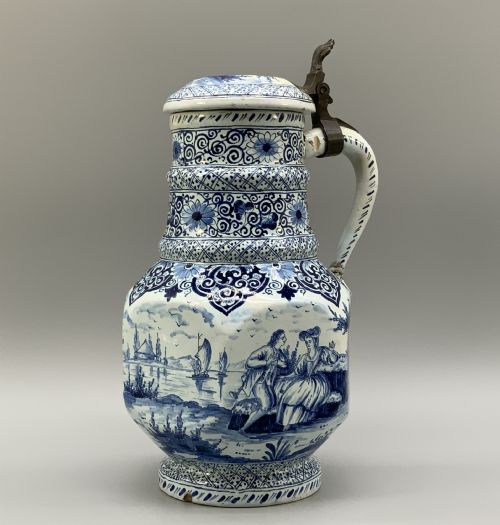
Potters shaped these vessels using earthenware, ceramic, and ironstone bodies, frequently finishing them with tin glazes or flowing blue pigments under the glaze. Some notable pieces incorporate pewter lids, copper lustre details, or specialised bisque porcelain parian ware.
Decoration techniques rely heavily on cobalt blue painting and transfer printing, capturing intricate chinoiserie motifs, botanical patterns, and historical views directly onto the clay body before firing.
Blue White Pottery Jug Retail Price Guide 2026
Typical asking prices for blue white pottery jug among the pieces listed under this phrase on Sellingantiques today, from the lower quarter to the upper quarter. They describe what is for sale here now, not the wider market.
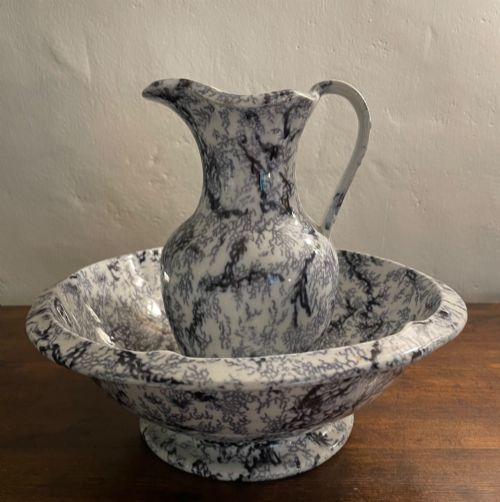
The selection includes graduated sets, water jugs with matching basins, and figural pitchers from English and Dutch potteries.
Assessing quality
Quality rests in the crispness of the blue pigment and the precision of the transfer or hand-painted brushwork, where finer pieces display sharp detailing and well-balanced forms. The integrity of the glaze, the smoothness of the ceramic body, and the presence of original mounts like pewter lids elevate certain examples above standard utilitarian wares.
The sophistication of the design, whether an early Dutch delft chinoiserie scene or a detailed 19th-century topographical transfer, distinguishes exceptional production from standard commercial output.
Minton·Doulton Lambeth·Doulton Burslem·Mason's·Pieter Verburg·John Rogers and Son·John Meir and Son of Tunstall
The Blue White Pottery Jug Glossary
- Delftware
- Tin-glazed earthenware produced in the Netherlands and England, known for its characteristic blue and white painted decoration.
- Transferware
- Pottery decorated by applying a design from an engraved copper plate onto paper, which is then transferred onto the unglazed or bisque ceramic body.
- Toby jug
- A pottery jug shaped as a full-bodied figure, usually a stout, cheerful man holding a mug of beer and a pipe.
- Parian ware
- A type of fine-grained unglazed biscuit porcelain resembling white marble, developed during the Victorian era for decorative jugs and figures.
- Ironstone
- A heavy, durable type of earthenware patented in the 19th century, designed to resist chipping while mimicking porcelain.
Blue White Pottery Jug: Frequently Asked Questions
How do I date a blue white pottery jug?
Dating relies on identifying the underlying material, such as early tin-glazed earthenware versus later Victorian ironstone, alongside stylistic clues like transfer-printed historical views or hand-painted chinoiserie motifs.
Markings on the base, manufacturing techniques, and the presence of original fittings like pewter lids also help narrow down the period of production.
Were these jugs used for water or display?
Many large pieces served practical functions as water jugs, washbasin pitchers, and milk creamers in domestic settings.
Others, such as puzzle jugs and figural toby jugs, served social or decorative purposes, engaging guests at taverns and dining tables.
What is flow blue?
Flow blue is a 19th-century style where the cobalt blue pigment intentionally blurred or bled into the white glaze during the firing process.
This technique created a soft, misty appearance that was particularly popular on Staffordshire jugs and tableware.
How should I clean antique pottery jugs?
Antique jugs require gentle cleaning with lukewarm water and a mild detergent, avoiding harsh scrubbing that might damage aged tin glazes or delicate surface decoration.
Submerging fragile earthenware or pieces with historical cracks should be avoided to protect the porous ceramic body.