





Blue White Earthenware Set
A blue white earthenware set offers the domestic charm of cobalt pigment painted across tin-glazed surfaces and transfer-printed bodies.
Blue White Earthenware Set
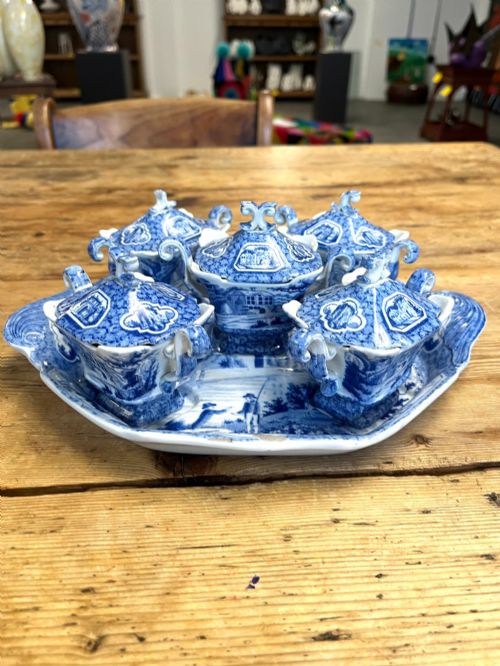
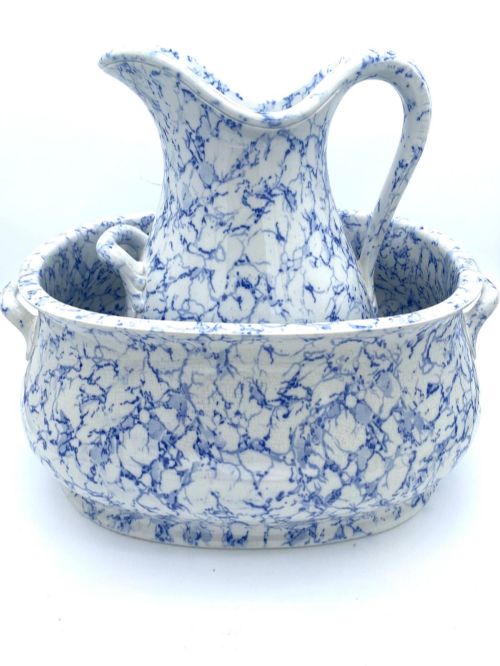
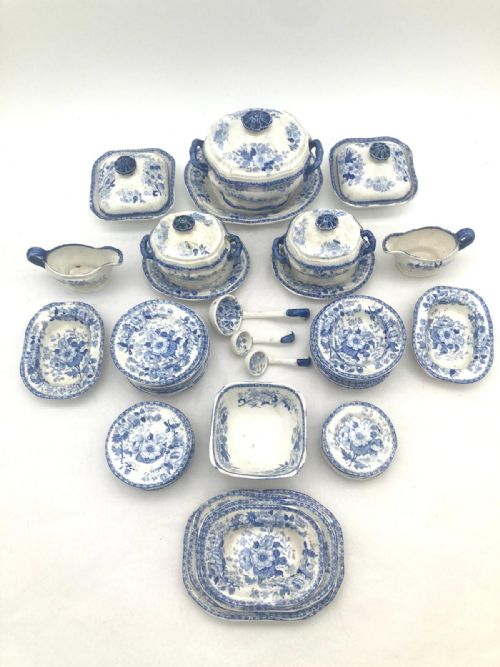
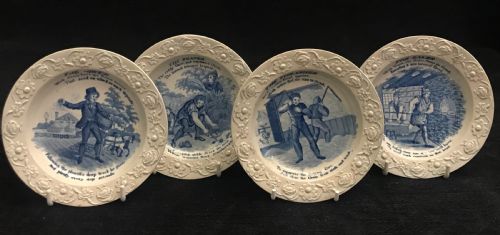
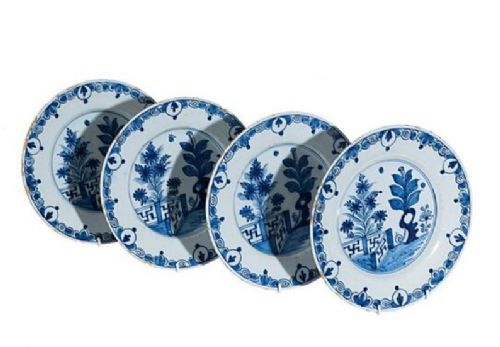
A blue white earthenware set spans functional dining groupings, children's services, inkstands, and matched plates originating from the eighteenth and nineteenth centuries. These domestic collections include transfer-printed dinner services, botanical plates, flow blue basins, and tin-glazed delftware chargers.
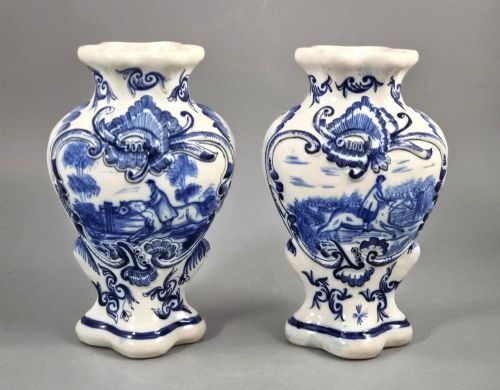
The pieces appearing on this page lean heavily toward nineteenth-century English transferware and eighteenth-century Dutch delftware. Buyers encounter matched sets of plates, tiered jugs, and specialised serving vessels produced during the Georgian, Victorian, and Regency periods.
Materials and production methods
Potters built these vessels using earthenware and pearlware bodies, applying tin glazes or clear lead glazes over the clay. Cobalt pigment provided the deep blue coloration, applied either by hand-painting directly onto the raw glaze or via copperplate transfer printing.
Fired in kilns, these ceramics fused the metallic oxide pigments with the silicates in the glaze. Makers at factories in Staffordshire, France, and the Netherlands utilised these established chemical interactions to achieve the characteristic deep blue motifs.
Blue White Earthenware Set Retail Price Guide 2026
Typical asking prices for blue white earthenware set among the pieces listed under this phrase on Sellingantiques today, from the lower quarter to the upper quarter. They describe what is for sale here now, not the wider market.
Listings feature 18th-century Dutch Delft plates alongside 19th-century English transferware services by makers like Minton and Wedgwood.
Distinctions in quality and execution
Quality rests in the crispness of the cobalt transfer or the precision of the hand-painted brushwork. Superior sets display sharp outlines in patterns like Italian Marble or Willow, whereas lesser examples suffer from blurred pigment transfer and uneven glaze pooling.
The fineness of the underlying earthenware body and the uniformity of the glaze surface separate standard utilitarian wares from ambitious cabinet pieces. Potteries such as Minton and Wedgwood achieved thinner potting walls and more refined surface finishes than smaller provincial kilns.
Fourmaintraux-Courquin at Desvres·Elkin & Newbon
The Blue White Earthenware Set Glossary
- Pearlware
- A refined earthenware developed in the late eighteenth century featuring a subtle bluish glaze that pooled in crevices to mimic Chinese porcelain. It forms the body of many early nineteenth-century table sets.
- Flow blue
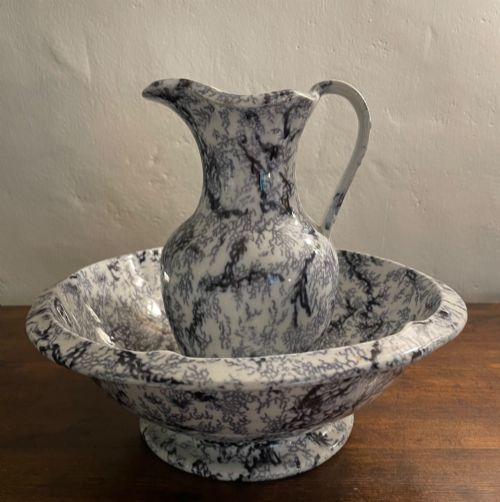
- A nineteenth-century transfer printing technique where lime or ammonia chloride was introduced into the kiln to deliberately blur the cobalt pigment into the surrounding white glaze. This created a misty, atmospheric aesthetic popular on jugs and footbaths.
- Delftware
- Tin-glazed earthenware produced in the Netherlands and England, typically decorated with cobalt blue motifs inspired by imported Chinese porcelain. Eighteenth-century examples often take the form of chargers and plates.
- Transfer printing
- A mechanical method of applying complex decorative patterns to ceramic bodies by pressing paper engraved with cobalt pigment onto the biscuit or glazed ware. It enabled mass production of intricate pictorial services.
- Faience
- European tin-glazed earthenware, particularly associated with French production centres such as Desvres. These pieces combine white opaque glazes with hand-painted cobalt designs.
Blue White Earthenware Set: Frequently Asked Questions
How do I care for antique earthenware?
Wash these pieces by hand using warm water and mild soap, avoiding abrasive sponges that might scratch the historical glaze. Dry them thoroughly with a soft cloth rather than leaving them to air dry.
Keep them away from direct sunlight and sudden temperature shifts to protect the porous earthenware body and prevent crazing in the glaze over time.
What is flow blue pottery?
Flow blue refers to nineteenth-century ceramics where the cobalt pigment intentionally bled into the surrounding white glaze during the kiln firing. This resulted in a soft, hazy appearance across the pattern.
Potters achieved this effect by introducing volatile substances into the kiln atmosphere, transforming standard transfer-printed designs into atmospheric maritime or floral scenes.
How do I date a blue and white set?
Examine the base of the pottery for maker marks, registration diamonds, or impressed factory ciphers that point to specific decades of production. The composition of the ceramic body, such as the distinct bluish tint of earlier pearlware, also aids dating.
Stylistic cues like Victorian chinoiserie motifs or Georgian botanical borders further narrow the manufacturing window when compared against known historical patterns.
Were these sets used daily?
Many of these earthenware sets served utilitarian roles in Georgian and Victorian households for dining, washing, and desk organisation. Dinner services and jugs saw frequent handling during everyday domestic life.
Smaller child's services and delicate inkstands were exceptions, often reserved for nursery education or polite parlour use rather than robust kitchen labour.