





Blue White Covered Urn
A blue white covered urn brings classic cobalt painting and traditional form together, offering a striking display piece for any room.
Blue White Covered Urn
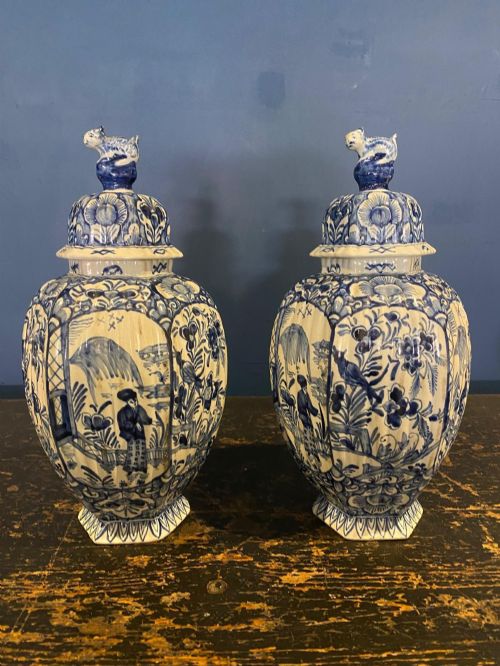
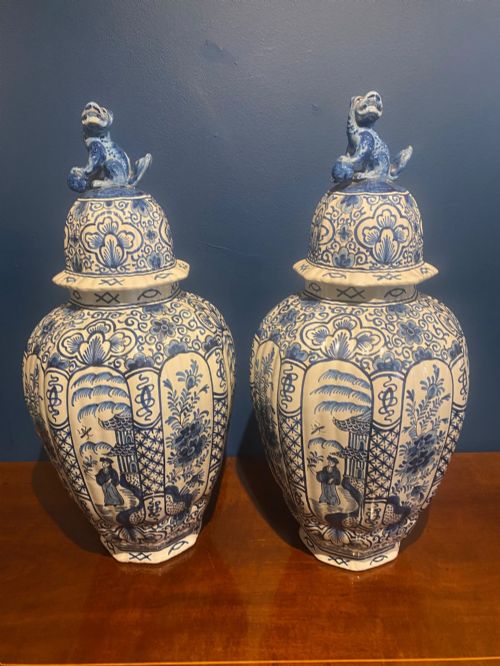
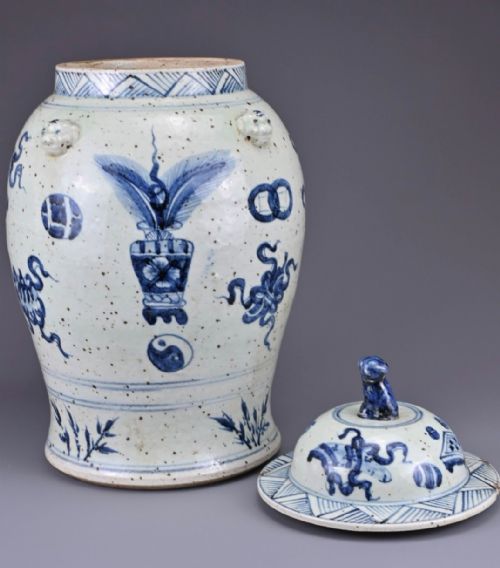
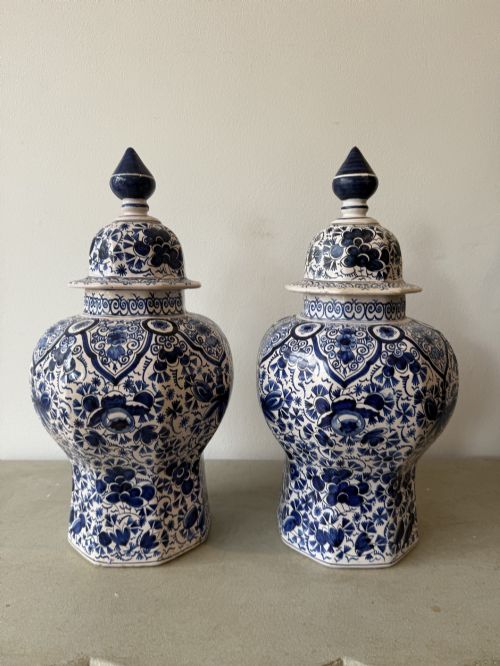
A blue white covered urn is a lidded vessel designed for display, appearing across this selection in forms ranging from traditional Chinese jars to European delftware and ironstone. These pieces serve primarily as decorative urns, jars, and vases, often featuring fitted covers.
The objects span multiple periods, with examples originating from the seventeenth century through to the early twentieth century. British potteries, Dutch delftware makers, French faience workshops, and East Asian kilns all contribute distinct shapes and decorative traditions to the selection.
Buyers will encounter various vessel types, including large storage jars, potpourri pots with covers, and slender vases with handles. The form unites utilitarian vessel shapes with ornamental painting, executed in cobalt blue pigment against a white ground.
How they were made
Potters shaped these vessels from ceramic bodies such as porcelain, ironstone, and tin-glazed earthenware, applying cobalt pigment by hand before firing. Some pieces incorporate tin glaze or enamel to achieve their characteristic bright white surface and deep blue decoration.
Surface ornamentation relies heavily on cobalt glaze, sometimes complemented by additional gilding such as gold leaf accents. Firing techniques varied according to the origin, producing high-fired porcelain from Asian kilns as well as earthenware bodies from European factories.
Blue White Covered Urn Retail Price Guide 2026
Typical asking prices for blue white covered urn among the pieces listed under this phrase on Sellingantiques today, from the lower quarter to the upper quarter. They describe what is for sale here now, not the wider market.
Listings feature pieces spanning the seventeenth century through to the twentieth century, incorporating porcelain, ironstone, and tin-glazed earthenware.
What varies in quality
Quality reveals itself in the crispness of the cobalt painting and the balance of the vessel form, where skilled brushwork creates depth and clarity in the design. Superior examples display careful control during the glazing and firing process.
The weight and refinement of the ceramic body also distinguish different pieces, with finer porcelain and dense ironstone representing more robust construction. Additionally, the fidelity of historical design influences the character of each urn.
Spode·Masons·Royal Crown Derby
The Blue White Covered Urn Glossary
- Tin-Glazed Earthenware
- A pottery body coated with an opaque white glaze containing tin oxide, which provides a smooth surface for painted cobalt decoration. This technique forms the basis of traditional delftware and faience production.
- Ironstone
- A heavy, durable ceramic patented in the nineteenth century as a hard-wearing alternative to porcelain. It frequently supports transfer-printed or hand-painted blue and white designs.
- Cobalt Glaze
- A deep blue metallic colorant applied to ceramic surfaces before or during firing to create enduring patterns. The pigment withstands high kiln temperatures without losing its intense hue.
- Pot Pourri
- A vessel equipped with a pierced cover designed to diffuse scent from dried botanical materials placed inside. These containers combine functional ventilation with ornamental form.
- Ovid
- A rounded, egg-shaped vessel profile commonly found in traditional jar and vase forms. This silhouette provides a stable base and generous surface area for pictorial decoration.
Blue White Covered Urn: Frequently Asked Questions
What were covered urns used for?
These lidded vessels served primarily as decorative ornaments on mantelpieces and sideboards in fine interiors. Some specific forms, such as potpourri jars, held dried scented petals to freshen the air in domestic rooms.
Larger jars and covered urns also functioned as standalone decorative statements, showcasing the wealth and taste of the owner through fine ceramic art.
How do I date a blue and white urn?
Dating relies on examining the ceramic body, glaze characteristics, and the style of the cobalt painting. Porcelain pieces often point to East Asian export periods or later European imitations, while tin-glazed earthenware typically suggests European delft production.
Maker marks, where present on the base, provide more precise chronological markers. Comparing the potting technique and form with known historical periods helps narrow the decade of creation.
How should I display my urn?
Place your covered urn on a stable surface away from high-traffic edges where the lid or handles might be accidentally knocked. Pairing a pair of matching urns on a mantel or console creates a balanced, classical arrangement.
Ensure the display area receives moderate lighting to highlight the details of the cobalt glaze without exposing the ceramic to harsh, direct sunlight for extended periods.
Are the lids original to the vases?
Checking the fit and glaze consistency between the vessel and its cover helps determine if they started life together. Lids made for specific urns usually share the exact same ceramic body type, age-related wear, and pigment tone.
Over the centuries, lids were sometimes separated and replaced with compatible matches, making careful inspection of the rim and interior joint worthwhile.