





Blue White Ceramic Drainer
These blue white ceramic drainer pieces are antique kitchen and dining accessories designed to fit inside serving platters, offering practical utility and traditional charm.
Blue White Ceramic Drainer
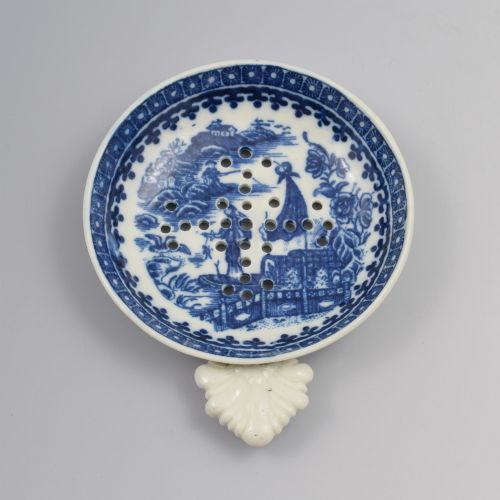
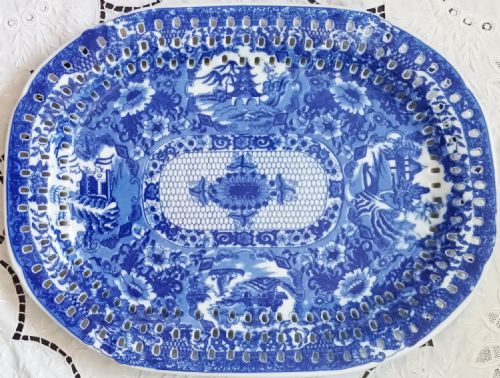
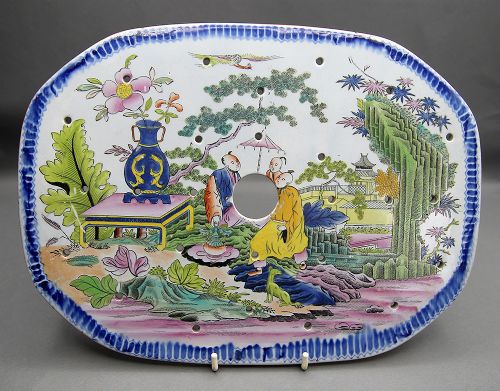
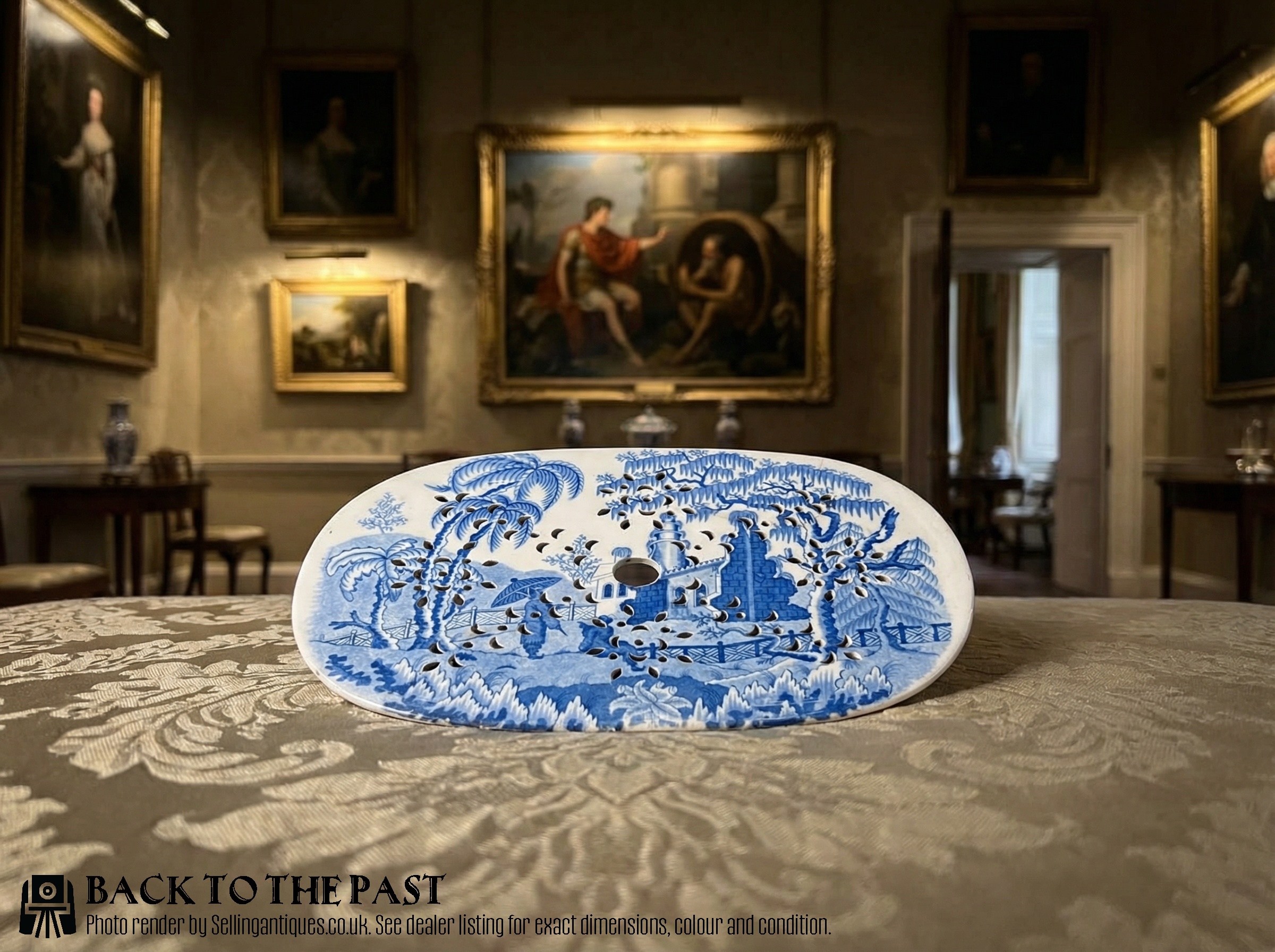
When you search for a blue white ceramic drainer, you examine kitchen and dining accessories designed to lift joints of meat or soft foods above resting juices inside a serving dish. The examples you meet on this page span the eighteenth and nineteenth centuries, taking forms such as platter drainers, egg drainers, and meat strainers.
The styles range from English Country and Georgian transfer-printed wares to Chinese Export porcelain and Chinoiserie patterns. Makers utilised earthenware, ironstone, pearlware, and porcelain to produce these pierced tableware components.
Materials and construction
Potters formed these pieces using ceramic bodies including ironstone, pearlware, and soft-paste porcelain, shaping them to fit specific serving platter contours. They applied cobalt blue glazes beneath the surface before firing, creating transfer-printed patterns such as net designs, fishing scenes, and architectural ruins.
Makers pierced the wet clay with numerous small holes or slotted apertures to allow juices to drain efficiently during carving and service. Certain items received supplementary detailing, including gold leaf highlights applied over the fired glaze.
Blue White Ceramic Drainer Retail Price Guide 2026
Typical asking prices for blue white ceramic drainer among the pieces listed under this phrase on Sellingantiques today, from the lower quarter to the upper quarter. They describe what is for sale here now, not the wider market.
Materials documented across the selection include ironstone, pearlware, porcelain, and soft-paste ceramic bodies.
Judging quality in a drainer
The distinction between standard utility items and finer pieces lies in the crispness of the transfer printing and the regularity of the piercing. Expert potting ensures the drainer sits level within its matching platter without rocking.
Early soft-paste porcelain and export porcelain examples display greater refinement in paste preparation and glaze smoothness than heavier nineteenth-century ironstone pieces designed for robust dining room service.
Caughley·Mason·Minton·Davenport·Worcester
The Blue White Ceramic Drainer Glossary
- Transfer printing
- A method of decorating ceramics by engraving a design upon a copper plate, pulling it on tissue paper, and transferring the ink onto the biscuit surface before glazing. This technique allowed complex Chinoiserie and scenic patterns to be reproduced consistently.
- Pearlware
- An earthenware body developed in the late eighteenth century featuring a subtle blue-tinted transparent glaze that pooled blue in crevices. It bridged the gap between creamware and later white ironstone.
- Ironstone
- A heavy, durable type of earthenware patented in the early nineteenth century designed to resist chipping and staining during heavy table service. It provided a robust surface for transfer-printed decoration.
- Soft-paste porcelain
- An artificial porcelain composition fired at lower temperatures than hard paste, prized by eighteenth-century factories for its warm glow and smooth glaze. It appears in early specialised items like egg strainers.
Blue White Ceramic Drainer: Frequently Asked Questions
What is a blue white ceramic drainer used for?
These ceramic inserts were placed inside meat platters and serving dishes to keep roasts and poultry elevated above accumulated juices during carving at the table.
Smaller versions, such as egg drainers, rested over cups or basins to separate liquids during food preparation.
How do I date a blue white ceramic drainer?
Dating relies on identifying the ceramic body, such as distinguishing eighteenth-century soft-paste porcelain or pearlware from nineteenth-century ironstone. Transfer-printed motifs, factory marks on the reverse, and stylistic indicators like Regency or Chinoiserie borders also narrow the period of manufacture.
Pieces bearing specific maker names often correspond to documented production windows recorded in ceramic history.
Did drainers come with matching platters?
Many drainers were produced specifically to fit the dimensions of corresponding meat platters or serving dishes, sharing the same pattern and ceramic body. Some survived as standalone items while others remain paired with their original dishes.
Matching sets demonstrate unified factory production where the curve of the strainer matches the inner rim of the platter.
How should I display a drainer?
Because these pieces feature pierced patterns and blue and white transfer designs, they display effectively when mounted on plate stands or hung on walls. Their intricate geometric and pictorial piercings reward close inspection when viewed upright.
They also sit naturally inside antique serving dishes on sideboards or open shelving.