


Blue Vase Still Life
A blue vase still life brings the quiet intimacy of domestic interior arrangements onto canvas and paper through varied painterly traditions.
Blue Vase Still Life
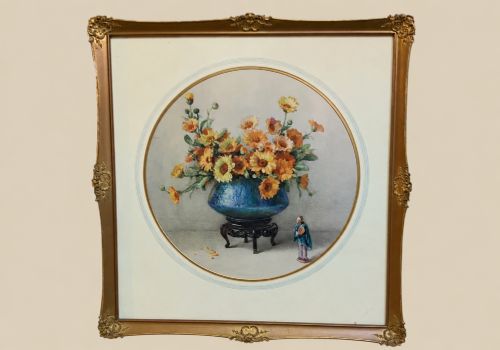
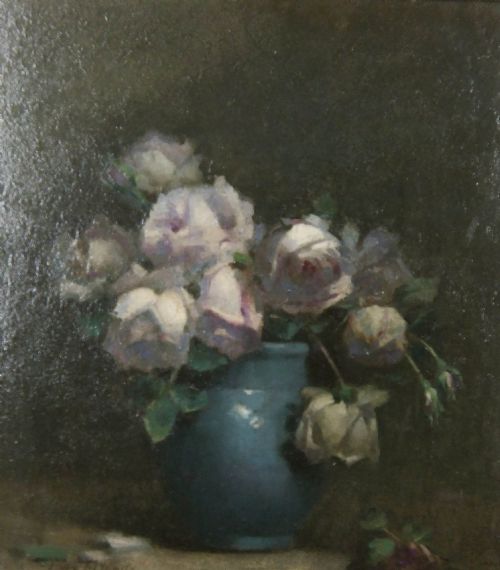
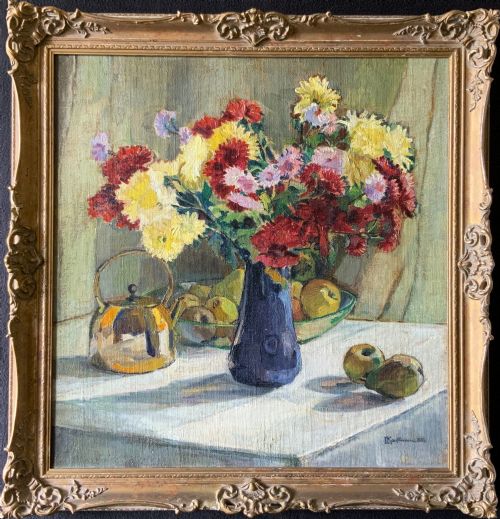
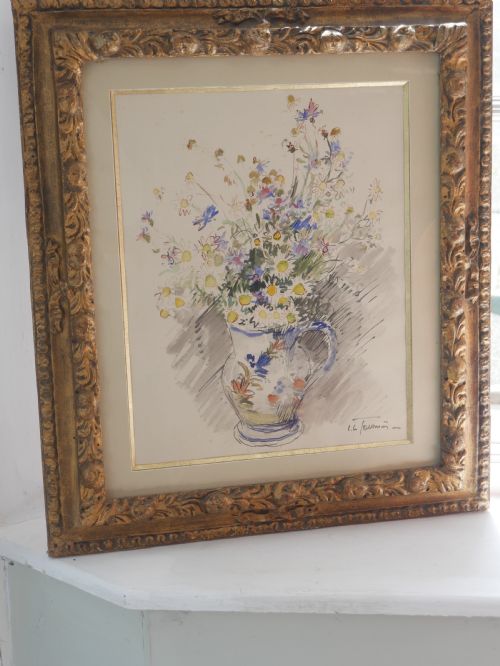
When you search for a blue vase still life, you encounter framed paintings and watercolours depicting floral arrangements, Chinese objects, or fruit alongside ceramic vessels. The selection spans the twentieth century, bringing together British Impressionism, Victorian watercolours, and mid-century modern compositions.
You are most likely to meet works executed in oil on canvas, oil on board, and watercolour pigment on paper from the 1930s and 1950s. These pieces frequently capture summer flowers, roses, wallflowers, or peonies arranged thoughtfully within domestic spaces.
The assortment includes works from named British painters as well as contributions from the wider British school and continental artists. Subjects range from traditional floral studies to Luminist pointillist interiors and tempera compositions.
Materials and technique
Artists utilise oil paint on canvas or board to build rich textures and deep tones, allowing for layered depictions of petals, foliage, and glazed ceramics. Watercolours on paper offer a lighter, more translucent approach, capturing delicate washes of pigment for floral studies.
Many works incorporate gilt frames that complement the painted surface, adding structural depth and period context to the presentation. The technical execution relies on brushes handling pigment with varying degrees of impasto, flat tempera applications, or fine pointillist dots.
Canvases and paper supports are paired with period frames including decorative gilt examples.
Variations in quality
The strength of a composition rests on the balance of colour harmony, brushwork confidence, and the spatial relationship between the vessel and its botanical contents. Stronger examples demonstrate a sure command of light falling across surfaces, whereas simpler studies rely on straightforward documentation.
The integration of the supporting frame, the preservation of the original pigment without excessive intervention, and the distinct signature of a recognised hand elevate certain examples above standard decorative pieces.
William Thomas Wood·Owen Bowen·Stuart Armfield·Phyllis I Hibbert·Amy Reeve-Fowkes·Olive Higginbottom·John Burns Robertson·Tom Whitehead·W.R.E. Goodrich·Tschacbasov
The Blue Vase Still Life Glossary
- Oil on canvas
- Pigment suspended in drying oil applied to a woven fabric surface stretched over a wooden frame. This medium allows for rich blending and textured brushwork.
- Watercolour
- A paint consisting of colour pigments suspended in a water-soluble vehicle, typically applied to paper. It yields translucent washes that let the bright paper ground reflect light through the pigment.
- Tempera
- A permanent, fast-drying painting medium consisting of coloured pigment mixed with a water-soluble binder material such as egg yolk. It produces a flat, matte surface finish.
- Impasto
- Paint applied thickly to a canvas or panel, standing out from the surface so that the marks of the brush or palette knife remain visible. This technique introduces tangible physical depth to floral arrangements.
- Pointillism
- A technique of painting in which small, distinct dots of colour are applied in patterns to form an image. Artists use this method to create vibrant optical blending from a distance.
Blue Vase Still Life: Frequently Asked Questions
How do I care for an oil painting?
Keep oil paintings away from direct sunlight and fluctuating temperatures to prevent the canvas from warping or the paint from cracking. Dust the surface gently with a soft, dry brush without applying moisture or cleaning agents.
Ensure the room maintains stable humidity levels and avoid hanging pieces directly above active heat sources. Professional conservation should be sought if the paint layer requires cleaning or stabilization.
What is the difference between oil and watercolour?
Oil paint utilises a drying oil binder that builds thick, opaque layers with extended working times. This allows artists to rework sections and create textured surfaces.
Watercolour uses water-soluble binders on paper, creating translucent washes that rely on the white ground beneath. These works require protective glass framing to prevent moisture damage.
How do I date a mid-century still life?
Examine the framing materials, canvas types, and stylistic indicators such as post-war modernist palettes or mid-century tempera techniques. Signatures, exhibition labels on the reverse, and artist records provide precise chronological markers.
Compare the handling of the brushwork and floral subject matter against documented periods of the artist's working life. Construction methods on the stretcher frames also offer clues to the era of production.
Where should I hang a floral still life?
Choose walls with indirect ambient light where the colours and brushwork can be appreciated without UV exposure. Dining rooms, studies, and hallways traditionally house domestic still life subjects effectively.
Ensure the hanging height places the centre of the canvas at eye level for comfortable viewing. Pair the scale of the painting with appropriate wall space so the frame commands the correct proportion.