


Blue Turquoise Dress Ring
A blue turquoise dress ring brings a striking punch of vivid blue to the hand, combining deep history with distinct character.
Blue Turquoise Dress Ring
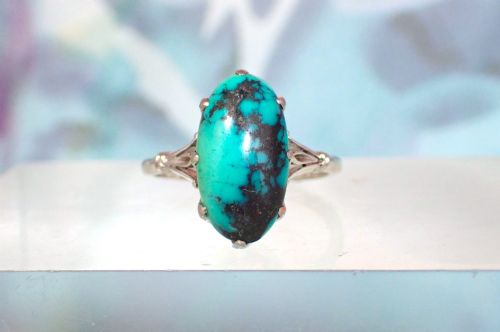
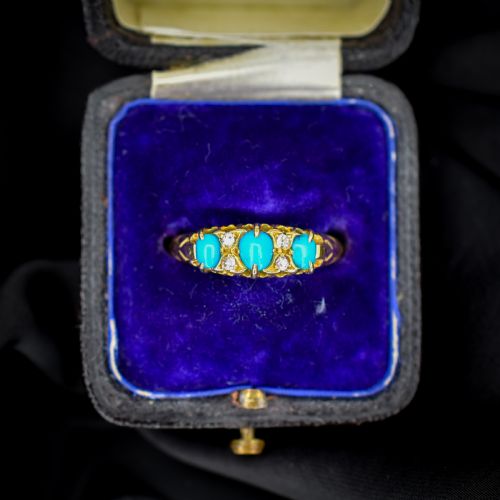
A blue turquoise dress ring is a statement piece of hand jewellery designed to showcase vibrant turquoise stones, frequently paired with diamonds. You are most likely to encounter Victorian examples on this page, alongside pieces from the Edwardian and Art Deco periods.
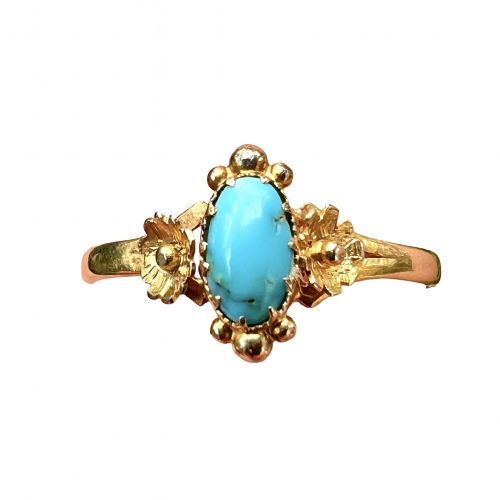
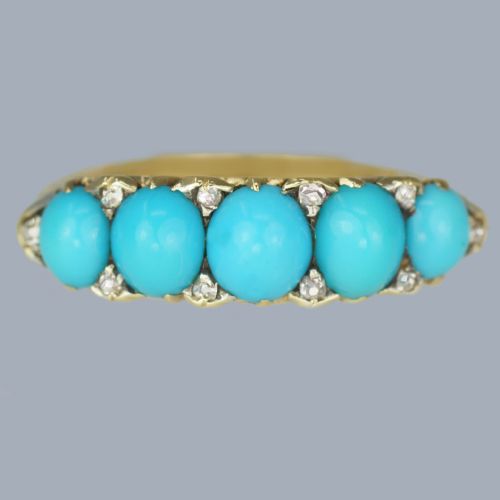
The selections span distinct stylistic movements, including Victorian arts and crafts flower motifs, delicate scroll boat settings, and geometric Art Deco designs. These rings utilise various gold purities, predominantly 18ct yellow and white gold, alongside 9ct yellow gold and 15ct yellow gold.
Makers often arranged turquoise alongside rose cut or brilliant cut diamonds in cluster formations, star settings, or five stone arrangements. The resulting pieces offer a tangible link to nineteenth and early twentieth century goldsmithing traditions.
How they were made
Goldsmiths constructed these rings using traditional casting and hand-working techniques in 9ct, 15ct, and 18ct yellow and white gold. Stones were hand-set into bezel, claw, or flush settings tailored to the specific contours of each turquoise cabochon and diamond.
Surface decoration often included fine scrollwork, engraved details, and cluster configurations that maximised the visual impact of the blue turquoise against the surrounding metal and diamond accents.
Listings feature yellow gold, white gold, turquoise, and diamond across Victorian, Edwardian, and Art Deco periods.
What varies in quality
The overall standard of a blue turquoise dress ring depends on the uniformity of the stone's colour, the stability of its matrix, and the crispness of the gold setting work. Superior examples demonstrate precise stone alignment and well-preserved structural integrity in the underlying precious metal.
Craftsmanship in the mounting - such as the delicacy of a flower petal cluster or the symmetry of a scroll boat frame - distinguishes finer outputs from standard workshop production. The integration of supporting diamonds also influences the visual weight and finish of the piece.
The Blue Turquoise Dress Ring Glossary
- Cabochon
- A gemstone shaped and polished with a smooth, rounded domed top rather than faceted edges. This cut is standard for turquoise to highlight its natural colour and surface pattern.
- Cluster ring
- A ring design featuring a central stone encircled by a border of smaller stones, commonly turquoise surrounded by diamonds. This arrangement maximises the play of light and colour on the hand.
- Arts and Crafts
- A design movement prioritising handcraftsmanship, natural motifs, and traditional materials over mass production. Pieces from this style often feature organic flower forms.
- Scroll boat
- An elongated, curved boat-shaped setting reminiscent of a small hull, often embellished with scrollwork details. It allows multiple stones to sit harmoniously across the finger.
Blue Turquoise Dress Ring: Frequently Asked Questions
How do I clean my turquoise ring?
Turquoise is a softer, porous gemstone that requires gentle care to maintain its appearance. Wipe it clean with a soft, damp cloth and avoid harsh chemical cleaners or ultrasonic baths.
Store the ring separately from harder jewellery to prevent scratching. Keeping it away from prolonged direct sunlight and oils will help preserve the stone's natural colour.
Are these rings suitable for daily wear?
Victorian and Edwardian rings can be worn daily if treated with appropriate care and respect for their age. Removing the ring during heavy manual work or gardening protects the softer turquoise and the older gold settings.
Regular checks by a jeweller will ensure the claws and bezels remain secure. Proper maintenance allows these historical pieces to be enjoyed safely in modern life.
How do I date an antique turquoise ring?
Dating relies on stylistic clues, mounting techniques, and hallmarks stamped into the interior of the gold band. Victorian, Edwardian, and Art Deco periods each possess distinct aesthetic signatures and setting methods.
Assay office marks and maker's stamps can provide specific years of origin. Comparing the construction details against documented periods helps establish a reliable timeline.
What is the difference between yellow and white gold settings?
Yellow gold was widely utilised throughout the Victorian era to create warm, rich contrasts with turquoise stones. White gold emerged more prominently around the Art Deco period, offering a cooler backdrop that heightened the brilliance of paired diamonds.
Choosing between them depends on personal aesthetic preference and the prevailing metal trends of the ring's manufacturing era. Both metals provide a durable foundation for antique gemstone settings.