



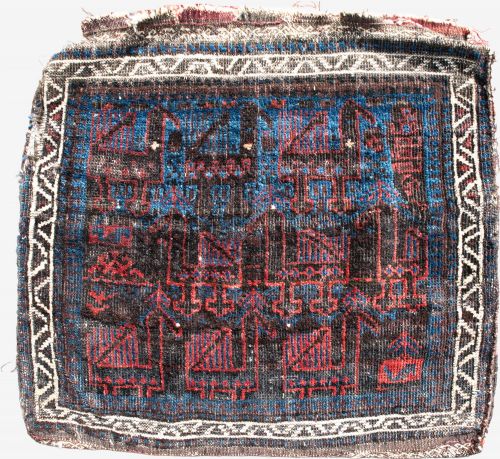

Blue Tribal Bag
These woven containers and faces offer an immediate connection to nomadic life through rich wool and vegetable dyes.
Blue Tribal Bag
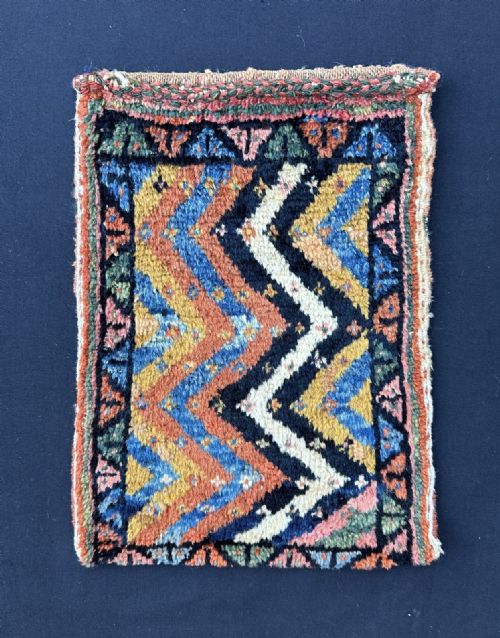
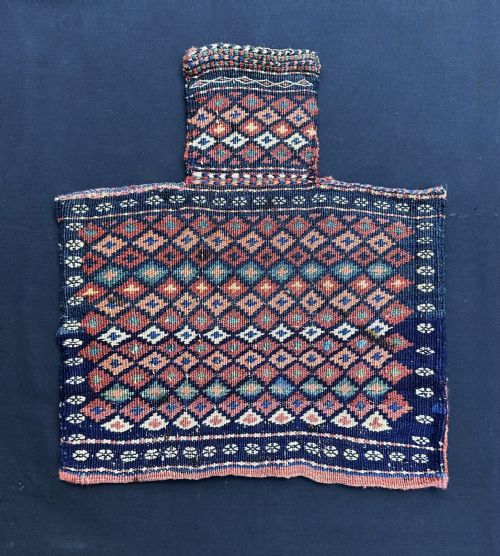
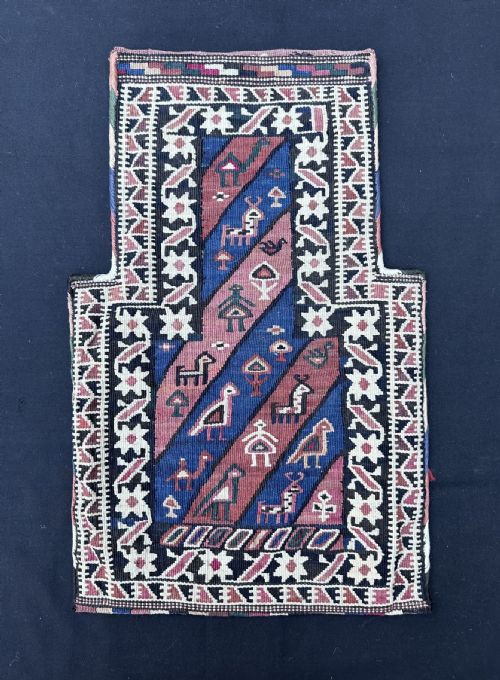
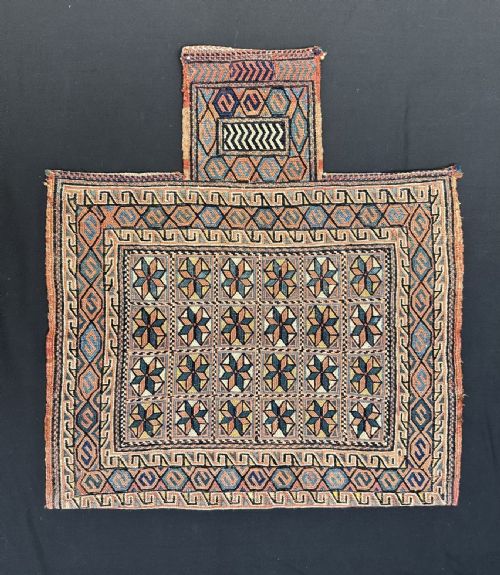
A blue tribal bag represents utilitarian textile art woven by nomadic and village groups across Persia, the Caucasus, and Central Asia during the nineteenth and early twentieth centuries. These pieces encompass functional storage items such as salt bags, vanity bags, spindle bags, and complete or fragmentary saddlebags designed for transport on animals.
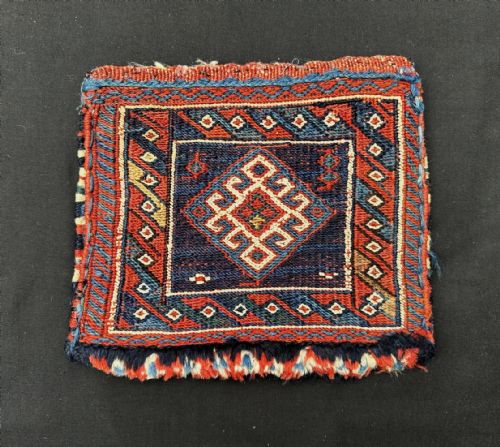
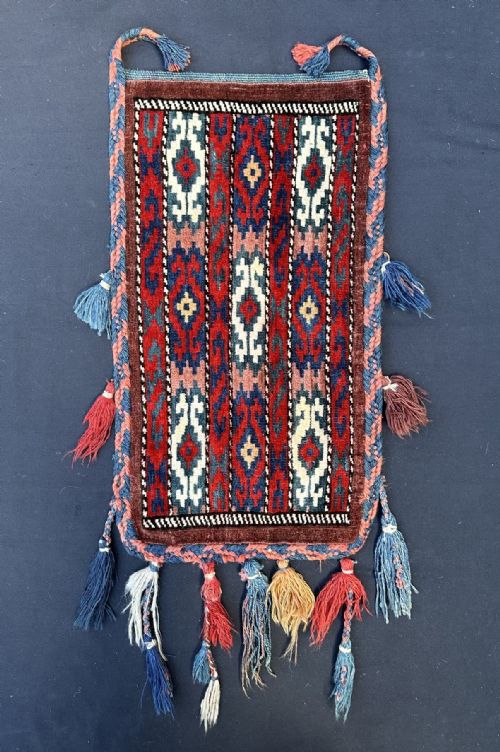
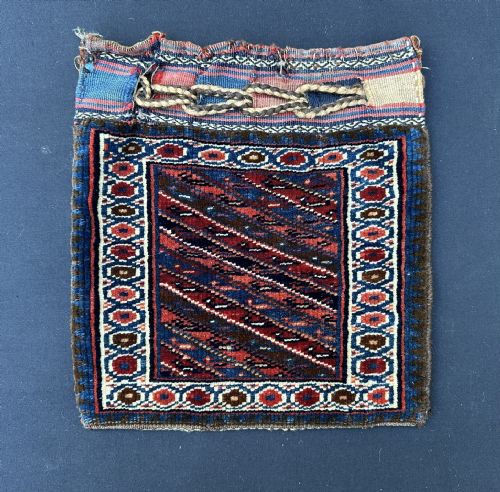
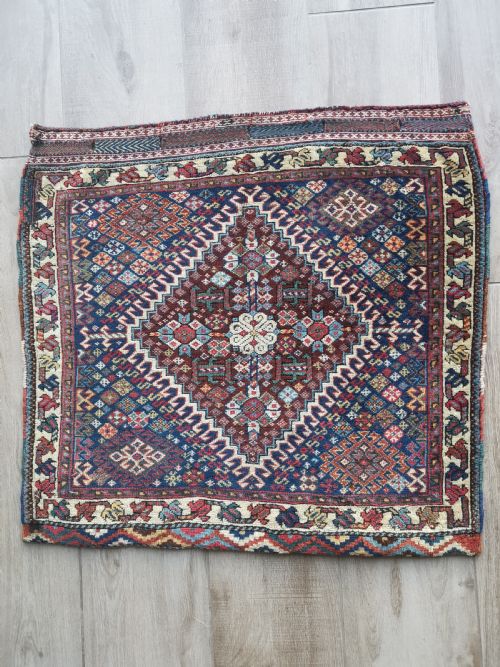
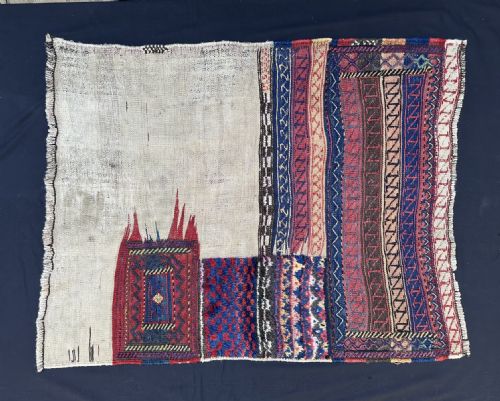
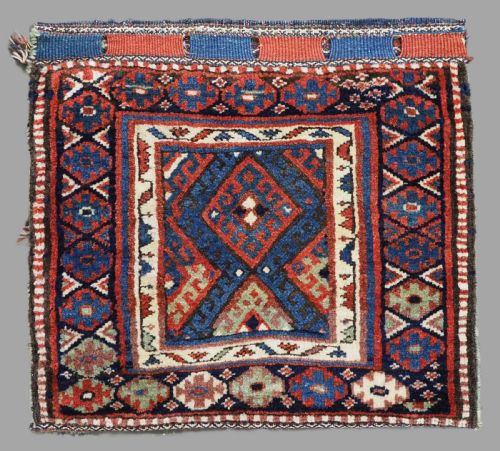
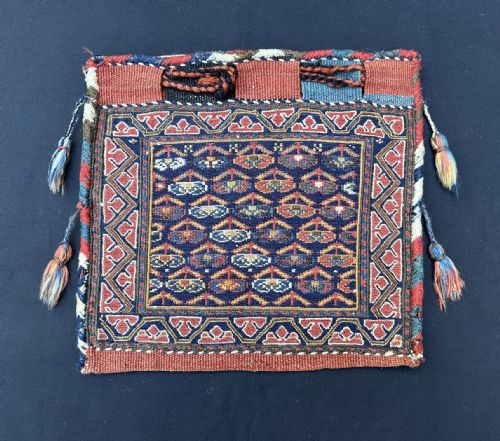
The dominant examples on this page are bag faces and half-khorjin components produced by tribal confederations including the Afshar, Qashqa'i, Shahsavan, Kurdish, and Baluch groups. Such items served practical domestic and nomadic needs while displaying distinct regional iconography and knotting traditions.
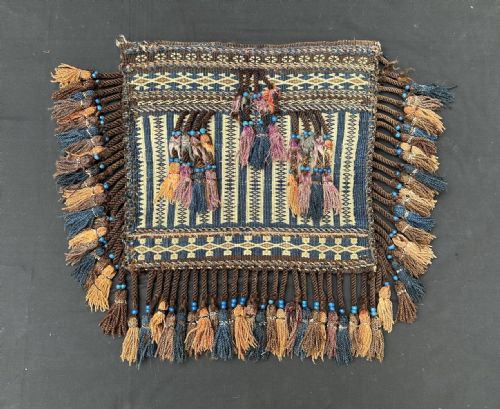
Forms range from small square vanity pouches to larger storage sacks, often retaining their flatweave backs or appearing as isolated panels preserved for their visual appeal. Their presence reflects the domestic output of weavers working within specific tribal territories from the mid-nineteenth century onward.
Materials and construction methods
The construction relies predominantly on hand-spun wool for the pile and foundation, supplemented by cotton and occasionally goat hair for structural strength and resilience. Weavers utilised natural and vegetable dyes to achieve deep indigo blues alongside earthy secondary tones.
Techniques vary from hand-knotted pile work to flatwoven soumak wrapping and plain weave structures, depending on the specific tribal origin and the intended function of the bag. The integration of materials such as glass beads appears in specific vanity and utility items.
Blue Tribal Bag Retail Price Guide 2026
Typical asking prices for blue tribal bag among the pieces listed under this phrase on Sellingantiques today, from the lower quarter to the upper quarter. They describe what is for sale here now, not the wider market.
Listings feature pieces spanning the nineteenth and early twentieth centuries, incorporating wool, cotton, and natural dyes across Persian, Caucasian, and Central Asian origins.
Assessing quality in nomadic bags
Quality rests upon the handling of the wool, the saturation and depth of the natural dyes, and the precision of the tribal patterning. Luminous, oily wool and complex vegetable dye palettes distinguish superior weaving from more utilitarian examples.
Structural integrity also defines the standard, whether evaluating the survival of an original plain weave back, the crispness of soumak work, or the tightness of the knotting in pile bag faces.
The Blue Tribal Bag Glossary
- Khorjin
- A traditional double saddlebag used by nomads for transport and storage. These pieces were joined by a central web that was often cut apart over time, leaving half-khorjin pieces.
- Soumak
- A flatweave technique utilising supplementary weft wrapping that creates a textured, durable surface. This method appears frequently on Shahsavan and Afshar bags.
- Bag face
- The decorative front panel of a storage or saddle bag that survived independently after the plain weave back deteriorated or was removed. These panels display the primary iconography.
- Salt-bag
- A specific small storage container woven for domestic use, typically featuring a narrowed neck and distinctive tribal motifs. They hung inside tents for household provisions.
- Torba
- A wide storage bag produced by Turkmen tribes, usually featuring gul motifs and a flatweave reverse. These items decorated the interior of nomadic dwellings.
Blue Tribal Bag: Frequently Asked Questions
What is a blue tribal bag used for?
These textiles served practical functions within nomadic and village households, holding salt, wheat, spinning tools, or personal items during seasonal migrations. They were designed to hang inside tents or drape across pack animals.
Over time, many of these utilitarian containers were separated from their original backs or pairs, transitioning from working objects into decorative panels preserved for their artistic merit.
How do I tell different tribal designs apart?
Weavers from different regions applied distinct structural methods and colour palettes, such as the soumak work of Shahsavan groups or the boteh motifs associated with Afshar weavers. Qashqa'i and Kurdish pieces often employ specific medallion layouts and geometric borders tied to their geographic origins in Persia.
Examining the handling of the wool, the secondary colours, and the weave structure helps assign a piece to a specific confederation or valley.
How should I care for an antique bag face?
Display these textiles away from direct sunlight to protect natural vegetable dyes from fading over time. Gentle vacuuming with a mesh screen protects the wool fibres from damage.
Mounting flat panels onto a supportive backing helps distribute weight if hung on a wall, preserving the structural integrity of the foundation.
Are these bags complete with their backs?
Some listings retain their original plain weave backs, while others consist solely of the decorative bag face. Complete examples preserve the entire construction used by the nomadic maker.
Both complete sacks and isolated faces represent authentic periods of production, with surviving backs offering additional evidence of utility.