



Blue Stoneware Pot
A blue stoneware pot brings tactile weight and rich cobalt depth to a room, offering functional utility alongside enduring decorative presence.
Blue Stoneware Pot
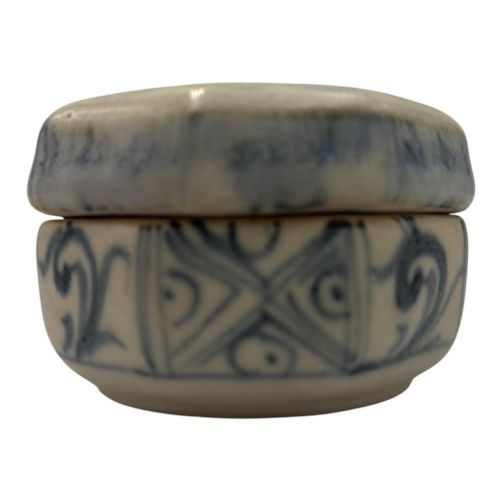
A blue stoneware pot encompasses a robust range of ceramic vessels spanning the seventeenth century through to the early twentieth century. Buyers seeking this phrase typically encounter sturdy jardinieres, tobacco jars, teapots, and decorative jugs shaped from dense, vitrified clay.
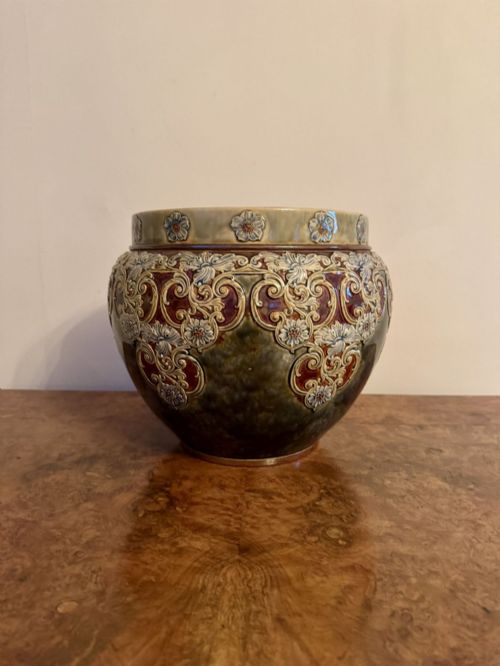
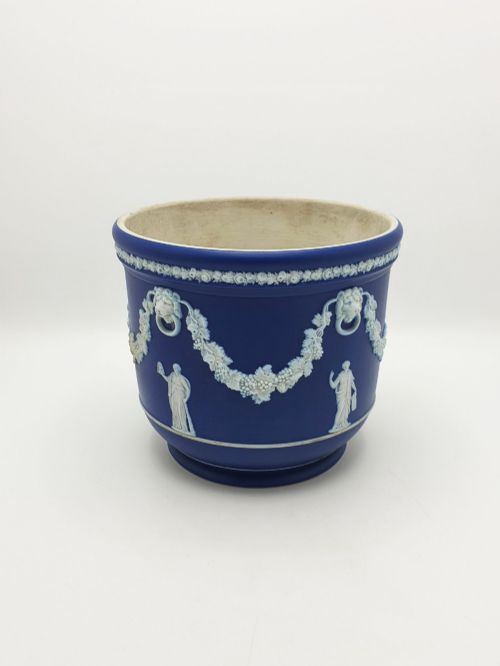
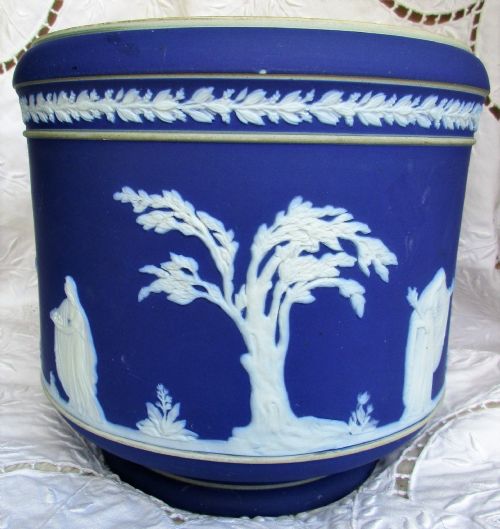
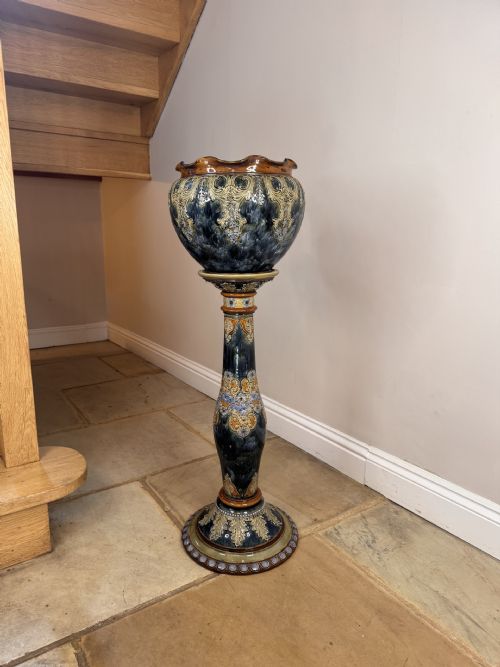
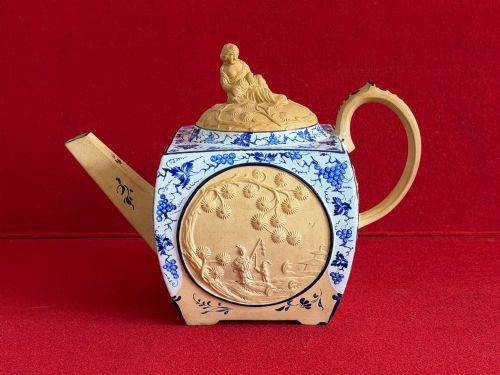
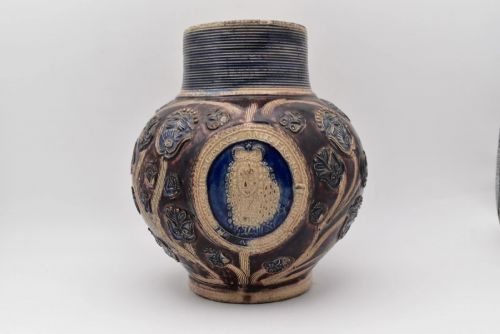
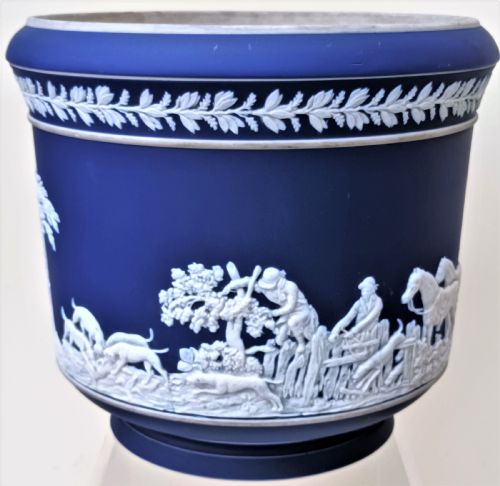
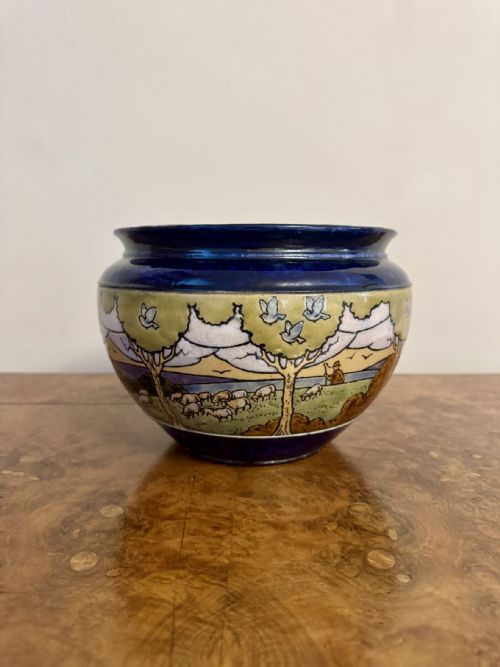
The selections on this page lean heavily toward nineteenth and early twentieth century English pieces, notably robust jardinieres by Doulton Lambeth and classical Jasperware by Wedgwood and William Adams and Sons. Earlier examples, such as Westerwald jugs from the seventeenth century and Georgian teapots, occasionally appear to reward the specialist collector.
Forms vary from large, plant-holding jardinieres bearing intricate slipwork and Slaterware textures to small trinket boxes and biscuit barrels. Each piece reflects the utilitarian strength of fired stoneware paired with decorative blue glazing or contrasting white-on-blue relief.
How they were made
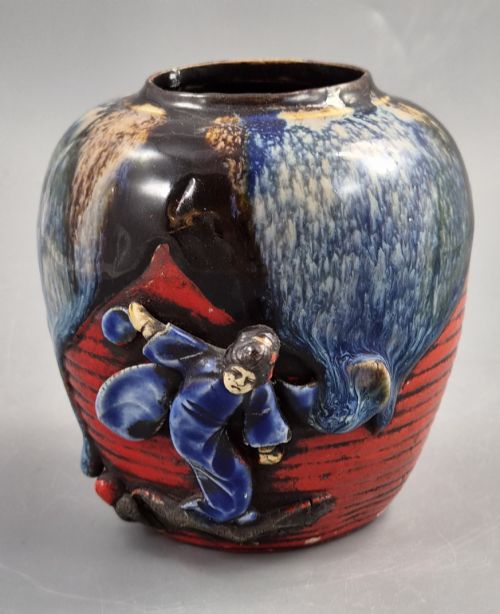
Potters built these vessels using dense, impermeable clay bodies that matured at high kiln temperatures, ensuring durability and resistance to moisture. Artisans applied cobalt oxides to achieve the characteristic blue colour, often under salt glazes or rich flambe finishes that produced mottled, lustrous surfaces.
Decorative effects relied on varied techniques, including sprigged white jasper reliefs applied to blue grounds, intricate incised Slaterware patterns mimicking lace, and hand-painted Chinoiserie motifs. Metal mounts, such as brass or silver collars, were sometimes added by makers to reinforce rims and elevate the finish of teapots and jars.
Blue Stoneware Pot Retail Price Guide 2026
Typical asking prices for blue stoneware pot among the pieces listed under this phrase on Sellingantiques today, from the lower quarter to the upper quarter. They describe what is for sale here now, not the wider market.
Listings feature stoneware from the seventeenth, nineteenth, and early twentieth centuries, alongside ceramic and Jasperware pieces decorated with glazes and brass elements.
What varies in quality
Quality rests upon the crispness of the moulding, the depth and evenness of the cobalt glaze, and the precision of hand-applied details. Pieces featuring sharp, undercut jasper reliefs or well-controlled flambe runs demonstrate superior craftsmanship compared to softer, blurred mouldings.
The reputation of the studio or pottery and the individual artist's hand also dictate distinction. Signed work from notable designers or leading factories exhibits finer decorative execution and stronger material integrity than anonymous utilitarian output.
Spode·Royal Doulton·William Adams and Sons·Doulton Burslem·Doulton Lambeth·Wedgwood
The Blue Stoneware Pot Glossary
- Stoneware
- A robust ceramic pottery fired at high temperatures until the clay body vitrifies into a non-porous material. This substance resists liquid absorption and provides exceptional structural strength.
- Jasperware
- A fine-grained, unglazed stoneware developed by Wedgwood, typically featuring a coloured ground with contrasting applied white classical reliefs. The matte finish resembles fine porcelain bisqueware.
- Jardiniere
- A large ornamental pot or planter designed to hold growing plants or floral arrangements. These vessels are frequently decorated to be viewed from all sides.
- Slaterware
- A ceramic decorating technique where damp clay is pressed against rough fabrics or lace before firing, leaving a textured surface. This method was widely utilised by Doulton in the late nineteenth century.
- Flambe glaze
- A lustrous, streaky glaze containing metallic oxides that melts and flows during high-temperature firing. The technique produces unpredictable, rich colour variations across the vessel body.
Blue Stoneware Pot: Frequently Asked Questions
What is a blue stoneware pot used for?
These vessels served various domestic and decorative purposes, ranging from holding large houseplants in a jardiniere to storing tobacco, biscuits, or tea. Their robust walls kept contents insulated and protected from moisture.
Today, they function primarily as decorative accents, interior planters, or table centerpieces. Their durable construction makes them practical for everyday display in living spaces.
How do I date an antique blue pot?
Dating relies on identifying factory backstamps, impressed maker marks, and stylistic clues such as the neoclassical motifs of the Georgian era or the textured finishes of the Victorian period. Examining the weight of the clay and the composition of the glaze also helps establish the era of manufacture.
Reference marks and specific blue hues shift across decades, allowing collectors to narrow down the production period. Comparing pieces against documented factory patterns confirms their chronological placement.
Are these pots waterproof?
Stoneware is naturally vitrified and non-porous, meaning the fired clay body itself holds water without leaking. However, older pots with hairline cracks or unglazed interiors require care when used for living plants.
Using a hidden plastic liner inside antique jardinieres protects the historic interior surface from mineral deposits and moisture damage. This simple step preserves the integrity of the piece while allowing functional use.
How do I care for antique stoneware?
Maintenance involves dusting with a soft, dry cloth and washing gently with warm water and mild soap when necessary. Averting harsh chemical cleaners protects the historic glazes and applied surface reliefs.
Keeping pieces away from rapid temperature fluctuations prevents thermal shock to the ceramic body. Careful handling ensures the raised decorations and rims remain undamaged.