
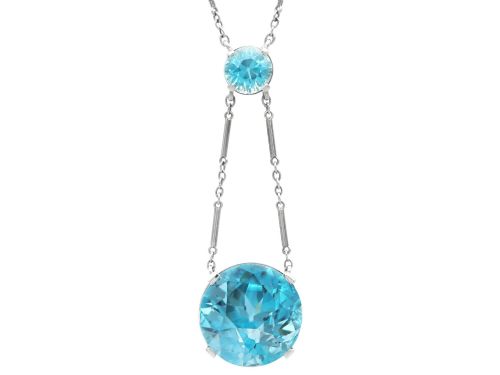
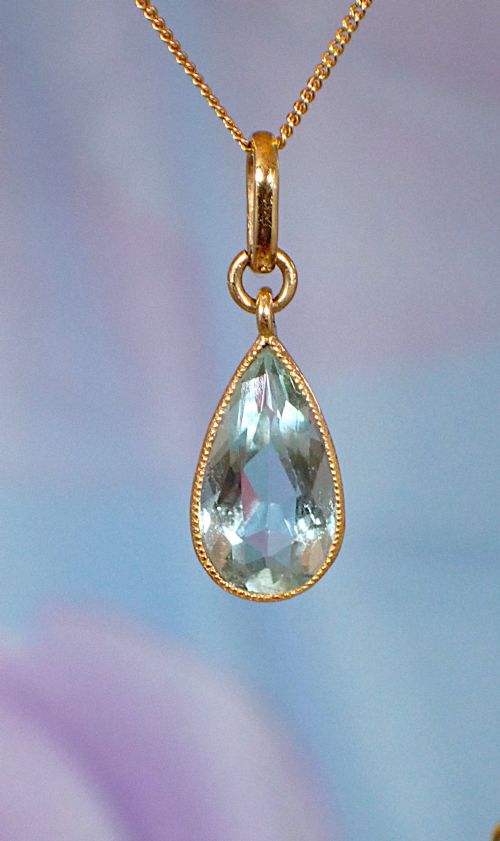
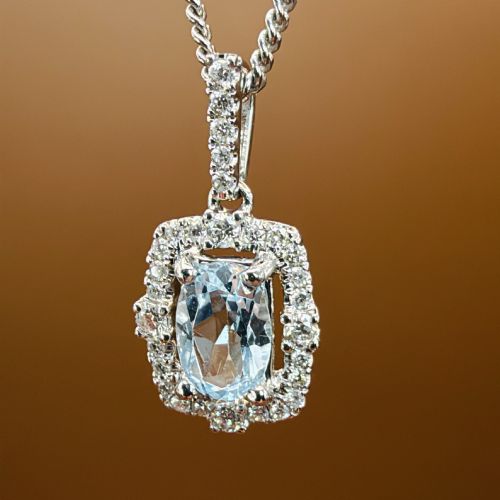
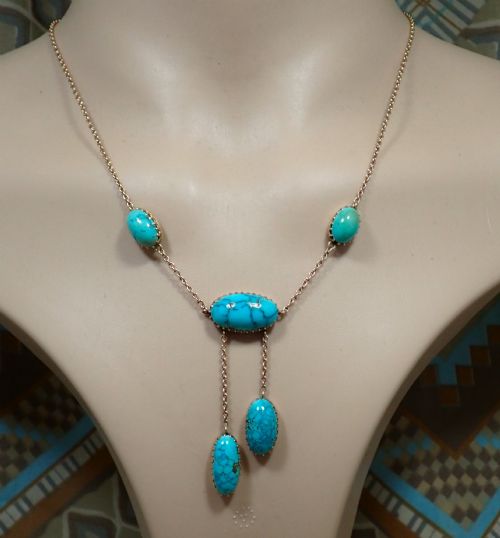



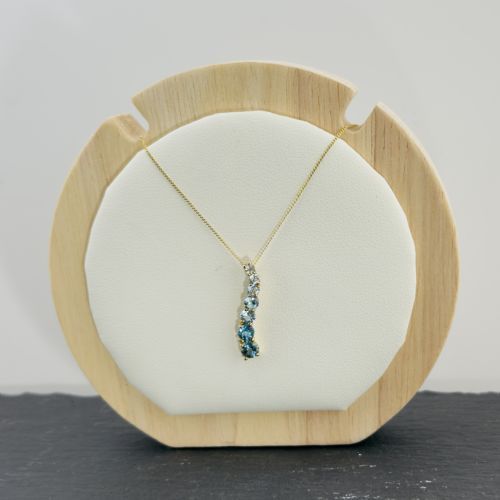


Blue Stone Pendant Necklace
A blue stone pendant necklace brings together cool gemstones and precious metals, offering a wearable piece of history from the Victorian era to the mid-twentieth century.
Blue Stone Pendant Necklace
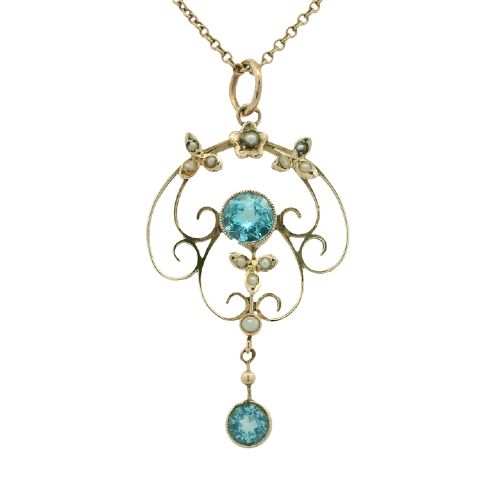
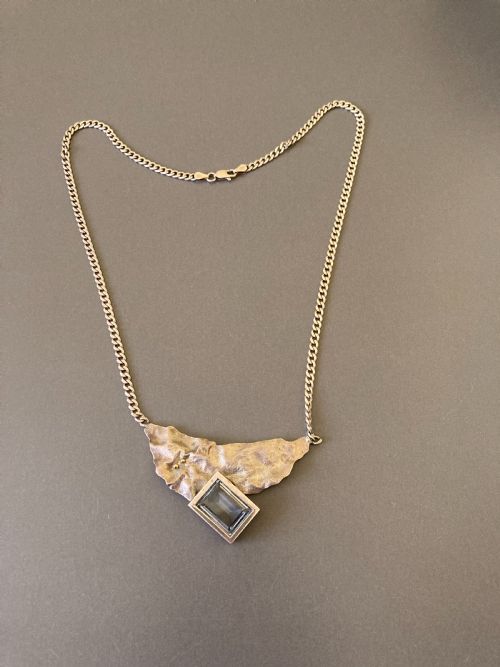
The pieces on this page draw from distinct stylistic movements such as Edwardian, Art Nouveau, and Arts & Crafts. Among these, Edwardian and mid-century modern classic designs appear most frequently in the listings.
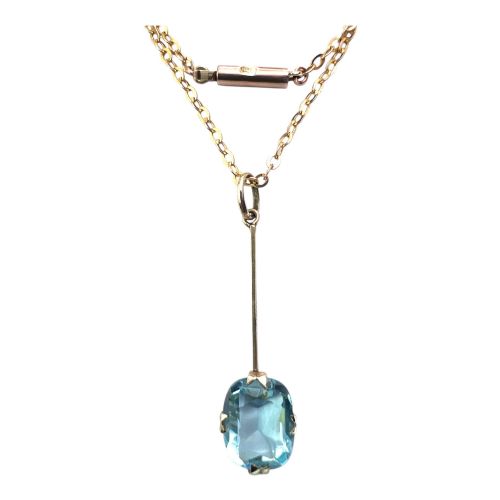
Makers utilised both yellow and white precious metals to frame these stones, creating distinct contrasts with the blue hues. Pendant necklaces and simple drop forms represent the standard configurations found across the eras.
Materials and construction methods
Goldsmiths and silversmiths constructed these pieces using nine-carat and eighteen-carat gold alongside sterling silver settings. Stones such as aquamarine, blue topaz, sapphire, turquoise, and zircon are secured via claws, bezels, or intricate filigree work.
Period techniques include pierced gold frames, cluster settings combining diamonds with coloured gems, and delicate pearl accents. These methods reflect the prevailing jewellery manufacturing standards of each respective decade.
Edwardian jewellers occasionally hid tiny pearl accents within drop clusters to catch the eye during candlelit evenings.
Assessing quality in period pieces
Quality rests upon the stone cut, the precision of the metalwork, and the overall integrity of the setting. Hand-finished filigree and well-matched cluster arrangements separate finer workshop output from standard production.
The weight and purity of the gold or silver mountings, alongside the clarity and depth of colour in the central blue stones, define the upper tier of surviving examples.
The Blue Stone Pendant Necklace Glossary
- Aquamarine
- A pale blue variety of beryl utilised frequently in Edwardian and mid-century pendant designs. Its transparency lends itself to step cuts and oval shapes.
- Negligee necklace
- An asymmetrical Edwardian drop style featuring two pendant ends suspended at different lengths. It typically incorporates delicate fine chains and gemstone drops.
- Festoon necklace
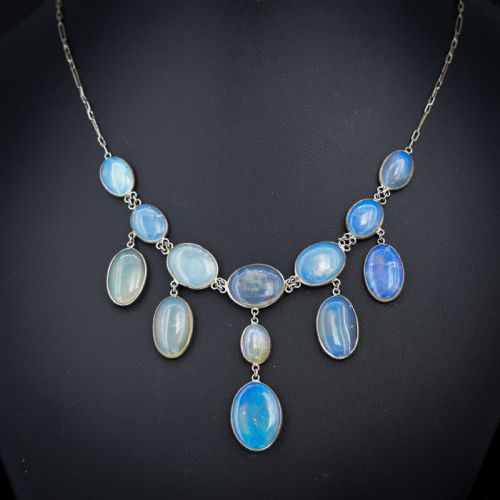
- A decorative style featuring draped chains, swags, and suspended gemstone drops or fringes. This format was popular during the Edwardian era.
- Filigree
- Fine metal wire soldered into openwork patterns, common in silver Art Nouveau and Edwardian pieces. It creates a lace-like framework around central stones.
- Paste
- Hand-cut glass utilised in historical jewellery to imitate precious gemstones. Period paste pieces exhibit careful individual setting rather than mass production.
Blue Stone Pendant Necklace: Frequently Asked Questions
How do I date my pendant necklace?
Dating relies on examining the metal hallmarks, the style of the setting, and the cut of the gemstones. Edwardian pieces often display delicate millegrain edges and platinum-topped gold, whereas mid-century examples favour cleaner modern lines.
Changes in chain construction and clasp types also provide reliable indicators of a piece's manufacturing decade.
Are these blue stones natural?
The listings include both natural gemstones such as aquamarine, sapphire, and topaz, as well as period materials like turquoise and paste. Gemstone verification depends on microscopic examination of inclusions and internal growth patterns.
Historical pieces occasionally utilise treated stones or period-correct glass substitutes, each possessing distinct optical characteristics.
How should I care for antique gold?
Antique gold settings require gentle cleaning with warm soapy water and a soft brush to remove accumulated surface dust. Harsh chemical dips should be avoided, particularly when dealing with softer stones or pearl accents.
Store each necklace separately in a lined box to prevent the chain from tangling and the pendant from scratching against other items.