






Blue Stone Gold Pendant
These blue stone gold pendant pieces offer a bright flash of sapphire, topaz, or turquoise set in yellow, white, or rose gold.
Blue Stone Gold Pendant
A blue stone gold pendant brings together precious metals and cool-toned gems in styles spanning the Victorian era through to the mid twentieth century. Buyers search for this phrase when they want a wearable piece of jewellery that combines the warmth of gold with the distinctive colour of a blue stone.
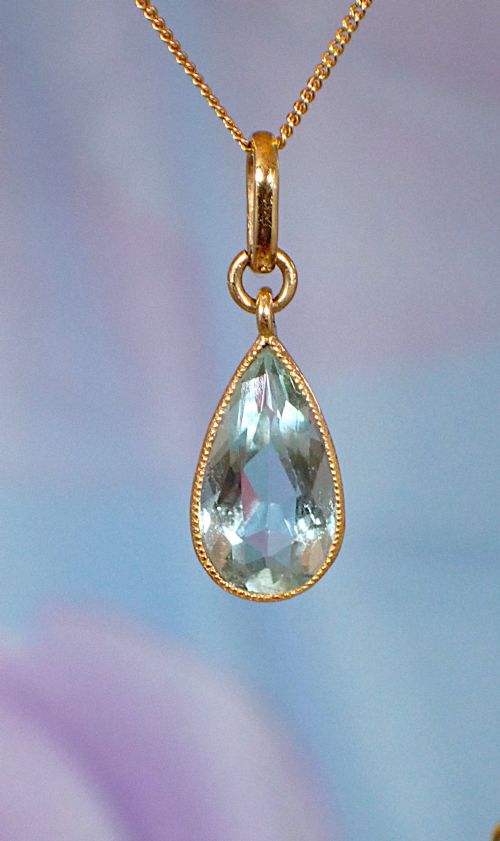
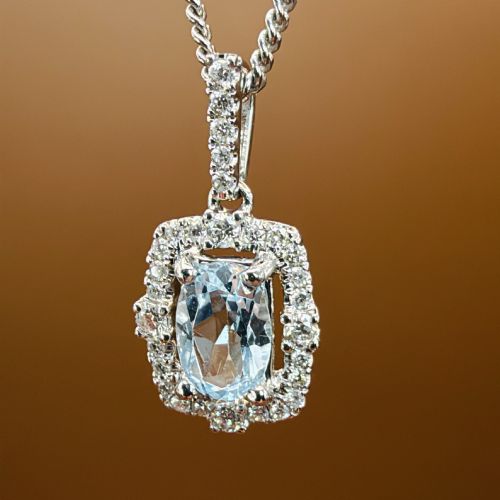
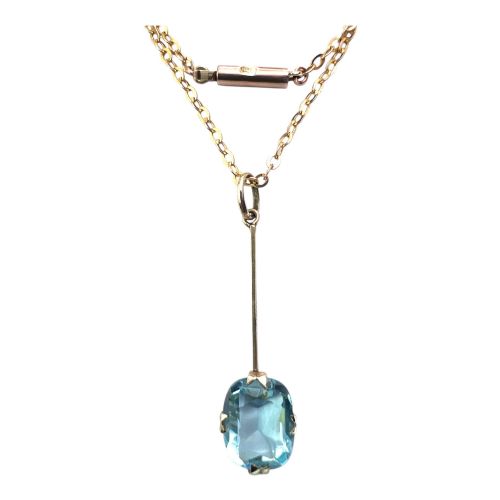
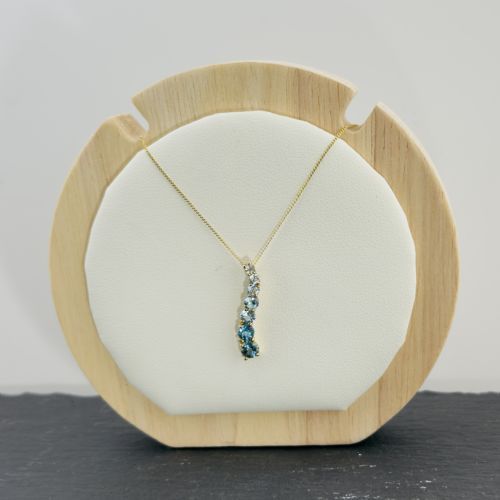
The most common examples on this page date from the Edwardian period and the mid twentieth century, often taking the form of pendant necklaces or drop necklaces. These items showcase stones such as aquamarine, blue topaz, sapphire, and turquoise mounted securely in nine carat yellow or white gold settings.
Materials and construction
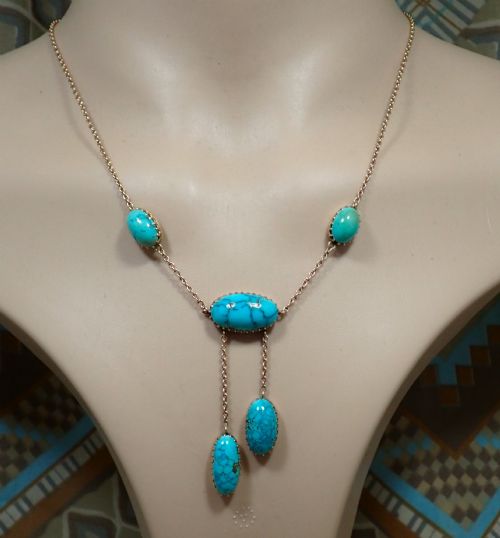
Makers utilised nine carat gold, eighteen carat gold, and rolled gold to form the structural mounts, chains, and settings for these blue stones. Stones such as blue topaz, aquamarine, sapphire, and turquoise were cut into pear, oval, cabochon, or matrix shapes to catch the light.
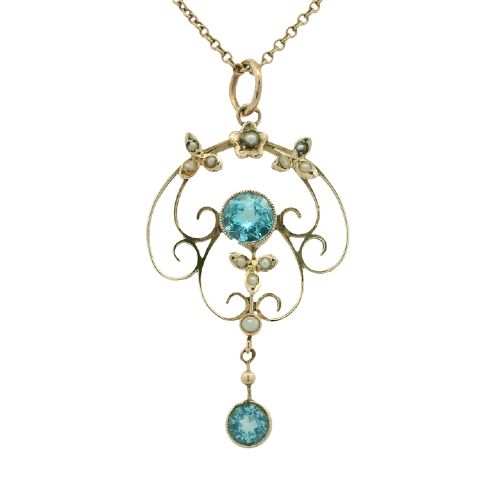
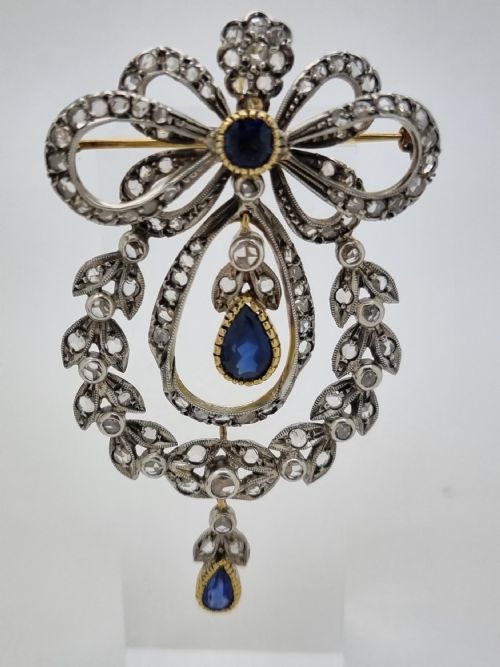
Many Edwardian and Victorian pieces incorporate delicate details like seed pearls, paste, and enamel alongside the central blue stone. Setting techniques range from traditional claw mounts to cluster arrangements and closed-back foils depending on the era of manufacture.
Current listings feature nine carat gold, eighteen carat gold, and rolled gold paired with blue topaz, aquamarine, sapphire, and turquoise across mid twentieth century and Edwardian forms.
Assessing quality and craftsmanship
The distinction between standard items and finer examples rests on the depth of the gold work and the clarity of the blue stone. Superior pieces display thoughtful arrangement of secondary gems like diamonds and pearls that complement rather than crowd the central element.
Construction integrity also defines the tier of a piece, observable in the sturdiness of the jump rings, the neatness of the stone settings, and the preservation of original chains. Older items that retain their structural soundness and secure clasps command greater attention.
The Blue Stone Gold Pendant Glossary
- Cabochon
- A gemstone shaped and polished with a smooth, rounded surface rather than faceted. This style highlights the natural colour and internal characteristics of stones like turquoise and sapphire.
- Negligee necklace
- A drop necklace style popular in the Edwardian period featuring two unequal pendants suspended from a central motif. It offers a fluid, asymmetrical look characteristic of early twentieth-century design.
- Paste
- Hand-cut glass used in historic jewellery to imitate gemstones. High-grade paste is prized for its clear brilliance and careful foil backing.
- Matrix
- The host rock in which a gemstone is embedded, visible as dark webbing in turquoise stones. This pattern gives each natural piece a distinct appearance.
- Rolled gold
- A material made by bonding a thin sheet of gold to a base metal core. It provides the appearance and wear resistance of solid gold at a different weight.
Blue Stone Gold Pendant: Frequently Asked Questions
What periods do these pendants come from?
The pieces span from the Victorian era through the Edwardian period and into the mid twentieth century. Each era brings distinct design traits, such as the intricate wirework of early periods or the clean lines of nineteen fifties pieces.
Buyers find examples representing several decades of jewellery manufacturing, allowing for diverse stylistic choices within a single search.
Are the chains original to the pendants?
Some pieces retain their period chains, while others have been paired with replacement chains or sold as pendants alone. Checking the listing details clarifies whether a matching chain is included with the pendant.
Collectors often look for matched metals between the suspension loop and the accompanying chain to ensure visual consistency.
How should I care for antique gold jewellery?
Historic gold and gemstone pieces require gentle cleaning with a soft cloth and warm soapy water. Harsh chemical dips can damage softer stones like turquoise and pearls.
Stroor and display settings benefit from careful handling to preserve delicate claw mounts and prevent strain on aged gold links.
What blue stones appear in these listings?
The selection includes aquamarine, blue topaz, sapphire, turquoise, blue zircon, and paste. Each mineral brings a different shade of blue, from pale icy tones to deep saturated hues.
Natural stones sit alongside treated varieties and glass substitutes, reflecting the manufacturing standards of their respective decades.