
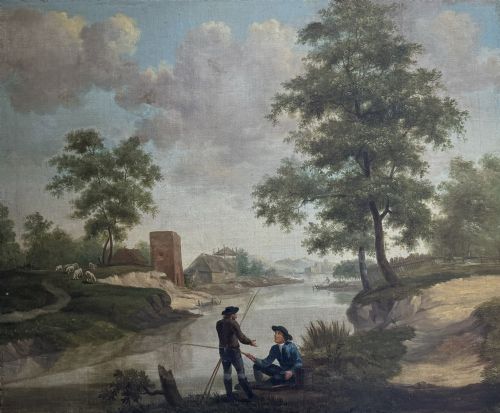
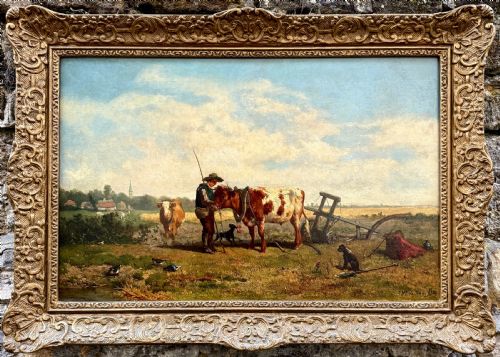


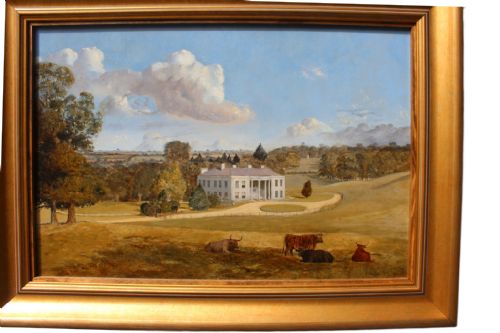


Blue Sky Pastoral Oil Painting
These blue sky pastoral oil painting works capture open horizons and rural life across centuries of British and continental artistry.
Blue Sky Pastoral Oil Painting
A blue sky pastoral oil painting typically presents serene rural scenes, agricultural vistas, and open skies designed to bring the tranquillity of the countryside indoors. Buyers searching for a blue sky pastoral oil painting encounter canvases spanning the eighteenth century through to the mid-twentieth century, capturing shifting agricultural landscapes and domestic farm life.
The selections on this page showcase varied British and European traditions, ranging from Georgian and Victorian realism to British impressionism and twentieth-century pastoral views. Works appear in formats including large landscapes, intimate panels, and oval compositions depicting riversides, meadows, and agricultural labourers.
Most pieces date from the nineteenth and early twentieth centuries, featuring artists associated with regional schools across Yorkshire, Kent, and Essex alongside continental scenes. Collectors find subjects varying from quiet pastoral idylls and church views to harvesting scenes beneath expansive open skies.
Materials and methods
The physical foundation of these works relies upon oil paint applied to woven canvas, linen canvas, or wooden panel supports. Painters built luminous skies and textured rural terrain through layered oil mediums that preserved brushwork and pigment depth over generations.
Frames play an integral structural and aesthetic role, frequently constructed from carved wood, gesso, and giltwood. These ornate or simple moulded surrounds protect the perimeter of the canvas while framing the atmospheric pastoral composition within.
Listings feature oil paintings executed on canvas, linen canvas, and panel, housed in period gilt wood and gesso frames.
Distinguishing quality in pastoral works
Quality resides in the handling of atmospheric light, cloud structure, and the naturalism of the rural topography across the canvas. Superior examples demonstrate confident brushwork and tonal harmony that capture the specific luminosity of an open sky above a landscape.
The integrity of the original support, the preservation of the pigment layer, and the quality of the period framing contribute significantly to a piece's overall standing. Finer works exhibit a compelling spatial depth and compositional balance that elevate simple rural views into striking historical records.
William Sydney Cooper·George Vicat Cole·Frederick W. Jackson·Florence Hess·Thomas Rose Miles·Herbert Royle·George Cole·Thomas Sydney Cooper
The Blue Sky Pastoral Oil Painting Glossary
- Gesso
- A traditional white paint mixture consisting of a binder mixed with chalk, gypsum, or pigment. It is applied to wooden panels or canvas substrates to prepare a smooth surface for oil painting.
- Giltwood
- Timber carved and coated with a thin layer of gold leaf or metallic powder. This material is frequently used to construct ornate decorative frames for antique paintings.
- British Impressionism
- An art movement focusing on light, loose brushwork, and everyday subjects painted outdoors. It heavily influenced late nineteenth and early twentieth-century landscape artists.
- Italianate landscape
- A pictorial genre depicting idealized pastoral scenery inspired by the light and topography of Italy. These compositions often incorporate distant villas and classical architectural elements.
Blue Sky Pastoral Oil Painting: Frequently Asked Questions
What defines a pastoral oil painting?
A pastoral oil painting depicts rural scenes, agricultural life, and natural landscapes such as meadows, riversides, and farmsteads. These works emphasise tranquility and a connection to the countryside.
Artists historically used these compositions to evoke a romanticized or realistic view of agrarian existence, often emphasising expansive skies and natural light.
How do I date a landscape painting?
Dating relies upon stylistic markers, clothing styles of figures, framing techniques, and the type of canvas or panel support used. Pigment analysis and inscribed signatures or exhibition labels also provide chronological clues.
Comparing brushwork techniques to known periods like Victorian realism or British impressionism helps narrow down the decade of creation.
Where should I hang these paintings?
These works suit traditional living spaces, studies, or hallways where natural light can illuminate the brushwork and gilt framing. Avoid placing oil paintings in direct sunlight or areas of high humidity.
Pairing a landscape with period furniture creates a cohesive historical display within a room.
How do I care for antique canvas?
Maintain a stable room temperature and humidity level to prevent the canvas or wooden panel from warping and the oil paint from cracking. Keep paintings away from direct heat sources.
Dust the surface and frame gently with a soft, dry brush, avoiding water or chemical cleaning agents on the paint.