




Blue Silver Pendant
A blue silver pendant brings together cool silver settings and luminous blue enamel, stones or glass.
Blue Silver Pendant
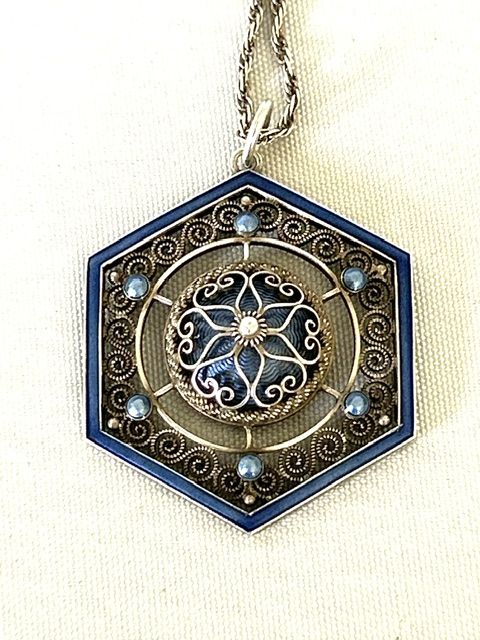
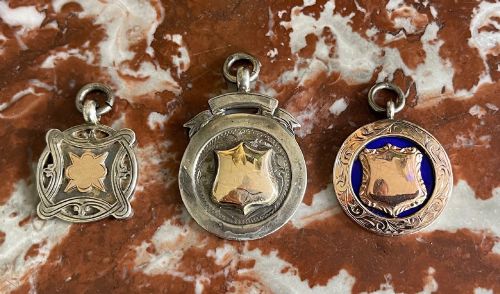
A blue silver pendant combines silver work with blue materials ranging from enamel to natural stones. These items appear across periods including the nineteenth century, Edwardian era, Art Nouveau, Arts and Crafts, and Art Deco movements. Pieces range from delicate floral motifs to geometric modernist designs.
The selection on this page centres on pendants and necklaces, alongside related forms like brooches and compacts that incorporate silver and blue elements. Many incorporate drop pearls, marcasite or chains to complete the neckwear design.
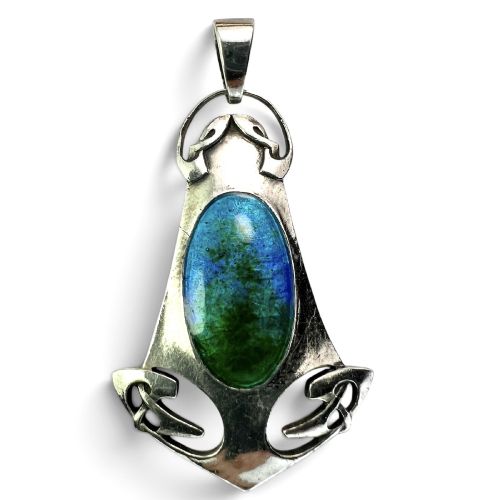
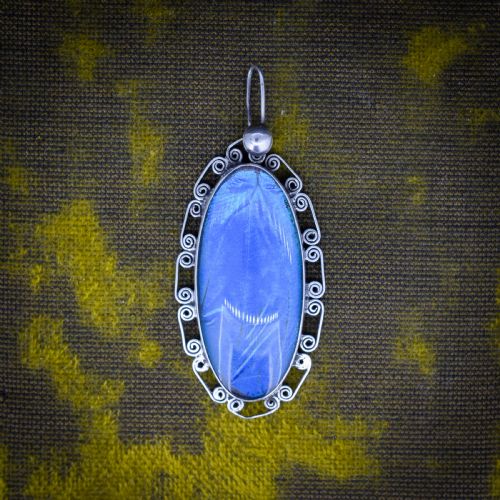
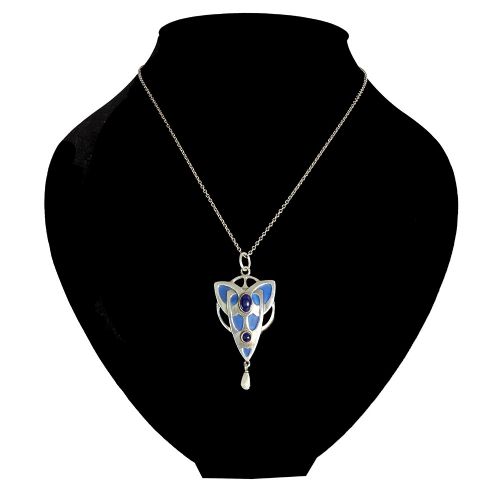
Art Nouveau and Arts and Crafts examples often feature hand-beaten silver set with blue enamel or moonstones. Art Deco pieces utilise symmetrical geometric patterns, often employing guilloche enamel or butterfly wing panels.
How they were made
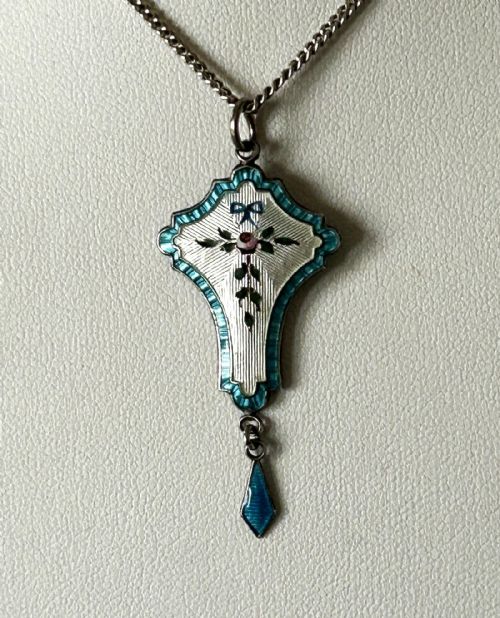
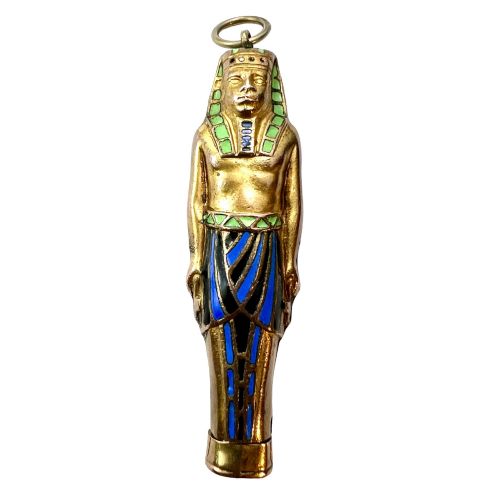
Makers shaped silver through casting, filigree work and hand-beating, frequently combining sterling silver or silver gilt with gold highlights. Enamel work takes forms such as translucent guilloche, cloisonne and landscape enamel fused to metal bases.
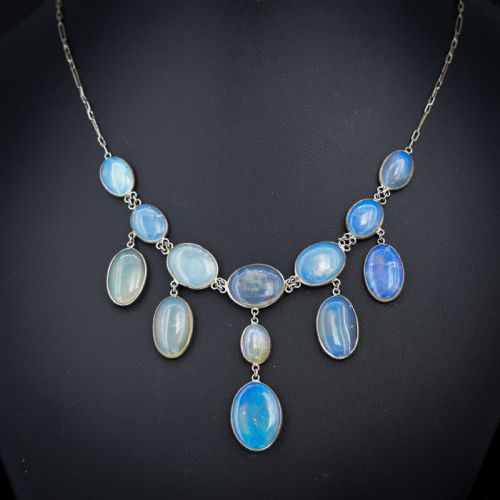
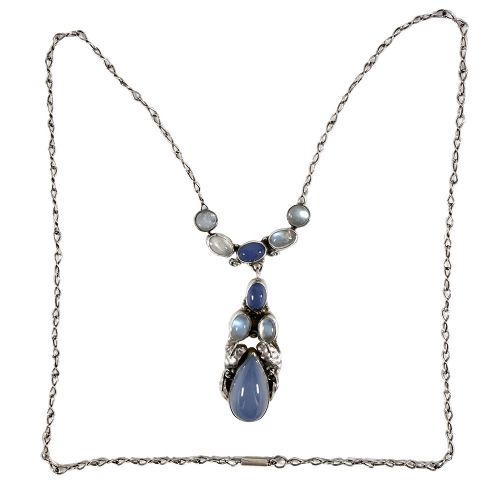
Stones including chalcedony, sapphires, topaz, turquoise and opals are bezel-set or drop-hung from silver mounts. Pearls, both blister and natural varieties, frequently dangle below the main pendant body as fringe elements.
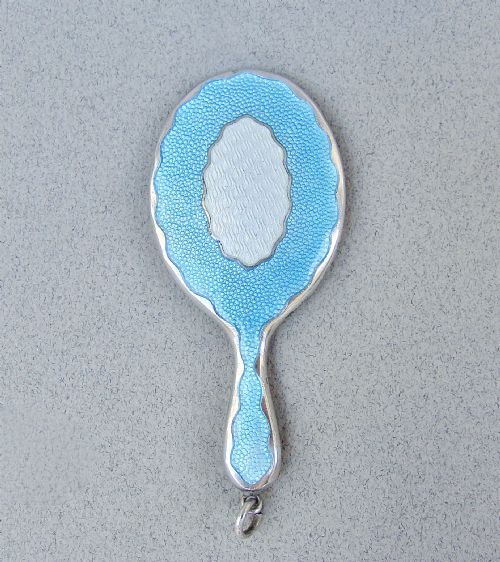
Several compacts and miniature purses hide blue enamel mirrors inside, proving that past owners insisted on checking their reflection in style.
What varies in quality
Quality rests in the crispness of the silver casting and the precision of the enamel work. Finer items show even enamel surfaces without chips or fire cracks, alongside secure stone settings.
Design attribution elevates certain pieces, particularly those bearing the marks of known workshops or makers. Hand-finished details on the reverse of the pendant and original silver chains also distinguish superior examples.
Marius Hammer·Archibald Knox·Liberty And Co·Murrle Bennett·Henry Williamson·Mary Thew·Henry Matthews·Wilhelm Fuhner·Dorrie Nossiter·Thomas L Mott·Henry Perkins And Sons·Charles Horner·David Andersen·Reeslev Design
The Blue Silver Pendant Glossary
- Guilloche enamel
- Enamel applied over a metal surface that has been machine-turned with an engraved geometric pattern. This technique creates shimmering light effects beneath translucent coloured glass.
- Festoon necklace
- A necklace featuring draped chains, swags or suspended drops that sit across the upper chest. Edwardian versions often incorporate opals and sapphires.
- Cloisonne
- Enamel work created by soldering thin metal wires to a metal base to form compartments filled with coloured glass paste. The piece is then fired and polished flat.
- Chalcedony
- A cryptocrystalline form of silica used commonly in Arts and Crafts jewellery. It presents a smooth, semi-translucent appearance in blue and grey tones.
Blue Silver Pendant: Frequently Asked Questions
How do I care for antique enamel pendants?
Enamel is essentially glass fused to metal, so it requires gentle handling to prevent scratching or chipping. Clean the piece using a soft cloth and warm soapy water, avoiding harsh chemical dips that can damage both the enamel and the silver.
Store pendants individually in lined boxes away from direct sunlight and harder items. Take care not to submerge antique pieces with glued or sealed stones like pearls into water for extended periods.
What periods are these blue silver pendants from?
The pieces span from the late nineteenth century through the Edwardian era, Art Nouveau, Arts and Crafts, and Art Deco periods, extending into mid-century modernist designs. Each era brought distinct aesthetic priorities, from organic floral lines to strict geometric symmetry.
Earlier nineteenth-century items often display hand-wrought silver and natural stones, while 1920s and 1930s examples frequently utilise machine-turned guilloche enamel or moulded glass.
Are the chains original to the pendants?
Some pendants retain their period-matching silver chains, while others have been paired with later compatible chains to ensure they remain wearable. Hallmarks and chain construction styles help determine whether the chain dates to the same period as the pendant.
When a piece includes an original chain, it is typically noted in the description, reflecting the complete historic package.
How can I distinguish Art Nouveau from Art Deco pendants?
Art Nouveau pieces, dating from around the turn of the twentieth century, feature flowing, asymmetrical lines inspired by natural forms such as flowers, vines and insects. They often utilise soft blue enamel, moonstones and whip-lash curves.
Art Deco items from the 1920s and 1930s embrace strict geometry, clean lines, and symmetrical arrangements. They frequently showcase vibrant guilloche enamel, butterfly wings or calibrated stones set in sharp silver frames.