


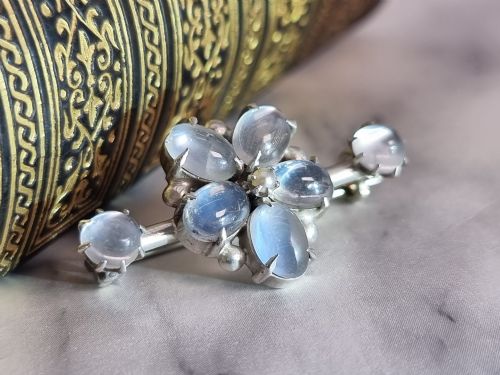


Blue Silver Brooch
A blue silver brooch brings together cool metal and vibrant enamel, stone, or glass in pieces spanning the Victorian period to the mid-twentieth century.
Blue Silver Brooch
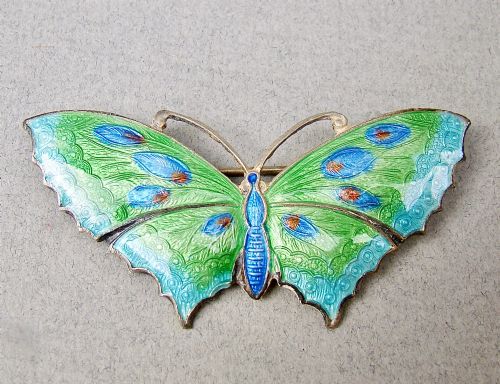
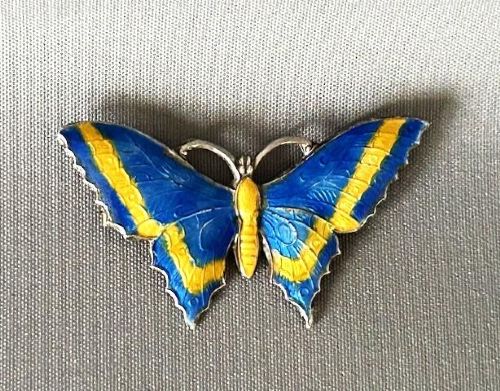
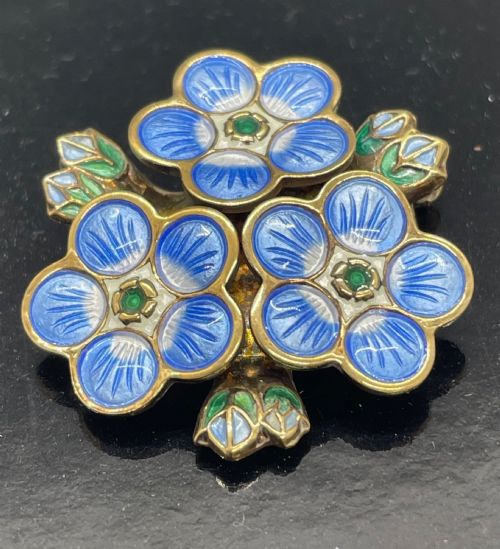
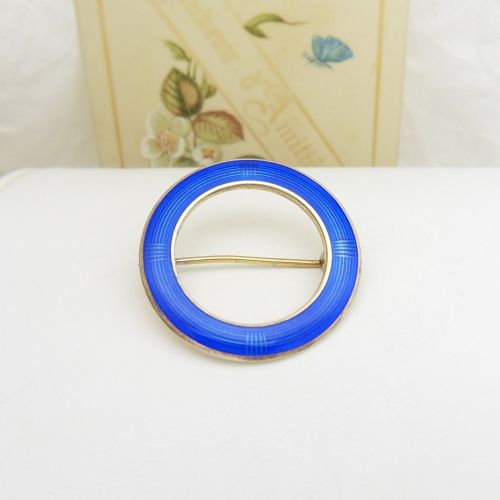
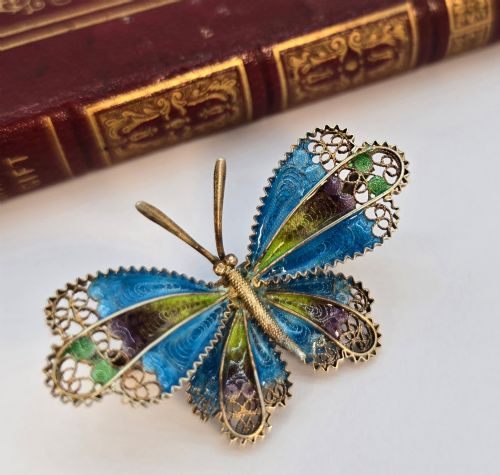
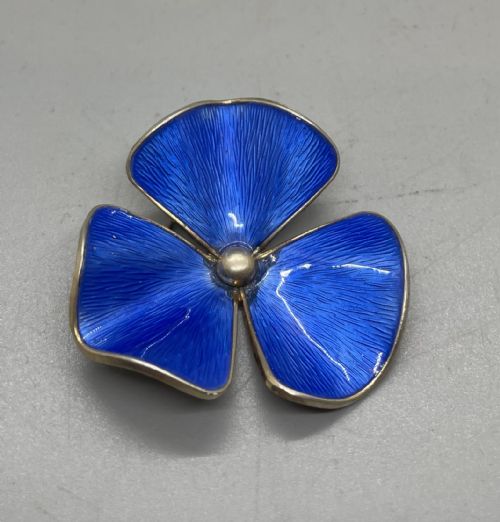
A blue silver brooch encompasses several distinct stylistic movements, most notably the intricate enamel work of Scandinavian designers from the mid-century and the naturalistic motifs popular during the Art Deco and Edwardian eras. Buyers searching for a blue silver brooch frequently encounter pieces shaped as butterflies, flowers, and geometric forms.
Earlier examples often incorporate sapphires, turquoise, or chalcedony mounted in silver alongside gold or gilt work. Later twentieth-century versions rely heavily on vitreous enamel applied to sterling silver bases, producing vivid colour fields.
Materials and construction
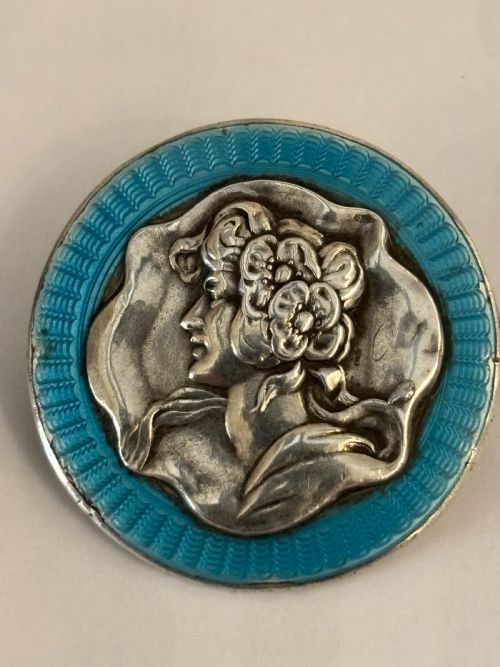
Silversmiths utilised sterling silver and silver gilt as the primary structural foundations, frequently applying transparent or opaque enamels over engine-turned guilloche patterns. Gemstones such as moonstones, sapphires, diamonds, and agates were bezel-set or flush-mounted into the metal framework.
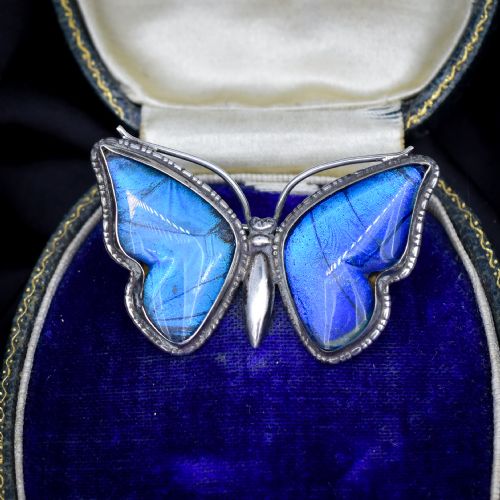
Specialised techniques like butterfly wing inlay under glass and cloisonne enamel appear across the inventory. Makers shaped wire and sheet metal to form delicate borders for winged insects, floral sprays, and abstract Scandinavian geometries.
Blue Silver Brooch Retail Price Guide 2026
Typical asking prices for blue silver brooch among the pieces listed under this phrase on Sellingantiques today, from the lower quarter to the upper quarter. They describe what is for sale here now, not the wider market.
Several makers turned ocean-going marine life into wearable art, including a silver brooch shaped as a sailfish with a pale blue eye.
Evaluating craftsmanship
Quality rests on the precision of the enamelling, the clarity of the underlying guilloche engraving, and the security of stone settings. Superior pieces display smooth, unblemished enamel surfaces without chipping or heavy restoration.
Makers known for exceptional execution, particularly established Scandinavian workshops and registered British silversmiths, often incorporated heavier gauge silver and gilt layers that retain their finish over generations.
Henry Matthews·Rhoda Wager·David Anderson·Hans Myhre·Aksel Holmsen·Hroar Prydz·Ivar T Holth·Finn Jensen·Adie And Lovekin·O.F. Hjortdahl·Rolason Brothers·John Atkins
The Blue Silver Brooch Glossary
- Guilloche
- An ornamental engraving technique that etches a precise, intricate geometric pattern into a metal surface before enamel is applied. This method allows light to reflect through translucent coloured glass layers.
- Silver Gilt
- Sterling silver that has been coated with a thin layer of gold, providing a warm yellow tone while maintaining a silver base. It appears frequently in mid-century enamel pieces.
- Blue Lace Agate
- A variety of chalcedony displaying pale blue bands with white lacing, commonly utilised in nineteenth-century Scottish pebble jewellery. It is cut and polished into cabochons for brooches and shields.
- Butterfly Wing
- A decorative medium using real Morpho butterfly wings sealed beneath bevelled glass panels to create a shimmering blue display. This technique gained popularity during the Art Deco period.
- Enamel
- A material made by fusing powdered glass to a metallic substrate through firing at high temperatures. Vitreous versions provide durable colour across floral and abstract brooch designs.
Blue Silver Brooch: Frequently Asked Questions
How do I date a blue silver brooch?
Dating relies on hallmarks, stylistic markers, and material combinations recorded across the periods.
Victorian and Edwardian items often feature gemstones and organic motifs, whereas mid-century Scandinavian examples display minimalist lines and bright enamel.
What is butterfly wing jewellery?
These pieces utilise iridescent wings from tropical butterflies preserved beneath glass.
Craftsmen arranged the material to form the wings of depicted insects within sterling silver settings.
Are Scottish pebble brooches silver?
Traditional Scottish designs are mounted in sterling silver and incorporate native stones like blue lace agate and chalcedony.
They reflect nineteenth-century Celtic revival aesthetics.
How should I care for enamel brooches?
Enamel requires gentle handling to prevent impact damage or scratching to the glass surface.
Store them separately from harder gemstones and avoid immersion in harsh cleaning solutions.