



Blue Shirvan Rug
A blue shirvan rug brings the distinct geometric patterns of the Eastern Caucasus into a room through rich wool and natural dyes.
Blue Shirvan Rug
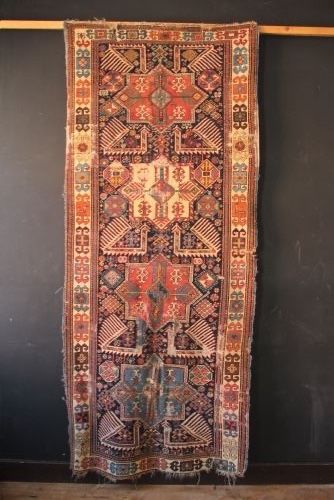
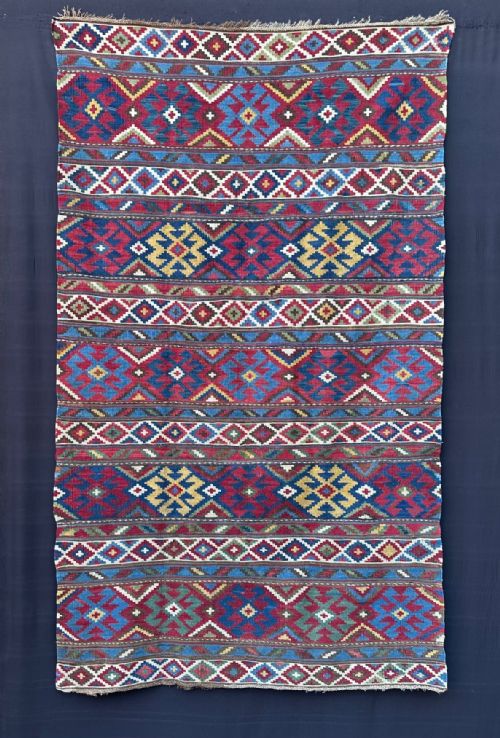
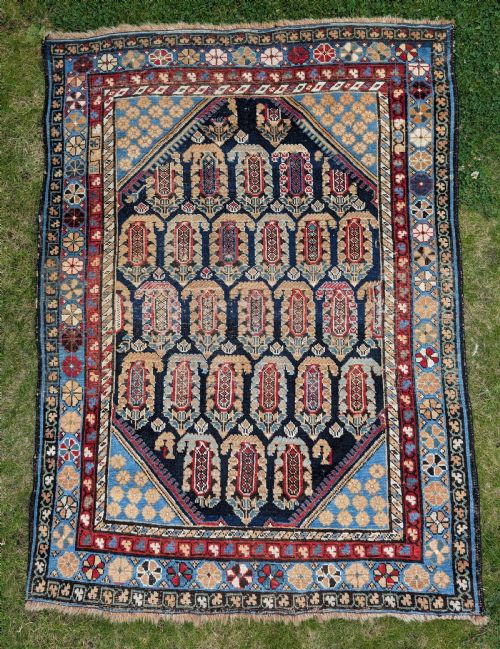
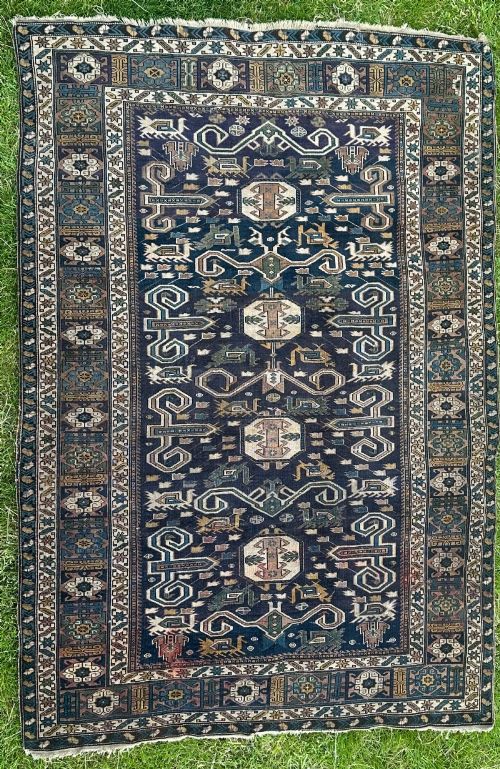
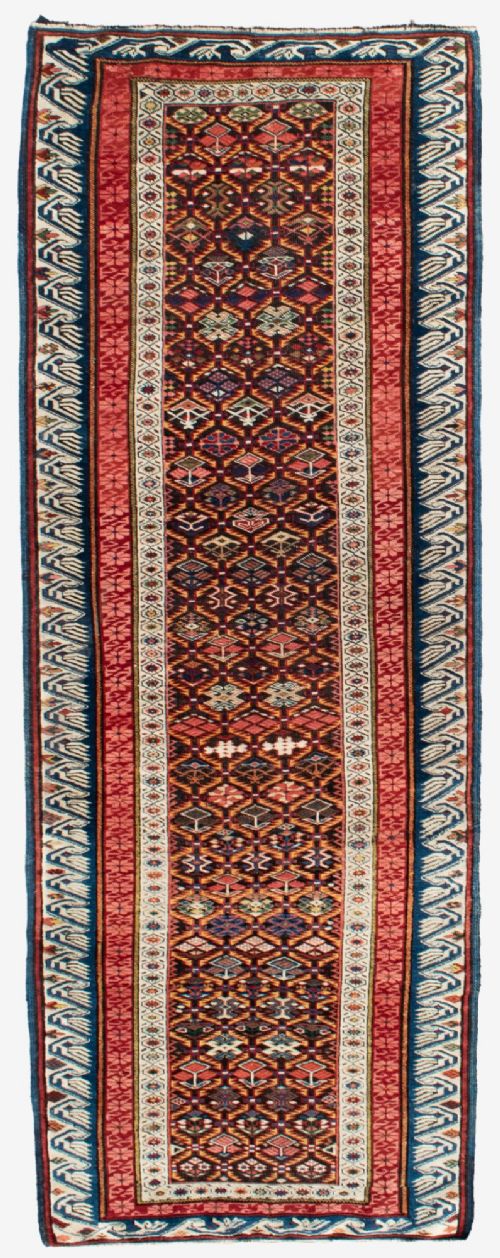
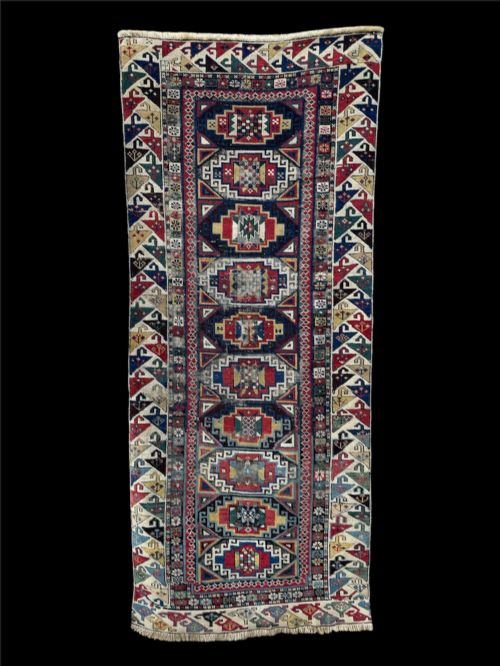
When someone searches for a blue shirvan rug, they are looking at woven floor coverings originating from the Shirvan region in the Eastern Caucasus during the nineteenth and early twentieth centuries. These pieces appear in various formats on this page, including standard area rugs, long runners, prayer rugs, and flat-woven kilims.
The selection demonstrates traditional Caucasian tribal designs, incorporating specific regional variations such as Akstafa, Baku, Khila, and Marasali motifs. Most examples date from the Victorian era up to the first quarter of the twentieth century, representing a distinct tradition of village and tribal weaving.
What varies in quality
The distinction between standard examples and superior pieces rests on the precision of the weave and the clarity of the regional design. Finer knot densities allow intricate motifs like Kufic borders and star patterns to maintain sharp definition.
Condition and completeness also govern the hierarchy, as intact borders and minimal pile wear distinguish well-preserved specimens from fragments or heavily battered rugs.
Blue Shirvan Rug Retail Price Guide 2026
Typical asking prices for blue shirvan rug among the pieces listed under this phrase on Sellingantiques today, from the lower quarter to the upper quarter. They describe what is for sale here now, not the wider market.
Listings feature pieces spanning from the Victorian period through to the 1920s, constructed entirely from hand-spun wool and natural dyes.
The Blue Shirvan Rug Glossary
- Shirvan
- A style of weaving originating from the Eastern Caucasus, known for structured geometric layouts and balanced proportions. These pieces frequently employ crisp lines and muted palettes.
- Kilim
- A flat-woven textile produced without a pile, resulting in a lighter, tapestry-like fabric. They are often characterised by banded designs and sharp geometric transitions.
- Prayer rug
- A small format textile featuring a distinct mihrab or niche design used historically for devotional purposes. Collectors prize them for their focused iconography and compact proportions.
- Runner
- A long, narrow carpet format designed for hallways or corridors. These pieces adapt the traditional motifs of the region into an elongated rectangular field.
- Natural dyes
- Organic colorants derived from plants, insects, and minerals before the widespread adoption of synthetic alternatives. They age gracefully, developing soft, harmonious patinas over decades.
Blue Shirvan Rug: Frequently Asked Questions
How do I date a blue shirvan rug?
Dating relies on structural analysis, wool quality, and the specific chemical composition of the natural dyes used in the piece. Stylistic markers such as border types and specific regional drawing styles also help narrow down the period of production.
Most examples originate from the late nineteenth century to the early twentieth century, aligning with traditional Caucasian weaving eras.
Where were these rugs made?
These textiles were produced in the Shirvan region of the Eastern Caucasus, an area renowned for its distinct village and tribal weaving traditions. Specific towns and districts within this region developed their own recognizable design vocabularies.
Weavers in these communities passed down patterns through generations, maintaining local aesthetic conventions.
How should I clean a antique rug?
Maintenance requires gentle handling, avoiding harsh chemical treatments or aggressive mechanical scrubbing that can damage hand-spun wool and natural dyes. Professional specialist cleaning tailored to antique oriental carpets is recommended.
Regular light vacuuming without a beater bar helps remove abrasive grit from the foundation.
What is a prayer rug used for?
Historically, these smaller formats served a devotional function, featuring an architectural arch motif that pointed toward Mecca. Today, collectors appreciate them for their focused compositions and symbolic design elements.
Their compact size makes them suitable for display on walls or as accent pieces in smaller spaces.