



Blue Sea Harbour Paintings
Blue sea harbour paintings capture coastal life across Britain and France through watercolours and oils.
Blue Sea Harbour Paintings
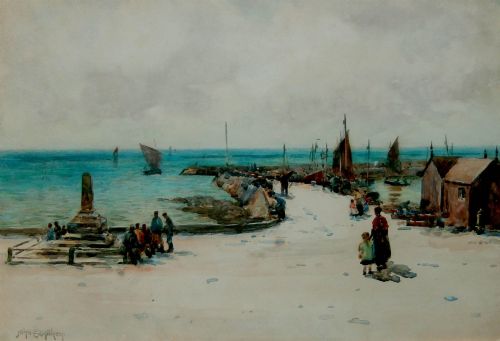
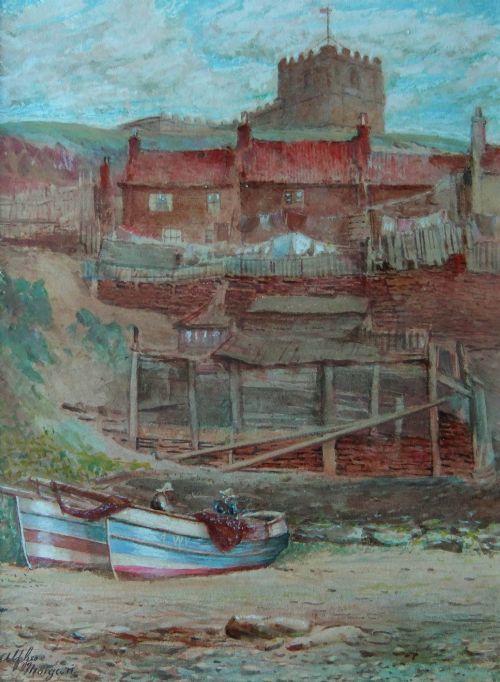
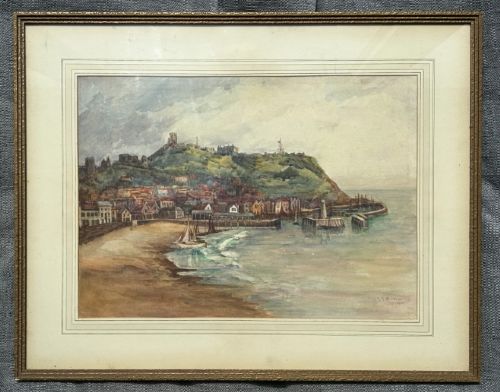
These blue sea harbour paintings record maritime life, coastal quays, and fishing fleets from the Victorian era through the mid-twentieth century. Collectors seek blue sea harbour paintings to bring authentic maritime atmosphere and historical coastal views into domestic interiors.
The works span British and French locations, including Cornish fishing villages, Yorkshire bays, Scottish ports, and Mediterranean harbours. Watercolours on paper and oil paintings on canvas dominate the selection, reflecting diverse regional topography.
Materials and methods
Artists employed watercolour pigment on paper or oil on canvas, framed behind glass or mounted on wood stretchers. These mediums allowed painters to capture changing coastal light and maritime weather conditions effectively.
Techniques range from traditional Victorian fine art realism to British impressionism, Edwardian studies, and dynamic modernist approaches. Brushwork varies from meticulous detail in architectural elements to looser, light-focused application across sea and sky.
Listings feature works created between the Victorian era and nineteen-sixty, utilising paper, canvas, wood, and glass.
Judging quality in coastal art
Quality rests upon the artist's handling of marine light, atmospheric depth, and structural composition within the harbour scene. Superior works demonstrate confident brushwork and a clear sense of place rather than formulaic reproduction.
The condition of the paper, pigment vibrancy, and original framing contribute significantly to a piece's standing. Stronger examples maintain surface integrity without heavy restoration or fading.
John E. Aitken·William Banks Fortescue·Alfred G. Morgan·Jean-Baptiste Olive·William Lee Hankey·James Torrington Bell·Gustave De Breanski·John William Gilroy
The Blue Sea Harbour Paintings Glossary
- Watercolour
- A paint consisting of soluble pigment suspended in a water-based solution, traditionally applied to paper.
- Oil on canvas
- Pigment bound in a drying oil, applied to a stretched canvas support to allow rich colour and texture.
- Maritime realism
- An artistic style dedicated to the accurate portrayal of ships, coastal scenes, and marine environments.
- Post-Impressionism
- An art movement extending impressionism while rejecting its limitations, focusing on expressive forms and symbolic use of colour.
Blue Sea Harbour Paintings: Frequently Asked Questions
What periods do these paintings cover?
The works span from the Victorian era and the nineteenth century through the Edwardian period, the nineteen-twenties, thirties, and forties, up to mid-century modern pieces.
This broad timeline shows changing artistic interpretations of coastal life over several decades.
Where do these coastal scenes originate?
The geographical focus centres primarily on British coastal locations such as Cornwall, Yorkshire, Scotland, and the Isle of Wight, alongside French ports in Normandy and the Mediterranean.
Artists frequently painted active fishing harbours and promenades in these specific regions.
How should I display a watercolour painting?
Watercolours require framing behind glass to protect the paper and pigment from moisture, dust, and direct ultraviolet light.
Placing them away from direct sunlight preserves the original colours and prevents fading over time.
What is the difference between oil and watercolour works?
Oils use pigment bound in drying oil on canvas or wood panels, offering rich textures and deep tones. Watercolours utilise pigment on paper, yielding a lighter, translucent quality.
Both mediums were chosen by artists to capture marine atmospheres in distinct ways.